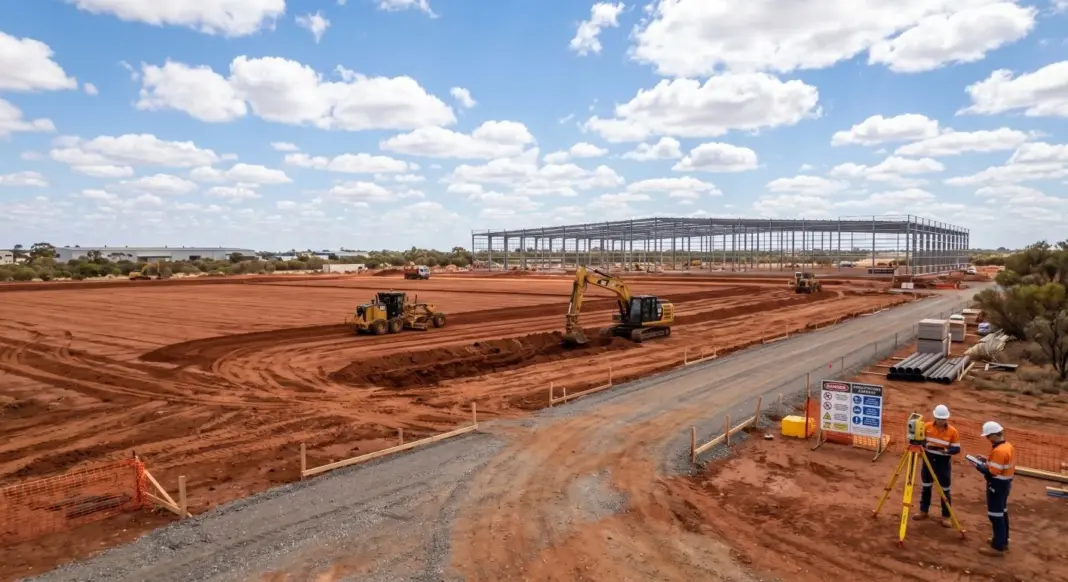
I’ve spent twenty years on Australian worksites, from dusty residential sub-divisions in Western Sydney to massive commercial builds in Melbourne. If there’s one thing that consistently does my head in, it’s watching a project manager try to “save time” by cutting corners on site prep. It never works. You don’t save time by skipping the basics; you just move the delay to the middle of the project where it costs ten times as much to fix.
If you want to actually hit your deadlines, you need to stop looking at site prep as a hurdle to clear and start seeing it as the foundation of your entire schedule. Get it right, and the rest of the build flows. Get it wrong, and you’ll be sitting in a site shed two months from now wondering why your subcontractors are all threatening to walk off.
Stop Treating Bulk Excavation Like a Guessing Game
The biggest time-waster I see is poor geotechnical planning. I once worked on a job where the developer thought he could skip a detailed soil report because the block “looked flat.” We hit coffee rock three days in. That little shortcut cost us three weeks of jackhammering and an extra fifty grand in hire fees.
Actual speed comes from knowing exactly what’s under the surface before the first excavator arrives. In Australia, our soil conditions swing wildly. You might have reactive clay in one spot and solid basalt in the next. Efficient site prep means getting a decent survey and a proper soil test. When your operators know exactly what they’re digging into, they can choose the right buckets and the right machinery from day one. That’s how you maintain a rhythm.
Smart Waste Management is a Productivity Hack
Most blokes think of waste management as just throwing stuff in a skip. That’s a mistake. If your site is cluttered, your heavy machinery can’t move. If your machinery can’t move, you’re losing money every hour. I’ve seen sites where the skid steer spent half its day just maneuvering around piles of timber and concrete because nobody bothered to designate a proper waste zone.
Set up your zones early. Separate your concrete, your metal, and your general waste. Not because you’re trying to be an eco-warrior, but because it’s faster. When the site is clean, your trades can get in, do their job, and get out without tripping over a pile of offcuts. A tidy site is a fast site. It’s that simple.
The Reality of Dust Suppression Australia
If you’re working anywhere near a residential area or a busy road, you’re one complaint away from a total shutdown. I’ve seen EPA inspectors pull the pin on jobs because the dust was blowing across the neighbor’s fence. That’s a week of progress gone while you scramble to fix it. This is where dust suppression Australia becomes a massive factor in your timeline.
You can’t just rely on a bloke with a hose anymore. It’s ineffective and a waste of labor. Using proper polymer-based suppressants or automated misting systems keeps the ground stable and the neighbors happy. More importantly, it keeps the visibility high for your operators. If your site is a giant brown cloud, your drivers have to slow down to 5km/h just to avoid hitting each other. Proper dust control keeps the pace up and the regulators off your back.
Leveling and Compaction Done Right the First Time
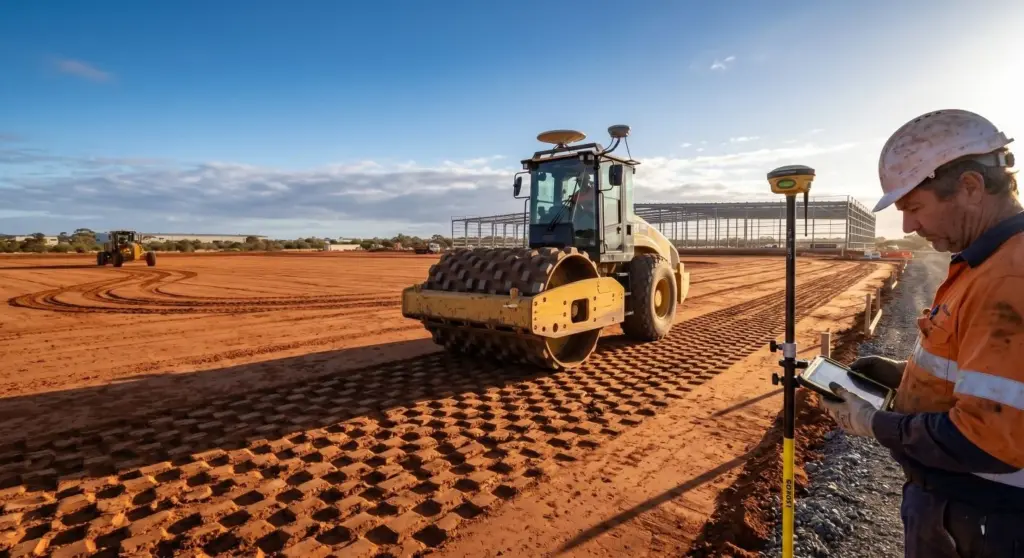
I’ve lost count of how many times I’ve seen a slab pour delayed because the compaction test failed. It’s a classic. The civil crew rushes the rolling, thinks it’s “good enough,” and then the engineer shows up and says no. Now you’re stripping back material and doing it again.
Do you know what really speeds up a timeline? Doing it once. Invest in GPS-guided leveling. It’s not a luxury; it’s a necessity if you want to avoid rework. We used GPS on a warehouse pad last year and finished the leveling forty percent faster than the manual method. The accuracy meant the slab crew could start exactly when they said they would. No arguments, no delays.
The Impact of Pressure Washing Commercial Spaces
Once the heavy earthworks are done and the structures are up, people tend to get lazy with the cleanup. They think they can leave the grime until the very end. But if you’re doing a fit-out or preparing for hand-over, you need a clean slate. This isn’t just about looks. It’s about being able to see defects before they become permanent.
Using pressure washing commercial equipment to blast away the buildup on concrete pads, tilt-up walls, and loading docks is the fastest way to get a site ready for the next trade. If the floor is covered in dried mud and slurry, your floor finishers or painters are going to charge you a “prep fee” and push their start date back. I’ve found that a dedicated day of high-pressure cleaning can shave three days off the final handover phase because it allows for a much faster inspection process.
Managing Site Access and Logistics
You can have the best machines in the world, but if the truck carrying your steel can’t get through the gate because the access road is a boggy mess, you’re stuck. Real-world site prep involves building proper temporary access roads. Don’t just throw down some crushed rock and hope for the best.
Think about the turning circles of a semi-trailer. Think about where the pump truck is going to sit. If you spend two days at the start of the project getting your site entry right, you won’t spend the next six months towing bogged delivery trucks out with an excavator. I’ve seen one bogged truck stall a whole site for four hours. That’s four hours of ten blokes standing around on your dime.
Why Quality Labor Beats Cheap Labor
I’ll be blunt: stop hiring the cheapest mob you can find for site prep. You get what you pay for. A cheap operator will gouge your site, hit a service line because they didn’t check the dial-before-you-dig, and then leave you to deal with the fallout.
An experienced crew knows how to read the site. They see problems before they happen. They might cost 20% more per hour, but they’ll finish the job in half the time and won’t leave you with a mess to fix. Efficiency isn’t about the lowest hourly rate; it’s about the lowest total cost to get the job done. If you want to speed up your timeline, hire the blokes who know what they’re doing.