
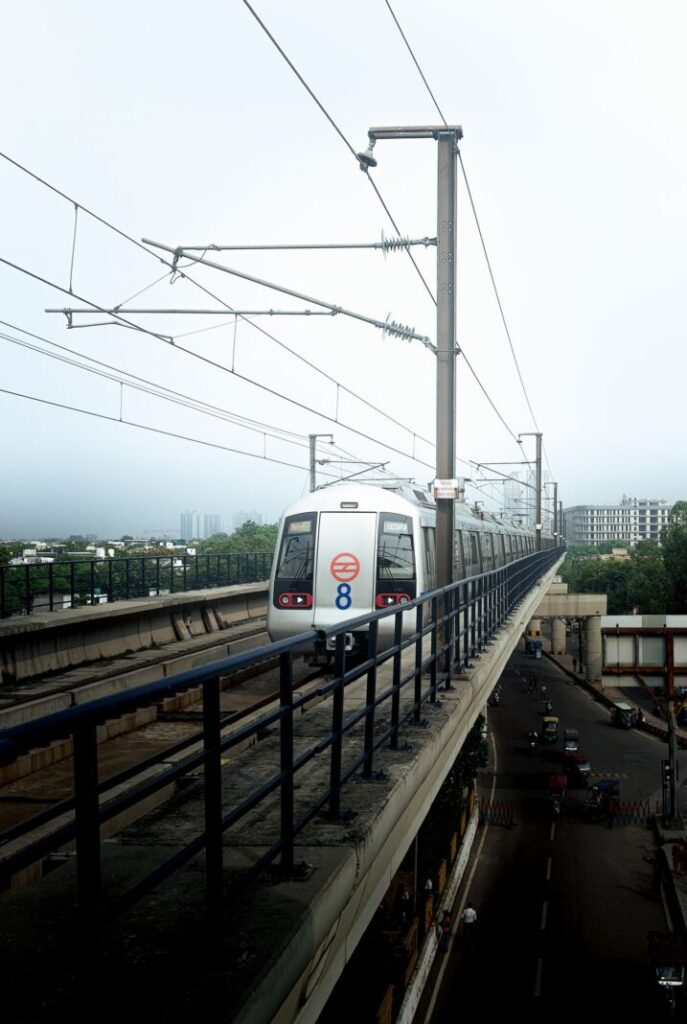
The Delhi Development Authority (DDA) has proposed expanding public transport and cycling infrastructure under the Master Plan for Delhi-2047 (MPD-2047), with plans to increase the Delhi Metro network to 695 km and the Namo Bharat network across the National Capital Region (NCR) to 383 km. The proposals also include approximately 200 km of cycle tracks, improved transport hubs and measures to reduce traffic congestion across the capital.
The plans were discussed during the DDA’s 11th stakeholder consultation on MPD-2047, held last week under the directions of Delhi Lieutenant Governor Taranjit Singh Sandhu. Representatives from civic agencies, transport authorities and infrastructure organisations participated in the meeting to discuss sustainable urban mobility and future transport requirements.
The consultation focused on public transport expansion, multimodal connectivity, non-motorised transport, parking management and road infrastructure improvements. These measures form part of the broader planning framework for accommodating Delhi’s future population and travel demand.
Metro and Namo Bharat Networks to Expand
Under the proposed master plan, the Delhi Metro network is expected to expand from its existing 416 km to 695 km. The Namo Bharat network across the NCR is also proposed to increase from 82 km to 383 km.
The planned expansion is intended to improve connectivity between residential areas, commercial centres and major employment destinations. A wider public transport network could provide commuters with more travel options and reduce dependence on private vehicles, particularly for longer journeys across Delhi and neighbouring urban centres.
The proposed expansion also reflects the need to coordinate transport infrastructure across administrative boundaries as the NCR continues to grow. Better connections between metro services, regional rapid transit and other modes of public transport could improve access to employment hubs and reduce pressure on major road corridors.
However, the proposed network lengths represent the master plan’s infrastructure vision. Their implementation will depend on project planning, funding, coordination among agencies and the execution of individual transport projects.
Around 200 Km of Cycle Tracks Proposed
The master plan also proposes developing approximately 200 km of cycle tracks to encourage cycling as a mode of urban transport.
Dedicated cycling infrastructure can support short-distance travel and improve access to metro stations, bus terminals and other public transport facilities. Properly connected cycle tracks could help commuters complete the first and last legs of their journeys without relying entirely on motorised transport.
The DDA’s consultation included discussions on active travel and the integration of cycling facilities with the wider transport network. The effectiveness of the proposed tracks will depend on their continuity, road safety, accessibility and integration with existing pedestrian and public transport infrastructure.
The initiative is part of the broader focus on sustainable mobility, which seeks to provide alternatives to private vehicles while improving the movement of people across urban areas.
Multimodal Hubs and Parking Management
MPD-2047 proposes strengthening multimodal integration through transport hubs at Sarai Kale Khan, Anand Vihar and Kashmere Gate. These locations are important transport interchange points, and improved integration could make transfers between different modes of transport more convenient.
The plan also proposes rationalising parking norms, making better use of existing parking facilities through demand management and preparing comprehensive area-based parking plans. These measures are intended to improve parking management and reduce congestion caused by vehicles searching for parking spaces or occupying road space.
Representatives from the Municipal Corporation of Delhi, Asian Development Bank, Public Works Department, National Highways Authority of India, Delhi Traffic Police, Transport Department and Delhi Metro Rail Corporation attended the consultation.
Road Improvements to Address Congestion
The master plan identifies several measures to improve road connectivity and ease traffic congestion, particularly in newly urbanised areas. These include developing new road networks, constructing underpasses and elevated corridors, bridging missing links, improving junctions and removing traffic bottlenecks.
Such interventions could help improve movement along congested corridors and connect emerging urban areas with established transport networks. Their impact will depend on coordinated planning, land availability and integration with public transport infrastructure.
Overall, Delhi’s Master Plan 2047 outlines a long-term approach to urban mobility through expanded public transport, cycling facilities, improved road connectivity and more organised parking management. The success of the proposals will depend on phased implementation and coordination among the agencies responsible for delivering the infrastructure.






