
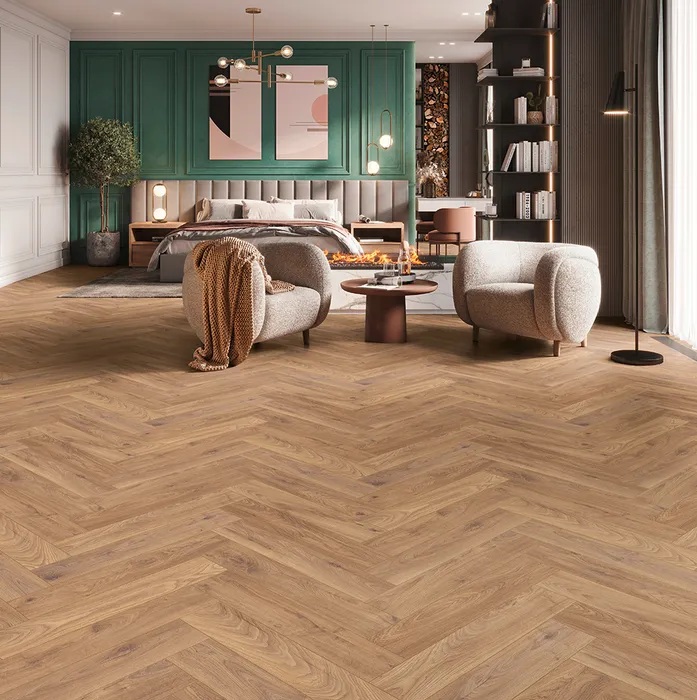
Laminate flooring and luxury vinyl plank flooring sit next to each other in every showroom, photograph almost identically in listing photos, and get quoted at comparable prices per square foot. Homeowners choosing between them often leave the store with the wrong product for their room because the decision looks simpler than it is.
For homeowners considering laminate flooring Indianapolis, understanding how these two flooring options differ is essential before making a purchase. The two floors are built from completely different materials, perform differently under moisture and foot traffic, and suit different rooms in the same house. Getting that match right at the selection stage saves the cost of replacing a floor that failed to perform where it was installed.
This guide covers every factor that separates laminate from vinyl plank so a homeowner can read the room, compare the specs, and select the right floor before anyone lifts a saw.
How Each Floor Is Built
Understanding what these floors are made of is the fastest way to understand how they behave.
Laminate flooring is a pressed, multi-layer product. The core layer is high-density fiberboard (HDF), a wood-fiber material compressed under high heat and pressure. Above the core sits a photographic layer printed with a wood, stone, or tile image. A clear wear layer bonds on top of the photographic layer and protects the surface from scratches, scuffs, and UV fading. The wear layer’s thickness, measured in AC ratings from AC1 to AC5, determines how long the floor holds its surface under daily use.
Luxury vinyl plank (LVP) uses no wood fiber at any layer. The core is 100 percent plastic, either a flexible PVC core or a rigid composite (WPC or SPC). A printed photographic layer sits above the core, and a clear urethane wear layer protects the surface. Because plastic does not absorb water at any layer, LVP is waterproof from the subfloor surface to the wear layer.
Water Resistance: Where the Decision Splits Most Sharply
This is the factor that eliminates one product for a specific room faster than any other.
Standard laminate is not waterproof. The HDF core absorbs water when exposed to it long enough. That absorption causes the core to swell, which pushes the seams apart, raises the edges of the planks, and eventually buckles the floor. A single major spill cleaned up within minutes rarely causes damage. A room that sees repeated moisture, persistent humidity, or any standing water will show the failure over time.
Waterproof-core laminate (WPC or SPC core, sold under various brand names) addresses this with a non-wood core that does not absorb water. These products carry a waterproof rating and perform in kitchens, finished basements, and laundry rooms where standard laminate would fail.
LVP at every price point is waterproof. The plastic core does not absorb water. This makes LVP the lower-risk choice for anyone who wants full waterproof performance without navigating product lines to find the waterproof version of laminate.
The practical rule: for dry rooms (bedrooms, living rooms, dining rooms, above-grade offices), standard laminate performs reliably. For rooms with any recurring moisture exposure, choose either waterproof-core laminate or LVP, then select between them on the other factors below.
Scratch Resistance and Surface Hardness
Laminate holds an advantage here that homeowners with pets and high foot traffic should factor into the decision.
The wear layer on laminate is an aluminum oxide coating fused into the surface during manufacturing. This coating is harder than the urethane wear layer used on most LVP products. On the Janka hardness scale, laminate surfaces typically register harder than rigid-core LVP at a comparable price point.
In practical terms: laminate resists scratches from dog nails, dragged furniture legs, and grit tracked in from outside better than most LVP at the same price. The difference is not absolute, and high-end LVP with a thicker urethane wear layer narrows the gap, but at mid-range price points, laminate wins on surface hardness.
LVP dents before it scratches. The plastic core, particularly in flexible PVC products, can indent under the sharp legs of heavy furniture. Rigid-core LVP (SPC) reduces this risk significantly because the stone-plastic composite core resists compression better than a flexible core.
Underfoot Feel and Sound
This is a subjective factor but one that homeowners notice immediately in a showroom walkthrough and every day after installation.
LVP, particularly WPC-core products, has a softer, warmer feel underfoot than laminate at comparable thickness. The composite core absorbs more impact than a dense HDF core, and WPC products often include an attached underlayment that adds a cushioning layer. For bedrooms, children’s rooms, and spaces where people stand for long periods, that softness is a real comfort difference.
Laminate on a good underlayment can feel solid and substantial, but it typically transmits more impact sound than WPC vinyl. SPC vinyl, the denser plastic composite, is harder underfoot than WPC and closer to laminate in feel.
Both floors perform better acoustically with a quality underlayment beneath them, and both benefit from a floating installation that allows for natural expansion and contraction without locking the floor to the subfloor.
Thickness, Subfloor Tolerance, and Installation Requirements
Laminate and LVP both use a click-lock floating installation and both require a flat, clean subfloor. The differences in how each handles subfloor irregularities matter in older homes where the subfloor is not perfectly level.
Laminate planks run thicker on average. A standard residential laminate is 8mm to 12mm thick; LVP commonly runs 4mm to 8mm. Thicker planks bridge minor subfloor dips better than thin ones, which means laminate can be more forgiving over a subfloor with small undulations.
LVP, particularly thin-profile products, requires a flatter subfloor than laminate to avoid the plank flexing at seam points and clicking loose over time. SPC-core LVP, being rigid, tolerates slight imperfections better than flexible PVC LVP, but neither matches a 12mm laminate plank for bridging a minor low spot.
Cost Comparison
Both products are available across a wide price range, and the overlap between mid-range laminate and mid-range LVP is significant. As a general framework:
Entry-level laminate starts below entry-level LVP at comparable wear-layer ratings. This makes laminate the more accessible option when budget is the primary constraint and the room is dry.
Waterproof-core laminate (WPC/SPC) prices close the gap with mid-range LVP considerably. When a buyer needs waterproof performance, the price advantage of standard laminate disappears.
High-end LVP with a thick wear layer, attached underlayment, and rigid core can price above mid-range laminate. At that price point, the choice comes down to whether scratch hardness or softness underfoot matters more for the specific room.
Installation cost is comparable between the two products for a standard floating installation. Subfloor leveling, stair nosing, and transitions add to both equally.
A Room-by-Room Decision Framework
Rather than declaring a winner, here is how to apply the factors above to specific rooms:
Bedrooms: dry room, comfort underfoot is a priority. Either product works; WPC vinyl wins on softness, laminate wins on cost at entry level.
Living room and dining room: moderate foot traffic, dry conditions, furniture movement. Laminate’s scratch resistance is an advantage. Rigid-core LVP is an equal competitor at similar price points.
Kitchen: recurring moisture from cooking, cleaning, and spills. Waterproof-core laminate or LVP. Standard laminate is a risk in kitchens with heavy cooking activity.
Finished basement: seasonal humidity fluctuation, possible subfloor moisture. SPC-core LVP or waterproof-core laminate (SPC). The rigid, non-absorbent core handles temperature and humidity changes better than a wood-fiber core.
Laundry room and utility space: high moisture risk. LVP or waterproof-core laminate only. Standard laminate fails here.
High-traffic entryway with pets: scratch resistance is the priority. AC4 or AC5-rated laminate outperforms most mid-range LVP on surface hardness.
How to Read a Product Spec Sheet Before Buying
The two numbers that matter most before selecting either product:
Wear layer thickness or AC rating (laminate): for laminate, the AC rating tells you the surface’s durability class. AC3 covers standard residential use. AC4 covers heavy residential or light commercial. AC5 is commercial-grade. For LVP, the wear layer is listed in mils (thousandths of an inch); 12 mil handles standard residential use, 20 mil handles heavy residential to light commercial.
Core type: the product card or spec sheet should identify the core. For laminate, look for HDF (standard, not waterproof), WPC (waterproof composite), or SPC (rigid stone composite, waterproof). For LVP, the same WPC and SPC designations apply.
If a product card lists neither the core type nor the wear layer clearly, ask before purchasing. Those two pieces of information tell you more about how the floor performs than the brand name or the showroom photography.
Where to See the Difference in Person
Product photography and online comparisons only carry a buyer so far. The thickness, weight, surface texture, and acoustic difference between a 12mm laminate plank and a 6mm LVP product are things a homeowner notices immediately when holding both in a showroom, and those physical differences inform the decision in ways a spec sheet does not.
Homeowners in the Indianapolis area who want to compare waterproof laminate and luxury vinyl plank options side by side can visit Reardon’s Flooring at 5563 S Belmont Ave, Indianapolis, IN 46217. The showroom stocks both product categories across multiple core types, wear-layer ratings, widths, and finishes. The staff walks customers through the comparison for their specific room conditions and quotes installation across the full project scope, including subfloor preparation.
View Your Trusted Flooring Experts in Indianapolis in a full screen map
Media Contact:
Company Name: Reardon’s Flooring
Contact Name: Clayton
Phone: (317) 781 8280
Address: 5563 S Belmont Ave
City: Indianapolis
State: IN
Postal Code: 46217
Country: United States
Website: https://reardonsflooring.com/
Social Media:
https://www.facebook.com/p/Reardons-Flooring-100064255952884
https://www.instagram.com/reardons_flooring






