
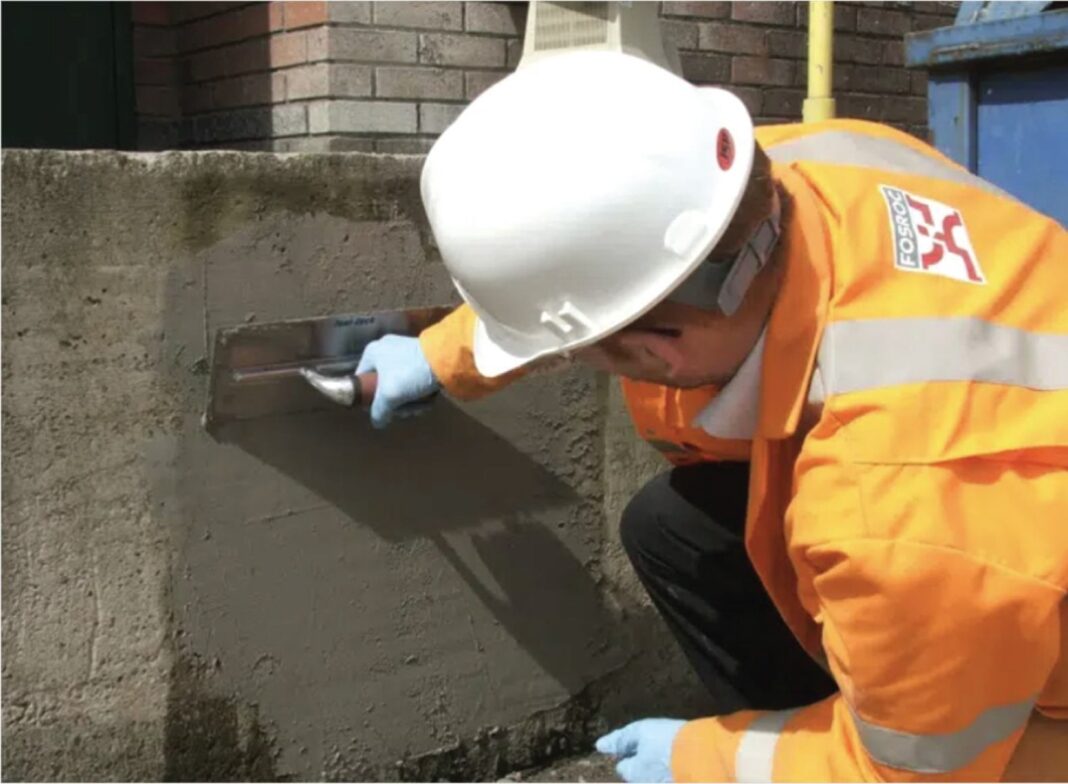
Fosroc Renderoc RG for Concrete Repair and Structural Strengthening
Damaged reinforced concrete structures may require repair and strengthening to restore their structural performance and serviceability. Common applications include the rehabilitation of columns, beams, slabs and piles, where concrete deterioration, inadequate capacity or changes in loading conditions may necessitate additional material around existing structural members. Restricted access and difficulties in compacting repair materials can also affect the execution of these works.
Fosroc Renderoc RG is a general-purpose, non-shrink cementitious microconcrete developed for repairing damaged reinforced concrete elements and carrying out structural strengthening work. Supplied as a pre-packed blend of dry powders, it requires the addition of clean water on site to produce a free-flowing repair material. Its formulation uses Portland cement, graded aggregates, fillers and additives that provide controlled expansion in the plastic state while minimising water demand.
Non-Shrink Formulation and High Strength
Renderoc RG incorporates a gaseous expansion system that compensates for shrinkage and settlement while the material remains in its plastic state. This characteristic supports the filling of repair sections and helps maintain contact between the repair material and the prepared substrate.
The low water requirement contributes to high early strength and long-term durability. The cured material also offers high ultimate strength and low permeability, making it suitable for selected structural repair and rehabilitation applications.
As a pre-packed product, Renderoc RG helps reduce variations associated with site-batched repair mixes. Its flow characteristics allow placement in locations where conventional concrete placement and vibration may be difficult.
Applications in Structural Repair
Renderoc RG is intended for economical repairs to damaged reinforced concrete elements, particularly where access is restricted or vibration of the placed material is difficult or impractical.
Typical applications include:
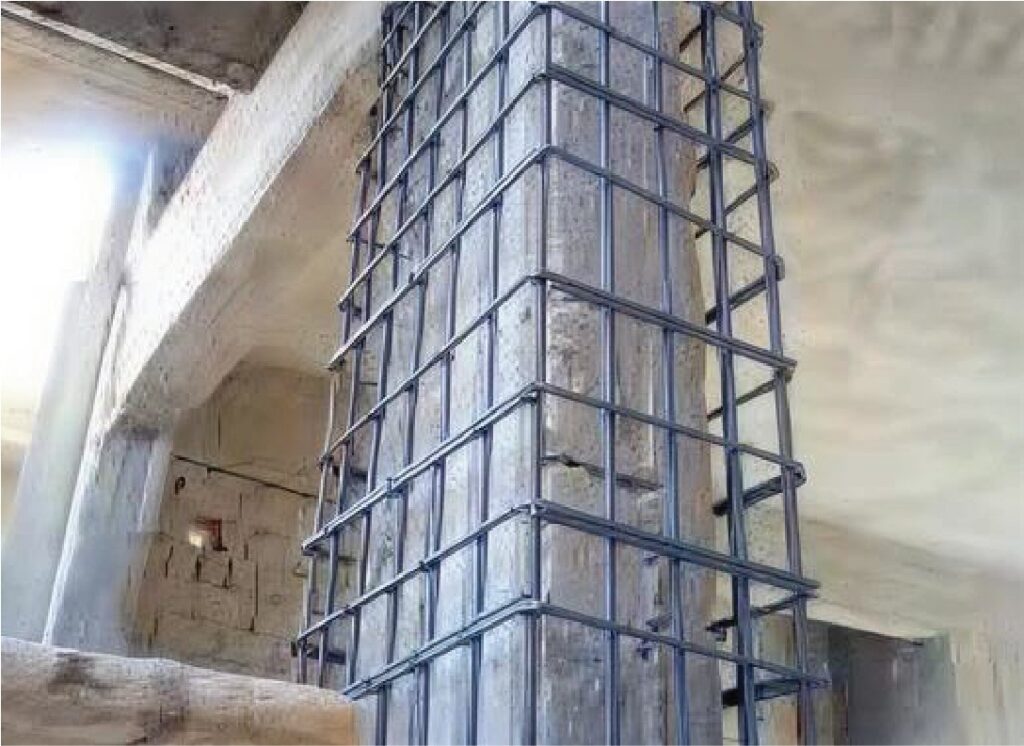
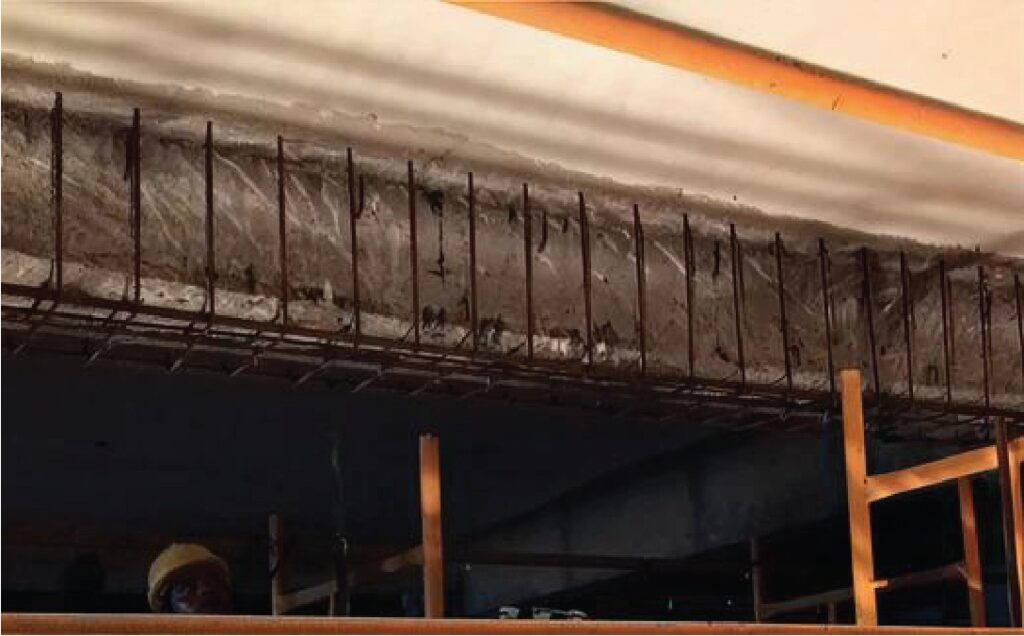
- Jacketing of reinforced concrete columns, beams and slabs
- Strengthening of existing concrete structural members
- Repair of damaged reinforced concrete sections
- Pile top encapsulation
- Concrete encasement and section build-ups
- Structural rehabilitation requiring pourable repair microconcrete
The material can be pumped or poured into prepared formwork, subject to the requirements of the application and project design.
Concrete Column Jacketing Procedure
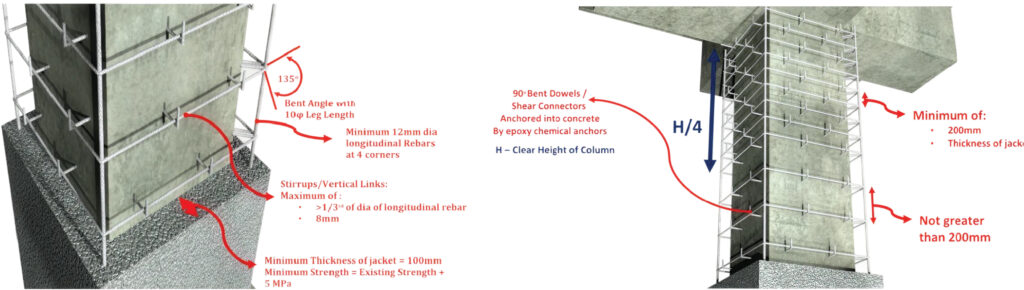
Column jacketing involves adding a designed layer of concrete or microconcrete around an existing column, generally with additional reinforcement and appropriate connections to the original structure. Renderoc RG can be used as the non-shrink microconcrete in suitable encasement applications.
The work begins with a structural assessment to establish the strengthening requirements, reinforcement arrangement and connection details. Existing reinforcement is mapped, and drilling locations are marked according to the approved design.
The general application sequence includes:
- Surface preparation: Remove loose and damaged concrete until a sound substrate is reached. Clean the surface and achieve suitable roughness for mechanical interlock.
- Drilling and anchoring: Drill holes at designated locations, remove dust and loose particles, and install reinforcement anchors using the specified Fosroc Lokfix E series anchoring system.
- Reinforcement installation: Fix the additional reinforcement according to the structural design and ensure that the bars are adequately anchored.
- Reinforcement protection: Apply Nitozinc® to the reinforcement as specified, keeping connection areas clear where required.
- Bonding preparation: Apply the specified bonding agent, such as Nitobond EP, in accordance with the approved system and project requirements.
- Formwork installation: Provide watertight formwork with suitable air vents to allow trapped air to escape during placement.
- Mixing and placement: Mix Renderoc RG with approximately 3.75–4 litres of clean water per bag, following the current product instructions, until a homogeneous mix is obtained. Place the material using the specified pouring or pumping method.
- Formwork removal and curing: Remove the formwork after the material has set sufficiently and cure the repaired section using water or a suitable curing compound as specified.
The reinforcement arrangement, anchoring details, bonding system and placement method must follow the approved structural design and the manufacturer’s current technical guidance.
Points to Consider During Application
Successful concrete repair depends on substrate preparation, reinforcement treatment, placement and curing, in addition to the performance of the repair material.
Important considerations include:
- Conduct a structural assessment before starting strengthening work.
- Remove deteriorated concrete and expose a sound substrate.
- Clean and passivate exposed reinforcement to reduce the risk of reinforcement corrosion and the halo effect.
- Ensure adequate surface roughness for mechanical bonding.
- Bring the prepared substrate to a saturated surface-dry (SSD) condition where required by the application specification.
- Select compatible bonding agents, taking care when using epoxy bonding agents in microconcrete or grout systems.
- Install additional reinforcement and anchoring systems according to the approved design.
- Ensure continuous placement to minimise the risk of cold joints.
- Provide appropriate compaction where required by the placement method.
- Complete curing using water or a compatible curing compound in accordance with the product instructions.
Performance Advantages
Renderoc RG combines flowability and non-shrink characteristics for structural repair work. Its key features include controlled expansion in the plastic state, rapid strength gain, high ultimate strength and low permeability after curing. The material can be pumped or poured into restricted locations, reducing the need for vibration in suitable applications.
The product contains no chloride admixture and is described as resistant to alkali-silica reaction (ASR) or alkali-aggregate reaction (AAR). These characteristics support its use in specified concrete repair and strengthening systems, subject to project conditions and the manufacturer’s recommendations.
Application Across Infrastructure and Industrial Structures
Concrete repair and strengthening are required across a range of infrastructure and industrial assets, including buildings, transport structures, foundations and other reinforced concrete elements. Column, beam and slab jacketing may be used where an engineered strengthening scheme calls for additional section capacity, while pile repair and encapsulation may be required to address specific foundation conditions.
Fosroc Renderoc RG provides a pre-packed, cementitious microconcrete option for these applications where a non-shrink, free-flowing repair material is specified. Its performance depends on appropriate structural design, substrate preparation, reinforcement detailing, mixing, placement and curing.
For repair and rehabilitation projects, selecting a compatible microconcrete and following the specified application procedure are essential to achieving the intended structural performance and service life.

Fosroc Chemicals (India) Private Limited
Address: Embassy Point No.150, 2nd Floor, Infantry Road, Bangalore – 560001
Tel: +91 80 4252 1900 | Fax: +91 80 2228 1510
Email: enquiry.india@fosroc.com | Website: www.fosroc.com






