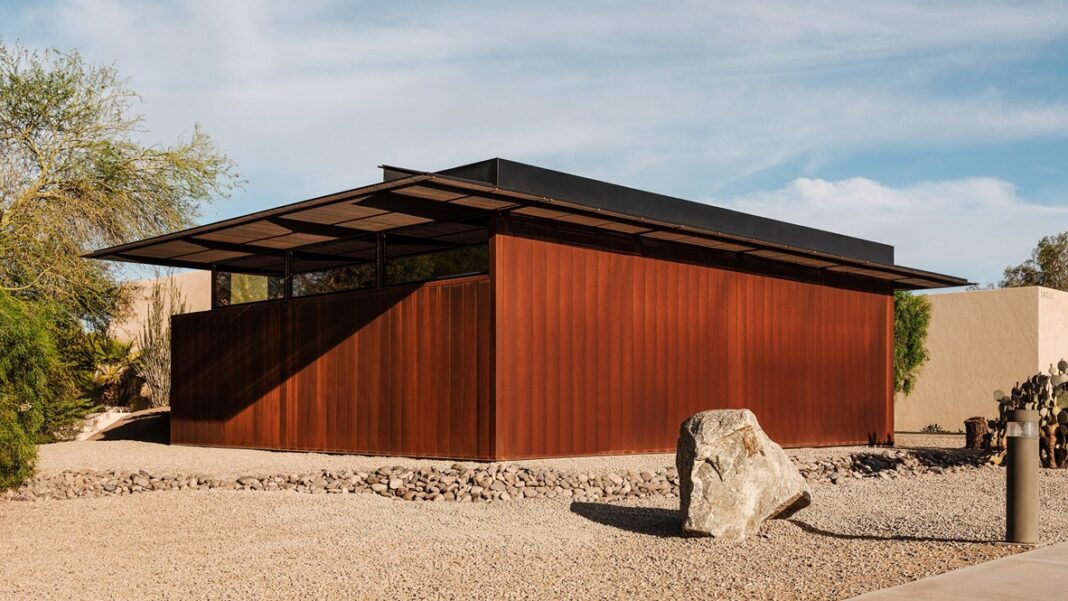
The newly expanded Cocopah Museum and Cultural Center in Arizona stands as a thoughtful example of how contemporary architecture can respectfully connect with Indigenous heritage, climate-responsive design, and material authenticity. Designed by California-based studio EYRC Architects, the standalone extension combines weathering steel, pigmented concrete, shaded openings, and natural materials to create a building deeply rooted in the landscape and traditions of the Cocopah Nation.
Located near Yuma and the Colorado River along the present-day US-Mexico border, the museum preserves and presents the history, traditions, and cultural identity of the Indigenous Cocopah people. The newly added structure was developed as an independent gallery space positioned near the original museum built in 1996. Despite being a modestly scaled project, the extension delivers a strong architectural presence through its carefully selected materials and climate-sensitive design approach.
Architecture Inspired by Traditional Cocopah Dwellings
The 1,200-square-foot gallery has been designed with an orthogonal layout and a broad overhanging flat roof that references the historically sustainable homes of the Cocopah people. Instead of replicating traditional forms directly, the architects adopted a contemporary interpretation that respects cultural memory while serving modern museum functions.
The structure is separated from the older museum building through a landscaped open space, helping create a calm transition between the old and new. This outdoor zone also reinforces the connection between architecture and the surrounding desert environment.
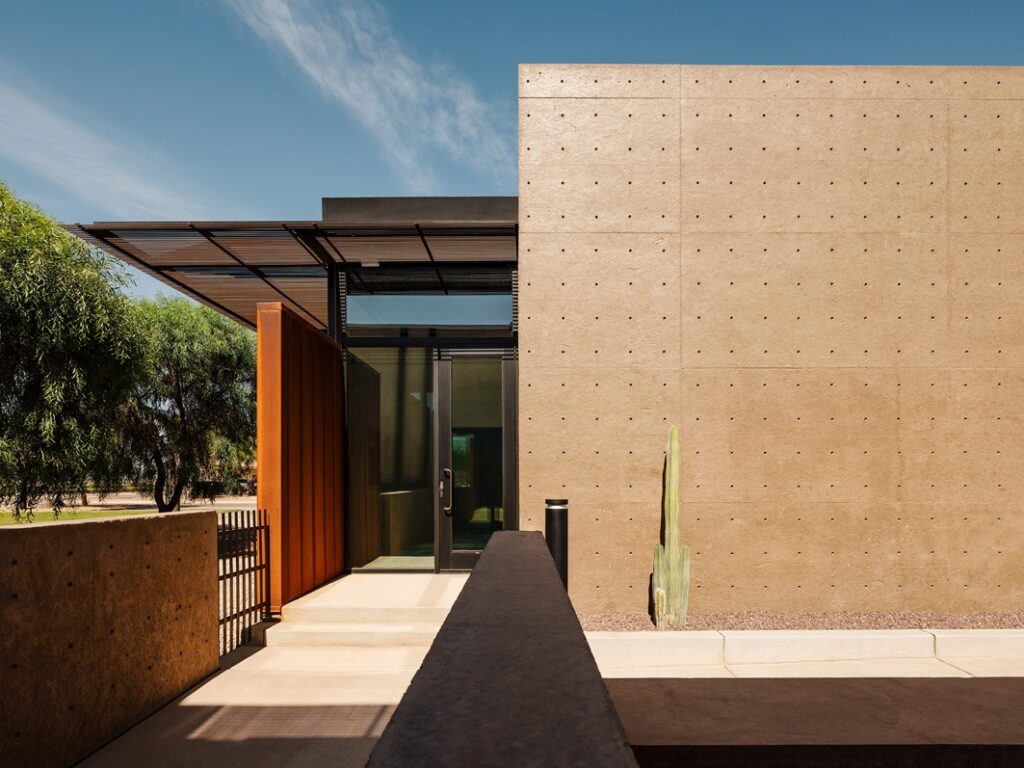
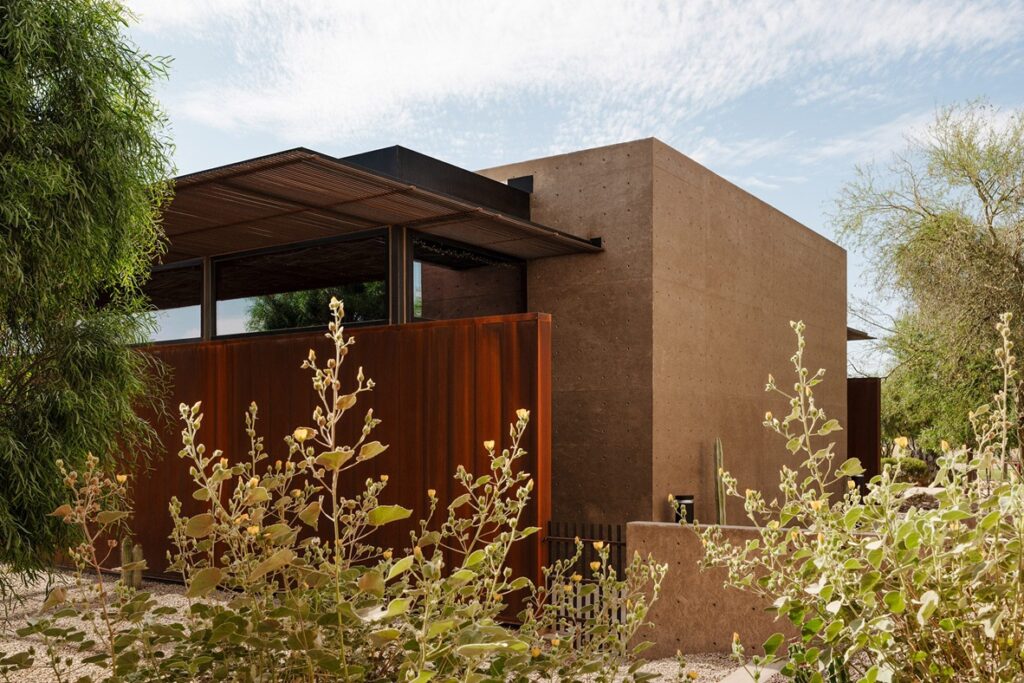
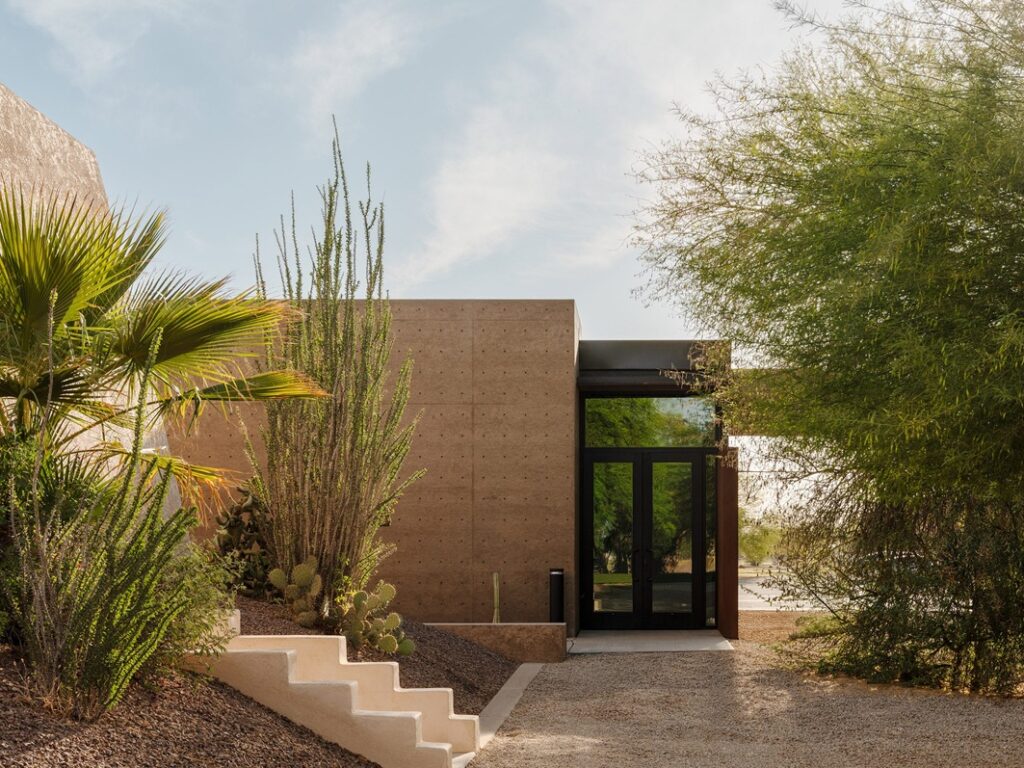
The main building mass uses pigmented cast-concrete walls that reflect the earthy tones of the Arizona landscape. According to the architects, the colour palette intentionally recalls the natural earthen walls historically used in Indigenous Cocopah construction.
Key Design Features of the Museum Extension
- Weathering steel panels wrap three sides of the structure and will naturally develop a patina over time.
- Pigmented concrete walls visually blend the building into the desert surroundings.
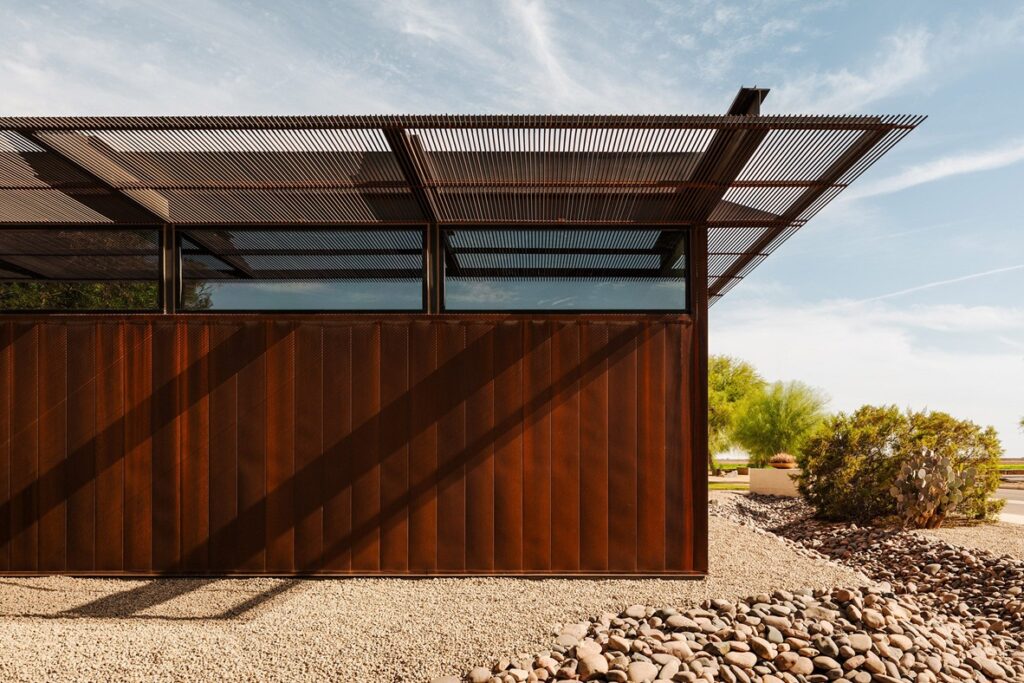
- Clerestory windows allow controlled daylight into the gallery spaces.
- An overhanging roof and steel trellis help reduce solar heat gain.
- Gravel landscaping and cactus planting reduce maintenance requirements.
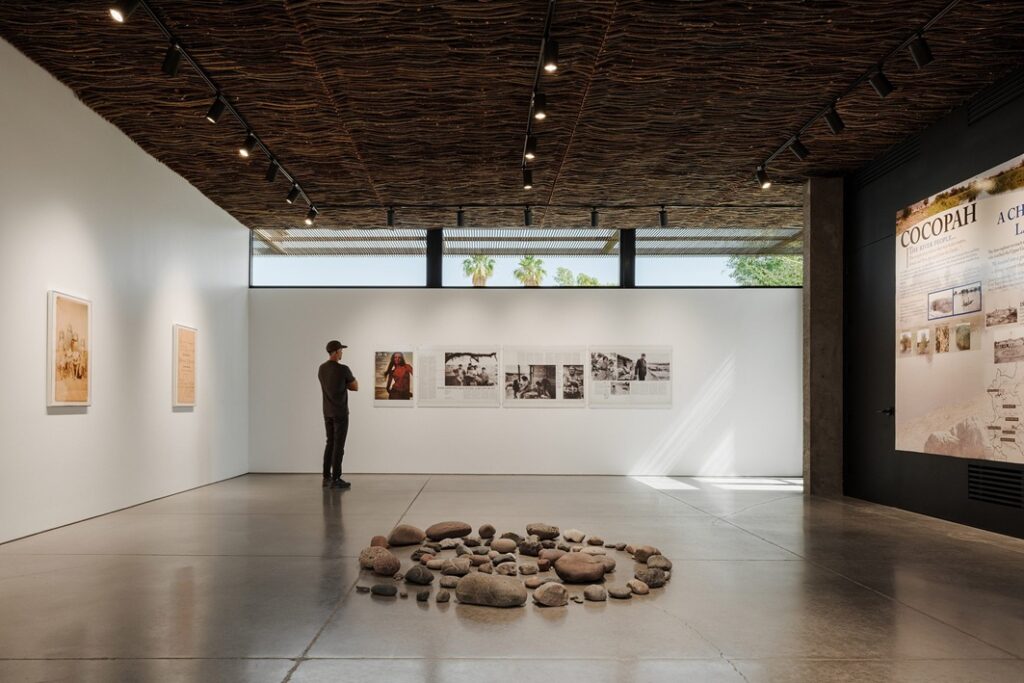
- Interior willow lattice ceilings reference native vegetation found near the Colorado River.
- The building envelope improves thermal insulation and energy efficiency.
Weathering Steel Creates a Strong Visual Identity
One of the project’s most striking elements is the use of weathering steel cladding. The vertical steel panels create a rugged, textured appearance that evolves with time as the material naturally oxidises and forms a protective surface layer.
This changing finish allows the building to age gracefully within the harsh desert environment while reducing long-term maintenance requirements. Beyond aesthetics, the weathering steel also reinforces the museum’s connection to the landscape, reflecting tones similar to desert rock formations and dry earth.
The architects used the material strategically to balance permanence with natural transformation. The result is a structure that feels contemporary yet timeless.
Climate-Responsive Design for Desert Conditions
The Arizona desert climate played a major role in shaping the architectural response. Rather than relying heavily on mechanical cooling systems, the design incorporates several passive strategies to improve comfort and reduce energy demand.
The concrete walls form a thermally stable envelope that minimises heat transfer during extreme daytime temperatures. Clerestory openings bring controlled daylight into the interiors while limiting direct solar exposure.
A distinctive steel trellis constructed from reinforcing bars extends above the windows, filtering sunlight and creating additional shading. The design references traditional woven structures while introducing a modern industrial interpretation.
Low-water landscaping using gravel beds and desert plants further supports environmental sustainability by reducing irrigation needs and long-term maintenance.
Interior Spaces Rooted in Nature and Tradition
Inside the gallery, the ceiling features a woven willow lattice inspired by vegetation traditionally found along the Colorado River. This detail introduces warmth and texture into the exhibition space while symbolically linking the museum to the ecological history of the region.
Natural materials and restrained finishes allow the exhibitions and storytelling elements to remain the focus of the visitor experience. The interiors feel calm, grounded, and closely connected to the cultural narrative of the Cocopah people.
The project demonstrates how even small architectural interventions can create meaningful emotional and cultural impact when materiality, context, and community participation are carefully considered.
Collaboration with the Cocopah Nation
A defining aspect of the project was the continuous consultation process between EYRC Architects and the Cocopah Nation. The design team worked closely with community members throughout the project to ensure the extension represented Indigenous identity in an authentic and respectful way.
Rather than imposing a purely contemporary architectural language, the project emerged through dialogue and listening. According to the architects, the goal was to create a building that allows the community to share its own story through space, materials, and atmosphere.
Both the architectural studio and the contractor contributed their services pro bono, reflecting a strong commitment to cultural preservation and community engagement.
Why This Project Stands Out
The Cocopah Museum extension is significant not because of monumental scale, but because of its sensitivity and clarity of purpose. It shows how architecture can:
- Respect Indigenous culture without becoming overly literal.
- Use durable materials that respond naturally to climate.
- Integrate sustainability through passive environmental strategies.
- Create strong visual identity using minimal architectural gestures.
- Balance contemporary aesthetics with historical references.
- Support storytelling and cultural preservation through design.
In an era where many cultural buildings compete for visual attention through dramatic forms, the Cocopah Museum extension takes a quieter and more grounded approach. The building succeeds through restraint, material honesty, and contextual sensitivity.
A Meaningful Example of Contemporary Cultural Architecture
The new Cocopah Museum and Cultural Center extension demonstrates how architecture can become a bridge between heritage, environment, and modern design thinking. Through the use of weathering steel, pigmented concrete, passive cooling strategies, and collaborative planning, EYRC Architects created a building that respects both land and community
Reference https://www.dezeen.com/