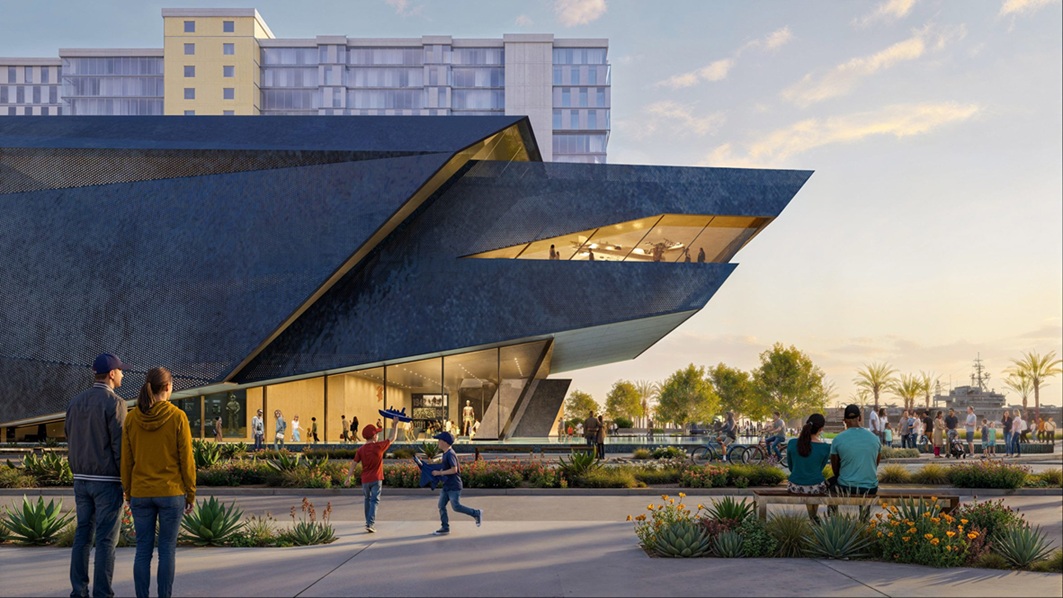
American architecture studio ZGF Architects has unveiled plans for a dramatic new Navy SEAL Museum on the waterfront of San Diego. Designed to reflect the precision, discipline, and stealth associated with the elite military force, the museum will become a major cultural and civic landmark along the city’s busy harborfront. Scheduled for completion by 2032, the project combines bold architectural expression with educational and public engagement spaces that connect visitors to the history and legacy of the United States Navy SEALs.
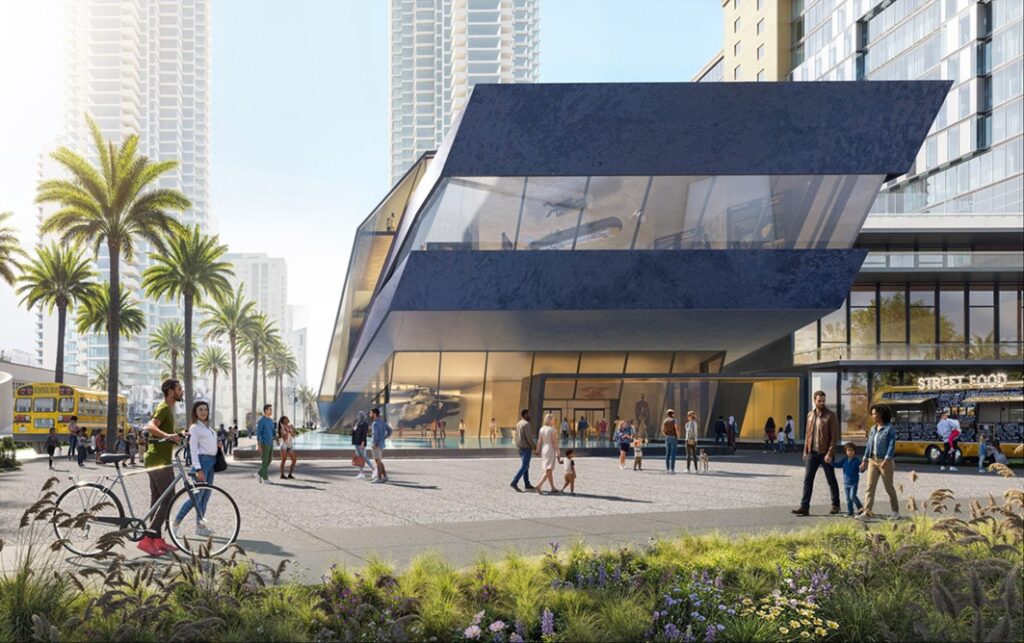
Located near Lane Field Park and the Embarcadero promenade, the proposed museum is designed to strengthen pedestrian links between the waterfront and surrounding urban areas. The architecture responds directly to its maritime setting while drawing inspiration from contemporary military design language. Sharp geometries, metallic surfaces, angled forms, and carefully controlled openings give the building a stealth-like appearance that mirrors the operational character of the SEAL teams.
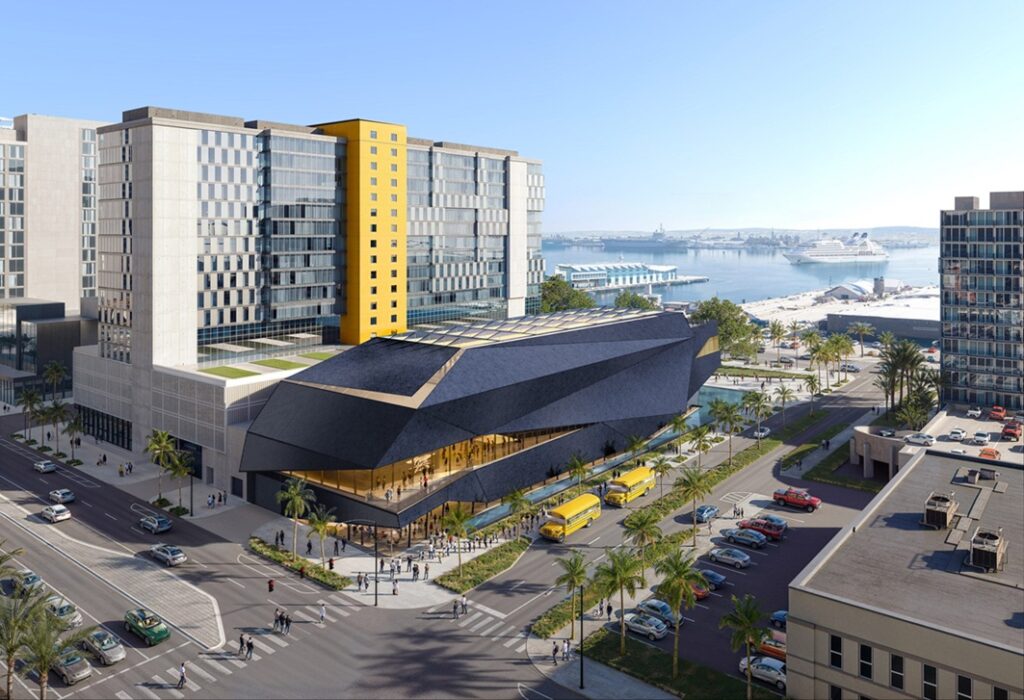
According to the architects, the design focuses on creating a strong visual identity without overwhelming the surrounding neighborhood. The museum’s sloping structure reduces the building’s perceived height and allows it to integrate more comfortably into the waterfront skyline. Instead of relying on excessive ornamentation, the building communicates strength through precision and restraint.
One of the project’s most striking features is its angular façade, which uses perforated metal screens, ribbon-like window openings, and rigid forms to create shifting patterns of light and shadow throughout the day. These carefully composed exterior elements are intended to symbolize tactical precision and physical endurance, qualities closely associated with Navy SEAL operations.
Key Architectural Features
- Angular metallic façade inspired by stealth technology
- Sloping form designed to reduce visual mass
- Large 65-foot-tall central atrium
- Reflecting pool inspired by SEAL water operations
- Rooftop terrace with harbor views
- Educational and interactive exhibition spaces
- Public café and gathering areas
- Strategic connection to San Diego’s waterfront promenade
At the center of the museum will be a dramatic multi-level atrium that acts as the heart of the visitor experience. Guests will enter through a relatively compressed entry point before emerging into the soaring vertical space, creating a carefully choreographed sense of transition and discovery. Suspended artifacts within the atrium will provide visitors with immersive visual experiences across several floors, allowing the museum itself to become part of the storytelling process.
The architects explained that movement through the museum has been carefully planned to guide visitors emotionally and spatially. Openings placed strategically throughout the building will reveal glimpses of exhibits from the outside, connecting the internal museum narrative with the surrounding city and harbor. This design approach creates moments of curiosity and anticipation while reinforcing the relationship between the museum and the public realm.
Outside the museum, landscape elements also contribute to the project’s symbolic identity. A reflecting pool near the entrance is designed to evoke the image of Navy SEAL teams emerging from water during covert missions. This subtle gesture reinforces the themes of stealth, resilience, and tactical expertise without relying on overt military symbolism.
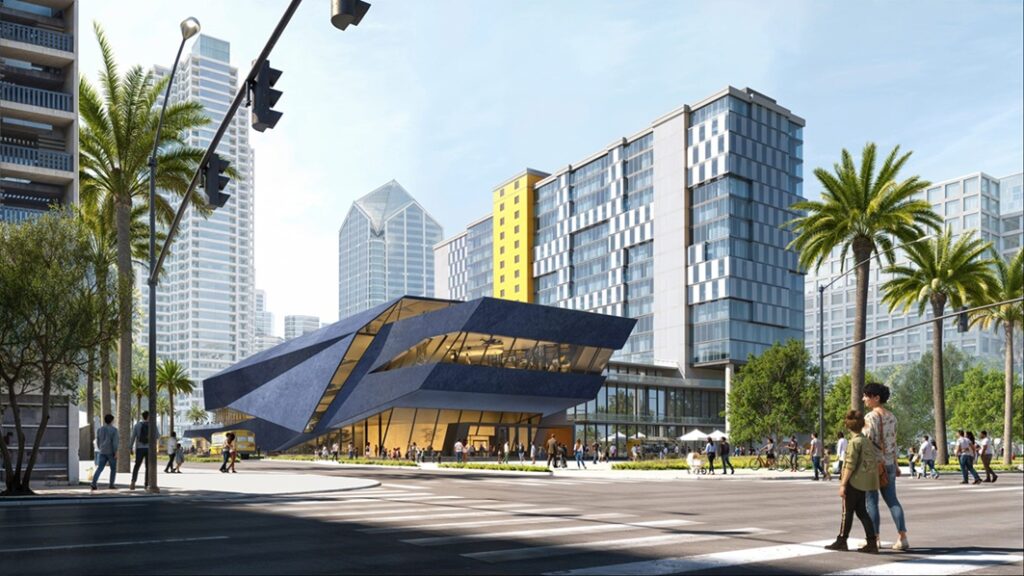
The project is not solely focused on commemoration. It is also intended to function as an active public and educational institution. The quieter northeast edge of the building will house youth learning spaces, community-focused educational facilities, interactive galleries, and a café. These programs aim to make the museum accessible to a wide audience, encouraging visitors to engage with military history through exhibitions, workshops, and public events.
Public-Focused Spaces Included in the Design
- Interactive history galleries tracing SEAL origins from World War II
- Educational facilities for students and young visitors
- Flexible public programming areas
- Community gathering zones
- Harbor-facing rooftop event space
- Café integrated into the museum experience
The rooftop terrace will provide panoramic views of the San Diego harbor and support events, museum functions, and public gatherings. Positioned along the busy Embarcadero corridor, the museum is expected to benefit from steady pedestrian traffic from nearby attractions including the USS Midway Museum and the Maritime Museum district. Its location strengthens its role as both a cultural destination and an extension of the city’s evolving waterfront experience.
The museum also reflects a broader trend in contemporary architecture where cultural buildings are designed to create immersive emotional experiences rather than simply housing exhibits. In this project, architecture, landscape, lighting, and circulation all work together to support storytelling and public engagement.
Images- dezeen.com