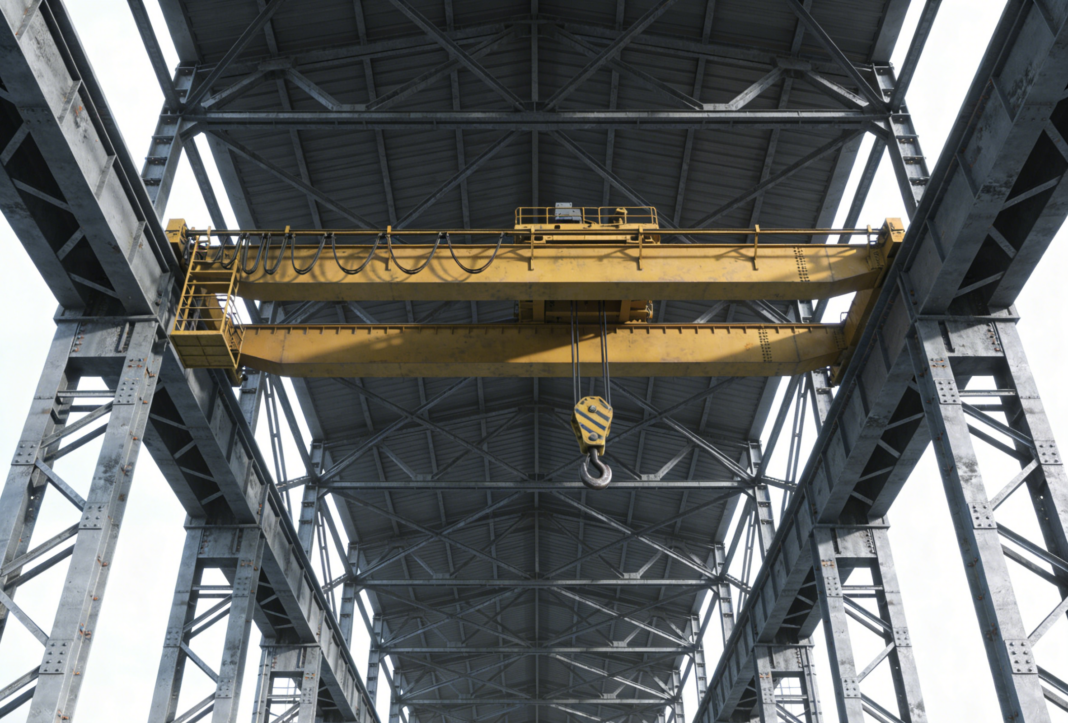
For small and medium manufacturing workshops, repair factories, and assembly plants, a workshop overhead crane is the core equipment for efficient material handling. However, many business owners focus only on price and rated load when purchasing lifting equipment and often overlook critical factors such as workshop adaptability, duty cycle alignment, and long-term operating costs.
As a result, the crane may suffer from:
- Low productivity
- Frequent mechanical breakdowns
- Hidden safety hazards
- Shortened service life
- Secondary replacement or reinforcement costs
If you want to invest in a cost-effective, durable, and fully adaptable workshop overhead crane, you must avoid blind selection and incorrect assumptions. This article provides professional selection standards, application-based matching logic, and error-avoidance strategies that many traditional buying guides fail to cover.
Why a Customized Workshop Overhead Crane Is Better Than Universal Lifting Equipment
Many workshop managers consider forklifts, portable jib cranes, or manual lifting tools as cost-saving alternatives. While these devices work in certain scenarios, they have natural limitations in long-term industrial operations. In contrast, a professional overhead crane offers unmatched advantages for continuous, standardized, and high-precision production lines.
1. Limitations of Forklifts and Portable Lifting Tools
Forklifts
- Occupy valuable floor space
- Easily collide with production equipment or stored materials
- Require skilled drivers
- Not suitable for vertical lifting or repetitive point-to-point handling
Portable lifting tools (chain blocks, small hoists, etc.)
- Only suitable for intermittent, low-frequency usage
- Cannot support heavy-duty or multi-shift operating environments
- Have limited lifting height and positioning accuracy
Conclusion: These tools are supplementary—not replacements—for a workshop overhead crane.
2. Why Workshop Overhead Cranes Are the Optimal Long-Term Solution
A workshop overhead crane features an overhead running structure, which means it:
- Does not occupy floor area
- Provides three-dimensional full-coverage material handling
- Supports high-frequency and repetitive lifting tasks
- Increases operational safety and reduces labor intensity
- Improves workflow efficiency and workshop space utilization
Whether your workshop is:
- A small repair shop with low ceilings
- A medium-sized assembly workshop with dense equipment
- A heavy-duty fabrication or machining plant
There are highly targeted overhead crane configurations available. Options include:
- Single girder overhead cranes for light–medium duty
- Double girder cranes for heavy-duty, high-lift scenarios
- Underslung suspension cranes for low-height workshops
- Freestanding modular cranes when the building structure cannot support loads
This adaptability is the main reason customized overhead cranes outperform “universal” or one-size-fits-all lifting equipment.
5 Most Common Workshop Overhead Crane Selection Mistakes to Avoid
Most crane failures and inefficient usage are caused by incorrect model selection, not by equipment quality. Based on real applications across hundreds of workshop types, these are the five most common mistakes companies make:
1. Focusing Only on Load Capacity and Ignoring Duty Cycle Classification
Many buyers look only at the lifting capacity—for example, 3t, 5t, or 10t—while ignoring the duty class.
However, a 5-ton overhead crane with:
- A3 light-duty → suitable only for occasional maintenance tasks
- A4 medium-duty or A5 heavy-duty → designed for continuous daily lifting
Using a light-duty crane in a high-frequency environment results in:
- Rapid hoist wear
- Motor overheating
- Frequent breakdowns
- Operation safety hazards
👉 Correct principle: Always evaluate operation frequency, average load, and work cycles—not just the maximum load.
2. Neglecting Workshop Height Limits and Structural Load Capacity
Standard overhead cranes have fixed installation requirements. Common issues include:
- Insufficient ceiling height, causing limited lifting stroke
- Roof beams unable to bear runway loads
- Interference with existing HVAC, pipelines, or lighting
Solutions include:
- Low-headroom hoists
- Underslung (suspension) cranes
- Lightweight modular cranes
- Double girder cranes for high-lift needs
Correct evaluation of structural conditions prevents installation delays and modification costs.
3. Ignoring Workflow and Equipment Layout During Crane Planning
Many workshops purchase cranes before planning production layout. This leads to problems like:
- Dead zones where the crane cannot reach
- Trolley hitting machines or shelves
- Inefficient material flow
A professional layout analysis should consider:
- Workstation placement
- Machine perimeter safety zones
- Material flow direction
- Storage areas and assembly lines
A well-matched crane layout greatly improves efficiency.
4. Selecting Only One Crane When Multiple Smaller Units Are More Efficient
In long workshops or multi-station lines, a single crane may cause:
- Bottlenecks
- Operators waiting for a crane
- Low overall efficiency
Instead of one 10-ton crane, two 5-ton cranes may:
- Handle tasks in parallel
- Improve safety
- Reduce waiting time
- Lower maintenance downtime
Always evaluate operating independence and cycle time.
5. Buying Based Only on Price Instead of Lifetime Operating Cost
A low-priced crane often uses:
- Inferior motors
- Basic electrical systems
- No frequency inverter
- Lower safety standards
This leads to:
- Higher maintenance cost
- Shorter lifespan
- More downtime
- Higher accident risk
Total ownership cost (TOC) is always more important than the initial purchase price.
How to Match the Best Workshop Overhead Crane for Different Scenarios
Below are typical workshop types and recommended configurations:
| Workshop Scenario | Typical Challenges | Recommended Overhead Crane Type | Key Advantages |
| Low-Ceiling Repair Workshops | Limited headroom; restricted installation space | Underslung Suspension Overhead Crane | Minimal headroom requirement; fits existing roof beams; maximizes lifting height |
| Medium-Sized Assembly Workshops | Frequent point-to-point material transfer; need stable, accurate positioning | Single Girder Overhead Crane (A3–A4 duty) | Cost-effective; efficient for medium-frequency operations; smooth control |
| High-Frequency Production Lines | Continuous lifting, long operating hours, repetitive cycles | Single/Double Girder Overhead Crane (A4–A5 duty) | Designed for higher duty cycles; durable motors; reduced downtime |
| Heavy-Duty Fabrication or Metal Processing Workshops | Heavy loads, large components, high lifting height requirements | Double Girder Overhead Crane | Higher load capacity; stable heavy-duty lifting; supports advanced features like anti-sway |
| Workshops Without Adequate Building Support | Weak roof/column load-bearing capacity; temporary or rented facilities | Freestanding Modular Overhead Crane System | No reliance on building structure; relocatable; ideal for weak or temporary buildings |
| Workshops with Dense Equipment Layout | Narrow aisles; high risk of collision; limited floor space | Overhead Crane (Top-Running) | Full overhead coverage; eliminates floor obstruction; safer for dense environments |
Long-Term Operation Value of a Properly Selected Workshop Overhead Crane
A correctly matched crane delivers significant long-term benefits:
· A correctly selected workshop overhead crane significantly reduces long-term maintenance, repair frequency, and spare parts consumption, lowering the overall lifecycle cost of the equipment.
· It enhances production efficiency through stable operation, faster material flow, and minimized downtime, directly improving workshop throughput and output stability.
· Proper crane selection increases operational safety by reducing mechanical stress, preventing overload conditions, and ensuring consistent performance under actual working conditions.
· It improves the overall working environment by reducing manual labor intensity, optimizing workflow routes, and ensuring smoother, safer, and more ergonomic daily operations.
Final Words
Choosing the right workshop overhead crane is not just about lifting capacity or price—it is about ensuring compatibility with your workshop structure, production rhythm, safety requirements, and long-term business development.
By avoiding common selection mistakes and matching the crane to your actual working conditions, you will significantly improve productivity, reduce operating costs, and extend the equipment’s service life.