
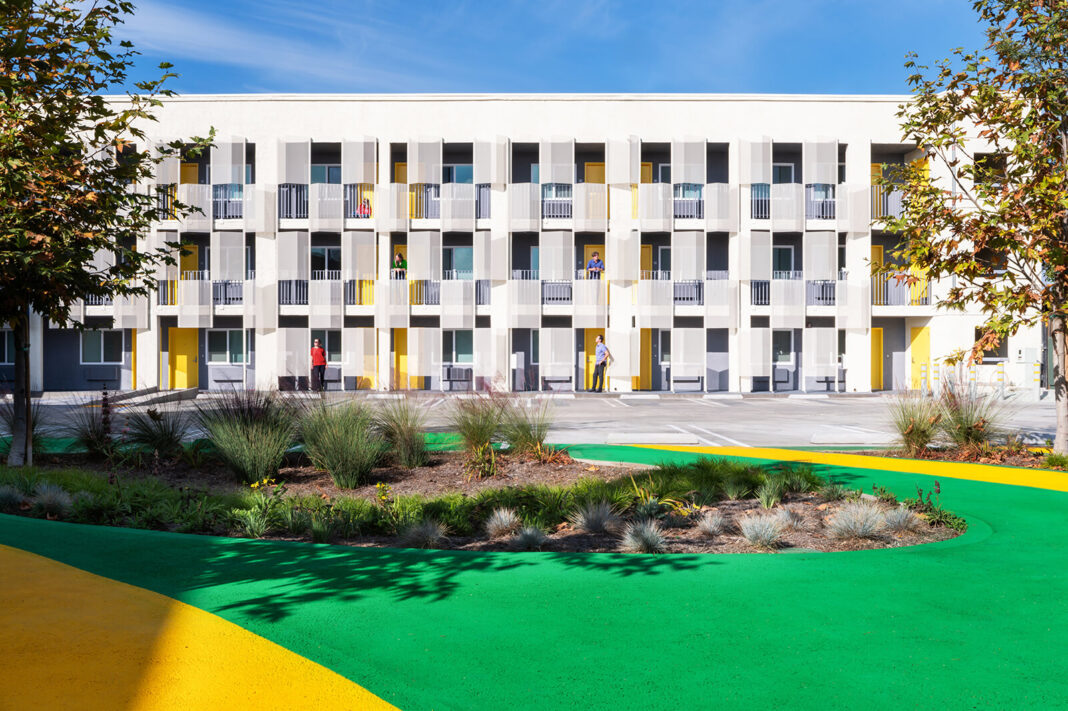
Urban housing crises across global cities have pushed architects to rethink how underused or deteriorating structures can be reactivated into dignified living environments. One compelling example is the transformation of a dilapidated motel into Hub City Heights in East Compton, California. Designed by the Los Angeles-based practice Kadre Architects and featured on STIRworld, the project demonstrates how high-density housing can be achieved through adaptive reuse, community-centered planning, and climate-sensitive design thinking.
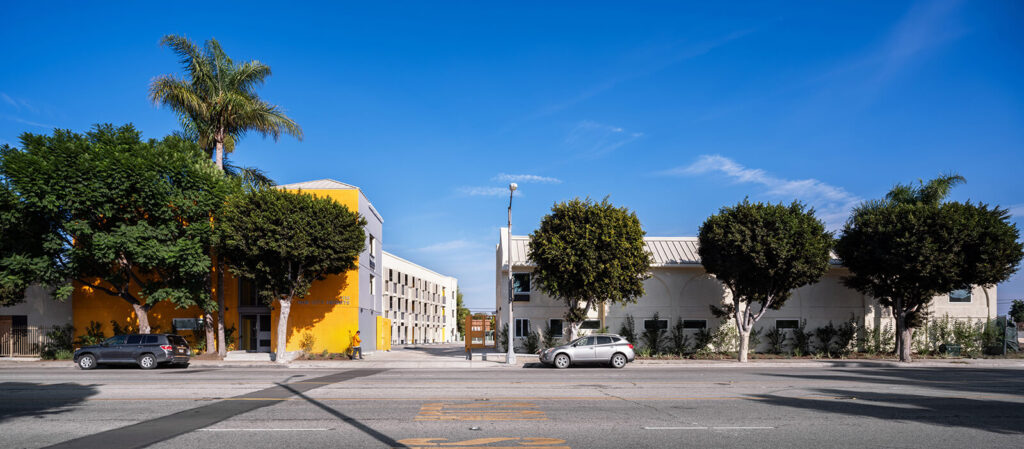
Rather than demolishing the existing structure, the architects chose to reimagine it as a 40-unit permanent supportive housing complex, primarily serving individuals experiencing homelessness. The result is not just a housing upgrade but a spatial and social transformation that redefines what “high-rise or multi-unit living” can mean in constrained urban contexts.
From Motel to Community Infrastructure
The original site was a neglected motel, a building typology often associated with decline in suburban American landscapes. Instead of treating it as waste, the design team approached it as a structural framework capable of supporting new life.
Key interventions included:
- Retaining the basic building massing and structure
- Reorganizing circulation to prioritize community interaction
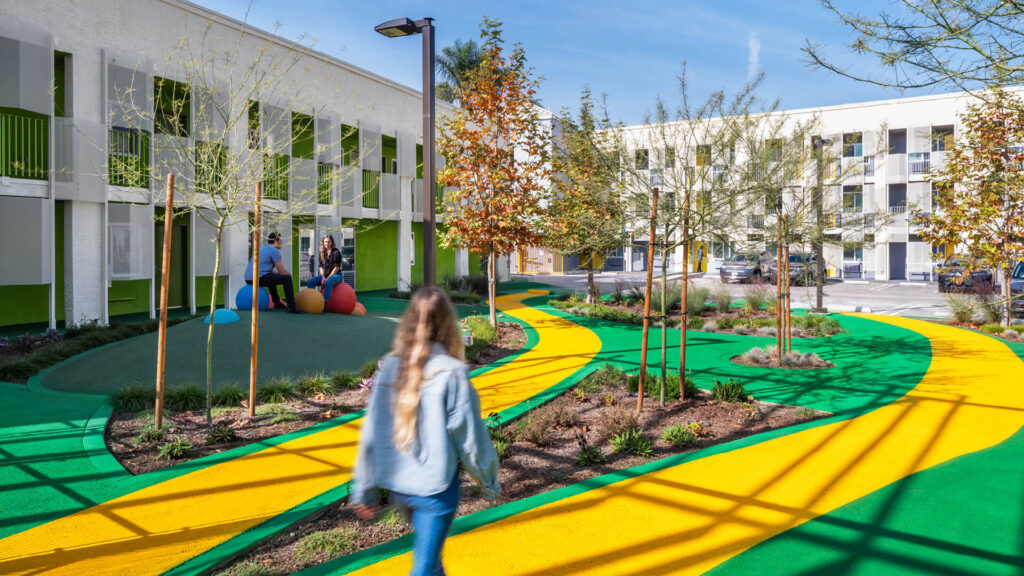
- Converting parking zones into shared public landscapes
- Introducing layered support spaces for residents
This adaptive reuse strategy significantly reduced construction waste while accelerating project delivery—an important factor in public housing developments funded under programs like Project Homekey.
More importantly, the project reframes high-density housing not as vertical stacking alone but as a horizontal-vertical hybrid system, where social life is distributed across courtyards, corridors, and semi-public thresholds.
Spatial Design Strategy: Beyond the Building Envelope
A defining feature of Hub City Heights is its emphasis on community-first spatial planning. Instead of treating circulation as a purely functional necessity, the architects designed it as a social connector.
Key spatial ideas include:
- Central courtyard activation: The vast former parking area is converted into a landscaped communal courtyard
- Dual building blocks: Two cuboidal volumes of three and two storeys organize density without overwhelming scale
- Pedestrian prioritization: Internal streets allow direct access to units, reducing hierarchy between residents
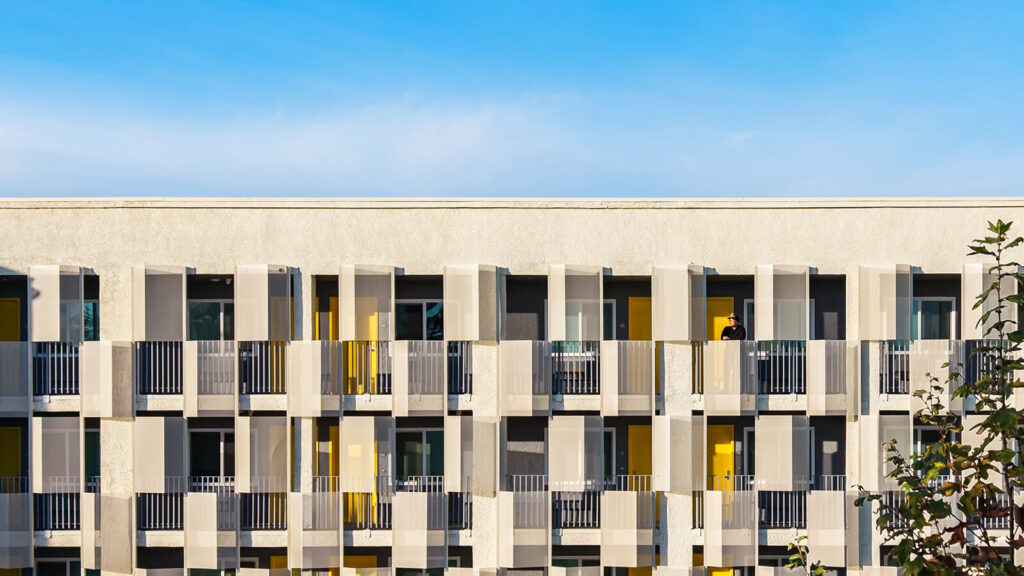
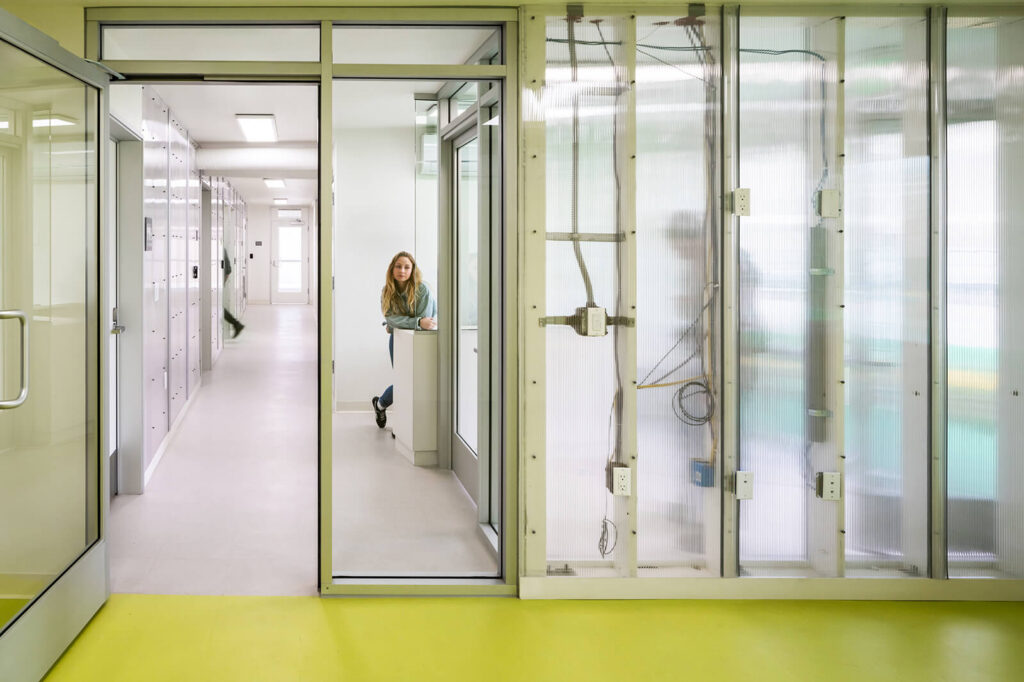
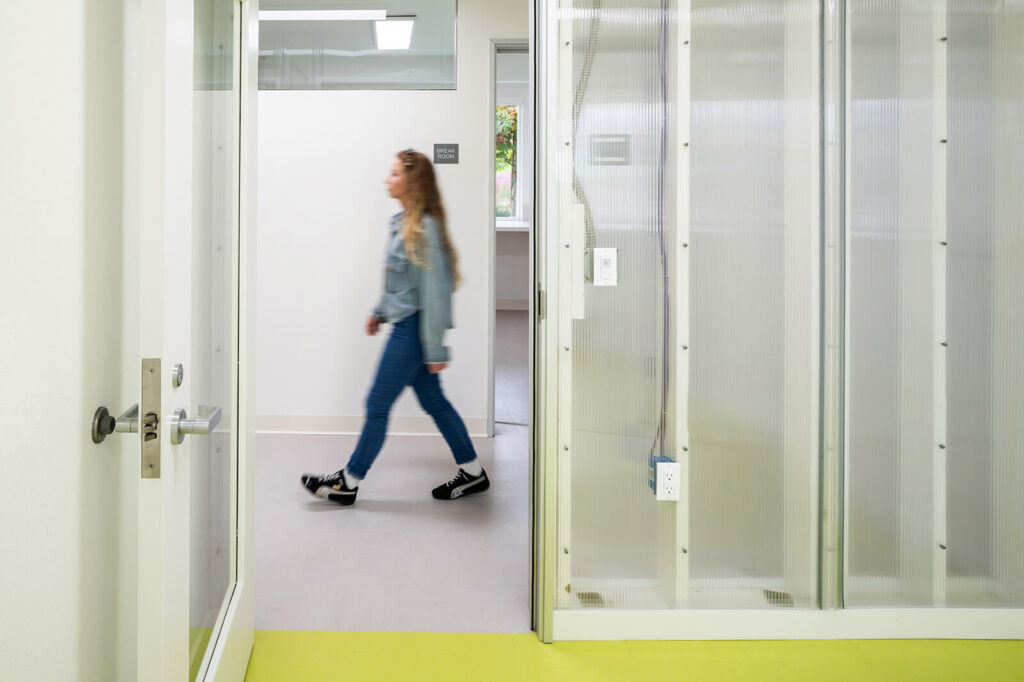
- Layered visibility: Semi-transparent materials create visual continuity between private and shared zones
These interventions ensure that movement through the complex becomes an everyday opportunity for interaction rather than isolation.
Architectural Expression and Material Identity
The architectural language of the project avoids institutional sterility, which is often common in emergency or affordable housing. Instead, it adopts a more expressive yet controlled aesthetic.
Notable design elements include:
- Bright facade articulation that improves visibility and identity
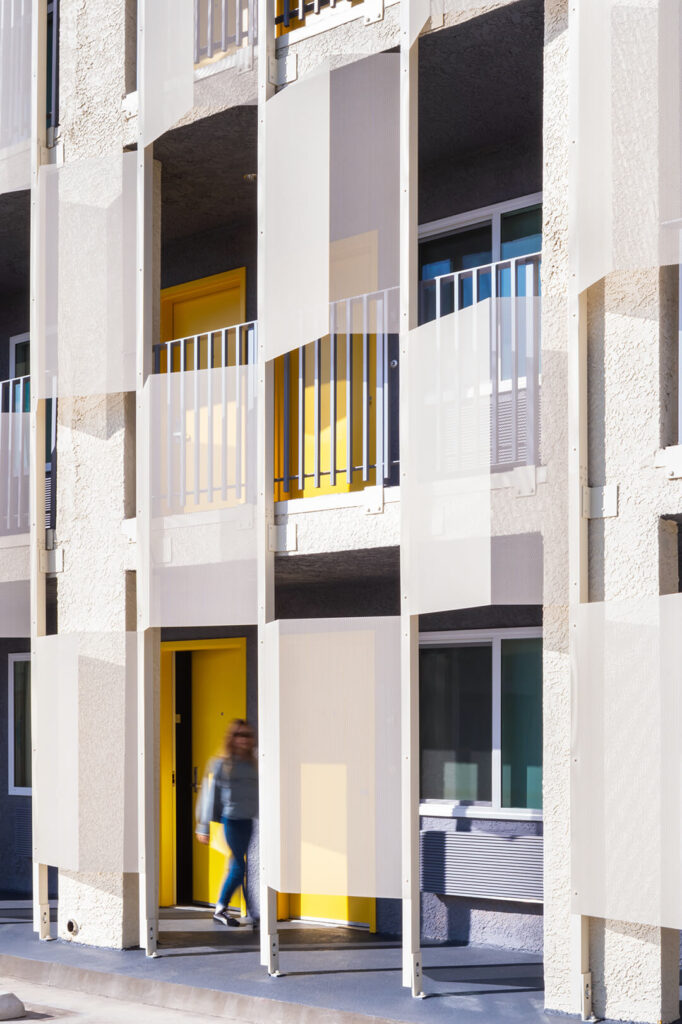
- Bespoke perforated metal screens that regulate light and privacy
- Polycarbonate cladding in service zones for diffused transparency
- Rhythm-based facade composition that enhances legibility
These material choices serve a dual purpose: environmental performance and psychological well-being. The design consciously rejects neutrality, which can often translate into emotional detachment in housing environments.
Social Design: Housing as a Framework for Stability
While architecture cannot solve social instability alone, it can create the conditions for recovery, dignity, and routine. Hub City Heights integrates this philosophy through its spatial and programmatic organization.
The project includes supportive services such as:
- On-site administrative and case management offices
- Community gathering zones for residents
- Landscaped recreational areas including dog parks and seating zones
- Flexible shared spaces for interaction and events
These elements transform the housing complex into a hybrid infrastructure, part residence, part support system.
A key insight emerging from the design is that stability is not produced by architecture alone but by the intersection of space, services, and sustained human support systems.
Environmental and Urban Regeneration Aspects
Adaptive reuse significantly reduces embodied carbon by preserving existing structures. In this project, environmental benefits are also achieved through landscape redesign and passive strategies.
Environmental contributions include:
- Conversion of heat-absorbing asphalt parking into green courtyards
- Introduction of rain gardens for water management
- Increased shaded communal areas through vegetation
- Reduced demolition waste through structural retention
These interventions help shift the perception of high-density housing from resource-intensive development to regenerative urban practice.
Key Takeaways from the Project
Hub City Heights provides broader insights applicable to future high-rise or multi-unit housing developments:
- Reuse over replacement: Existing structures can be powerful foundations for new housing systems
- Courtyards as social infrastructure: Open space is as critical as built space in dense housing
- Design with dignity: Aesthetic care directly influences emotional well-being
- Integrated services matter: Housing alone is insufficient without support systems
- Flexibility ensures longevity: Non-rigid frameworks adapt better to changing social needs
Conclusion
The transformation of a deteriorated motel into Hub City Heights illustrates how architecture can operate at the intersection of urgency and empathy. Through adaptive reuse, spatial reorganization, and community-driven design, Kadre Architects demonstrates that high-density housing does not need to feel compressed, temporary, or institutional. Instead, it can be open, legible, and socially responsive, offering not just shelter, but a framework for rebuilding lives. As cities continue to confront housing shortages and homelessness, such projects signal a shift in thinking: from building more structures to building better systems of living.
Images: stirworld.com- Paul Vu






