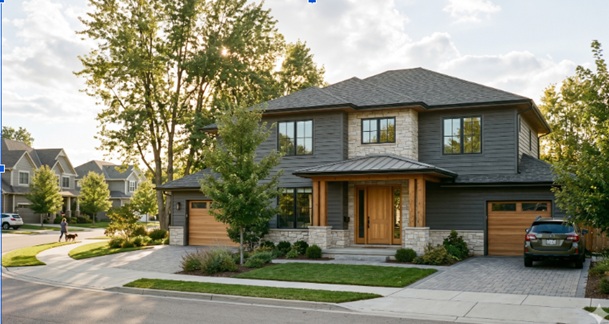
Urban living has undergone a structural shift. As inner-city land values across South Australia continue to premiumize, the traditional approach to residential development is evolving. Modern metropolitan buyers are no longer content with compromising on generic, cookie-cutter layouts that fail to utilize their allotments efficiently. Instead, maximizing a tight urban footprint requires an entirely tailored architectural approach.
For property owners navigating the complexities of inner-city infill, narrow frontages, and strict heritage overlays, partnering with a dedicated custom home builder in Adelaide has transitioned from a luxury choice to an absolute necessity. A bespoke build allows city homeowners to bypass the rigid constraints of volume-built plans, delivering a highly contextual, space-optimized sanctuary engineered precisely for metropolitan lifestyles.
From navigating complex zero-allotment boundary lines to optimizing multi-level vertical living, building in established urban areas demands specialized technical expertise. This guide analyzes why custom design has become the structural benchmark for modern city homeowners and how to successfully execute a premium metropolitan build.
Understanding the Urban Custom Home Journey
Building in an established metropolitan or city-fringe environment introduces distinct spatial and logistical variables. Unlike greenfield developments, bespoke home building in high-density areas requires an iterative, highly coordinated planning and construction methodology across four distinct phases.
1. Conceptual Architectural Planning & Spatial Optimization
In urban centers, space is the ultimate premium. Architectural design must shift focus toward intelligent spatial optimization, vertical volume, and maximizing natural light paths. Your designer analyzes how to capture northern solar access on narrow lots, incorporates deep-plan lightwells, and positions active living spaces to protect visual privacy from multi-storey neighbors. This phase ensures every square meter of your floor plan serves a dual functional purpose, eliminating wasted hallway zones and balancing open-plan entertaining with acoustic isolation.
2. Pre-Construction Site Assessments & SA Civil Engineering
Adelaide features highly reactive clay soils—particularly across the city center, inner-eastern plains, and foothills. When building close to existing structures or directly on boundary lines, a premium custom home builder must conduct rigorous pre-construction assessments. These specialized engineering protocols include:
- Detail and Level Surveys:** Mapping exact boundary lines, shared fencing configurations, and the structural footing depths of neighboring buildings.
- Soil Borehole Testing:** Identifying the exact subterranean soil classification (such as Class H1, H2, or E highly reactive clays) to design safe foundation systems.
- Engineered Civil Plans:** Developing specialized slab designs, bored piers, or underpinning systems to guarantee structural stability without compromising adjacent properties.
- Stormwater Retention Calculations:** Ensuring adherence to stringent municipal council regulations regarding site discharge, detention tanks, and heavy rainfall management.
3. The Selections Process: Materials Tailored for Longevity
The selection phase for an urban home must prioritize acoustic dampening, thermal efficiency, and low-maintenance longevity. Rather than choosing from restrictive, mass-market design catalogs, custom builds like Urban3 allow you to source architectural materials globally. For city environments, this involves selecting high-performance acoustic glass to block street noise, fire-rated external cladding systems for tight boundary walls, and commercial-grade window joinery that withstands heavy UV exposure while maintaining crisp structural profiles.
4. Construction Phase & The Grand Reveal
Executing a custom architectural plan on an inner-city site requires elite project management and precise logistical orchestration. Material deliveries, crane operations, and scaffolding setups must be tightly scheduled to minimize traffic disruption in tight suburban streets. Because urban builds often utilize complex engineering elements—such as suspended concrete slabs, cantilevered upper floors, or structural steel frames—your builder’s site supervisor maintains daily quality assurance checks through every critical construction milestone up to completion.
Key Factors to Evaluate in an Adelaide Custom Home Builder
Constructing a premium home in an established metropolitan area requires a building partner with localized expertise and structural capability. When evaluating potential firms, audit their operational frameworks against three core pillars.
Hyper-Local Suburb Expertise & Trade Networks
A successful custom home builder in Adelaide must possess an intimate understanding of the Development Plans and planning protocols governing various inner-city councils. Navigating the heritage conservation zones in the City of Unley or the strict character design codes within the City of Norwood Payneham & St Peters requires a sophisticated compliance approach. Furthermore, premier builders maintain dedicated networks of specialized trades and master craftspeople who understand how to work safely and efficiently within constrained, high-density work sites.
Financial Health, HIA/MBA Credentials & Indemnity Category Ratings
The commercial viability and corporate governance of your builder protect your long-term capital investment. Verify that any prospective building company holds a current, unrestricted license with Consumer and Business Services (CBS) and maintains active ties with peak regulatory bodies like the Housing Industry Association (HIA SA) or the Master Builders Association. Critically, review their QBE Building Indemnity Insurance risk rating. High-tier category classifications indicate exceptional financial health, giving you absolute security throughout the lifetime of your construction contract.
Structural Transparency vs. Hidden Post-Contract Variations
Many volume-based builders use artificially low initial base prices that exclude essential site works, traffic management costs, or realistic material allowances. Elite custom builders eliminate this financial risk by providing comprehensive, transparent fixed-price contracts. Every engineering requirement, retaining wall system, council condition, and premium selection is costed upfront. This structural transparency ensures your project remains on budget, protecting you from unexpected variations during construction.
Designing for the SA Climate: The 7-Star Energy Performance Reality
A critical factor for modern city homeowners is minimizing operational running costs through advanced sustainable architecture. Under updated National Construction Code (NCC) mandates, all new custom homes must achieve a verified minimum 7-star NatHERS energy rating.
Achieving a 7-star rating on a tightly packed urban or city-fringe lot requires a calculated response to Adelaide’s distinct Mediterranean climate. A professional custom home builder employs intelligent passive solar design principles to stabilize internal temperatures without relying solely on mechanical heating and cooling.
By strategically placing high-performance low-E double glazing, optimizing roof eaves to block intense summer heat, and incorporating internal thermal mass elements like polished concrete slabs, the home naturally captures and retains heat during winter while rejecting it throughout January heatwaves. This environmental integration ensures your urban sanctuary remains resilient against rising utility costs while providing superior internal comfort.
Maximizing Value: The Knockdown Rebuild Strategy in Established Suburbs
For city homeowners who love their current geographic location but have outgrown their existing dwelling, the knockdown rebuild strategy offers the ultimate return on investment. This pathway is rapidly becoming the standard for securing a brand-new architectural footprint in premium, land-locked Adelaide suburbs like Prospect, Walkerville, or Mile End.
Opting to knock down and start fresh allows you to bypass the compromises, hidden structural defects, and severe layout limitations associated with renovating older, non-insulated housing stock. It provides a clean slate to re-engineer your allotment’s orientation, implement state-of-the-art civil drainage, and introduce modern open-plan living zones that match how your family actually lives. When executed by an experienced team, the complexities of utility disconnections, council demolition approvals, and boundary realignments are managed seamlessly as part of an integrated workflow.
Bringing Your Custom Vision to Life
As metropolitan areas become denser, the limitations of standard, mass-produced housing layouts become impossible to ignore. For city homeowners seeking to maximize capital value, spatial efficiency, and lifestyle enjoyment, bespoke architectural design has established itself as the modern standard.
When you are ready to transition your urban property from a conceptual floor plan into a structural masterpiece, partner with a building team that balances technical engineering with refined design sensibilities. Aligning your project with a high-performance team like the [reputable custom home builder in Adelaide](https://urban3.com.au/) at Urban3 ensures every challenge of inner-city building is solved with precision. Their total project transparency, deep understanding of South Australian construction compliance, and uncompromising craftsmanship transform your design vision into an enduring architectural legacy.