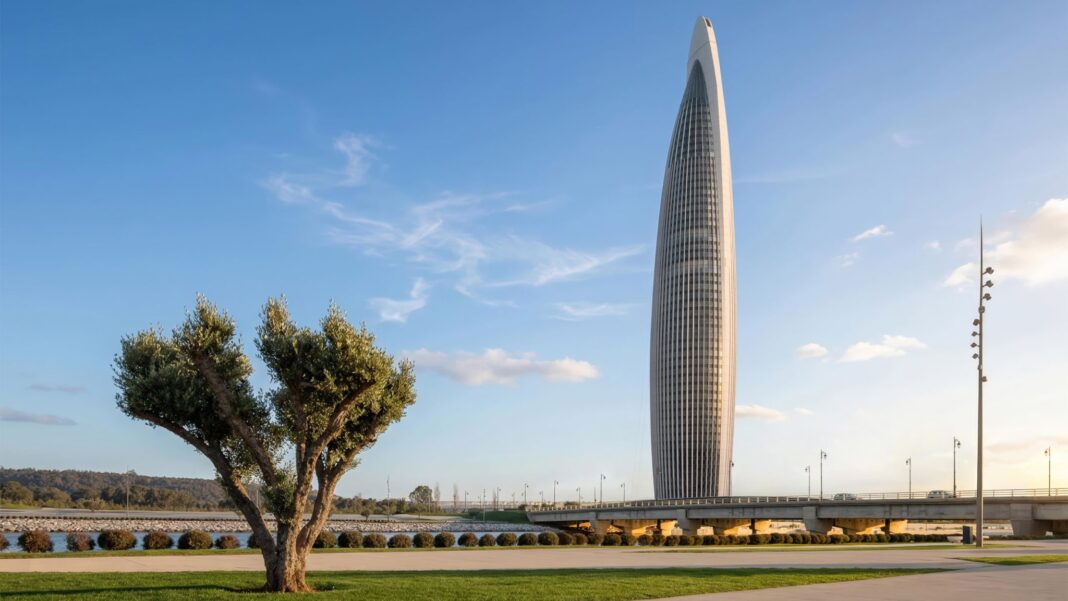
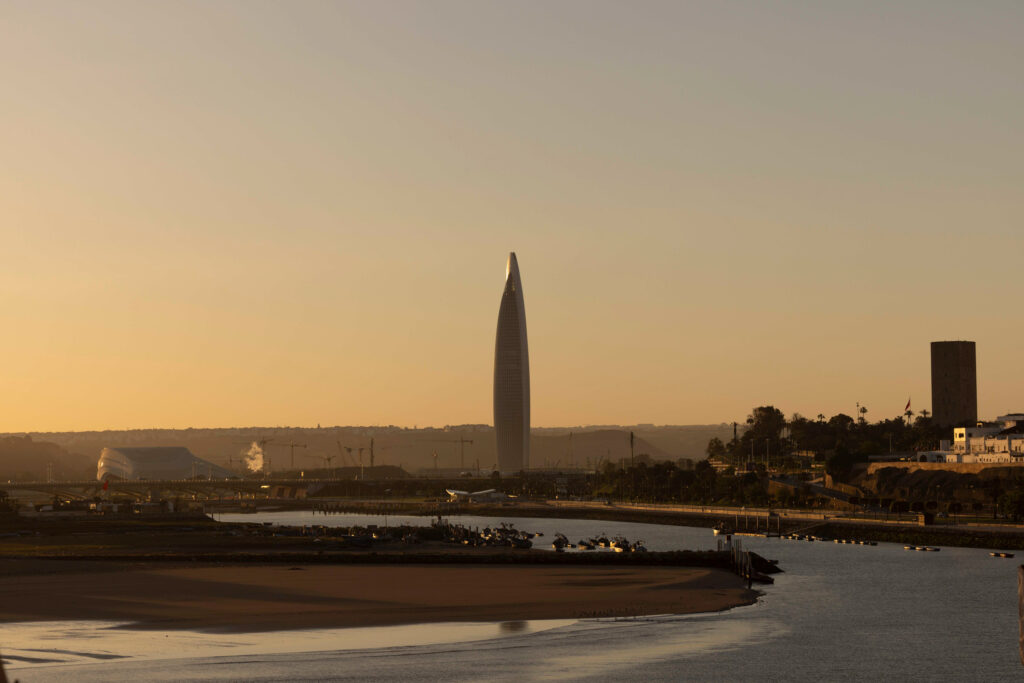
A striking new skyscraper has transformed the skyline between Rabat and Salé with the completion of the iconic Mohammed VI Tower. Designed by Spanish architecture studio Rafael de La-Hoz Arquitectos in collaboration with Moroccan architect Hakim Benjelloun, the 250-metre-tall skyscraper is now officially the tallest building in Morocco and the third tallest completed tower in Africa.
The futuristic structure rises 55 storeys above the Bou Regreg River and has already become one of North Africa’s most recognizable modern landmarks. With its sleek aerodynamic silhouette and pointed crown, the tower resembles a rocket ready for launch, giving the development a strong visual identity that reflects ambition, innovation and national progress.
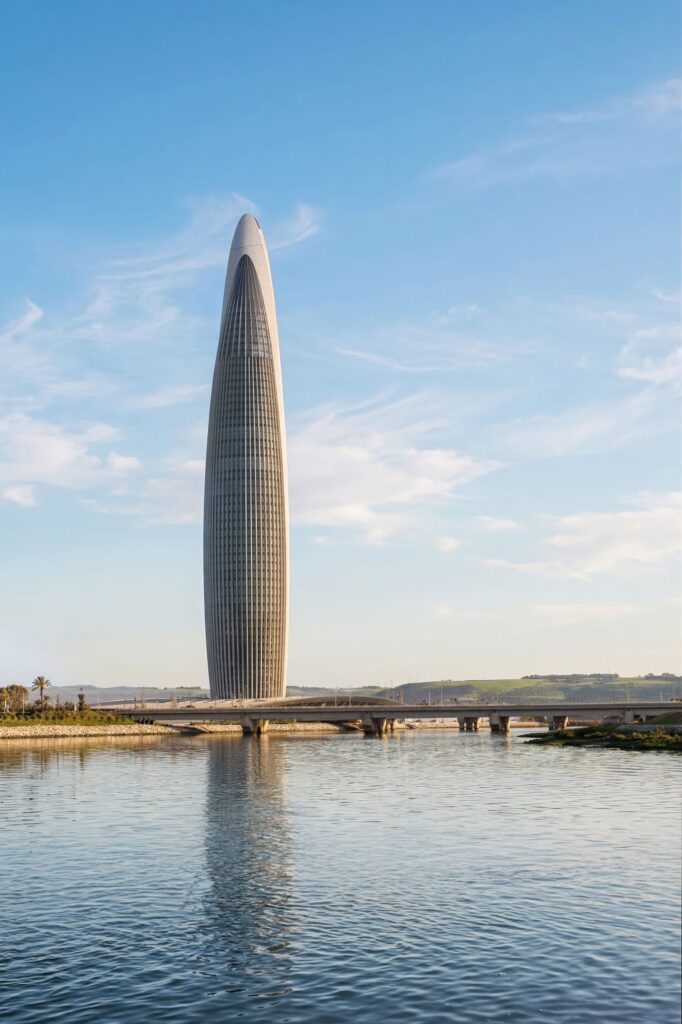
A Landmark Designed to Symbolize Modern Morocco
Named after Mohammed VI, the tower represents Morocco’s growing global presence and its push toward advanced urban development. The skyscraper was developed by O Tower, part of O Capital Group, led by Moroccan billionaire and Bank of Africa CEO Othman Benjelloun.
Construction began in 2017 and took several years to complete due to the technical complexity and scale of the project. The tower was envisioned not only as a commercial high-rise but also as a symbol of economic confidence and architectural ambition.
Architects reportedly drew inspiration for the design from a NASA flight simulation experience visited by Benjelloun in 1969. This influence is visible in the building’s streamlined vertical form and launch-pad-inspired podium.
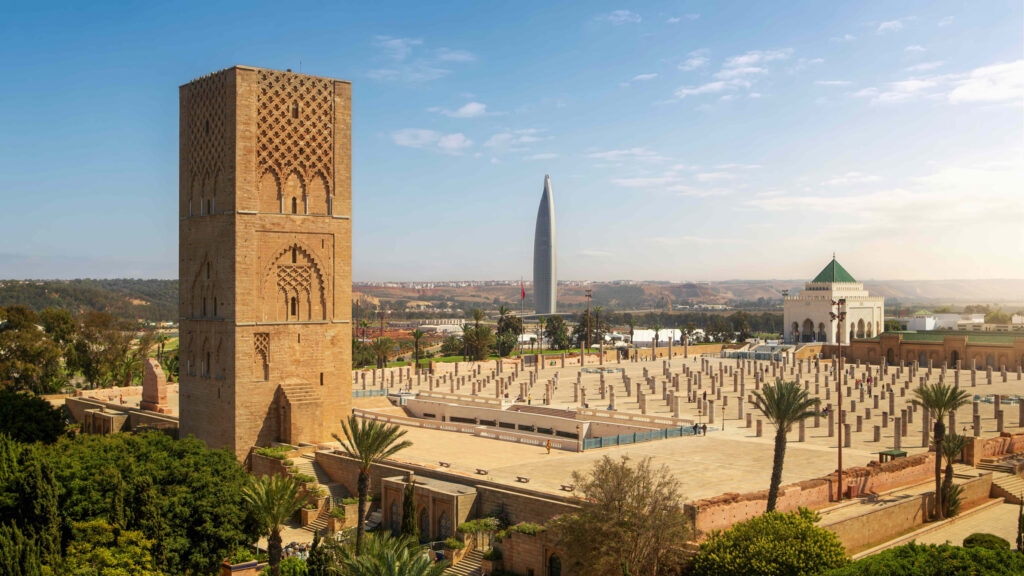
Mixed-Use Development with Luxury Amenities
The tower has been designed as a mixed-use vertical city combining hospitality, business, residential and cultural functions within a single structure.
Key components inside the skyscraper include:
- Premium office spaces
- Luxury residential apartments
- Exhibition and cultural areas
- Observation decks with panoramic city views
- Restaurants and hospitality facilities
- Banking services
- A luxury Waldorf Astoria Rabat-Salé hotel
The lower podium contains a grand reception hall, restaurants and additional exhibition spaces, creating a public-friendly environment at the base of the tower.
The inclusion of hospitality and cultural elements makes the project more than just an office skyscraper. It aims to become a major destination for tourism, business and international events.
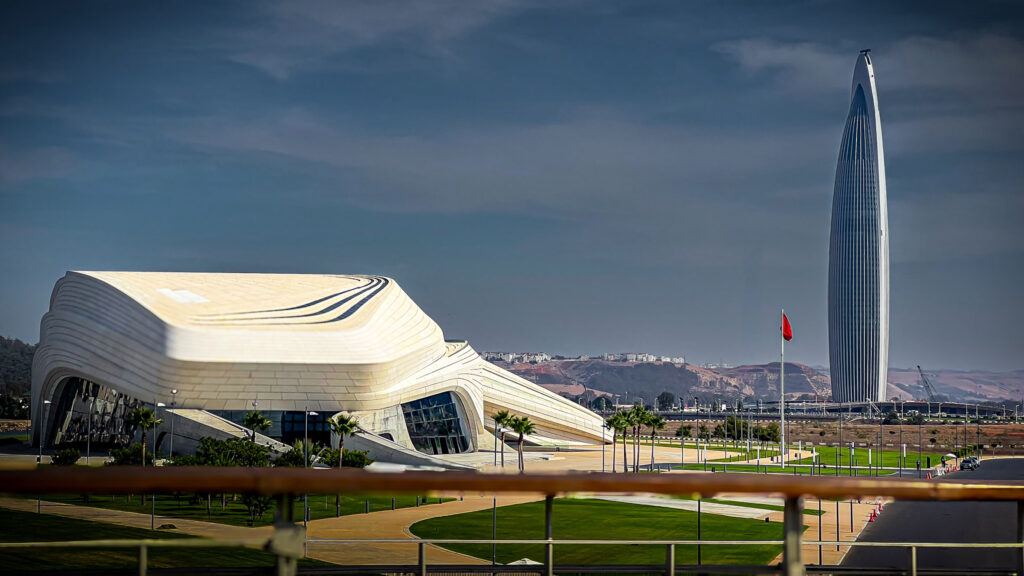
Sustainable Features and Smart Design
One of the most notable aspects of Mohammed VI Tower is its environmentally responsive facade. The south-facing side of the tower incorporates a photovoltaic double-skin system designed to generate solar energy while simultaneously reducing heat gain inside the building.
This sustainable strategy helps improve thermal efficiency in Morocco’s warm climate and reduces dependence on traditional energy systems.
Additional sustainability-focused features include:
- High-performance glazing systems
- Energy-efficient climate control technologies
- Natural light optimization
- Advanced insulation systems
- Smart building management technologies
The project reflects the growing trend of integrating renewable energy and green technologies into large-scale urban developments across Africa and the Middle East.
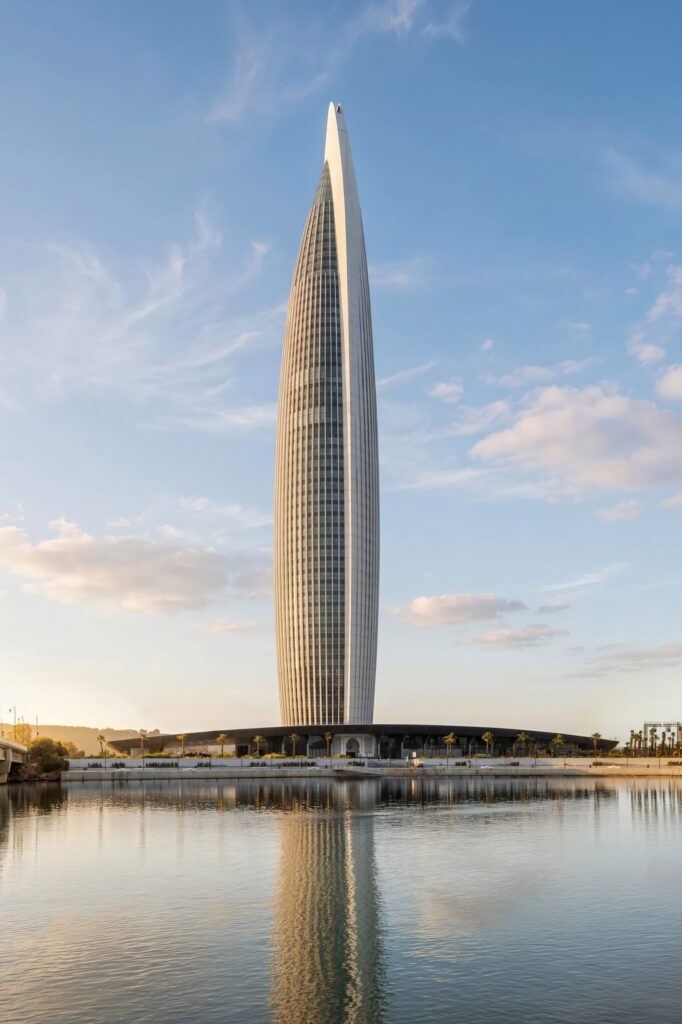
Elegant Interiors Inspired by Moroccan Craftsmanship
The interiors of the tower were designed by renowned French designer Pierre-Yves Rochon, known internationally for luxury hospitality projects.
The interior design blends international luxury aesthetics with traditional Moroccan craftsmanship and materials. Rich finishes and carefully selected textures create a timeless atmosphere throughout the building.
Materials used include:
- White marble
- Brushed brass
- Bronze accents
- Cordoba leather
- Traditional ceramic zellige tiles
- Natural wood paneling
These elements help maintain a strong connection to Moroccan cultural identity while delivering a modern luxury experience.
Morocco’s Tallest Building
At 250 metres tall, Mohammed VI Tower has surpassed the famous Hassan II Mosque in Casablanca, which previously held the title of Morocco’s tallest structure at 210 metres.
The skyscraper is now ranked among Africa’s tallest completed towers, behind, Great Mosque of Algiers Tower and Iconic Tower
Another major project, the Alamein Iconic Tower in Egypt, is expected to exceed Mohammed VI Tower’s height once completed.
Africa’s Growing Skyscraper Boom
The completion of Mohammed VI Tower highlights the rapid rise of skyscraper construction across Africa. Major cities in Morocco, Egypt, Nigeria and South Africa are increasingly investing in high-rise developments as symbols of modernization and economic growth.
However, this trend has also sparked debate among architects and urban planners. Critics argue that some supertall towers function more as prestige projects than solutions to urban challenges such as housing shortages, transport issues and infrastructure gaps.
Supporters, meanwhile, believe these developments attract investment, create employment and help position African cities as global business destinations.
A New Architectural Icon
Mohammed VI Tower is more than just a record-breaking skyscraper. It represents Morocco’s aspirations for technological advancement, sustainable development and international recognition in architecture and urban design. As Africa continues to experience rapid urban transformation, projects like Mohammed VI Tower demonstrate how architecture is increasingly being used to express national ambition, cultural identity and future-focused development.
Images- deezen.com