
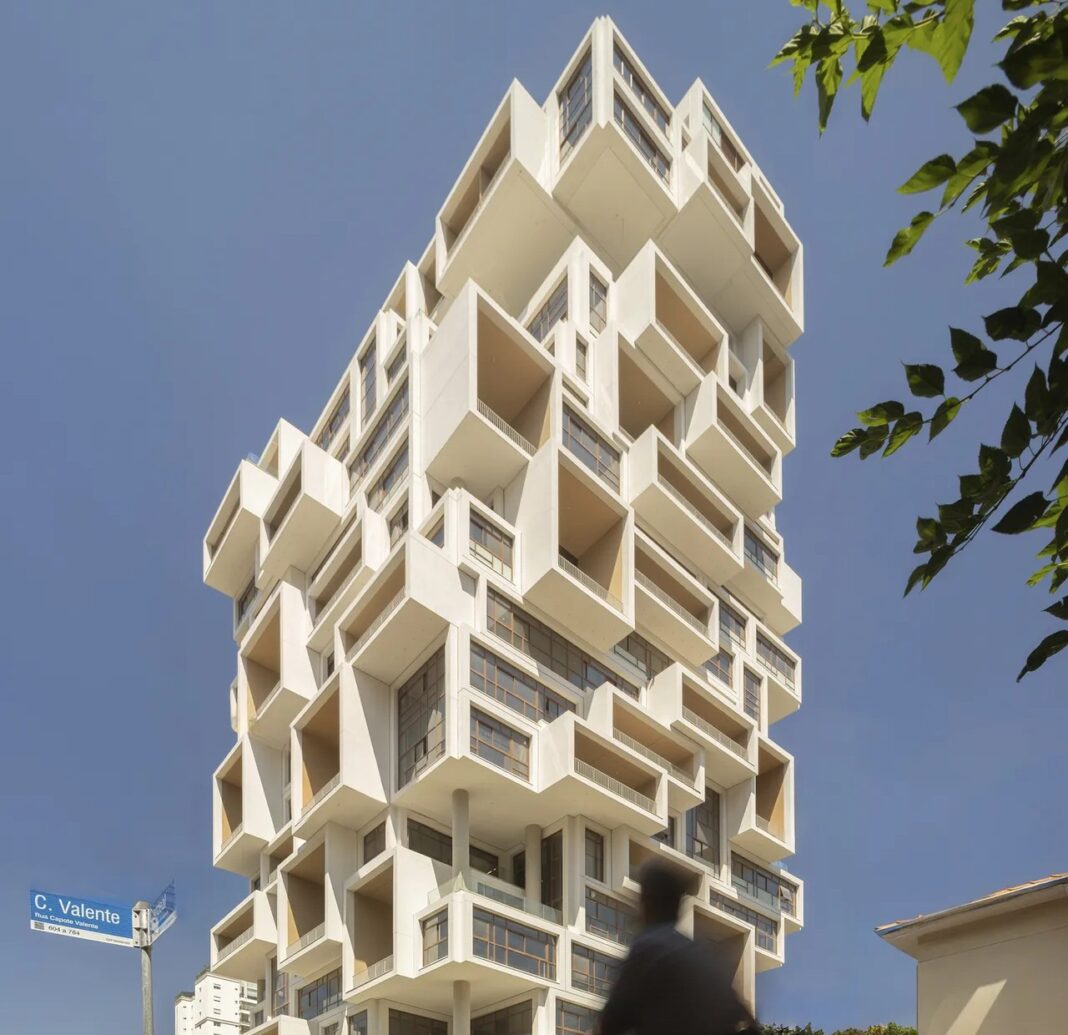
In São Paulo’s fast-evolving Pinheiros district, the recently completed Valente Tower introduces a bold reinterpretation of high-rise mixed-use design. Developed by Brazilian architecture practice FGMF Arquitetos for developer Idea!Zarvos, the 21-storey tower stands at the intersection of Capote Valente and Cardeal Arcoverde streets. It is conceived not as a static glass slab but as a dynamic composition of shifting volumes that reshape how a tower engages with light, people, and the city.
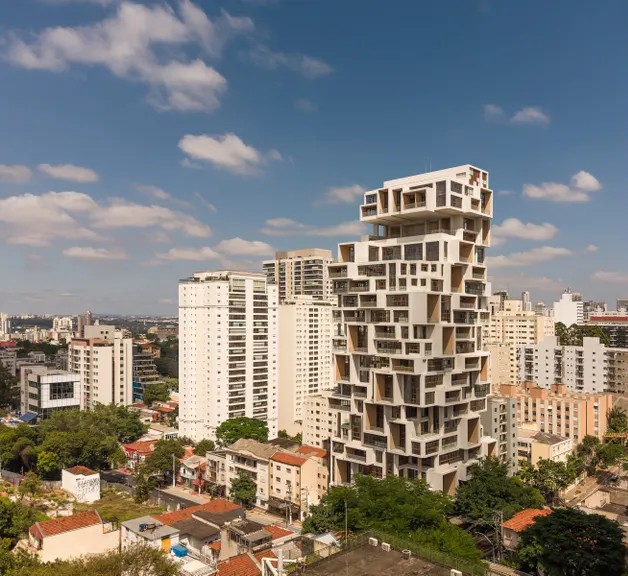
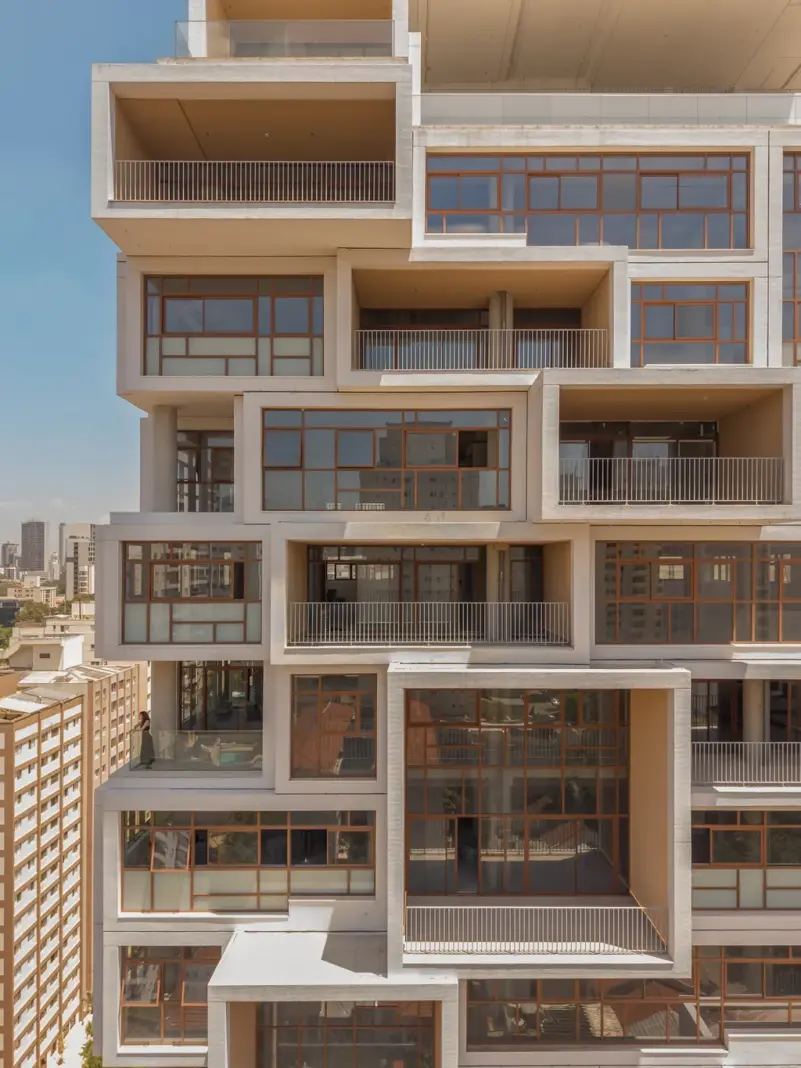
At first glance, the building’s defining feature is its “pixelated” façade—a layered arrangement of stacked and extruded rectangular forms. These projections and recesses generate a three-dimensional grid of balconies, terraces, and outdoor rooms. Instead of a uniform curtain wall, the façade behaves like a spatial matrix, constantly changing its appearance depending on viewpoint and sunlight.
A Vertical Urban System
Valente Tower spans roughly 15,000 square meters and is designed as a vertically integrated mixed-use environment. Rather than separating functions into isolated zones, the project interweaves residential, commercial, and public programs within a single structure.
Key programmatic elements include:
- Residential lofts located on upper floors for better light and views
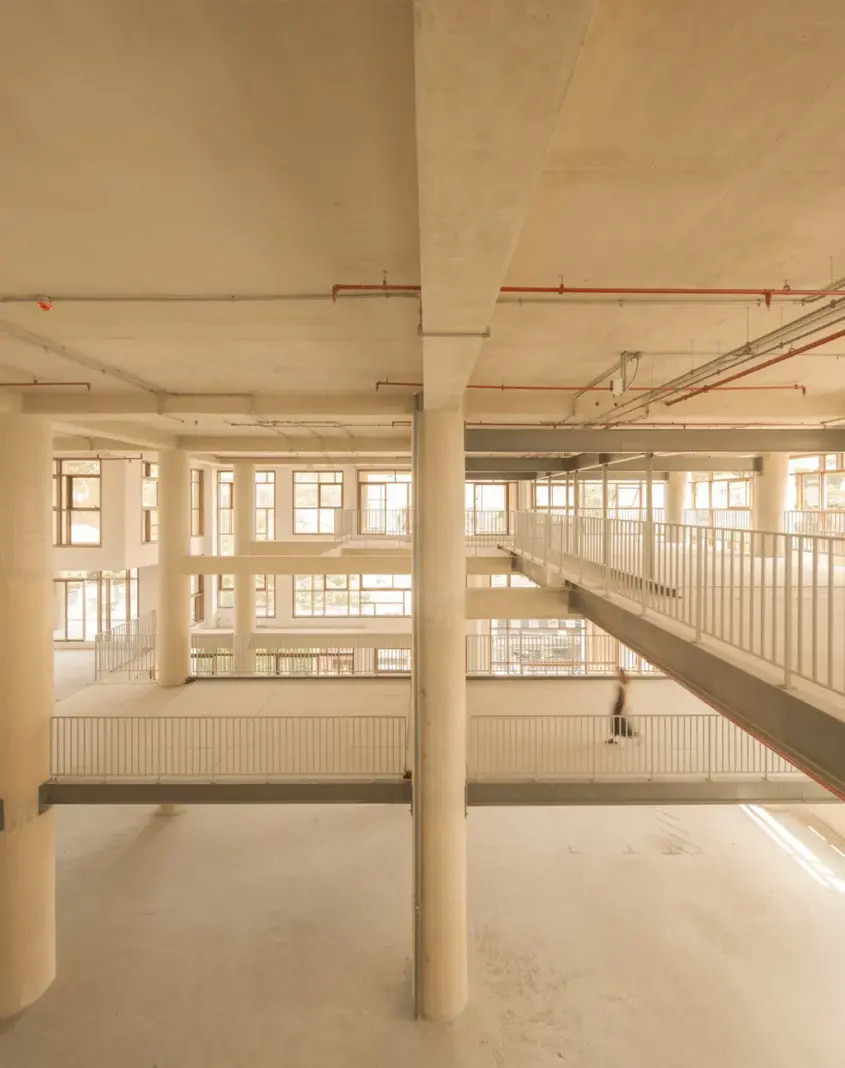
- Duplex and triplex office spaces with double-height ceilings
- Flexible mezzanine levels that allow spatial customization
- Ground-floor retail and restaurants that activate street life
- Shared amenities distributed throughout the building
This arrangement reflects a growing trend in dense urban centers: vertical neighborhoods that behave like compact cities rather than isolated buildings.
The Pixelated Façade Strategy
The façade system is not purely aesthetic; it is deeply tied to environmental and spatial performance. Each extrusion or recess is carefully calibrated to improve comfort and urban engagement.
The design achieves multiple objectives:
- Solar control: Projecting volumes help reduce direct solar exposure
- Natural ventilation: Openings and setbacks enhance airflow
- Outdoor expansion: Balconies and terraces extend interior living spaces
- Visual diversity: No two floors appear identical from the street
The result is a constantly shifting architectural profile that breaks the monotony typically associated with high-rise development.
Landscape Integration
Landscape design plays an important role in extending the building’s architectural language into the city. Architect Rodrigo Oliveira introduces a layered public interface that blurs boundaries between private and communal space.
Major landscape interventions include:
- Expanded sidewalks with integrated seating
- Street-level greenery enhancing pedestrian experience
- A suspended plaza offering elevated city views
- Vegetated terraces embedded within façade recesses
- A rooftop restaurant functioning as a public destination
These interventions ensure that Valente Tower is not just a vertical object but a participatory urban environment.
Architecture as Adaptive Urban Fabric
The project represents the third collaboration between FGMF Arquitetos and Idea!Zarvos, continuing a shared interest in expressive yet functional urban architecture. Instead of prioritizing efficiency-driven repetition, the design emphasizes variability, individuality, and spatial richness.
Core design intentions include:
- Breaking down the rigidity of conventional tower typologies
- Encouraging flexible work and living environments
- Strengthening interaction between building and street
- Creating a recognizable landmark within São Paulo’s skyline
By translating programmatic complexity into sculptural form, the tower challenges the conventional image of corporate residential high-rises.
Urban and Architectural Impact
Valente Tower contributes to broader debates in contemporary architecture about density, livability, and urban identity. Its pixelated façade is not merely a stylistic gesture but a spatial strategy that rethinks how vertical buildings can support human-scale experiences.
The project demonstrates:
- A shift from uniform façades to articulated, responsive envelopes
- Integration of mixed-use programs into a single vertical ecosystem
- Strong connection between landscape, architecture, and public space
- A renewed focus on environmental responsiveness in high-rise design
As São Paulo continues to densify, Valente Tower stands as an example of how architectural innovation can transform vertical construction into a more engaging and adaptive urban form, one that is both visually distinctive and functionally layered.
Referece www.wallpaper.com






