India’s first high-speed rail project, the Mumbai–Ahmedabad Bullet Train corridor, has reached significant construction milestones, reflecting steady progress toward transforming the country’s transportation infrastructure. According to the latest progress update released by the National High Speed Rail Corporation Limited for May 2026, extensive work has been completed across various sections of the 508-kilometre corridor.
The project has achieved 352 kilometres of viaduct construction and 446 kilometres of pier work, marking substantial advancement in the development of the elevated rail network. The Mumbai–Ahmedabad High-Speed Rail corridor, spanning across Maharashtra, Gujarat, and the Union Territory of Dadra and Nagar Haveli, will connect the two major economic centres through 12 stations.
A significant feature of the project is its predominantly elevated design. Nearly 90 per cent of the alignment is being constructed as an elevated corridor, while the remaining sections comprise tunnels, bridges, and station infrastructure. This approach is expected to enhance operational efficiency while minimizing disruptions to existing transportation networks and urban areas.
Construction activities have also progressed in track infrastructure. NHSRCL reported the completion of 193 route kilometres of reinforced concrete track bed, a critical component that provides stability and durability for high-speed rail operations. In addition, track slab installation with Cement Asphalt Mortar (CAM) injection has been completed over 78 route kilometres, ensuring the precision and reliability required for bullet train services.
Another major milestone is the installation of noise barriers along 291 kilometres of elevated sections. These barriers are designed to reduce noise levels in nearby residential and commercial areas, contributing to environmental sustainability and community comfort along the corridor.
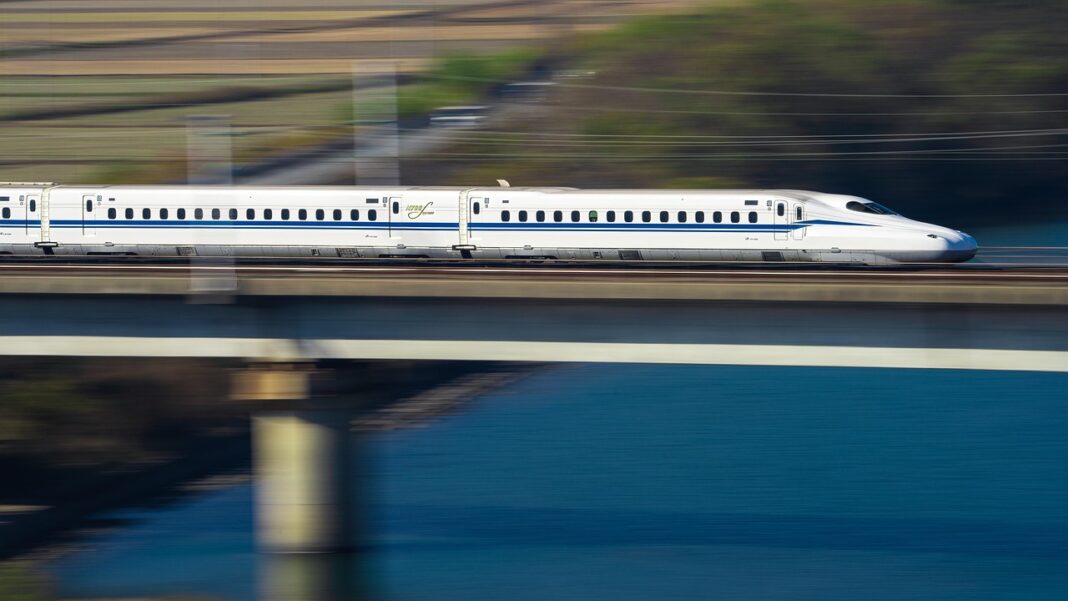
The Mumbai–Ahmedabad Bullet Train project represents a landmark initiative in India’s transportation sector. Once operational, the corridor is expected to significantly reduce travel time between the two cities while offering a modern, safe, and efficient mode of transport. The project is based on Japanese Shinkansen technology and is expected to set new benchmarks for rail travel in the country.
Beyond faster passenger movement, the high-speed rail corridor is anticipated to stimulate economic development, enhance regional connectivity, and create employment opportunities during both construction and operational phases. Improved connectivity between key commercial and industrial hubs is also expected to support business growth and encourage investment across the corridor.