What Is Below-Grade Waterproofing?
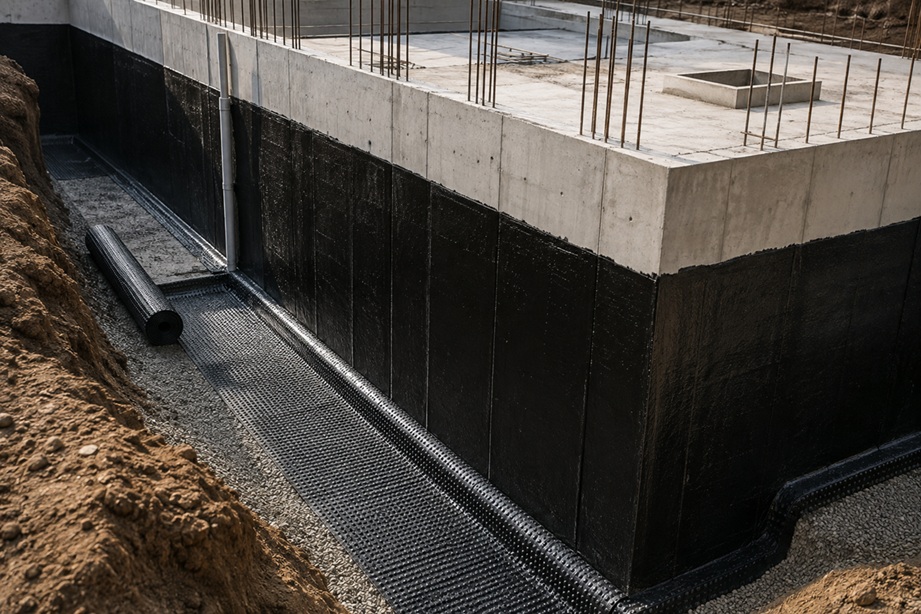
Below-grade waterproofing refers to the protection of building elements that are constructed below the surrounding ground level. These elements may include basement slabs, foundation walls, retaining walls, underground tanks, tunnels and other buried concrete structures.
The objective is to prevent water from reaching the internal side of the structure and to control moisture movement through the concrete and joints. Depending on the project, waterproofing can be provided on the external face, internal face or within the concrete construction itself.
A below-grade waterproofing strategy generally includes:
- Waterproofing membranes or coatings
- Waterstops at construction and movement joints
- Protection boards or drainage layers
- Concrete designed with appropriate water resistance
- Joint sealing systems
- Drainage arrangements
- Crack treatment and injection systems
- Proper treatment around service penetrations
The waterproofing design should be coordinated with structural and drainage requirements rather than treated as a standalone finishing activity.

Why Below-Grade Structures Require Waterproofing
- Groundwater Level: High groundwater can create continuous water pressure against basement walls and foundation slabs.
- Soil Conditions: Soil permeability and drainage characteristics affect how water moves toward underground structures.
- Hydrostatic Pressure: Accumulated groundwater can exert pressure on walls and slabs, increasing the risk of water penetration.
- Construction Joints: Joints between concrete pours can become water pathways if they are not properly detailed and sealed.
- Cracks: Shrinkage, thermal movement, settlement and structural loading can create cracks that allow water to enter.
Applications of Below-Grade Waterproofing
- Basements
- Underground parking structures
- Foundation walls
- Foundation slabs
- Retaining walls
- Lift pits
- Underground tanks
- Tunnels
- Subways
- Utility chambers
- Culverts
- Swimming pools
- Underground storage areas
- Podium slabs
- Plant rooms
- Water treatment structures
- Below-grade commercial spaces
- Underground infrastructure structures
Is your building or structure facing Basement water seepage, groundwater infiltration etc Connect with rugt waterprifing product manufacturer and applicators fir your project requirement Shwcse your product ad application services in our business listing website I a a reader- subsuve ti iur newsletter rght rglifj
Protect Your Structure from Below-Grade Water Ingress
Is your building or structure facing basement water seepage, groundwater infiltration, damp walls, hydrostatic pressure or concrete leakage?
Connect with the right waterproofing product manufacturers and applicators for your project requirements.
Manufacturers and applicators: Showcase your waterproofing products and application services on our business listing website and reach relevant construction professionals.
Readers: Subscribe to our newsletter for the latest construction, waterproofing and infrastructure updates.
Major Types of Below-Grade Waterproofing
Different waterproofing systems are available for underground construction. The appropriate system depends on project conditions and the construction sequence.
Types of Below-Grade Waterproofing
1. External Waterproofing
External waterproofing is applied to the outer surface of basement walls, foundation walls and other below-grade structural elements before backfilling. It creates a barrier between the structure and surrounding soil and groundwater. Common materials include bituminous membranes, polymer-modified membranes, liquid-applied membranes, polyurethane coatings, and PVC or HDPE sheet membranes. This method is generally suitable for new construction where external surfaces are accessible.
2. Internal Waterproofing
Internal waterproofing is applied to the inside surface of below-grade structures. It is commonly considered for existing basements and underground structures where excavation around the external walls is not practical. Cementitious coatings, crystalline treatments, liquid-applied coatings and injection grouting can be used depending on the leakage condition. The source and pressure of water should be assessed before selecting an internal waterproofing treatment.
3. Integral Waterproofing
Integral waterproofing incorporates water-resistant properties into the concrete through the use of suitable mix designs and waterproofing admixtures. It helps reduce water penetration through the concrete matrix but does not eliminate the need for proper treatment of construction joints, movement joints, cracks and service penetrations. It is often used along with other waterproofing measures.
4. Sheet Membrane Waterproofing
Sheet membranes are manufactured waterproofing materials installed over prepared surfaces to create a continuous barrier. They may be bonded, mechanically fixed or loose-laid depending on the system. They are commonly used for basement walls, foundation slabs, retaining walls and underground structures. Particular attention is required at membrane joints, overlaps, corners and penetrations to maintain continuity.
5. Liquid-Applied Waterproofing
Liquid-applied membranes are applied using brushes, rollers or spray equipment and form a continuous waterproofing layer after curing. They can be useful on irregular surfaces and around corners, transitions and penetrations. Correct surface preparation and achieving the specified application thickness are important for consistent performance.
6. Cementitious Waterproofing
Cementitious waterproofing uses cement-based materials, often modified with polymers and other additives, to create a water-resistant coating over concrete or masonry. It can be applied to basement walls, slabs, lift pits, water-retaining structures and other underground surfaces. Proper substrate preparation, mixing, application and curing are required for the coating to perform as intended.
7. Crystalline Waterproofing
Crystalline waterproofing materials are designed to reduce water movement through concrete by forming insoluble crystalline formations within capillary pores and discontinuities. They can be applied as surface treatments or incorporated into concrete, depending on the product. Applications include basement slabs, foundation walls, tunnels, tanks and other concrete structures exposed to water.
8. Waterproofing with Waterstops
Waterstops are used primarily at construction joints and movement joints to restrict water passage through discontinuities in concrete. PVC waterstops, hydrophilic waterstops and other joint-sealing profiles can be used according to the joint design. Correct positioning during reinforcement installation and concrete placement is important because displacement can compromise the waterproofing detail.
9. Injection Waterproofing
Injection waterproofing is used mainly for existing below-grade structures where water enters through cracks, joints or other defined pathways. Polyurethane injection materials can be used for water-bearing cracks where flexibility and water-reactive properties are required. Injection grouting can also be used to control leakage through specific areas without requiring extensive external excavation.
10. Drainage-Integrated Waterproofing
Drainage-integrated waterproofing combines waterproofing protection with drainage measures that manage water around the structure. Drainage boards, perimeter drains, filter layers, sump pits, drainage channels and pumping arrangements may be incorporated depending on site conditions. This approach can help reduce water accumulation and hydrostatic pressure around below-grade structures.
Waterproofing of Construction Joints
Construction joints are among the important locations requiring attention in below-grade waterproofing.
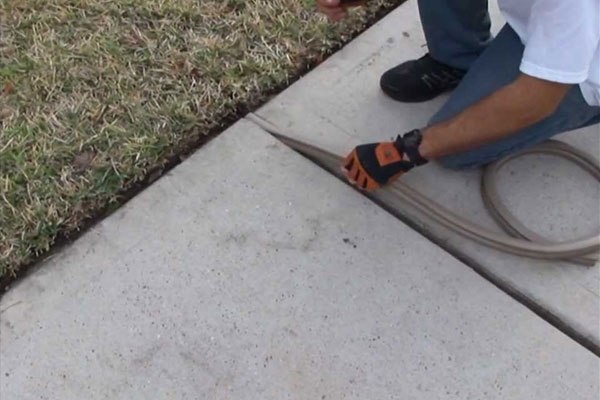
A construction joint is created when concrete placement is interrupted and subsequently resumed. The interface between the two concrete pours can become a path for water.
Common joint protection methods include:
- PVC waterstops
- Hydrophilic waterstops
- Injection hoses
- Joint sealants
- Swellable profiles
- Surface-applied joint treatments
The joint detail should be established before concrete placement. Waterstop positioning must be maintained during reinforcement installation and concreting so that displacement does not compromise the intended barrier.
Waterproofing Movement Joints
Movement joints accommodate changes caused by thermal movement, shrinkage or structural movement. Waterproofing these locations requires materials capable of accommodating the expected movement.
Depending on the application, systems may include:
- Flexible waterstops
- Joint sealants
- Expansion joint assemblies
- Preformed waterproofing profiles
- Membrane detailing systems
The waterproofing detail should allow movement without creating a gap through which water can enter.
Treatment of Pipe and Service Penetrations
Pipes, cables, ducts and other services often pass through underground walls and slabs. These penetrations need to be integrated with the waterproofing system.
Typical approaches include:
- Water-tight sleeves
- Mechanical seals
- Flanged connections
- Flexible sealants
- Membrane collars
- Hydrophilic sealing components
The penetration detail should be coordinated before construction because attempting to seal penetrations after waterproofing has been completed can be more difficult.
Waterproofing of Basement Slabs
Basement slabs can be exposed to groundwater pressure from below. The waterproofing system may be installed below the slab, above the slab or as part of an integral waterproofing approach depending on the project design.
A typical below-slab arrangement may include:
- Prepared subgrade
- Blinding concrete
- Waterproofing membrane
- Protection layer where required
- Reinforcement
- Structural concrete slab
The exact arrangement depends on structural and waterproofing design requirements.
Particular attention should be given to membrane laps, construction joints, reinforcement supports and service penetrations before concrete placement.
Drainage and Below-Grade Waterproofing
Waterproofing should be coordinated with site drainage. A waterproofing membrane alone may not be sufficient where significant quantities of groundwater accumulate around the structure.
Drainage measures can include:
- Perimeter drains
- Drainage boards
- Filter layers
- Sump pits
- Drainage channels
- Pumping arrangements
- Surface water management
The purpose of drainage is to reduce water accumulation and manage water around the structure.
In basement construction, drainage systems should also consider maintenance access and the consequences of pump failure where mechanical pumping is required.

Below-Grade Waterproofing for Existing Structures
Waterproofing an existing basement is different from waterproofing a new structure because access to the external surface may be restricted.
Several techniques can be considered depending on the source of leakage.
Crack Injection
Injection systems can be used to seal water-bearing cracks in concrete. Polyurethane injection materials are commonly used where flexibility and water-reactive properties are required.
Epoxy injection may be considered where structural crack repair is required and the crack is suitable for that application.
Pressure Grouting
Injection grouting can be used to control water entering through cracks, joints or other pathways. The material and injection pressure should be selected according to the structure and leakage condition.
Internal Coatings
Where external excavation is not practical, internal cementitious or other coating systems can be considered after appropriate surface preparation and water management.
Common Causes of Below-Grade Waterproofing Failure
Waterproofing failures can occur because of design, material selection, installation or subsequent construction activities.
Common causes include:
- Inadequate surface preparation
- Incorrect material selection
- Poor membrane overlaps
- Damage during reinforcement placement
- Improper waterstop installation
- Untreated construction joints
- Poor detailing around penetrations
- Insufficient membrane thickness
- Inadequate curing
- Improper backfilling
- Uncontrolled cracking
- Lack of drainage
- Poor inspection during installation
Waterproofing failures are often difficult to correct after a basement has been backfilled and occupied. Quality control during installation is therefore important.
Quality Control for Below-Grade Waterproofing
A waterproofing inspection should be carried out at different stages of construction.
Important checks include:
Before Application
- Check substrate condition.
- Remove loose material and contaminants.
- Repair significant cracks and surface defects.
- Confirm required surface dryness or moisture condition.
- Check corners and transitions.
- Verify material compatibility.
During Application
- Check membrane alignment.
- Inspect laps and joints.
- Verify application thickness where applicable.
- Check detailing around penetrations.
- Inspect waterstop positioning.
- Ensure protection layers are installed correctly.
Before Backfilling
- Inspect the completed waterproofing layer.
- Repair visible damage.
- Check joints and termination points.
- Confirm protection boards or drainage layers.
- Record inspection results.
Before Concrete Placement
For systems installed below slabs or within concrete construction, the waterproofing arrangement should be inspected before reinforcement and concrete placement make the system inaccessible.

Factors for Selecting a Below-Grade Waterproofing System
The selection process should consider several factors rather than relying only on the material price.
Groundwater Conditions
The expected groundwater level and water pressure should be established.
Structure Type
Basements, tunnels, lift pits, tanks and retaining walls have different exposure conditions and detailing requirements.
Construction Sequence
A system suitable for open excavation may not be suitable where the waterproofing surface becomes inaccessible during construction.
Expected Movement
Joints and structural movement should be considered when selecting membranes, waterstops and sealants.
Accessibility
For existing structures, internal systems or injection techniques may be more practical where external access is restricted.
Durability
The expected service conditions, soil exposure and maintenance requirements should be considered when selecting materials.
Compatibility
Waterproofing materials should be compatible with concrete, primers, sealants, protection layers and other materials used in the construction.
Conclusion
Below-grade waterproofing is an important part of basement and underground construction because these structures can be exposed to groundwater, soil moisture and hydrostatic pressure. Effective protection requires more than applying a membrane to a concrete wall or slab. The waterproofing approach should address the concrete surface, construction joints, movement joints, cracks, service penetrations, drainage and protection of the installed system.
Proper detailing and installation are equally important. A well-selected waterproofing material can still fail if joints are poorly treated, membranes are damaged, penetrations are inadequately sealed or drainage is ignored. Inspection at each stage of installation, followed by appropriate protection before backfilling or subsequent construction, can reduce the likelihood of leakage.