
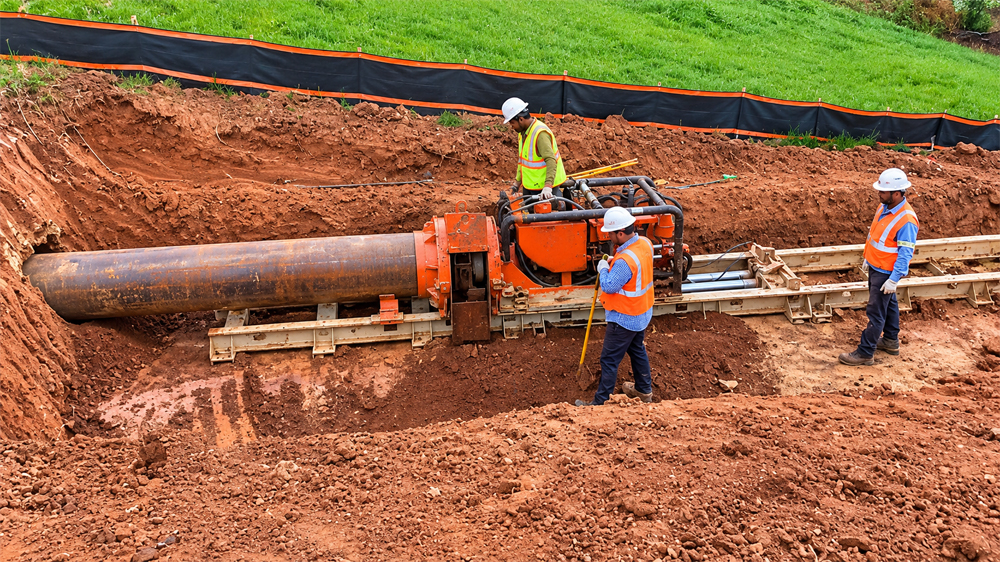
Horizontal Directional Drilling (HDD) is a trenchless construction method used to install underground pipelines and utility conduits with minimal surface excavation. The technique allows pipes to be installed beneath roads, highways, railway tracks, rivers, buildings and other obstacles without opening a continuous trench along the entire alignment. It is widely used for water supply pipelines, sewer networks, gas distribution, power cables, telecommunications ducts and other underground utility infrastructure.
Unlike conventional open-cut installation, which requires excavation along the pipe route, HDD uses a steerable drilling system to create an underground bore along a planned alignment. The bore is then enlarged to accommodate the required pipe diameter, and the pipe is pulled through the prepared borehole. This approach can reduce disruption to traffic, limit damage to existing surfaces and help maintain access to surrounding properties during construction.
HDD is particularly suitable for urban infrastructure projects where underground utilities must cross busy roads, railway corridors, waterways or environmentally sensitive areas. However, successful installation depends on ground investigation, accurate alignment planning, drilling fluid management, bore stability, equipment selection and careful control of pipe pulling forces.






