
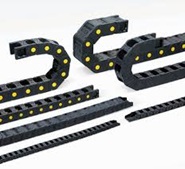
In heavy industry, the smallest component can quietly determine whether operations run smoothly — or grind to a halt. Cables are a perfect example. They don’t get much attention until something fails. And when they do fail, downtime becomes expensive very quickly.
That’s where a well-engineered drag chain cable or crane cable comes in. These aren’t ordinary wires. They are purpose-built systems designed to move, bend, lift, and perform in demanding environments where mechanical stress is constant and reliability is non-negotiable.
Companies like Hebei-Huatong have built their reputation around understanding this reality. Their approach isn’t just about manufacturing cables — it’s about engineering long-term performance into every meter.
Understanding Drag Chain Cable in Real-World Conditions
A drag chain cable isn’t simply a flexible wire placed inside a chain. It’s designed specifically for continuous motion — sometimes thousands or even millions of cycles — without losing structural integrity.
In automated factories, robotic arms, CNC machines, and high-speed production lines, cables are constantly bending, sliding, and repositioning. Standard cables often fatigue under this stress. Insulation cracks. Conductors break. Signal integrity drops.
A properly designed drag chain cable avoids these issues through:
- Fine-stranded conductors for flexibility
- Special insulation compounds that resist wear
- Controlled torsion performance
- Resistance to oil, abrasion, and mechanical shock
Industry research shows that motion-optimized cables can significantly extend service life compared to standard industrial cables in dynamic applications. In large manufacturing facilities, this translates into measurable savings — fewer shutdowns, fewer replacements, and reduced labor costs.
But beyond cost, there’s a bigger factor: predictability. When motion systems operate consistently, production planning becomes easier and safer.
Crane Cable: Built for Power, Height, and Heavy Load
If drag chain cables focus on motion cycles, crane cable systems focus on power delivery under vertical movement and load strain.
Cranes operate in some of the toughest environments imaginable — shipyards, ports, steel plants, mining operations, construction sites. These are not climate-controlled environments. Exposure to moisture, dust, vibration, UV radiation, and mechanical stress is constant.
A crane cable must withstand:
- Repeated lifting cycles
- Mechanical tension
- Environmental exposure
- Electrical load variation
Failure in such settings isn’t just inconvenient. It can compromise safety and halt major operations.
According to industrial safety data, electrical faults and mechanical wear are among the most common causes of crane system interruptions. Using purpose-built crane cables significantly reduces these risks by combining reinforced insulation, high tensile strength conductors, and durable sheathing materials.
In simple terms: these cables are designed to move up and down all day without complaining.
Why Engineering Standards Make a Difference
It’s easy to underestimate cables because they’re often hidden inside equipment. But manufacturing them requires strict adherence to international standards.
Hebei-Huatong operates with globally recognized certifications including UL, CSA, CE, and TÜV. These certifications aren’t marketing labels — they represent compliance with safety, electrical, and mechanical performance benchmarks.
In export-driven industries, certification matters. Project engineers, procurement managers, and compliance officers need assurance that every component meets international regulations. That level of trust is built over years of manufacturing discipline and testing protocols.
Testing for dynamic bending, insulation aging, tensile strength, and electrical conductivity ensures that both drag chain cable and crane cable products perform under stress — not just in laboratory conditions, but in real industrial environments.
Applications That Demand Reliability
These cables are not niche products. They operate at the heart of industrial infrastructure.
In Automated Manufacturing
Production lines depend on continuous motion. A broken cable can stop robotic systems instantly. Motion-rated cables protect against that risk.
In Ports and Shipyards
Gantry cranes move containers weighing several tons. The power supply must remain stable and uninterrupted. Crane cables here face wind, salt air, and heavy vibration daily.
In Mining and Heavy Industry
Dust, heat, and abrasive conditions push materials to their limits. High-durability sheathing becomes essential for longevity.
In Construction
Tower cranes rely on safe vertical power transmission. Reliable crane cables directly impact worker safety and operational efficiency.
Across these industries, cable failure doesn’t just delay work — it affects entire supply chains.
The Hidden Cost of Choosing the Wrong Cable
Sometimes companies try to reduce upfront costs by selecting general-purpose cables for dynamic or crane applications. Initially, everything works fine. But over time, the strain accumulates.
Micro-cracks form. Conductors weaken. Downtime increases.
Studies in industrial maintenance consistently show that reactive repairs cost significantly more than preventative investment in the correct components from the beginning. In high-cycle environments, the right cable can mean the difference between months of uninterrupted operation and repeated service calls.
This is why engineered drag chain cable and crane cable systems are considered long-term investments rather than consumables.
Experience and Manufacturing Strength
Hebei-Huatong’s production capabilities reflect decades of manufacturing experience in industrial wire and cable solutions. With large-scale facilities and a global supply presence, the company supports projects ranging from localized automation setups to international infrastructure developments.
Their focus on research and development ensures that materials and designs evolve alongside industrial demands — whether that involves higher voltage tolerance, enhanced flexibility, or improved environmental resistance.
This continuous improvement mindset aligns with modern industrial expectations: equipment must last longer, operate faster, and perform under tougher conditions than ever before.
Final Thoughts
Cables may not be the most visible part of industrial machinery, but they are undeniably among the most critical. A high-quality drag chain cable ensures smooth motion and longer operational life in automated systems. A well-engineered crane cable guarantees safe, stable power transmission in lifting and heavy-load applications.
When these components are designed properly — tested thoroughly, certified internationally, and manufactured with experience — they become silent enablers of productivity.
In industries where downtime is costly and safety is paramount, choosing the right cable isn’t just a technical decision. It’s a strategic one.






