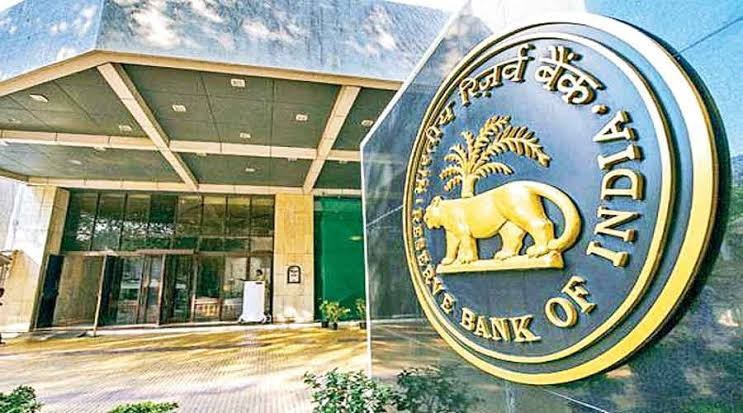
As the Reserve Bank of India (RBI) prepares for its Monetary Policy Committee (MPC) meeting, real estate industry leaders expect the central bank to maintain the repo rate, citing the importance of monetary stability amid global uncertainties, inflation concerns and continued housing demand. Developers and sector experts believe a stable interest rate environment will support buyer confidence, improve financial planning and encourage sustained growth across residential and commercial real estate segments.
What Industry Experts say?
Anil Godara, Founder and Managing Director, J Estates, said, “The market is entering the second half of the year with healthy buyer sentiment, and at this stage, stability in monetary policy is more valuable than frequent rate changes. We expect the RBI to maintain the repo rate, which would provide continuity for both homebuyers and developers. A stable interest rate gives buyers greater confidence while planning long-term financial commitments and helps sustain momentum in residential sales. With infrastructure-led growth creating new residential hotspots, demand is increasingly being driven by genuine end-users rather than speculative investors. Policy stability will help ensure this positive trend continues in the coming quarters.”
Ashish Agarwal, Director, AU Real Estate, said, “The real estate market has demonstrated strong resilience despite global economic uncertainties, and we expect this momentum to continue. An unchanged repo rate can strengthen. For developers, stability in the interest rate cycle is an important enabler as it encourages buyer confidence and supports long-term business planning. Homebuyers today are driven by product quality, location, lifestyle offerings and trust in the developer, with financing being one of several considerations. A stable policy environment will help sustain demand, encourage new project launches and strengthen the overall market.”
Santosh Agarwal, Executive Director & CFO, Alpha Corp Development Limited, said, “If the Reserve Bank of India keeps the repo rate unchanged at 5.25 per cent, the policy would reinforce stability and confidence in the residential real estate market. A predictable interest rate environment allows homebuyers to plan long-term financial commitments with greater certainty, sustaining demand across mid-income, premium and luxury segments over the next 6–12 months. While a status quo is positive, a continued accommodative policy stance and adequate liquidity would further strengthen housing affordability and improve access to home finance. Stable borrowing costs also encourage developers to accelerate project execution and new launches, supporting sustained growth across the broader real estate sector.”
Yateesh Wahaal, Director, M3M, said, “The upcoming monetary policy announcement will be closely watched by both homebuyers and the real estate sector. While the RBI continues to balance inflation and growth, the housing market has remained resilient, supported by strong end-user demand and positive buyer sentiment. Any indication of policy stability or a supportive stance would further strengthen confidence, improve affordability, and encourage homebuying, particularly in the mid-income and premium segments. A stable interest rate environment also provides greater certainty for developers and investors. Backed by robust infrastructure development and rapid urbanisation, India’s residential real estate sector remains well-positioned for sustained growth.”
Ashish Sharma, AVP Operations, Brahma Group, said, “The upcoming RBI monetary policy announcement is expected to provide important cues for the housing market and the broader economic outlook. We expect the RBI to maintain the current repo rate, as a stable interest rate environment will reinforce homebuyer confidence and ensure greater predictability in borrowing costs. This is particularly important at a time when housing demand continues to remain resilient across both mid-income and premium segments. For developers, policy stability supports long-term investment planning, timely project execution and capital deployment. With robust infrastructure development, rapid urbanisation and strong economic fundamentals continuing to drive demand, we remain confident about the sustained growth trajectory of India’s real estate sector.”
Raoul Kapoor, Co-CEO, Andromeda Sales and Distribution Pvt. Ltd., said, “The RBI MPC review meeting is scheduled for 3-5 August, it is expected that the apex bank will maintain a status quo once again on the policy repo rate, as inflation remains broadly within the comfort zone while global uncertainties continue to persist.
“The central bank is likely to adopt a cautious and data-dependent approach, balancing the need to support economic growth with the objective of maintaining price stability.
“For retail borrowers, particularly those with floating-rate home, auto, and personal loans linked to external benchmarks, a consecutive pause in rates have kept the EMIs unchanged since last few quarters and another likely pause will keep the situation same.
“However, if inflation continues to remain under control and economic conditions permit, there could be room for a rate cut in subsequent policy reviews, which would lower borrowing costs and improve affordability further. Existing borrowers should continue to monitor the transmission of policy rates by banks and consider refinancing and balance transfer if significant interest rate differentials emerge.”
Umesh Gowda H A, Chairman and Founder, Sanjeevini Group, said, “The upcoming RBI Monetary Policy Committee meeting comes at a time when the global economy is grappling with heightened geopolitical tensions, persistent supply chain disruptions and renewed inflationary pressures, particularly due to rising energy prices. In such an environment, we expect the RBI to prioritize macroeconomic stability over monetary easing. While a status quo on the repo rate appears to be the most prudent approach, the central bank’s commentary on inflation and liquidity will be equally important. For the real estate sector, stable interest rates provide certainty to both developers and homebuyers, allowing investment and purchase decisions to continue without disruption. India’s housing market has demonstrated resilience over the past few years, and policy stability will help sustain this momentum despite global uncertainties.”
Mukesh Choudhary, Managing Director, Accuspace, said, “The RBI faces the delicate task of balancing economic growth with inflation management amid an increasingly volatile global environment. Given the geopolitical risks and the possibility of elevated inflation, we expect the MPC to adopt a wait-and-watch approach. Such a stance would reassure both domestic and foreign investors who value policy consistency during uncertain times. For the real estate sector, especially commercial assets and institutional investments, predictable interest rates are often more valuable than abrupt policy shifts. A stable monetary environment supports long-term capital deployment, strengthens financing conditions and reinforces India’s position as an attractive real estate investment destination.”
Ankur Jalan, CEO, Golden Growth Fund (GGF), a Category II Real Estate focussed Alternative Investment Fund (AIF), said, “The upcoming RBI Monetary Policy Committee meeting assumes greater significance amid escalating geopolitical tensions, volatile crude oil prices and persistent inflationary risks. In this environment, we expect the RBI to adopt a cautious and calibrated approach, with a status quo on policy rates being the most likely outcome. For real estate-focused AIFs, macroeconomic stability and policy predictability are more critical than short-term rate movements. A stable interest rate environment supports disciplined capital allocation, sustains investor confidence and enables developers to execute projects without facing abrupt increases in financing costs. India’s real estate sector continues to benefit from strong structural demand, rapid urbanisation and increasing institutional participation. As long as inflation remains under control and financial conditions remain stable, the sector is well-positioned to attract long-term domestic and global capital. We believe a measured policy stance by the RBI will reinforce confidence among investors and further strengthen the investment case for professionally managed real estate assets.”
Lalit Parihar, Managing Director, Aaiji Group, said, “Escalating geopolitical conflicts have increased the risk of imported inflation through higher crude oil and commodity prices. In this backdrop, we believe the RBI will remain cautious and maintain its focus on anchoring inflation expectations. While the real estate sector always welcomes lower borrowing costs, preserving economic stability is a larger priority. A measured policy stance will reinforce investor confidence and ensure that financing costs remain predictable. The housing sector today is driven by genuine end-user demand and improved affordability, making it resilient enough to withstand a temporary pause in monetary easing. Once global uncertainties subside, the RBI will have greater flexibility to support growth through calibrated policy measures.”
Rajnikant Mishra, Founder and Chairman, Amrawati Group, said, “With the repo rate expected to remain at 5.25%, we foresee a period of policy stability that will help maintain confidence across key sectors of the economy. A predictable interest-rate environment enables both developers and homebuyers to make long-term financial decisions with greater certainty. For the real estate industry, this continuity is expected to sustain healthy demand, support project execution, and reinforce housing as a resilient and preferred investment avenue amid evolving market conditions.”
Ravi Kant, Founder, Elegance Enterprises, said, “We expect the RBI to adopt a prudent and measured stance in its upcoming monetary policy revision. While the domestic inflation scenario has been largely satisfactory, global risks, changing trade scenarios, and geopolitical considerations continue to necessitate caution. A steady interest rate regime fosters investor confidence and helps plan investments, as also brings stability in borrowing and lending. It is most likely that the Monetary Policy Committee will take any decision based on the flow of macroeconomic data. On the whole, the emphasis needs to be placed on promoting growth without compromising on inflation expectation stability and financial stability.”
Neeraj K. Mishra, Executive Director, Ganga Realty, said, “We expect the RBI to maintain a balanced and calibrated approach in the upcoming monetary policy. A stable repo rate would provide continuity and confidence to both homebuyers and developers, especially at a time when the housing market continues to witness healthy demand across key segments. Policy stability helps preserve affordability, supports buyer sentiment, and enables long-term investment decisions. For the real estate sector, sustained interest rate stability can further strengthen momentum in residential sales and encourage fence-sitters to advance their homeownership plans. We remain optimistic about the sector’s growth trajectory, backed by strong end-user demand and improving economic fundamentals.”
HS Kandhari, Co-Founder & Executive Director, Harmony Infra Ventures, said, “The real estate industry will welcome the continued pause as the repo rate has been held at 5.25% for three consecutive reviews. If the cost of capital is stable developers can confidently plan for project financing and construction timelines instead of hedging against rate volatility each quarter. For homebuyers, steady EMIs remain a key factor in converting intent into bookings, particularly in the mid and premium housing segments. On the supply side, a stable rate environment eases pressure on developer borrowing costs and NBFC funding lines, both of which had tightened through earlier rate cycles. At this stage, the industry would rather see continuity in policy stance than a rate cut that risks reversal within a few quarters. In a capital-intensive sector like real estate, predictability sustains momentum more than any single rate action.”
Raghunath Reddy Bhattagiri, Co-founder & MD, Triguna Projects, said, “The next RBI monetary policy will be characterized by a measured approach driven by data. The domestic economy being resilient and inflation levels stable, the central bank will have enough space to take stock of changing developments at the international and domestic level without having to make any changes in policy. Keeping the current repo rates unchanged will help ensure continuity and stability for firms, households, and the market. Meanwhile, RBI will be careful about external challenges and the movement in the prices of commodities and liquidity.”
Going forward, the real estate sector is expected to focus on sustaining demand through improved affordability, timely project delivery and customer-centric development strategies. A stable interest rate environment will provide greater clarity for buyers and developers, enabling better financial planning and investment decisions. With infrastructure expansion, urbanisation and rising demand for quality housing continuing to support the market, the sector is likely to maintain its growth momentum. Developers are expected to leverage policy stability to accelerate project execution, while buyers may continue to show confidence in residential purchases. The RBI’s balanced approach towards inflation management and economic growth will remain a key factor in shaping the outlook for real estate in the coming quarters.
Image- indiaadvocacy.in