
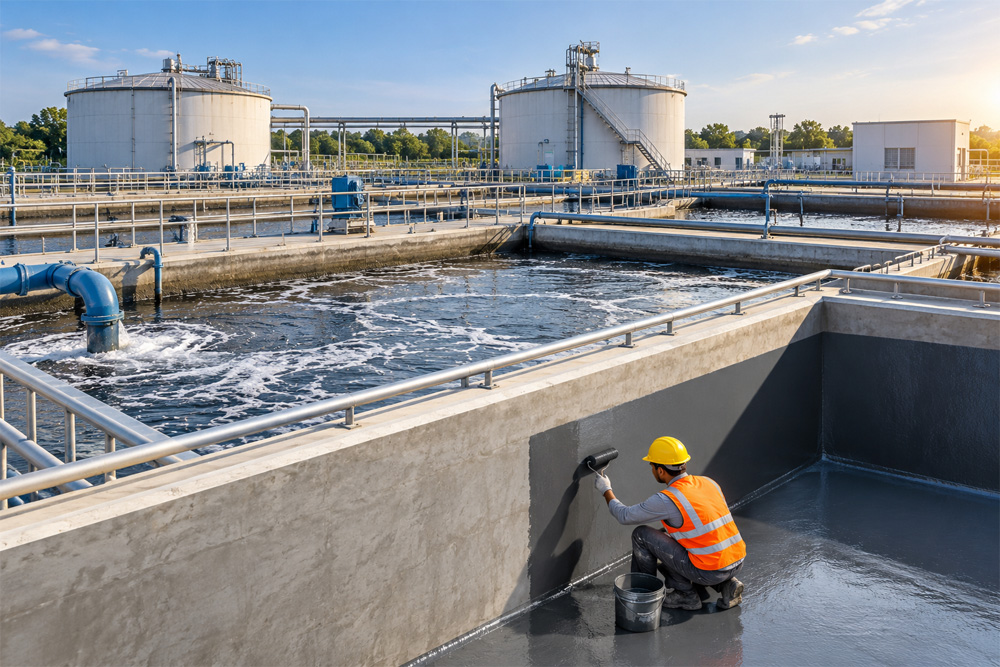
Why Waterproofing Is Important in Sewage Treatment Plants?
Concrete is widely used in STPs because of its strength, availability and ability to form large tanks and channels. However, concrete is not completely impermeable. Water can pass through pores, shrinkage cracks, construction joints and poorly compacted areas. When wastewater contains aggressive chemicals, prolonged exposure can also contribute to the deterioration of concrete and embedded reinforcement.
Water leakage from an STP can contaminate surrounding soil and groundwater, affect nearby structures and create operational problems. In underground tanks, groundwater ingress can increase the volume of wastewater entering the treatment process and place additional demand on pumping and treatment equipment. Leakage from tanks can also reduce the available treatment volume and make it difficult to maintain operating levels.
Waterproofing helps control these risks by forming a suitable barrier against water movement. Depending on the system, it can also provide resistance to chemicals, protect the concrete surface and improve the service life of the structure.






