Real estate projects involve multiple stakeholders, including developers, landowners, contractors, consultants, architects, lenders, suppliers, homebuyers and government authorities. With different contractual obligations, timelines and commercial interests involved, disputes can arise at various stages of a project. Delays in construction, payment issues, changes in scope, quality concerns, contractual interpretation and possession-related matters are among the issues that can lead to disagreements.
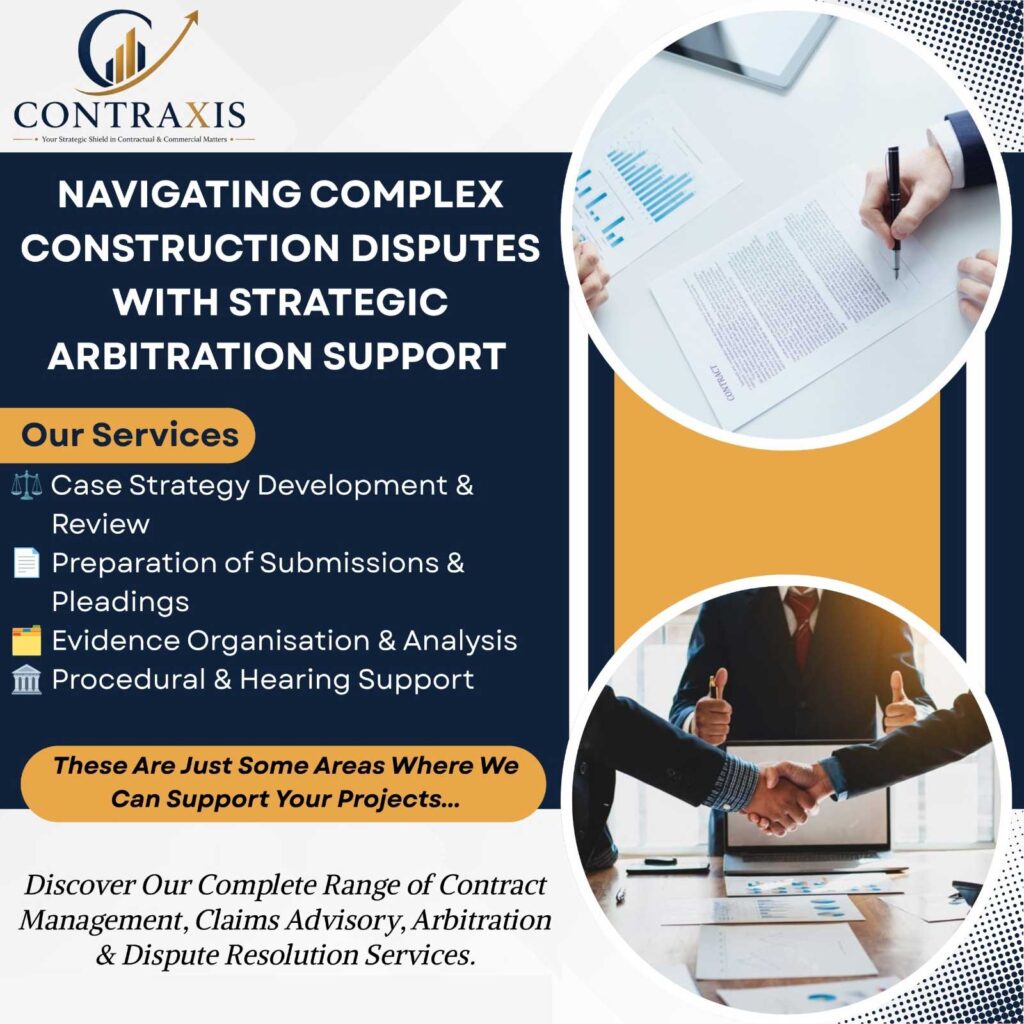
Contraxis provides Arbitration & Alternative Dispute Resolution Support for real estate and construction-related matters. Its services cover arbitration strategy and support, preparation of claims, defences and submissions, evidence management, procedural compliance assistance, and mediation, adjudication and ADR support. The approach focuses on organising the dispute process and supporting clients with the documentation and submissions required at different stages.
Common Sources of Disputes in Real Estate Projects
Disputes can emerge from both development agreements and construction contracts. One of the common areas is delay. A project may be affected by delayed approvals, changes in design, availability of materials, labour constraints, site conditions or actions of one of the contracting parties. Determining responsibility for the delay can become complicated when several events occur simultaneously.
Payment and contractual claims are another frequent source of disputes. Contractors may raise claims for unpaid bills, variations, additional work or escalation, while developers may dispute the basis or value of those claims.
Other disputes can involve:
- Interpretation of development and construction contracts
- Variation and change-order claims
- Defects and workmanship-related issues
- Extension-of-time claims
- Liquidated damages and delay-related claims
- Non-payment or delayed payment
- Measurement and valuation disputes
- Land and development agreements
- Contractor and subcontractor claims
- Termination of contracts
- Defects liability and warranty obligations
- Possession and completion-related disagreements
Because these matters can involve contractual, commercial and technical questions, structured dispute-resolution support is often required.
Arbitration Strategy and Support
Arbitration can be an important mechanism for resolving disputes where the relevant contract contains an arbitration agreement. Construction agreements, development agreements, EPC contracts, consultancy agreements and subcontract agreements may specify the process for referring disputes to arbitration.