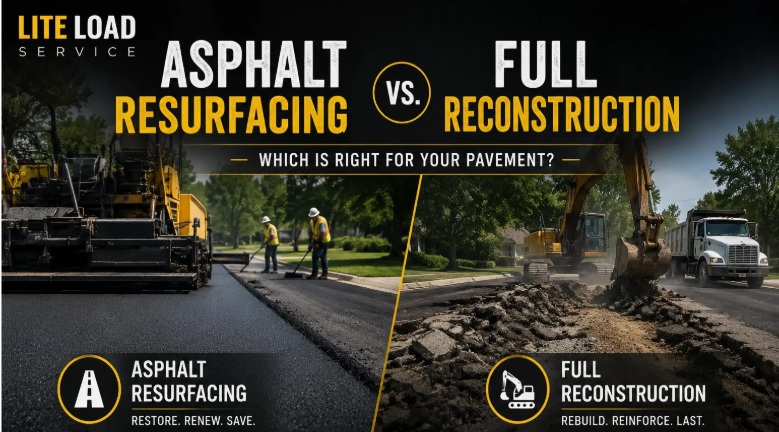
Asphalt resurfacing works when the existing pavement structure is still stable, but the surface has deteriorated. Full reconstruction becomes necessary when the pavement’s deeper layers have failed. That distinction, not how the parking lot looks from the street, is what actually determines the right project.
Choosing the wrong treatment is an expensive mistake. Resurfacing a lot with a failed base only delays the problem, and the cracks come back within a year or two. Reconstructing a lot that only needed a new surface wastes budget that could have gone toward other property improvements. Getting this decision right starts with understanding what each option actually does.
Asphalt Resurfacing vs Full Reconstruction
Both methods restore a damaged parking lot or paved area, but they solve different problems. Resurfacing renews the driving surface. Reconstruction rebuilds the structure underneath it. Understanding which layer is actually damaged is the starting point for every decision that follows.
What Is Asphalt Resurfacing?
Asphalt resurfacing generally involves preparing the existing pavement, repairing appropriate damaged areas, addressing cracks and surface defects, and applying a new asphalt layer over the existing pavement.
This is not simply pouring new asphalt over everything and hoping it holds. A contractor typically mills or cleans the surface, patches problem spots, corrects minor low areas, then bonds a fresh layer on top. Done correctly, resurfacing gives an aging parking lot a new driving surface without removing the entire pavement structure.
What Is Full Asphalt Reconstruction?
Reconstruction means removing failed pavement and rebuilding the pavement structure from the ground up. The basic process includes:
- Removing the existing asphalt
- Inspecting the underlying base and subgrade
- Correcting structural or drainage problems
- Rebuilding the base where required
- Installing new asphalt pavement
Reconstruction tackles underlying issues that resurfacing can’t fix. If the soil has shifted, the base has degraded, or water has compromised the structure, a new surface layer won’t help. In such cases, the project requires full parking lot paving, rebuilding from the subgrade up rather than just treating the surface.
Asphalt Resurfacing: The Smart Upgrade
Surface appearance can be misleading. A parking lot can look worn and faded while the base underneath remains fully capable of supporting traffic. The condition of the base matters more than how the surface looks, because the base is what actually carries the load.
Damage Is Mostly Surface-Level
Resurfacing tends to fit situations involving:
- Minor cracking
- Surface oxidation
- Raveling
- General wear
- Minor surface deterioration
Not every crack qualifies for resurfacing. A single hairline crack is different from a network of interconnected cracks that signals movement below.
The Pavement Is Generally Stable
Resurfacing makes more sense when the pavement remains relatively level and stable. Noticeable dips, waves, or areas that shift underfoot usually point to something happening beneath the surface.
Drainage Problems Are Limited or Already Corrected
Water is one of the biggest threats to asphalt pavement. It works its way into small cracks, softens the base, and accelerates failure from below. Resurfacing should not be used to hide unresolved drainage problems. If water is still pooling or draining poorly, that needs to be corrected first, or the new surface will fail the same way the old one did.
When Full Reconstruction Is the Better Choice
Alligator cracking is a pattern of interconnected cracks that resembles reptile skin. It typically indicates that the pavement structure has been repeatedly flexing under load without adequate support, which points to structural failure rather than a surface problem.
Repeated Potholes and Repairs
A pothole that keeps returning in the same spot, even after repair, usually means the base underneath has broken down. Recurring potholes can indicate problems below the surface rather than isolated surface damage, and they are often the clearest early signal that a lot needs more than another round of patching.
Base or Subgrade Failure
The aggregate base and subgrade support the entire pavement structure. When either one fails, whether from poor original construction, water infiltration, or age, the surface above it cannot hold up long-term regardless of how it is resurfaced.
Severe Drainage or Water Problems
Standing water, poor drainage, and water infiltration can damage the pavement structure by weakening the base and subgrade over time. When drainage problems have been present for a while, the damage frequently extends well past what is visible.
Major Rutting or Settlement
Significant depressions, rutting, or settlement usually mean the pavement has lost its structural support. A new surface layer over these areas will settle again in roughly the same pattern.
7 Signs Your Asphalt May Need Reconstruction
- Extensive alligator cracking. Widespread interconnected cracking across large sections points to structural fatigue.
- Deep or recurring potholes. Especially potholes that return after repair.
- Significant pavement settlement. Visible low spots or sunken areas.
- Severe rutting. Deep wheel-path grooves from repeated heavy traffic.
- Failed pavement edges. Crumbling or breaking edges along the lot perimeter.
- Persistent drainage problems. Water that consistently pools in the same areas.
- Repairs that repeatedly fail. Patches or crack fills that do not hold.
No single symptom automatically means reconstruction is required. The combination and severity of these problems, evaluated together, is what determines the right path forward.
Resurfacing vs Reconstruction: What Should You Compare?
Surface Condition
Surface deterioration tells you how the top layer is holding up, but it does not confirm what is happening underneath.
Structural Condition
The pavement’s underlying layers ultimately determine whether resurfacing will hold or fail again quickly.
Drainage
Standing water, poor grading, and water infiltration are strong indicators of how much stress the pavement has already absorbed.
Repair History
A lot that has needed frequent patching is providing useful evidence. Repeated repairs often mean the underlying problem was never actually resolved.
Expected Remaining Service Life
The right treatment depends partly on how long the property needs the pavement to perform. A lot expected to serve five more years has different requirements than one expected to serve fifteen.
Budget
Initial cost matters, but so does long-term value. Resurfacing is not automatically cheaper in every situation, especially if the base ends up failing shortly after.
Can You Resurface Asphalt With Cracks and Potholes?
Cracks and potholes do not automatically rule out resurfacing. The important question is why the damage occurred and whether the underlying pavement remains structurally sound.
Some damaged areas may need asphalt repair before resurfacing begins. A contractor might patch isolated potholes, complete crack filling in problem areas, and correct any weak base spots first. Once those repairs are stable, a resurfacing overlay can go on top with a reasonable chance of holding up.
Example: A commercial parking lot has faded asphalt, minor cracking, and general surface wear. The base remains stable, and drainage works properly. In this case, resurfacing could make sense, since the damage is largely cosmetic and the structure underneath is intact.
Why Resurfacing Failed Pavement Can Be a Bad Investment
Placing a new asphalt layer over an unstable pavement structure does not fix the underlying issue. What typically happens instead:
- Cracks return, often in the same locations
- Potholes develop again within a short period
- Uneven pavement reappears as the base continues to shift
- Water infiltration continues undermining the structure
- Premature deterioration sets in faster than expected
- The property ends up paying for the same work twice
Example: A parking lot has widespread alligator cracking, recurring potholes, settlement, and standing water. Resurfacing this lot without addressing the base would likely produce the same failures within a season or two, which is why reconstruction tends to be the more appropriate path here.
What Happens During an Asphalt Condition Assessment?
A professional contractor should evaluate:
- Surface cracking
- Potholes
- Rutting
- Settlement
- Drainage
- Pavement thickness where relevant
- Base condition
- Subgrade condition
- Previous repairs
- Traffic loads
- Age and maintenance history
A visual inspection is useful, but it may not reveal every structural problem. Some base and subgrade issues only become apparent through further testing or targeted excavation in a few areas. This is also where isolated problem areas often get flagged for parking lot repair ahead of any larger decision about resurfacing or reconstruction.
How to Choose Between Resurfacing and Reconstruction
A simple way to frame the decision:
Mostly surface damage + stable pavement structure = resurfacing may be appropriate
Extensive structural damage + unstable base or subgrade = reconstruction may be necessary
Mixed conditions = repair failed areas first, then determine whether resurfacing is appropriate for what remains
The final recommendation should always come from an on-site pavement assessment, not from photos or a quick drive-by look.
How Regular Asphalt Maintenance Can Delay Major Reconstruction
Preventative maintenance will not stop every pavement failure, but applied at the right time, it can meaningfully slow deterioration. Common maintenance treatments include:
- Crack filling
- Sealcoating
- Timely asphalt repairs
- Drainage maintenance
- Routine inspections
- Addressing potholes early
Sealcoat and crack filling are maintenance treatments, not substitutes for reconstruction once the pavement structure has already failed. Their value is in slowing down the damage before it reaches that point, which is why routine inspection schedules matter as much as the repairs themselves.
Final Takeaway
Resurfacing treats a deteriorated surface when the pavement structure remains sound. Reconstruction addresses deeper structural failure that a new surface layer cannot fix. Do not choose based solely on the lowest initial quote. A cheaper resurfacing job over a failed base often costs more in the long run once repairs, downtime, and repeat work are factored in.
If it is time for a professional assessment, Lite Load Asphalt works with property and facility managers to evaluate pavement condition and recommend the right path forward, whether that means resurfacing, repair, or a full rebuild.