
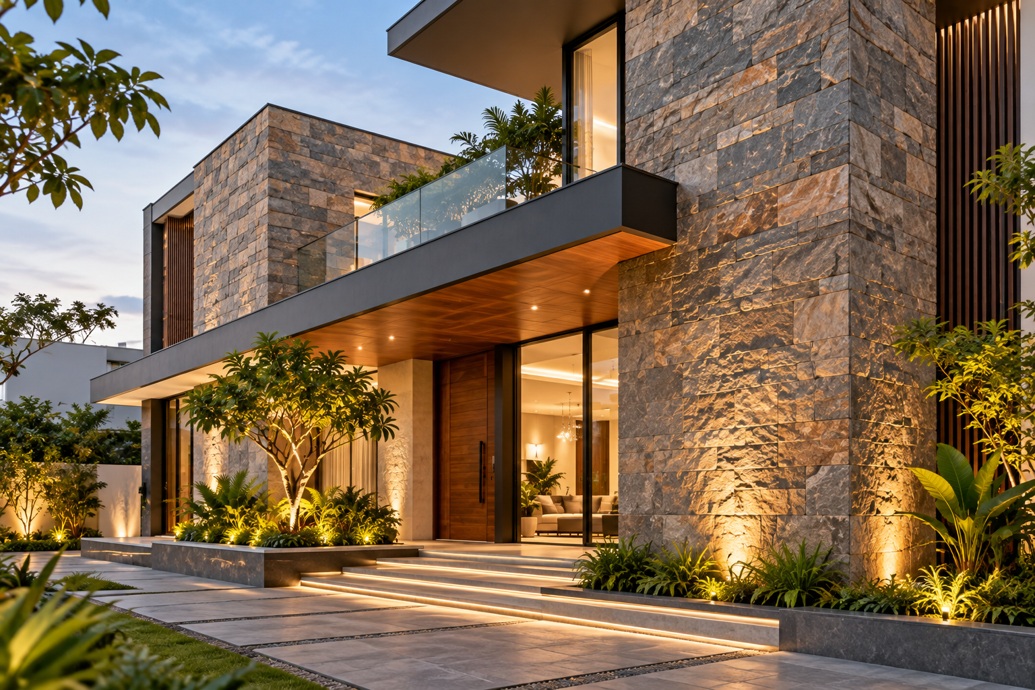
A home’s exterior sets the tone before anyone steps through the front door. A carefully chosen stone wall facade can add depth and texture, whether used around the entrance, across an upper floor, or along a garden-facing wall. The key is to balance these details with the home’s architecture and surrounding finishes. Used thoughtfully, textured surfaces can add character without making the exterior feel visually heavy.
Why Textured Facades Suit Contemporary Homes
Contemporary homes tend to rely on clean shapes, generous glazing and a limited palette. A stone-textured wall softens those crisp lines and adds interest without extra ornament. It can also separate different parts of the building, such as the entrance, a balcony or the boundary wall.
Scale is everything. A heavily patterned finish across every elevation can overwhelm a compact home, while a single feature wall creates a clear focal point. View the building from the street and from the garden before deciding where texture will have the most impact.
Explore Stone-Inspired Engineered Surfaces
Natural stone wall cladding has shaped architecture for centuries, but homeowners now have another option: engineered surfaces with finishes inspired by stone, marble, granite and concrete. Because the same designs are often available for interior walls, floors and worktops, they make it easier to link the facade with the rest of the home.
For an exterior wall, look for surfaces rated UV-stable, so the colour holds up in strong sun. Large-format panels are also worth considering, as they mean fewer joints across a wall.
Choose a finish that supports the architecture rather than simply imitating nature. A subtle granular texture suits a minimalist home, while a bolder marble-inspired look can work around a carefully framed entrance. Keep the surrounding elements simple so the feature surface stays legible.
Stone Wall Facade Ideas for Different Architectural Styles
Where you place texture matters as much as which texture you choose. These stone wall facade ideas offer a useful starting point:
- Entrance feature: Wrap a textured surface around the front door to make the entry feel distinct. Coordinate its colour with the door, lighting and paving.
- Balcony accent: A contrasting finish can define the balcony and add depth to a plain elevation. Check how it looks from both the street and inside.
- Boundary wall: Repeating the facade finish on part of the boundary wall links the house to its landscape. Avoid it if the design already uses several materials.
- Vertical feature: A narrow textured band emphasises height and pairs well with vertical fins or screens.
- Courtyard wall: A textured wall makes a calm backdrop for plants, seating or a water feature. Make sure the surface suits the moisture and exposure.
- Indoor-outdoor continuity: A related finish inside and out makes adjoining spaces feel connected, though installation methods may differ between the two.
Pick the one or two ideas that suit your home best. Using every idea at once usually dilutes the effect.
Choose the Colour and Pattern Carefully
Colour changes how large and prominent a facade appears. Light neutrals keep a wall visually open, while deep browns, greys and charcoal tones make a feature feel grounded. Warm shades complement wood and planting, while cooler tones pair well with glass and metal. In hot climates, remember that darker walls absorb more of the sun’s heat, so they often work best on smaller or shaded areas.
Texture also plays with light. A textured surface casts small shadows that shift its colour through the day, so view samples in both sun and shade, at the scale they will be installed. A controlled palette keeps the exterior balanced:
- Main colour: One shade for most of the walls.
- Feature surface: Use the stone-inspired texture where it has the most impact.
- Supporting finishes: A small number of accents for frames, railings and details.
Repeat these colours and materials where they help link the entrance, boundary and outdoor living areas.
Understand Performance and Installation
A facade faces conditions that interior surfaces never see: sun, rain, temperature swings, wind, pollution and, on taller homes, height. The fixing system, joints, substrate preparation and drainage all matter as much as the surface itself. Large-format panels on upper floors generally need mechanical fixing or a ventilated facade system designed by a qualified professional, not adhesive alone.
Manufacturers like Neotra Advanced Surfaces, for example, offer engineered surfaces that resist fire, scratches, and stains and are unaffected by UV light. A feature list like this is a useful guide, but it never replaces facade engineering or project-specific installation advice. Ask your architect or installer to clarify:
- Product suitability: Is the chosen collection and thickness recommended for exterior walls at your building’s height?
- Fixing system: Which fixing or support system is required?
- Junctions: How will corners, openings, joints and edges be finished?
- Drainage: How will water drain, and how will the wall manage moisture?
- Maintenance: What cleaning will the finished facade need?
A good set of drawings should show these details, not just the surface colour.
Coordinate the Facade with Landscaping and Lighting
The exterior should feel connected to the rest of the property. Planting softens the edge of a textured wall, while paving and outdoor furniture can echo its tones. Leave enough space for plants to grow without blocking ventilation, drainage or maintenance access.
Lighting brings texture to life after sunset, but the type of light matters:
- Grazing light: Fittings placed close to the wall and aimed along it cast shadows that bring out every groove and ridge.
- Wall washing: Fittings set further back spread light evenly, flattening texture and suiting smoother walls.
- Accent lighting: Small spots can highlight the entrance or a single feature panel.
Use fittings rated for outdoor use, avoid glare into windows or neighbouring homes, and test the effect before final installation where you can.
Conclusion
A stone wall facade gives a contemporary home depth, texture and a clear identity. The best results come from choosing a finish that suits the architecture, limiting competing materials and planning the technical details before installation. Stone-inspired engineered surfaces offer a practical route to that look, provided each product is confirmed for exterior use. Add thoughtful lighting and landscaping, and your facade will feel distinctive while staying connected to everyday life.






