
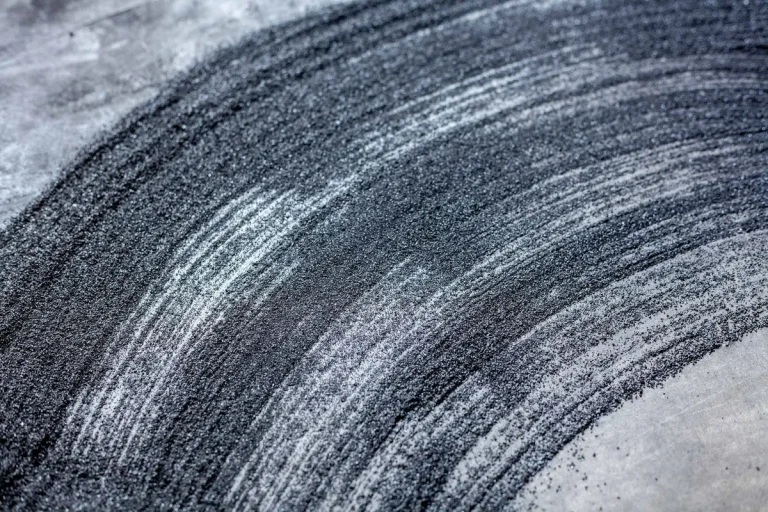
Clean water depends on effective treatment processes, and filtration media have played an important role in those systems for generations. What began largely with relatively simple sand filtration has developed into carefully engineered systems that use different media types, particle sizes, densities, and layered configurations. The development of anthracite coal filtration became an important part of this evolution, helping water treatment facilities use deeper filter beds and different media layers to capture suspended material efficiently.
Over the past century, improvements in engineering knowledge and water treatment requirements have changed how filtration systems are designed and operated. Understanding this progression helps explain why modern facilities carefully consider media specifications rather than treating filter material as a simple commodity.
Early Water Treatment Relied Heavily on Sand
Sand has a long history as a water filtration medium because it is widely available, durable, and capable of capturing suspended particles as water moves through a filter bed. Early filtration systems demonstrated that passing water through granular material could significantly improve its physical quality. As municipal water systems expanded, sand filtration became an established part of many treatment processes.
However, conventional sand filters also presented operational limitations. Suspended material could accumulate relatively close to the surface of the bed, increasing resistance to water flow and eventually requiring cleaning. These limitations encouraged engineers to investigate other media and filter-bed configurations that could use the available filtration depth more effectively.
Anthracite Introduced New Filtration Possibilities
Anthracite began gaining attention as a filtration medium during the early twentieth century. Its physical characteristics made it useful in granular water filtration applications, particularly when combined with other media. Compared with typical filter sand, anthracite is generally lighter and can be supplied in larger particle sizes. These differences make it possible to create layered filtration systems in which coarser, lower-density material remains above finer, denser sand.
This arrangement represented an important development because it allowed suspended particles to be captured at different depths. Instead of concentrating most of the contaminant load near the top of a single-media bed, filtration could occur through a greater proportion of the available media.
Dual-Media Filtration Improved Filter-Bed Utilisation
The development of dual-media filtration represented a significant step forward in granular water treatment. A typical configuration uses a layer of relatively coarse, lower-density coal-based media above a layer of finer sand. Water passes through both materials during normal operation. Larger suspended particles can be captured within the upper media, while finer particles travel deeper before being retained by the sand.
This arrangement can provide several advantages:
- Greater use of filter depth
- Improved solids distribution
- Increased solids-holding capacity
- Potentially longer filter runs
- More efficient filtration operation
These benefits helped establish layered granular filtration as an important approach in modern water treatment.
Filter Media Became More Precisely Specified
As filtration engineering developed, treatment facilities began paying greater attention to the physical characteristics of individual media. Rather than simply specifying sand or coal, engineers could define characteristics such as effective size and uniformity coefficient. These specifications influence how water moves through the bed and how effectively different particles are captured. Density also became particularly important in multi-layer filtration systems because the media must maintain the intended arrangement after backwashing.
Other characteristics considered when selecting filtration media can include particle shape, hardness, durability, and chemical suitability. This shift towards precise specification helped make filter performance more predictable.
Backwashing Became an Important Design Consideration
Granular filtration media cannot continuously capture suspended material without being cleaned. As particles accumulate, resistance to water flow increases and filtration performance can eventually decline. Backwashing became a fundamental part of modern rapid filtration systems. During this process, water is directed through the filter in a way that expands and agitates the media bed, allowing trapped contaminants to be removed.
For multi-media systems, differences in particle density and size help the layers settle back into their intended positions following the backwash cycle. Effective backwashing therefore depends not only on equipment design but also on selecting filtration media with suitable physical characteristics.
Water Treatment Requirements Continued to Expand
During the twentieth century, population growth, urbanisation, industrial development, and increasing expectations for drinking water quality placed greater demands on treatment infrastructure. Water filtration systems needed to process larger volumes while maintaining consistent performance. Treatment facilities also had to manage variations in raw water quality caused by weather, catchment conditions, and other environmental factors.
These challenges encouraged continued improvements in filter design, media specification, monitoring, and operational procedures. Granular media remained valuable because properly designed filters could provide reliable treatment at substantial scale.
Local Filter Media Became Increasingly Important
The availability of suitable filtration materials can influence both the design and operation of water treatment facilities. In Australia, increasing water treatment requirements created demand for filtration media capable of performing similar functions to traditionally imported anthracite. Suitable Australian coal resources provided an opportunity to develop locally manufactured alternatives engineered for filtration applications.
Local production can provide practical advantages for water treatment projects, particularly when consistent particle sizing and project-specific specifications are available. The development of Australian filter coal demonstrates how established filtration principles can be adapted to local resources and supply requirements.
Modern Filtration Extends Beyond Drinking Water
Granular media filtration is now used across a much broader range of applications than traditional municipal drinking water treatment.
Different filtration configurations may be found in:
- Potable water treatment
- Wastewater treatment
- Industrial process water
- Municipal infrastructure
- Desalination pre-treatment
Each application presents different challenges. Industrial process water may have specific requirements related to downstream equipment, while desalination plants need effective pre-treatment to protect later treatment stages. Modern filtration media are therefore selected according to the particular characteristics and performance requirements of each system.
Technology Has Improved Filter Monitoring
Another important change has been the ability to monitor filtration systems more closely. Modern water treatment facilities can track factors such as flow rates, pressure loss, turbidity, filter run length, and backwashing performance. This operational information helps treatment teams understand how effectively filters are performing.
Better monitoring also allows facilities to identify changes that may indicate media deterioration, unusual contaminant loading, or other operational problems. While the basic principle of passing water through granular material remains familiar, modern monitoring has made filtration considerably more controlled and measurable.
The Fundamentals Still Matter
Despite advances in automation and treatment technology, the fundamental characteristics of filtration media remain important. Particle size, density, durability, uniformity, and bed depth all influence how a granular filter performs. Selecting appropriate media requires an understanding of the entire filtration system rather than focusing on one specification in isolation.
Modern engineering has therefore refined rather than replaced many of the principles established during the development of sand, anthracite, and dual-media filtration. The materials may appear relatively simple, but their interaction within a carefully designed filter bed can have a significant influence on treatment efficiency.
Conclusion
Water filtration media have evolved considerably over the past century, moving from predominantly single-media sand systems towards carefully specified dual-media and multi-media configurations. The introduction of anthracite and other coal-based filtration media allowed engineers to use filter-bed depth more effectively and manage suspended solids across different layers. Improvements in particle-size specification, backwashing, monitoring, and media manufacturing have further refined granular filtration. At the same time, locally produced filtration media have provided additional options for Australian water treatment projects.
Although modern water treatment facilities use increasingly sophisticated technology, granular filtration remains based on well-established physical principles. Understanding how filtration media have evolved helps demonstrate why careful material selection continues to be an important part of efficient and reliable water treatment.






