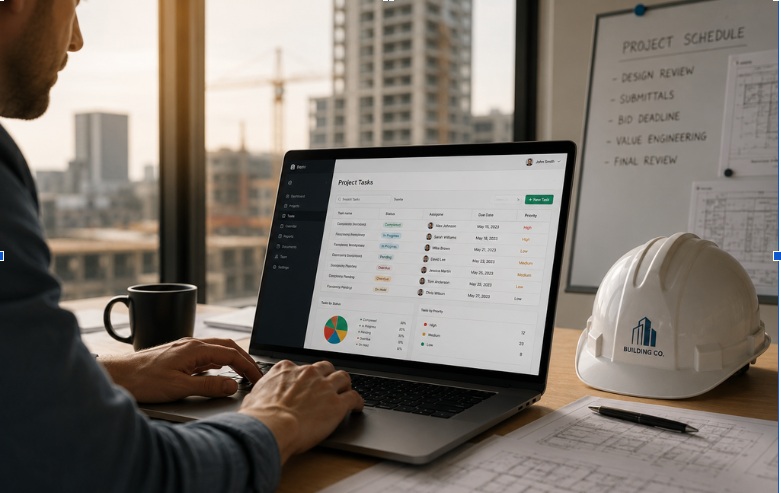
A construction estimate may end with a total, but the work behind that total is rarely simple. Every bid depends on drawing reviews, quantity checks, scope decisions, subcontractor responses, pricing updates, exclusions, alternates, approvals, and dozens of small follow-ups. A single overlooked item can affect the final price, the company’s margin, or its chances of winning profitable work.
Many contractors already have capable estimating tools, experienced staff, and detailed procedures. The trouble often appears between those pieces. Tasks live in one platform, conversations sit in email, notes remain inside spreadsheets, and pricing updates reach only part of the team. People stay busy, yet nobody has one dependable view of what’s complete and what still needs attention.
That fragmentation creates a dangerous illusion. The estimate may look finished while unresolved questions are still sitting in someone’s inbox. A stronger bid process connects the numbers with the work required to confirm them.
Where Estimating Work Starts To Break Down
Estimating teams rarely lose control all at once. The process usually weakens through small gaps that seem harmless in isolation. A reviewer leaves a note that isn’t assigned. A subcontractor promises revised pricing, but no reminder is created. A scope question gets answered in a meeting and never makes it back into the estimate.
Those gaps become harder to manage as bid volume increases. An estimator handling one small project may remember every pending detail. That same approach falls apart when the team is pursuing several jobs with overlapping deadlines, revised drawings, late vendor responses, and last-minute addenda. Memory isn’t a reliable operating system for a growing contractor.
Common breakdowns include:
- Tasks with no clear owner or completion date.
- Pricing changes that aren’t reflected in the latest estimate.
- Review comments stored outside the project record.
- Subcontractor quotes seen by only one team member.
- Scope assumptions that can’t be traced after submission.
- Final approvals completed through informal conversations.
Each problem adds uncertainty to the bid. Even if the team catches the issue before submission, valuable time gets spent searching for information, requesting updates, and confirming work that may already be done.
Why Separate Task Platforms Create More Work
General project management platforms can assign tasks, set deadlines, and track status. Those features are useful, but they don’t automatically understand the structure of a construction estimate. A task labeled “review HVAC pricing” offers little value if the assignee can’t see the affected scope, relevant quote, drawing reference, allowance, and current estimate value.
The team then has to recreate that context manually. Estimators paste links, upload screenshots, copy email conversations, write lengthy explanations, and tag multiple people. What began as an attempt to organize the process becomes another layer of administration.
Separate systems also make completion difficult to verify. A task may show as finished in one platform while the estimate remains unchanged elsewhere. A manager can see that someone clicked “complete,” but not whether the correct cost code was revised or the pricing assumption was documented.
That gap creates questions during final review:
- What changed after the task was completed?
- Who approved the revised number?
- Which quote supports the adjustment?
- Was the change included in the submitted version?
- Can the decision be explained during project handoff?
A task system shouldn’t create another place to search. It should make the estimate easier to understand, review, and defend.
What Connected Estimating Tasks Should Include
Construction estimating task management works best when each assignment remains attached to the information that gave it meaning. A scope question should connect to the relevant division, bid package, drawing, or estimate line. A pricing follow-up should connect to the vendor response that could change the total. A review comment should stay visible beside the portion of the estimate that needs attention.
That structure reduces the time people spend rebuilding background information. The assignee can see the issue, understand its impact, and take action without hunting through folders or asking several coworkers for clarification.
A capable system should support:
- Internal assignments with named owners and due dates.
- External follow-ups involving subcontractors, suppliers, or consultants.
- Reminders that reflect the actual bid deadline.
- Open, completed, overdue, and blocked task statuses.
- Comments and files attached to the related estimating record.
- Private assignments for sensitive pricing or strategy discussions.
- Reusable task templates for standard bid stages.
- Activity logs showing who changed what and when.
The goal isn’t to fill the screen with more alerts. It’s to give every important action a clear place within the bid. Teams should be able to open a project and understand what remains unresolved without conducting a digital scavenger hunt.
Good software also needs enough flexibility to match the contractor’s operation. A specialty contractor, general contractor, design-build firm, and civil contractor won’t follow identical estimating procedures. The system should support repeatable standards without forcing every company into the same rigid process.
Clear Ownership Protects The Bid
Tasks lose value when everyone can see them, but nobody clearly owns them. Shared visibility is useful, yet responsibility still has to rest with a specific person. “The estimating team will check it” isn’t an assignment. It’s an invitation for several people to assume someone else handled the issue.
Connected workflows make ownership visible. Each action can have an assignee, due date, status, and related project context. Managers can see which items are moving, which are stalled, and where someone may need support before the bid reaches a critical point.
Clear ownership also improves conversations. Instead of asking an entire group whether a quote arrived, a leader can check the record and speak directly with the person responsible. That saves time and removes the awkward uncertainty that surrounds loosely assigned work.
Strong accountability doesn’t require micromanagement. It requires a shared record that answers basic questions:
- Who is responsible for the next action?
- What information do they need?
- When must it be completed?
- What part of the estimate could change?
- Has the result been documented?
A process built around those questions helps protect both speed and accuracy. People can focus on completing the work instead of constantly reporting where the work stands.
Keeping Subcontractor Pricing From Slipping Through
Subcontractor and supplier pricing creates some of the most unpredictable pressure in preconstruction. Quotes may arrive late, exclude important scope, use different assumptions, or change after revised drawings are issued. Estimators often spend significant time requesting updates and comparing responses.
Email alone isn’t enough to manage that activity. A quote may be received, read, and forgotten before its numbers are entered. One estimator may know that a vendor excluded equipment rental while the rest of the team assumes the quote is complete. Those details can quietly shape the final bid.
Connected task tools can give each pricing request a visible status. The team can track who has responded, which quotes need clarification, what follow-ups are due, and whether the latest pricing has been included. That record becomes especially valuable near bid day, when several responses may arrive within a short window.
A consistent pricing workflow might include:
- Sending bid invitations to approved subcontractors.
- Confirming receipt and intent to quote.
- Scheduling follow-ups before the submission deadline.
- Reviewing scope coverage and exclusions.
- Comparing pricing against historical costs or competing quotes.
- Approving the selected number for the estimate.
- Recording late revisions before final submission.
This process won’t make every subcontractor respond on time. It will give the estimating team a better chance of seeing the gap early and making a controlled decision instead of a rushed guess.
Creating A Repeatable Preconstruction Process
Every estimator develops personal habits. One person relies on calendar reminders, another keeps handwritten notes, and someone else builds a detailed spreadsheet for each bid. Individual methods may work for a while, but they make collaboration and growth harder.
A repeatable workflow gives the team a common starting point. Each new opportunity can begin with a standard set of stages, responsibilities, and checkpoints. The project may require adjustments, but the essential work doesn’t have to be invented every Monday morning again.
Typical stages may include:
- Bid intake and initial go-or-no-go review.
- Document collection and drawing assessment.
- Quantity takeoff and scope development.
- Subcontractor and supplier outreach.
- Quote leveling and pricing validation.
- Risk, exclusion, and alternate review.
- Executive approval and final submission.
- Post-bid follow-up and project handoff.
Templates help protect consistency without replacing professional judgment. Experienced estimators can still adjust the process based on project type, client requirements, delivery method, and available information. The template simply makes it harder to forget a routine step during a hectic week.
Standardization also helps new employees become productive faster. Instead of learning the entire estimating process through scattered instructions and tribal knowledge, they can see how work moves from intake to submission. Managers gain a clearer framework for coaching, quality control, and workload planning.
Better Visibility Leads To Stronger Reviews
Final bid reviews often happen under serious time pressure. Leaders may need to assess the scope, major cost drivers, exclusions, subcontractor coverage, allowances, and risk exposure in a limited window. They shouldn’t have to spend that time asking whether routine follow-ups were completed.
A connected workflow gives reviewers a cleaner picture before the meeting begins. Open items remain visible, completed tasks retain their history, and major decisions stay attached to the related estimate information. The conversation can focus on judgment and risk instead of basic status updates.
Visibility is also useful before the final review. Managers can monitor active bids and see where work is building up. If one estimator has several overdue pricing tasks or a project has too many unresolved scope questions, leadership can respond while there’s still time.
Useful dashboards should make it easy to identify:
- Bids approaching their submission dates.
- Tasks that are overdue or blocked.
- Quotes that haven’t been received.
- Reviews waiting for approval.
- Projects with unusually high numbers of unresolved items.
- Workloads that may require reassignment.
The purpose isn’t to create surveillance. It’s to help the team direct attention where it can protect the bid. Better visibility gives managers a chance to solve problems before those problems reach the proposal.
Connecting Estimating Decisions To Project Handoffs
Winning the job doesn’t erase the decisions made during estimating. Project teams need to understand the assumptions, exclusions, vendor selections, scope concerns, alternates, and pricing risks built into the proposal. A weak handoff forces operations to reconstruct that history after the contract is awarded.
Connected records make the transition cleaner. The project manager can see which questions were raised, how they were resolved, and what conditions shaped the final amount. Important information doesn’t disappear inside an estimator’s inbox or personal notes.
This continuity can reduce early project confusion. Operations receives more than a cost summary. The team receives the reasoning behind the numbers, including any commitments or uncertainties that require attention during purchasing, scheduling, or subcontract negotiation.
A strong handoff record can include:
- Approved subcontractor and supplier quotes.
- Scope clarifications and documented exclusions.
- Allowances and assumptions requiring confirmation.
- Value engineering options discussed during bidding.
- Pending items accepted as calculated risks.
- Internal notes that affect procurement or execution.
Estimating and operations may have different responsibilities, but they’re working from the same commercial promise. Preserving the decision trail helps both sides protect it.
Choosing A System That Supports The Entire Workflow
Software decisions shouldn’t begin with the longest feature list. They should begin with the contractor’s actual process. Teams need to identify where information gets lost, which follow-ups consume the most time, and what leaders struggle to see across active bids.
A useful evaluation should examine how well the platform connects tasks with estimating data. Buyers should test whether an assignment can be tied to a specific scope item, quote, document, or review issue. They should also confirm that completed work remains easy to trace after the estimate changes.
Ease of use carries real weight. A sophisticated platform won’t improve the process if estimators avoid it because every update requires too many clicks. The best system fits naturally into the team’s daily work and reduces manual documentation rather than adding more.
Contractors should review:
- Integration with current takeoff, accounting, and project systems.
- Permissions for private pricing and management discussions.
- Template options for different project or bid types.
- Reporting across projects, deadlines, and employee workloads.
- Mobile access for team members working outside the office.
- Training, implementation, support, and ongoing maintenance.
- Pricing based on users, projects, features, or bid volume.
- Data ownership, security, backups, and export options.
The right platform won’t replace estimating skill. It will give that skill a more dependable operating structure. Teams gain fewer loose ends, clearer accountability, and a bid record that reflects both the final number and the work behind it.
Frequently Asked Questions About Construction Estimating Task Management
What Is Construction Estimating Task Management?
It’s the process of assigning, tracking, and documenting the actions required to complete a construction bid. Those actions may include drawing reviews, scope checks, quote requests, pricing updates, approvals, and final submission tasks. The strongest systems keep each action connected to the estimate or project information it affects. That connection gives estimators more context than a separate to-do list can provide.
Why Isn’t A General Task Management App Enough?
A general app can handle owners, deadlines, comments, and status changes, but it may not connect those items to specific estimating details. Team members often have to paste links, attach screenshots, or explain the issue in a long description. That extra work increases the chance that important context will be missed. A construction-focused workflow keeps the task closer to the scope, quote, document, or cost item behind it.
Can Built-In Tasks Reduce Estimating Errors?
Task tools can’t eliminate every estimating mistake, but they can reduce preventable oversights. Clear assignments and deadlines make follow-ups harder to forget, while connected records make it easier to confirm that pricing changes reached the estimate. Reviewers can also see unresolved issues before submission. The result is a more controlled process with fewer details left to memory.
How Does Task Management Help With Subcontractor Quotes?
It lets teams track invitations, responses, clarifications, exclusions, revisions, and approvals in one organized flow. Estimators can see which vendors haven’t replied and which quotes still require scope review. Follow-up dates can be tied to the bid deadline instead of managed through scattered reminders. This gives the team more time to address missing coverage or choose an alternative pricing source.
What Features Should Estimating Workflow Software Include?
Useful features include task assignments, due dates, reminders, status tracking, reusable templates, document links, private notes, and activity history. The platform should also connect actions to specific project or estimate details. Cross-project reporting helps managers monitor deadlines and workloads across the department. Permissions and data security are especially important for sensitive pricing discussions.
Does A Standardized Workflow Limit Estimator Flexibility?
A good workflow creates consistency without forcing every project through an identical path. Templates can cover the essential checkpoints while still allowing estimators to add, remove, or adjust tasks based on project conditions. This gives teams a dependable baseline and preserves room for professional judgment. The structure supports the estimator instead of replacing their experience.
How Can Contractors Improve Software Adoption?
Start with the real problems estimators face instead of presenting the software as a management mandate. Configure templates around the team’s current process, remove unnecessary steps, and explain how the platform will reduce searching and duplicate entry. Hands-on training should use active projects and familiar scenarios. Adoption improves when employees can see that the system saves time during an already demanding bid cycle.
How Much Does Construction Estimating Workflow Software Cost?
Pricing varies based on user count, project volume, feature access, integrations, implementation, and support. Some platforms charge a monthly amount per user, while others provide custom packages for larger contractors. Buyers should consider the full cost of setup, training, maintenance, and data migration alongside the subscription price. The cheapest option may cost more in practice if it creates additional manual work or doesn’t fit the company’s process.