
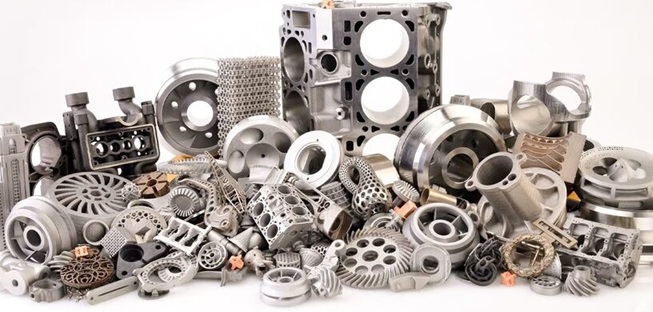
Lightweight components are becoming a key driver of innovation as industries seek products that are more efficient, durable, and cost-effective. Advances in materials and manufacturing technologies are making it possible to reduce weight without sacrificing strength, opening new opportunities across a wide range of applications.
As businesses focus on improving performance, lowering operating costs, and meeting sustainability goals, lightweight product design has become a strategic priority rather than an engineering preference. Companies that embrace these solutions are better positioned to create high-performing products while staying competitive in an increasingly demanding market.
Revolutionizing Product Design: The Role of Lightweight Parts
As lightweight components reshape expectations around performance, sustainability, and cost, product design is changing right along with them. Teams are no longer asking, “How do we shave off a few ounces?” The better question is, “What becomes possible if this part is lighter from the start?”
That shift matters. A lighter part can make a product easier to handle, cheaper to ship, simpler to install, and more pleasant to use. Sometimes it even opens the door to an entirely different design.
For teams moving from prototype to limited production, custom thermoforming services can be a practical way to create lighter housings, trays, panels, covers, and enclosures without jumping straight into expensive hard tooling. That can be a lifesaver when you need quick testing, flexible materials, and tighter control over production before committing to a larger rollout.
Driving Forces Behind the Shift to Lightweight Materials
Energy efficiency gets most of the attention, and fair enough. Lighter products often need less power to move, lift, carry, or operate. In vehicles and aircraft, that can mean real fuel or battery savings.
But the benefits don’t stop there. Lower weight can reduce freight costs, make installation safer, improve ergonomics, and limit wear on connected parts. If you’ve ever tried to move a heavy prototype across a shop floor, you know those “small” weight savings can feel very real.
Sustainability is another major driver. Using less material can mean less waste, easier transportation, and better lifecycle performance when parts are designed with reuse or recycling in mind.
Advances in Material Science Shaping New Design Choices
Across the lightweight materials industry, engineers now have more options than ever. Composites, advanced polymers, aluminum alloys, and bio-based materials all bring different strengths to the table.
That variety gives product teams more freedom. Need heat resistance? Chemical resistance? A better strength-to-weight ratio? A cleaner surface finish? There may be a material and process combination that fits.
Digital manufacturing, thermoforming, and additive processes also make it faster to test, revise, and improve parts. That’s where lightweight technology trends stop being abstract and start becoming useful on the production floor.
And once better materials meet faster production methods, the impact becomes easier to spot across major industries.
Industry-by-Industry Analysis: applications of lightweight components
The applications of lightweight components vary widely, but the goal is usually simple: improve performance without adding unnecessary burden. Each industry has its own pressures, of course. Still, the same basic design logic keeps showing up.
Make the part lighter. Keep it strong. Improve the product. Sounds simple. Getting it right takes work.
Aerospace and Automotive
Aerospace has always treated weight like money. Every pound matters. Lighter brackets, ducts, cabin panels, and structural parts can help reduce fuel use and improve payload flexibility.
In automotive, the rise of electric vehicles has made lightweighting even more important. Battery packs are heavy, and range matters to buyers. Lighter body panels, EV enclosures, interior systems, and support structures can help manufacturers balance range, safety, comfort, and production efficiency.
Construction, Healthcare, and Electronics
Construction teams are also paying attention. Lighter panels, steel systems, and composite elements can speed up installation while reducing structural load. As modular construction grows, this could become even more important. After all, faster installation often means fewer labor headaches.
Healthcare is another area where weight directly affects the user. Lighter prosthetics, orthotics, surgical tools, and wearable devices can improve comfort and mobility. When someone wears or uses a device every day, even a small reduction can make a big difference.
Electronics makers face their own challenge. Devices need to be thin, light, durable, and able to manage heat. That’s not exactly an easy wish list.
Sports, Recreation, and Consumer Products
In sports and recreation, weight can affect speed, comfort, control, and feel. Carbon fiber, titanium, and thermoformed plastics help create equipment that feels more responsive and personal.
Consumers notice these things too. A lighter case, tool, helmet, or accessory may not sound revolutionary on paper, but in the hand, it can be the difference between “fine” and “I love this.”
Here’s a quick comparison of where lightweighting creates value:
| Industry | Common Lightweight Part | Main Benefit |
| Aerospace | Interior panels, ducts, brackets | Fuel and payload gains |
| Automotive | EV enclosures, body panels | Range and safety balance |
| Healthcare | Prosthetics, wearables | Comfort and mobility |
| Electronics | Thin housings, heat-control parts | Portability and reliability |
| Construction | Panels and modular systems | Faster installation |
These examples make one thing clear: weight reduction is not a niche engineering trick. It is becoming part of how better products get built.
Emerging Lightweight Technology Trends Shaping the Next Decade
As composites, advanced polymers, and digital manufacturing mature, lightweight technology trends are moving from lab ideas to daily production. The market signal is strong too: “The global lightweight materials market size was valued at USD 197.1 billion in 2024 and is projected to grow from USD 235.5 billion in 2026 to USD 339.8 billion by 2030, at a CAGR of 9.6% from 2025 to 2030.”
For product teams, the future of lightweight materials will not be about grabbing the lightest material on a spec sheet and calling it a day. That rarely works. The smarter move is to choose the right material, process, geometry, and end-of-life plan together.
Circular Economy and Smarter Material Use
Sustainability now sits much closer to the design table. Parts need to be easier to repair, separate, reuse, or recycle. That means engineers have to think beyond first use.
This can get tricky with certain composites and mixed-material assemblies. Still, progress is happening. Designers are paying more attention to material blends, fastener choices, bonding methods, and disassembly from the very beginning.
That early thinking can prevent expensive problems later. Nobody wants to discover at the end of a product’s life that it is nearly impossible to recover or recycle.
Smart Lightweight Components
Once sensors and IoT features become part of lightweight parts, the conversation changes. The goal is no longer just “lighter.” It becomes “lighter, smarter, and measurable.”
A lightweight panel, for example, might track strain, temperature, vibration, or impact while still doing its main job. That kind of data helps teams plan maintenance before something fails.
It can also support stronger warranties, safer products, and fewer surprise shutdowns. For manufacturers, that is not just convenient. It can protect margins and customer trust.
The future looks exciting, but adoption is not automatic. Lightweighting still comes with practical challenges.
Overcoming Challenges in Lightweight Component Adoption
Even good ideas can stall when cost, durability, and compliance start pulling in different directions. Lightweighting works best when it is treated as a system-level decision, not a last-minute material swap.
Designers, suppliers, quality teams, and production partners need to work from the same assumptions early. Otherwise, a lighter part may solve one problem while creating three new ones somewhere else. Annoying? Yes. Avoidable? Usually.
Balancing Strength, Durability, and Cost
A lighter part still has to survive real life. That means impact, heat, vibration, cleaning chemicals, UV exposure, moisture, repeated handling, and the occasional user who treats it like a hammer.
Hybrid designs can help. A part might combine a rigid frame, a thermoformed shell, and localized reinforcement instead of forcing one material to do everything. That approach can keep weight down while improving strength where it actually matters.
The key is testing. Not just ideal-condition testing, either. Real-world testing.
Standardization and Quality Assurance
In aerospace, medical, automotive, and defense-related work, repeatability matters as much as creativity. Materials must be traceable, processes must be controlled, and inspections must be clear.
This is where experienced manufacturing partners earn their keep. They can help turn a promising concept into a part that passes review, performs consistently, and can actually be produced without drama.
Once those barriers are understood, integration gets easier. The next step is bringing lightweight thinking into product strategy from day one.
Final Thoughts on the Lightweight Revolution
The future of lightweight materials is not just about removing weight. It is about reducing waste, improving performance, controlling cost, and designing products that match how industries actually work today. Aerospace, automotive, healthcare, construction, electronics, and sports are already proving the value in different ways.
The companies that move early, test carefully, and choose the right production partners will have a real edge. Lighter products are not just easier to carry. Very often, they are smarter business.
Common Questions About Lightweight Components
Which industries benefit most from lightweight components?
Aerospace, automotive, healthcare, electronics, construction, and renewable energy often gain the most. These sectors depend on efficiency, safety, comfort, or easier installation, so reducing weight can improve both product performance and operating costs.
What are the main risks of switching to lightweight materials?
The biggest risks are poor material selection, weak durability testing, and missed compliance needs. A lighter part must still handle stress, heat, chemicals, impact, and real-world use without creating safety or maintenance problems.
How can smaller companies adopt lightweight technology cost-effectively?
Smaller companies can start with prototypes, low-volume runs, and targeted part redesigns. Working with experienced manufacturing partners helps reduce trial-and-error, control tooling costs, and choose materials that fit both performance needs and budget limits.






