
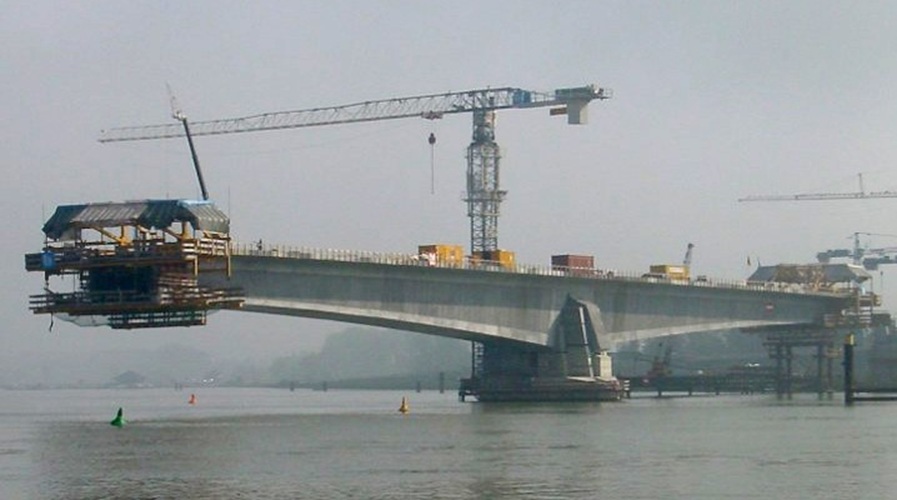
The Balanced Cantilever Construction Method is one of the most widely used advanced techniques in modern bridge engineering, especially for long-span bridges where falsework (temporary supports from ground or water) is difficult or impossible to install. This method is particularly suitable for constructing bridges over deep valleys, wide rivers, busy highways, or environmentally sensitive areas.
Concept of Balanced Cantilever Construction
The basic idea behind this method is simple but highly engineered:
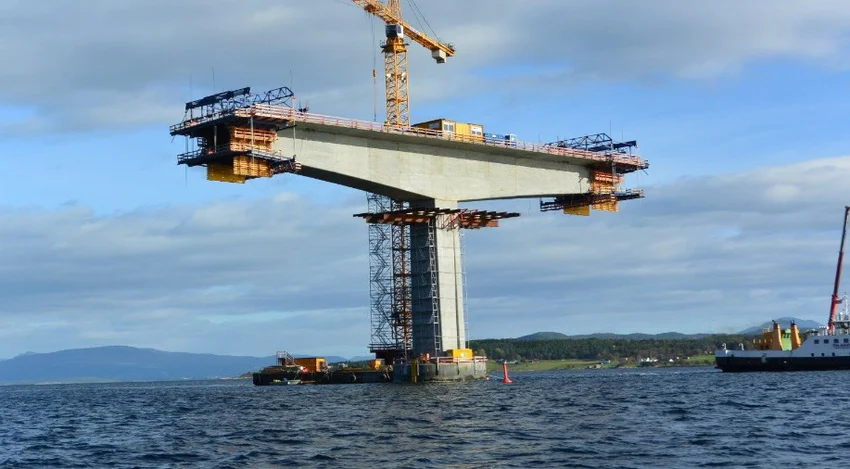
- The bridge is constructed outward from a central support (pier).
- Segments are added alternately on both sides of the pier.
- Each new segment is balanced by a corresponding segment on the opposite side.
- This ensures that the moments (bending forces) remain in equilibrium during construction.
The structure behaves like a cantilever during construction but remains “balanced,” hence the name. Once adjacent cantilevers meet, a closure segment is cast to complete continuity.
Key Components Involved
1. Piers
Piers act as the main vertical supports. They carry the load of the cantilever arms during construction and after completion.
2. Pier Table Segment
The first segment constructed on top of the pier is called the pier table. It acts as the starting platform for further cantilever construction.
3. Cantilever Segments
These are individual precast or cast-in-situ segments added sequentially on both sides of the pier.
4. Form Travelers
Special movable formwork systems that support fresh concrete segments during casting. They are critical equipment in this method.
5. Prestressing System
High-strength steel tendons are used to apply compression forces to the concrete, ensuring strength and stability.
6. Closure Segment
The final segment that connects two cantilever arms, making the bridge continuous.
Advantages of Balanced Cantilever Method
1. No Need for Ground Support
One of the biggest advantages is that it does not require scaffolding or falsework under the bridge. This makes it ideal for deep valleys and rivers.
2. Suitable for Long Spans
It is highly effective for spans ranging from medium to very long lengths.
3. Reduced Environmental Impact
Since construction happens above the ground, it minimizes disturbance to rivers, forests, and traffic below.
4. Structural Efficiency
Balanced construction ensures stability during every stage, reducing risk of collapse or imbalance.
5. Cost-Effective in Difficult Terrain
Although equipment may be expensive, it reduces the cost of temporary supports and access works.
6. High Precision and Quality Control
Especially in precast segmental construction, quality can be controlled in a controlled environment.
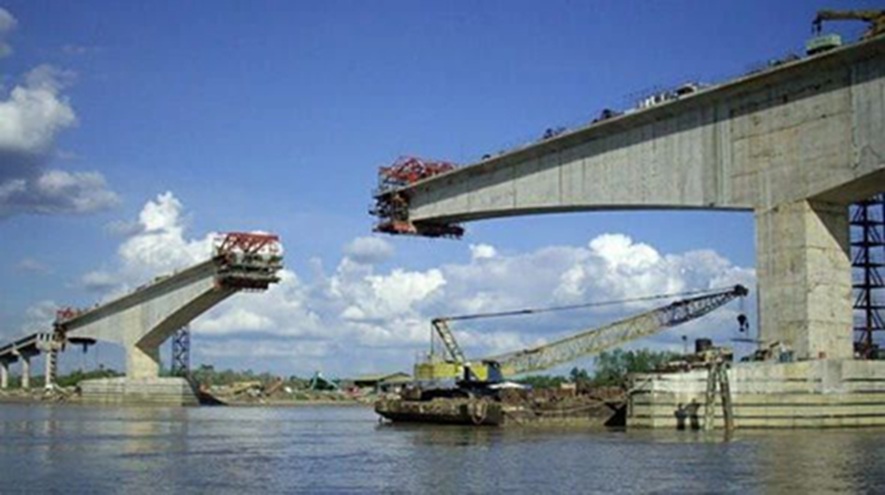
Applications of Balanced Cantilever Method
The method is widely used in:
- Highway flyovers and elevated corridors
- River bridges with deep or wide channels
- Metro rail viaducts
- Mountainous terrain bridges
- Urban infrastructure projects with traffic constraints
It is especially useful in situations where traditional scaffolding is impossible or environmentally restricted.
Construction Procedure
The balanced cantilever construction method follows a well-defined sequence:
Step 1: Construction of Foundations and Piers
Deep foundations such as piles or caissons are constructed first. After this, piers are built up to the required height.
Step 2: Pier Table Construction
A large segment known as the pier table is cast on top of the pier. This acts as the base for cantilever operations.
Step 3: Installation of Form Travelers
Form travelers are installed on both sides of the pier table. These machines support the construction of segments in mid-air.
Step 4: Segmental Construction Begins
Segments are constructed one by one, alternately on each side of the pier:
- First segment on left side
- Then corresponding segment on right side
This ensures balance is maintained at all times.
Step 5: Prestressing of Segments
After each segment is cast, prestressing cables are tensioned to provide structural strength and control deflection.
Step 6: Advancement of Cantilever Arms
The form travelers are moved forward after each segment, and the process repeats until the cantilever reaches the designed length.
Step 7: Closure of Span
When two cantilever arms from adjacent piers meet, a closure segment is cast between them.
Step 8: Continuity and Finishing
Final prestressing is applied to make the structure continuous. Roadway slabs, barriers, and finishing works are then completed.
Types of Balanced Cantilever Construction
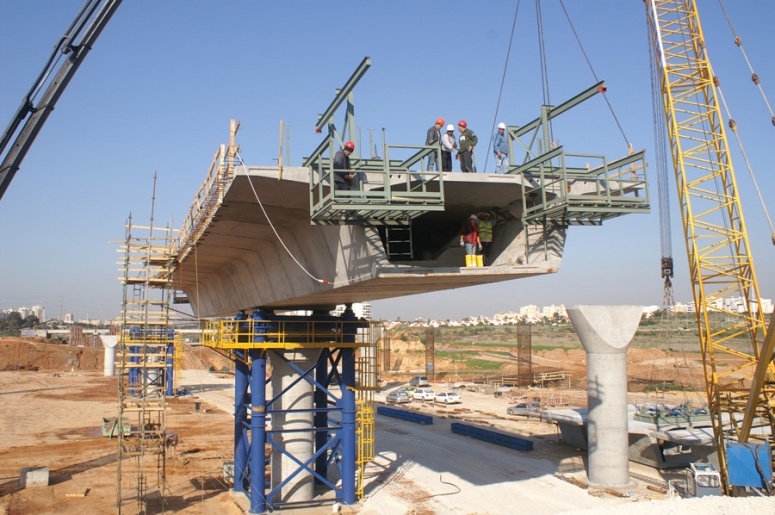
Cast-in-Situ Balanced Cantilever
In this method, bridge segments are cast directly at the construction site. Form travelers are used to support the fresh concrete until it gains strength. This method is mainly used in difficult terrains where transporting large segments is not possible.
Precast Segmental Balanced Cantilever
In this method, bridge segments are manufactured in a casting yard under controlled conditions. These precast segments are then transported to the site and assembled using cranes. It ensures faster construction and better quality control compared to site casting.
Epoxy Jointed Segmental Method
In this method, precast segments are joined together using high-strength epoxy adhesive. This provides excellent alignment, high structural strength, and durability. It is widely used in modern bridge projects requiring precision and long life.
Structural Behavior During Construction
During construction, each cantilever arm acts independently and experiences:
- Positive and negative bending moments
- Torsional forces due to asymmetry (if imbalance occurs temporarily)
- High shear forces near piers
Prestressing plays an important role in counteracting these forces and maintaining structural integrity.
Once the closure segment is installed, the structure becomes continuous, and loads are redistributed efficiently across the entire bridge.
The balanced cantilever method represents a major advancement in bridge engineering because it allows construction in locations that were previously considered impossible. It combines principles of structural mechanics, material science, and construction technology into a practical and reliable system.
Conclusion
The Balanced Cantilever Construction Method is a key technique in modern bridge engineering. Its ability to construct long-span bridges without ground support makes it highly valuable in challenging environments. Although it requires advanced technical expertise and careful planning, its advantages in safety, efficiency, and environmental protection make it one of the most important construction methods in the world.
As infrastructure demands continue to grow, this method will remain central to the development of complex bridges, especially when combined with modern technologies such as digital monitoring, precast systems, and advanced materials.






