
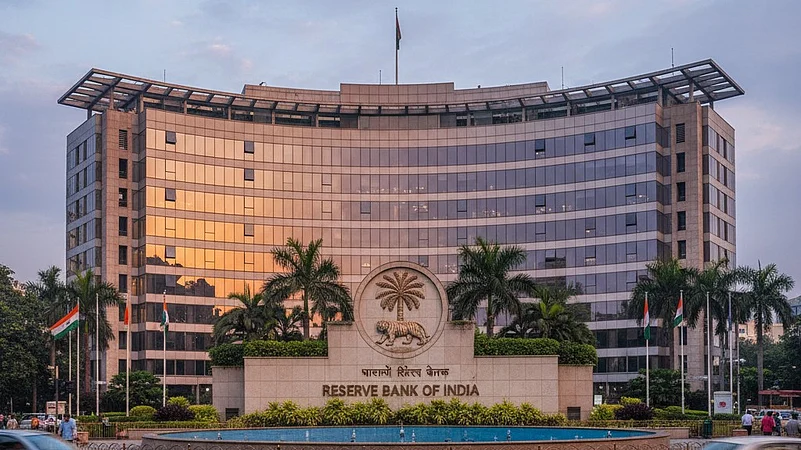
The Reserve Bank of India (RBI) has kept the benchmark repo rate unchanged at 5.25% and retained its neutral policy stance, while raising its FY27 real GDP growth forecast to 6.7% from 6.6% and lowering its inflation projection to 5.0%. The Monetary Policy Committee (MPC) opted to maintain the current policy settings as it monitors evolving domestic inflation trends and global economic uncertainties.
Announcing the outcome of the three-day MPC meeting on Wednesday, RBI Governor Sanjay Malhotra said the committee unanimously decided to leave the policy repo rate unchanged after assessing domestic and global macroeconomic conditions.
The central bank projected FY27 real GDP growth at 6.7%, with quarterly estimates of 7.0% in Q1, 6.4% in Q2, 6.5% in Q3, and 6.8% in Q4. The RBI said the risks to the growth outlook remain evenly balanced.
The RBI also revised its consumer price inflation (CPI) forecast for FY27 to 5.0%, down from the earlier estimate of 5.1%. Inflation is expected at 5.3% in Q1, 4.7% in Q2, 5.9% in Q3, and 5.5% in Q4, with food and fuel prices likely to keep inflation elevated in the near term before moderating later in the financial year.
Explaining the policy decision, Malhotra said India’s economic growth remains resilient but continues to face uncertainties arising from the southwest monsoon, El Niño conditions, geopolitical tensions and global trade developments. He added that the MPC would seek greater clarity on the inflation trajectory before considering any policy action.
The Governor noted that domestic economic activity has remained resilient despite global uncertainty, supported by strong domestic demand, healthy manufacturing activity and a rebound in merchandise exports. High-frequency indicators also suggest that the economy performed better than expected during the first quarter of FY27.
On the external front, the RBI said India’s foreign exchange reserves remain comfortable, providing import cover of more than 10 months and covering nearly 91% of external debt. The central bank expects the balance of payments to remain in surplus, supported by continued capital inflows.
For the real estate sector, the decision to keep the repo rate unchanged is expected to maintain stable borrowing costs for both homebuyers and developers. With no immediate increase in loan EMIs, housing affordability is likely to remain supportive, particularly in the mid-income and premium housing segments. The higher GDP growth projection also signals confidence in economic activity, which could support demand across residential and commercial real estate. However, developers and homebuyers will continue to monitor inflation trends and future monetary policy decisions, as any sustained price pressures could influence financing costs in the coming months.
Real Estate Expert Opinions
Mr. Abhay Mishra, CEO & President, Jindal Realty
“The decision to hold the repo rate steady offers a sense of continuity at a crucial time for the real estate sector. It reassures homebuyers by keeping borrowing costs stable and helps sustain demand momentum. For developers, it provides clarity for planning and execution. Going ahead, policy support and improved liquidity will be key to unlocking the sector’s full potential and ensuring steady, inclusive growth across markets.”
Mr. Rajat Bokolia, CEO, Newstone
“The recent RBI MPC meeting has decided to keep the repo rate unchanged at 5.25%, supporting the momentum for the real estate sector. It translates into stable home loans, directly improving housing demand with better liquidity for developers. This will ensure developers to accelerate project launches and completion timelines, securing an environment of prosperity and reliance across key real estate markets.”
Mr. Yashank Wason, Managing Director, Royal Green Realty
“RBI MPC’s decision to keep the repo rate unchanged at 5.25% is a significant positive note for the real estate industry. The unchanged repo rate will significantly benefit both buyers and developers. For homebuyers, unchanged interest rates mean manageable EMIs which will improve the rate of potential purchasers. For developers this unchanged stance will accelerate the project launches and completion timeline”
Mr. Dharmendra Raichura, VP & Head of Finance, Ashar Group
“The RBI’s decision to maintain the repo rate at 5.25% reinforces confidence in an already resilient residential real estate market by providing certainty around borrowing costs and creating a stable environment for homebuying decisions. The broad consensus among economists that the repo rate is likely to remain at 5.25% through the remainder of 2026 further supports homebuyer sentiment, financing decisions, and healthy residential demand over the next 6–12 months. For homebuyers, predictable EMIs improve purchase planning and affordability, while developers benefit from greater visibility in project execution, financing, and long-term capital allocation. The most supportive RBI policy signal for the housing sector would be a continued commitment to price stability, a predictable interest rate trajectory, faster transmission of policy rates into home loan pricing by banks, and adequate systemic liquidity to ensure efficient credit flow. Together, these measures would improve housing affordability, make home loans more accessible, strengthen end-user demand, and enable developers to plan investments, financing and project execution with greater confidence. A stable and well-transmitted monetary policy environment will play a pivotal role in sustaining long-term growth across India’s residential real estate sector.”
Mr. Rajan Luthra, CFO, Action Construction Equipment (ACE) Ltd.
“The RBI’s decision to keep the repo rate unchanged at 5.25%, while maintaining a neutral policy stance and projecting GDP growth of 6.7%, reflects confidence in the resilience of the Indian economy despite persistent global uncertainties. Continued public investment in infrastructure and capital expenditure remains a key driver of economic growth and reinforces India’s long-term development trajectory.
For the construction equipment sector, a stable interest rate environment provides greater predictability in financing, supports investments, and facilitates the timely execution of infrastructure projects. It also enables businesses to plan with greater confidence and pursue long-term growth strategies. At ACE, we believe this policy direction provides a conducive environment to strengthen our market position, drive innovation, and contribute meaningfully to India’s infrastructure development.”
Mr. Sandeep Agarwal, Executive Director – Finance & Group CFO, Elan Group
“The RBI’s decision to maintain the repo rate at 5.25% provides stability and greater visibility for long-term investment decisions amid evolving global and economic conditions. For the real estate sector, a stable rate environment supports buyer confidence and strengthens the outlook for projects backed by strong fundamentals, strategic locations and credible execution. This will continue to support sustainable growth across all housing segments.”
Mr. Rahul Singla, Director, MAPSKO Group
“The RBI’s decision to keep the repo rate unchanged at 5.25% underscores its commitment to maintaining a fine balance between economic growth and financial stability. The real estate sector has demonstrated remarkable resilience, with demand continuing to remain robust across key markets. Real estate has consistently been regarded as one of the most reliable long-term wealth creation avenues, and a stable monetary policy further reinforces this confidence. The decision is also expected to support developers by ensuring better financial visibility, improved liquidity, and greater confidence in planning and executing projects efficiently.
Adil Altaf, CEO, ANHAD Developers
“The RBI’s decision to maintain the repo rate reflects a balanced approach. As we noted ahead of the policy, stability is just as important for developers managing construction finance and land acquisition as it is for homebuyers. Predictable borrowing costs enable better project planning, timely execution, and sustained buyer confidence, creating a supportive environment for the sector’s long-term growth.”
Mr. Varun Garg, Director, Karyan Group
“The decision to keep the repo rate unchanged comes as a positive signal for the housing sector, particularly at a time when buyer sentiment remains strong. Stable borrowing costs encourage end-users to move ahead with purchase decisions while allowing developers to maintain project momentum. With demand for premium homes continuing to grow, consistent policy support and improved liquidity will further strengthen market confidence and contribute to the sector’s sustainable growth trajectory.”
Mr. Rishabh Periwal, Senior Vice President, Pioneer Urban Land & Infrastructure Ltd.
“The RBI Monetary Policy Committee’s decision to maintain the repo rate at 5.25% provides much-needed stability to the real estate sector. A steady rate environment ensures predictability in home loan costs, encouraging buyer confidence and sustaining housing demand. For developers, stable funding conditions and improved liquidity visibility enable better planning of project launches and execution timelines. Overall, this decision reinforces a growth-oriented environment and strengthens confidence across key real estate markets.”
Mr. Pushpender Singh – Managing Director, JMS Group
“The decision to keep the repo rate unchanged brings much-needed stability and predictability for the real estate sector. For homebuyers, it sustains affordability and supports sentiment in an already improving market. For developers, it allows better financial planning and project execution. However, timely liquidity support and faster approvals remain critical to maintain momentum. A balanced policy approach like this helps build long-term confidence and keeps the sector aligned with India’s growth aspirations.”
Mr. Sudeep Bhatt, Director Strategy, Whiteland Corporation
“The RBI MPC has decided to keep the repo rate unchanged at 5.25%. The stance is significant for the real estate sector. It means stable home loans which directly boost housing demand, while improving liquidity for developers. The sector stands to benefit from the re – established buyer sentiment and a growth in investment appetite with EMIs and borrowing cost stabilising.”
Mr. Jitender Yadav, Director, Roots Developers
“The RBI’s decision to maintain the repo rate at 5.25% is, a catalyst for renewed enthusiasm in the real estate sector. Stability in borrowing costs will make home loans more accessible which will increase demand of home buyers. This will also help developers to speed up project launches and improve completion timelines, strengthening an environment of growth and confidence across key housing markets. We look forward to a pragmatic environment for the real estate industry”
Mr Abhishek Raj, Promoter, Jenika Ventures
For a sector that depends on long-term planning and sustained investment, continuity in monetary policy is as valuable as lower borrowing costs. The RBI’s decision to keep the repo rate unchanged at 5.25% provides much-needed certainty for developers, homebuyers, and investors alike. Residential demand continues to be supported by urbanization, rising household incomes, and improving infrastructure, while the commercial segment is benefiting from business expansion and increasing occupier activity. This balanced policy approach creates a conducive environment for sustained growth across both asset classes. We believe that long-term value creation in real estate will incr…
Mr. Ashok Nehlia, Founder & CEO, Nehlia Developers
Policy stability always plays an important role in strengthening long-term investment sentiment, and the RBI’s decision to maintain the repo rate at 5.25% comes as a reassuring signal for the real estate sector. While the premium farmhouse segment is largely driven by lifestyle aspirations and long-term wealth creation, a stable interest rate environment further strengthens buyer confidence and investment planning. Today’s consumers are increasingly looking beyond conventional housing, with growing interest in spacious, nature-centric developments that offer privacy, wellness, and an enhanced quality of life. As connectivity improves and infrastructure expands across emerging destinations, premium farmhouse communities are becoming an attractive investment proposition. We believe that stable monetary policy, coupled with sustained economic growth, will continue to support demand for high-quality lifestyle developments and encourage long-term investments in this evolving segment.
Mr Pawan Sharma, Managing Director, TRG Group
Commercial real estate thrives in an environment where businesses have the confidence to plan ahead, expand operations, and invest for the long term. For developers like TRG Group, the RBI’s decision to retain the repo rate at 5.25% reinforces confidence by providing a stable monetary framework for businesses and investors. A predictable interest rate environment supports retailer expansion, strengthens occupier sentiment, and encourages capital deployment across commercial assets. As urban infrastructure continues to improve and consumer spending remains resilient, destinations such as TRG The Mall are well-positioned to benefit from stronger leasing activity, higher footfalls, and sustained demand. We believe this policy stability will continue to create a favorable ecosystem for commercial developments while unlocking long-term value for businesses, investors, and consumers alike.
Mr. Sam Chopra, President and Country Head, eXp Realty India
“The RBI’s decision to keep the policy repo rate unchanged at 5.25% comes at a time when global markets continue to face uncertainty from geopolitical developments and commodity price movements. In such an environment, a steady monetary policy provides businesses and investors with greater certainty for planning and investment decisions. For the real estate sector, stable interest rates help maintain buyer confidence while allowing developers to plan projects without the uncertainty of rising financing costs. Although global factors such as energy and raw material prices will continue to influence construction costs, India’s domestic demand and ongoing infrastructure investment continue to provide strong support for the sector. A predictable policy environment is therefore important in sustaining long-term investment across residential and commercial real estate.”
Mr. Rohit Kishore, CEO, Hero Realty
The RBI’s decision provides much-needed stability amid global uncertainties. Predictable interest rates help businesses and consumers plan with confidence, while stable borrowing costs support homebuyers and investment activity. For the real estate sector, this move is expected to sustain buyer sentiment and contribute to steady, long-term growth.
Mr. Aman Sarin, Director & CEO, Anant Raj Limited
“This is a welcome move by the RBI, especially given the ongoing crisis in West Asia, which continues to put pressure on input costs across sectors. In such an environment, stability in interest rates is important for maintaining overall confidence in the market. A steady rate scenario helps in better financial planning and provides clarity for both businesses and homebuyers. When borrowing costs are stable, it becomes easier to plan investments, manage cash flows, and stay focused on execution.
At the same time, current home loan rates are still at reasonable levels, which supports buying decisions. For many homebuyers, affordability today is not just about lower rates, but about certainty in monthly payments. That confidence plays a key role in converting intent into actual purchases. Overall, this decision creates a supportive environment where demand can continue to build gradually, while allowing the sector to navigate external challenges with greater resilience.”
Mr. Anurag Mathur, CEO, Savills India
The RBI’s decision to keep the repo rate unchanged at 5.25% for the fifth consecutive policy review, while maintaining a neutral stance, reflects a balanced approach to supporting growth while remaining vigilant on inflation amid an evolving global backdrop. With inflation within the target range, alongside evolving geopolitical developments and fluctuations in crude oil prices, the policy provides greater macroeconomic certainty and enhances visibility for long-term investment.
For the real estate sector, the status quo is expected to support a favourable credit environment while providing greater certainty on borrowing costs and financing conditions, encouraging homebuyer confidence, capital deployment and timely project execution. Although residential demand, particularly in the mid-income and affordable segments, has moderated, the current interest rate cycle should continue to support the sector. Going forward, disciplined capital allocation, operational agility and a resilient macroeconomic backdrop will remain key to creating long-term value.
Mr. Ashish Bhutani, CEO, Bhutani Infra
“Maintaining the repo rate is a prudential decision by the RBI that has come about after weighing various factors regarding the need to balance between fostering economic growth and preserving macroeconomic stability. A steady interest rate regime gives much-needed predictability to the market participants, which enables them to take important decisions in a more structured manner. The real estate segment is also benefited by policy consistency, and this helps in improving buyer sentiment, proper planning of projects, and ensuring financial discipline within the industry. The fast-paced growth in the infrastructure segment and the strength in demand levels mean that a steady monetary policy would help in keeping the investment momentum going.”
Mr.Ravikant, Co- Founder Elegance Infra and Enterprises
“Maintaining the repo rate by RBI is a favourable sign for the luxury real estate market. Interest rate stability increases confidence levels amongst the high-net-worth individuals and non-resident Indians, which helps in making informed decisions for investing in expensive and valuable properties. Although this segment of the real estate market is less susceptible to interest rates, stability in policy makes them more favorable for investment in luxury property segments.”
Mr. Raghunath Reddy Bhattagiri, MD and Founder, Triguna Projects
“The RBI’s policy on retaining the repo rate is a sign of a prudent stance considering the changing global situation. This stability in the interest rate is good news for the real estate sector since it helps to keep the mood of the buyers alive and EMI rates for home loans constant for the users. In a scenario where the risks of inflation are still there and global headwinds are still strong, the stable rate system gives both the developers and buyers a chance to make plans.”
Overall, the RBI’s decision to maintain the repo rate at **5.25%** has been widely welcomed by the real estate industry. Developers believe that policy continuity will strengthen market confidence, support housing demand, and provide a stable environment for long-term investments and sustainable growth across the sector.
Mr. Yateesh Wahaal, Director, M3M India
“The RBI’s decision to keep the repo rate unchanged at 5.25% provides much-needed stability to the real estate sector, particularly amid an evolving global economic landscape. The move is expected to support buyer confidence by ensuring greater predictability in home loan interest rates, thereby sustaining end-user demand. A stable interest rate environment also enables developers to plan investments and project execution with greater certainty. As the housing market continues to witness healthy demand, this policy continuity will help maintain positive market sentiment and support the sector’s steady growth trajectory.”
Mr. Ashish Sharma, AVP Operations – Brahma Group
The RBI’s decision to maintain the repo rate at 5.25 per cent reflects a balanced approach towards supporting economic growth while ensuring macroeconomic stability amid the current global uncertainties. For the real estate sector, this move provides much-needed certainty and reinforces confidence among both homebuyers and developers. Stable interest rates enhance affordability and encourage buyers to move forward with their purchase decisions, while enabling developers to plan investments, launch new projects, and execute ongoing developments with greater confidence. Overall, the decision is expected to sustain positive market sentiment, support housing demand, and strengthen the sector’s growth momentum in the months ahead.
Mr. Santosh Agarwal, Executive Director & CFO, Alpha Corp Development Limited
“The RBI’s decision to maintain the repo rate at 5.25% reflects a balanced approach towards supporting economic growth while remaining vigilant on inflationary pressures. For the residential real estate sector, policy stability is often more valuable than frequent rate movements, as it provides confidence to homebuyers, investors and developers alike.
For homebuyers, a stable interest rate environment preserves affordability and enables long-term financial planning without concerns of rising EMI obligations. Developers benefit from greater predictability in capital allocation and project execution, while investors gain confidence from a stable macroeconomic backdrop and sustained demand fundamentals.
The housing market has continued to demonstrate resilience, driven by strong end-user demand and rising aspirations for homeownership. With borrowing costs remaining stable and demand momentum intact, we expect the sector to maintain its growth trajectory across key residential markets.”
Mr. Deepak, Sangwan, Chairman, Origen Realty
“The MPC’s decision to keep the repo rate unchanged at 5.25% is indicative of a measured approach which will impact the real estate sector positively. For homebuyers, the stability in repo rate will translate to manageable home loan costs and conviction in buying decisions. For developers, the unchanged repo rate will reinforce disciplined execution of ongoing and pipeline projects. Investors are also set to benefit from a stable environment that consolidates real estate’s positioning as a dependable, non volatile , long term asset. At a broader level, the stability in the repo rate will provide the policy continuity required to maintain the momentum of India’s housing demand cycle and support its ongoing demand-led expansion”.
Mr Amit Goyal, Managing Director, India Sotheby’s International Realty
“This is the fourth consecutive RBI policy with the repo rate unchanged at 5.25%, and we welcome the decision. Despite higher crude prices and June retail inflation rising to an 18-month high, the RBI has prioritised stability. It reflects confidence in the resilience of the Indian economy, while remaining watchful of global risks.
For real estate, the timing is significant. This is the last policy review before the festive season, giving homebuyers and developers greater certainty to plan purchases and launches. Stable EMIs are particularly important as some overheated markets begin to see demand moderate. We expect this unchanged interest rates, together with easing crude prices, to support buyer sentiment and help sustain housing demand through the festive season.”
Mr Vimal Nadar, National Director & Head of Research, Colliers India
“RBI has kept the repo rate unchanged at 5.25% along with continuation of neutral stance, reflecting a vigilant approach amid the resurgence of West Asia crisis, volatile crude prices, fluctuating rupee and persistent inflationary risks. Although trade uncertainty, tariff rate recalibrations & renewed supply chain disruptions could weigh on growth prospects and affect multiple economic sectors, Indian real estate holds potential to navigate the downside risks successfully.
Additionally, stability in interest rates continue to provide comfort to homebuyers, especially in the affordable and middle-income segments. With the upcoming festive season, stability in EMIs could boost housing demand in the next few quarters. However, affordability pressures stemming from rising construction and labour costs may moderate sales as compared to the previous year. Developers, meanwhile, are likely to remain focused on cost management and timely project deliveries. Moreover, the recent RERA advisory to grant a four-month extension to eligible projects impacted by the West Asia conflict, provides a much-needed regulatory relief to affected developers.”
Mr Shrinivas Rao, FRICS, CEO, Vestian
“The RBI’s decision to keep the repo rate unchanged at 5.25% depicts its balanced approach amid prevailing geopolitical uncertainty, an uneven monsoon, and rising domestic inflation. The stable monetary policy is expected to support capital inflows into the real estate sector at a time when developers continue to grapple with elevated construction costs and softer foreign investment sentiment due to the West Asia conflict. The current mortgage rates may offer a limited window for prospective homebuyers before any potential policy tightening. If crude oil prices and inflationary pressures intensify in the coming months, the RBI may consider a 25-basis point rate hike in its next MPC meeting.”
Mr Akhil Saraf, Founder & CEO, Reloy (A proptech Firm)
“The RBI’s decision to keep the repo rate unchanged at 5.25% brings much-needed stability to the real estate sector. In today’s market, predictability is just as valuable as lower interest rates. For homebuyers, it means greater confidence in planning their finances and making purchase decisions, while for developers, it provides the certainty needed to plan investments and execute projects efficiently. Although a rate cut would have provided an additional boost to housing demand, maintaining the current rate strikes the right balance between supporting economic growth and keeping inflation in check. Overall, this policy continuity is expected to sustain positive sentiment across the residential real estate market.”
Mr. Pradeep Aggarwal, Founder and Chairman, Signature Global (India) Ltd.
“The RBI’s decision to maintain the repo rate at 5.25% reflects a prudent and balanced approach at a time when the global economy continues to face geopolitical uncertainties and external headwinds. With inflation remaining within the central bank’s comfort range, policy stability provides much-needed confidence to both businesses and homebuyers. The residential real estate sector has witnessed healthy demand in recent quarters, supported by stable borrowing costs and improving consumer sentiment.
Continuing with the current rate environment will help sustain housing demand, encourage homeownership, and enable developers to maintain project execution and new launches without disruption. Going forward, a stable monetary policy, coupled with strong economic fundamentals, is expected to support the sector’s long-term growth trajectory. “
Mr. Parvinder Singh, CEO, Trident Realty
“An unchanged repo rate provides a stable market condition for the real estate sector, where investment decisions are inherently long term. Buyers today are evaluating projects on the basis of infrastructure, connectivity and overall value, and policy stability complements that decision-making process. For developers, it brings greater visibility in financial planning and project execution. With demand remaining steady across emerging growth corridors, the current policy stance is likely to reinforce confidence and support sustained activity in the residential market.”
Mr. Vikas Bhasin, Managing Director, Saya Group
“The Reserve Bank of India (RBI) has once again kept the benchmark repo rate unchanged at 5.25%, with the last revision having taken place in December 2025. A stable interest rate environment is positive for the real estate sector as it provides confidence and certainty to prospective homebuyers planning to finance their purchase through a home loan. Stability in borrowing costs enables buyers to plan their finances better and make long-term investment decisions without concerns over rising EMIs.
Besides stability, home loans are currently available at attractive interest rates of around 7.25%, making homeownership more affordable than it has been in recent years. With the festive season approaching, several developers, including Saya Group, are offering attractive schemes, exclusive discounts, and flexible payment plans on ready-to-move-in or nearing possession properties with strong long-term value. Combined with stable borrowing costs and festive incentives, this presents an opportune time for homebuyers to make their purchase decision, particularly for those looking at ready-to-move-in or under-construction properties with strong long-term value. “
Mr. Sapan Gupta, Chief Financial Officer, Rodic Consultants
“The RBI’s decision to keep the repo rate unchanged reflects a balanced and forward-looking approach to supporting economic growth while maintaining macroeconomic stability. Coupled with the phased reduction in the Cash Reserve Ratio (CRR), which is expected to enhance systemic liquidity and improve credit availability, the policy provides a positive impetus for capital-intensive sectors such as infrastructure and construction.
As India continues to advance its infrastructure agenda amid global uncertainties, a stable financing environment will facilitate faster project execution, encourage greater private sector participation, and support sustained long-term growth. At Rodic Consultants, we believe these measures will strengthen confidence across the infrastructure ecosystem, enhance investment sentiment, and contribute to India’s vision of building a resilient, self-reliant, and globally competitive economy.”
Mr. Jash Panchamia, Executive Director, Jaypee Infratech Limited
“The RBI’s decision to keep the repo rate unchanged at 5.25% reinforces stability and predictability in the housing market. Attractive home loan rates already being offered by commercial banks have significantly improved affordability, encouraging first-time homebuyers to take purchase decisions with greater confidence. This stable interest rate environment, coupled with healthy financing options, is expected to sustain demand, particularly in the mid-income housing segment, where genuine end-user demand remains strong. We believe policy continuity will further strengthen buyer sentiment, support housing sales, and provide a positive outlook for the residential real estate sector in the coming months. “
Mr. Ashish Agarwal, Director, AU Real Estate
“The decision to maintain the repo rate reinforces stability in the housing market which is critical for sustaining buyer confidence. People buying premium homes are making a significant financial commitment, making predictability an important consideration in their decision-making. While interest rates are only one factor in the homebuying decision, a stable borrowing environment gives buyers greater confidence and one less reason to postpone their purchase. It also allows developers to focus on execution instead of constantly adjusting plans around changing financing conditions. We continue to see demand from buyers looking for better living spaces and steady monetary policy supports that confidence without creating unnecessary uncertainty. “
Mr. Anil Godara, Founder and Managing Director, J Estates
“The RBI’s decision to keep the repo rate unchanged offers much-needed predictability for the real estate sector. A stable interest rate environment enables buyers to evaluate homebuying decisions with greater financial clarity while allowing developers to maintain execution without disruption. In senior living, purchasing decisions are guided by long-term planning rather than short-term market sentiment. As demand for organized senior living communities continues to grow, policy consistency will play an important role in sustaining buyer confidence and encouraging responsible sectoral growth.”
Mr. Shekhar Patel, President, CREDAI
“The RBI’s decision to maintain the repo rate at 5.25% provides much-needed stability and reassurance for the real estate sector. Given the prevailing global uncertainties, maintaining the status quo sends a positive signal of confidence and policy continuity. Real estate is a long-gestation sector, and homebuyers make long-term financial commitments. A stable interest-rate environment enables both developers and buyers to plan with greater certainty. The RBI’s upward revision of India’s GDP growth projection to 6.7% underscores the resilience of the Indian economy despite external headwinds. Sustained economic growth, employment generation and continued infrastructure development remain the strongest drivers of housing demand. Despite supply-side disruptions in recent months due to the situation in West Asia, the housing market has continued to demonstrate remarkable resilience, reflecting strong underlying demand. Stable borrowing costs further support this momentum by providing financing certainty and facilitating timely project execution. Going forward, continued investment in infrastructure, coupled with stronger policy support for affordable housing, will further strengthen the sector’s long-term growth trajectory. Policy stability instils confidence across the housing ecosystem and is particularly significant for an industry where investment and homeownership decisions are made with a long-term perspective.”
Mr. Manoj Gaur, CMD, Gaurs Group
“We welcome the RBI’s decision to maintain the repo rate. In the current global environment, policy continuity carries its own significance. Real estate is a long-gestation sector where stability in financing conditions helps both developers and homebuyers plan with greater confidence rather than react to short-term developments. What is equally encouraging is the confidence the RBI has expressed in the resilience of the Indian economy. Infrastructure-led growth continues to reshape housing demand across NCR, and end-user interest has remained steady despite external uncertainties. A stable interest-rate environment allows this momentum to continue while providing the confidence needed for timely project execution and long-term investment.”
Mr. Sahil Agarwal, CEO, Nimbus Group
“The RBI’s decision to keep the repo rate unchanged reflects a calibrated approach in an environment where global risks, particularly elevated energy prices and geopolitical uncertainty, continue to pose inflationary challenges. For the real estate sector, policy predictability is often as valuable as monetary easing. Stable borrowing costs provide developers with greater visibility on project financing and execution, while enabling homebuyers to make long-term purchase decisions with increased confidence. Coupled with India’s resilient growth outlook and sustained infrastructure investment, the decision should help preserve the positive momentum in residential demand without compromising macroeconomic stability. The emphasis on continuity also gives businesses confidence to plan investments while leaving the central bank with adequate room to respond should external conditions evolve.”
Mr. Uddhav Poddar, CMD, Bhumika Group
“The RBI’s decision to maintain the repo rate at 5.25% reflects a measured response to evolving global and domestic conditions, which is highly reassuring for the real estate sector. More significant is the upward revision in FY27 GDP growth to 6.7%, signalling confidence in the resilience of the Indian economy despite continuing geopolitical uncertainties. For the real estate sector, such policy continuity provides stability in financial planning while supporting sustained housing demand and project execution.”
Mr. Amit Modi, Director, County Group
“Keeping the repo rate stable at 5.25% shows the RBI’s focus on maintaining macroeconomic balance while closely monitoring global developments. Such policy consistency provides more certainty for planning in the real estate sector. Buyers have become much more deliberate in their buying decisions, placing equal importance on lifestyle upgrades, enduring value and financial security. In this context, stable borrowing conditions become an important confidence driver. Combined with infrastructure-led growth and the rising preference for organised developments, these factors are expected to sustain healthy residential demand in the coming quarters.”
Mr. Prateek Tiwari, Managing Director, Prateek Group
“Maintaining the policy rate at 5.25% signals the RBI’s intent to strike a balance between inflation management and growth preservation. While rising input costs remain a concern, especially in construction, a stable rate environment helps prevent any immediate shock to home loan affordability. This is particularly important for end-users, whose purchase decisions are highly sensitive to borrowing costs. The neutral stance further reinforces predictability, allowing developers to plan launches and pricing strategies with greater clarity, thereby supporting sustained demand across key residential micro-markets.”
Mr. Sanjay Sharma, Director, SKA Group
“The RBI’s decision to maintain the repo rate at 5.25% amidst inflationary risks stemming from global crude price movements shows a continued commitment to a patient and data-driven policy approach. This stance helps to keep borrowing costs steady and liquidity conditions accommodative for homebuyers and developers. A rate cut might have given housing demand a further boost, but staying the course looks like a reasonable approach amid the evolving macro picture. Sustained end-user demand and infrastructure-led development will continue to be the key drivers of growth for the real estate sector going forward.”
Mr. Yash Miglani, Managing Director, Migsun Group
“The RBI decision to keep the repo rate unchanged at 5.25% sends a reassuring signal to the housing sector at a time when end-user demand continues to remain healthy. Stable lending conditions encourage homebuyers to move ahead with greater financial clarity, while developers gain better visibility for project planning and future launches. Supported by strong infrastructure development across NCR, the market is well placed to sustain steady residential growth over the coming quarters.”
Mr. Neeraj Gulati, Managing Director, Assotech
“The decision of the RBI to keep the repo rate unchanged at 5.25% creates a conducive policy environment for the housing market. Tier 2 markets, in particular, are likely to benefit from greater certainty around borrowing costs. Demand in such cities is end-user driven, and certainty with regard to borrowings forms an important factor in determining the long-term ownership decision. The current policy also allows developers to launch their projects in a more disciplined manner, with supply aligned to market needs. As infrastructure and economic opportunities continue to improve across emerging cities, Tier 2 residential markets are well placed to witness steady and sustainable growth.”
Mr. Sehaj Chawla, Managing Director, TREVOC Group
“An encouraging step for the real estate sector. The announcement reinforces an important message: the RBI remains confident about the resilience of the Indian economy and has decided to maintain the status quo on the repo rate. This approach is well suited to a sector like real estate, where buying decisions are rarely driven by short-term interest-rate movements alone. Strong domestic demand, improving economic prospects and a stable financing environment should continue to support healthy momentum across the residential market.”
Image- outlookbusiness.com






