
As urban expansion accelerates across the National Capital Region, areas such as Dwarka Expressway and Jhajjar are presenting increasingly complex engineering challenges. A majority of these challenges are due to changing soil conditions and groundwater behaviour. Recent studies have highlighted concerns ranging from weak soil strata affecting construction projects in Jhajjar to groundwater-driven land movement in parts of Dwarka Expressway. This reinforces the need for site-specific structural engineering rather than one-size-fits-all construction approaches.
The company of Perceptive Ideas Consulting Engineers is focused on helping the developers, corporations, and all other stakeholders in the process of infrastructure in solving challenges thanks to the sophisticated structural engineering designs which combine geotechnical insights, water management practices, robust construction materials, and climate-resistant engineering.
On this milestone achievement, Ajay Gupta, Founder, Perceptive Ideas Consulting Engineers, said:
“Every structure performs only as well as the ground beneath it. Our engineering philosophy begins with understanding site-specific soil characteristics, groundwater conditions, and long-term environmental behaviour before designing structural systems. Durability is not a single product or intervention, it is a system that must be engineered right from the beginning. The right design, materials, and execution can prevent future problems, extend service life, and reduce lifecycle maintenance costs.”
Addressing Ground and Water Challenges Through Engineering
The role of structural design engineers is essential in transforming geological research data into engineering applications. This is because soil’s strength and subsidence ability, as well as groundwater movement and groundwater chemistry, directly influence the selection of foundation type, load-bearing ability of the building, and its permanent characteristics.
Elevated chloride and sulphate concentrations in groundwater can accelerate reinforcement corrosion and concrete deterioration, while shallow groundwater tables can create continuous hydrostatic pressure on raft foundations, basements, retaining walls, and underground structures. If there are areas where ground conditions change significantly from one construction site to another, comprehensive engineering analysis is needed in order to minimise the potential risk during operations.
Multi-Layer Durability Strategy
Perceptive Ideas uses an approach that brings together structural engineering practices along with geotechnical information, ecological factors, and cutting-edge engineering techniques to develop a multi-layer durability strategy for long-term structural performance. Rather than relying on a single protective measure, the company focuses on multiple engineering interventions that work together to improve structural durability, minimise water ingress, and enhance the service life of buildings and infrastructure.
The strategy includes:
- Use of impermeable concrete to reduce water ingress and improve durability.
- Protection of concrete against corrosion and sulphate damage in aggressive ground conditions.
- Quality monitoring during concrete mixing, pouring, compaction, and curing to ensure consistent performance.
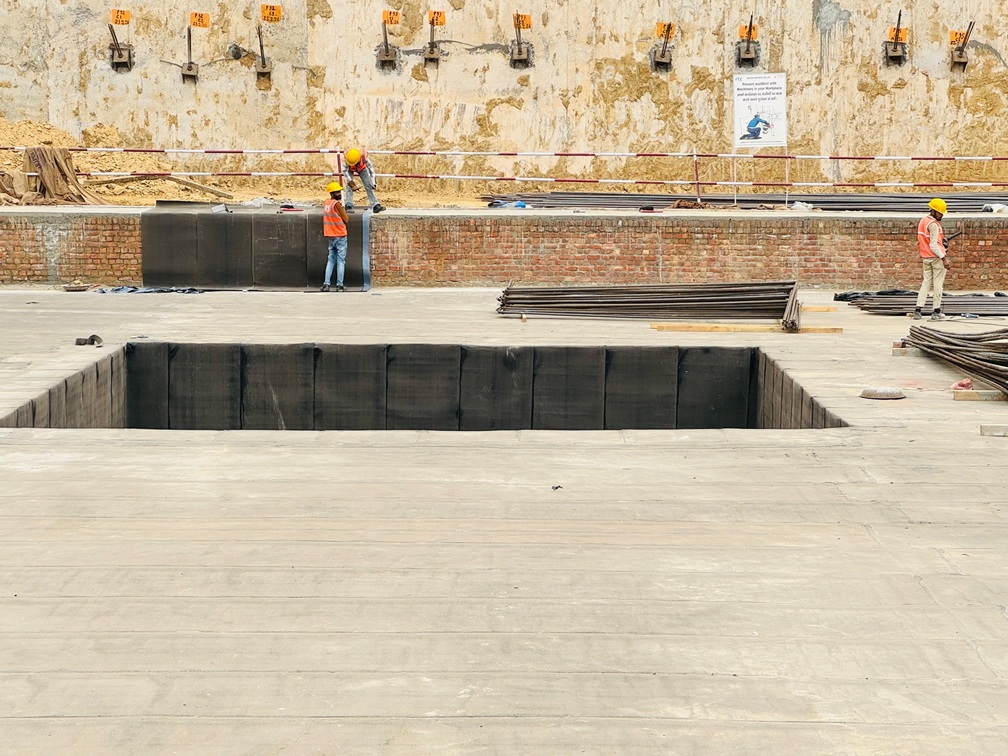
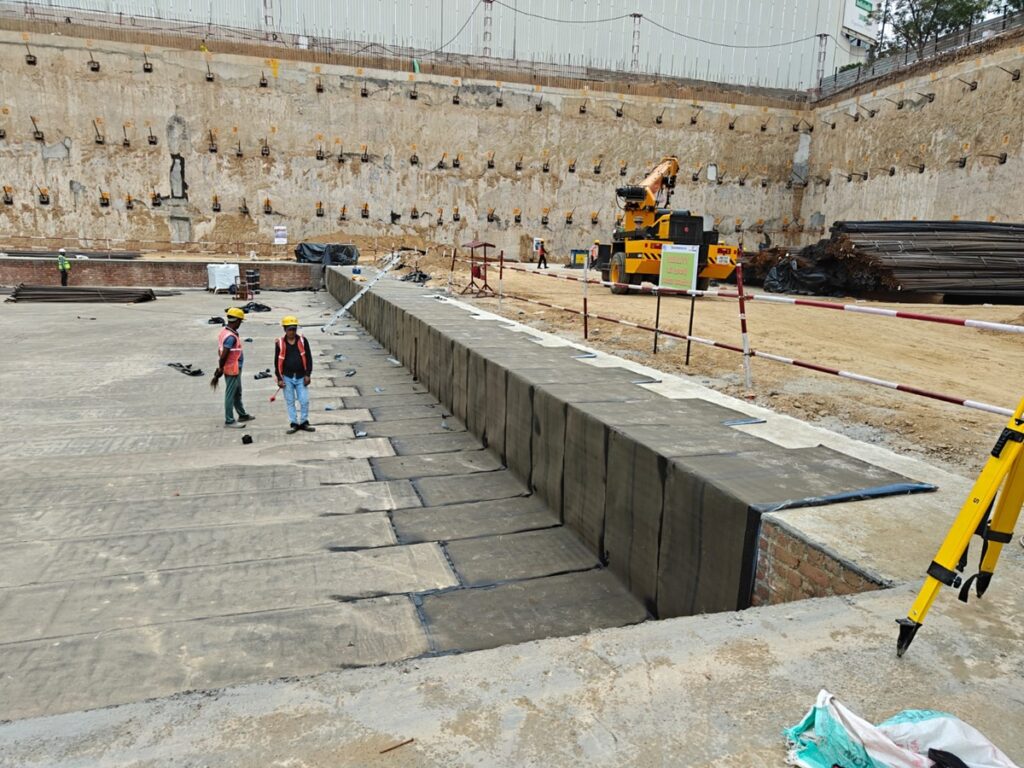
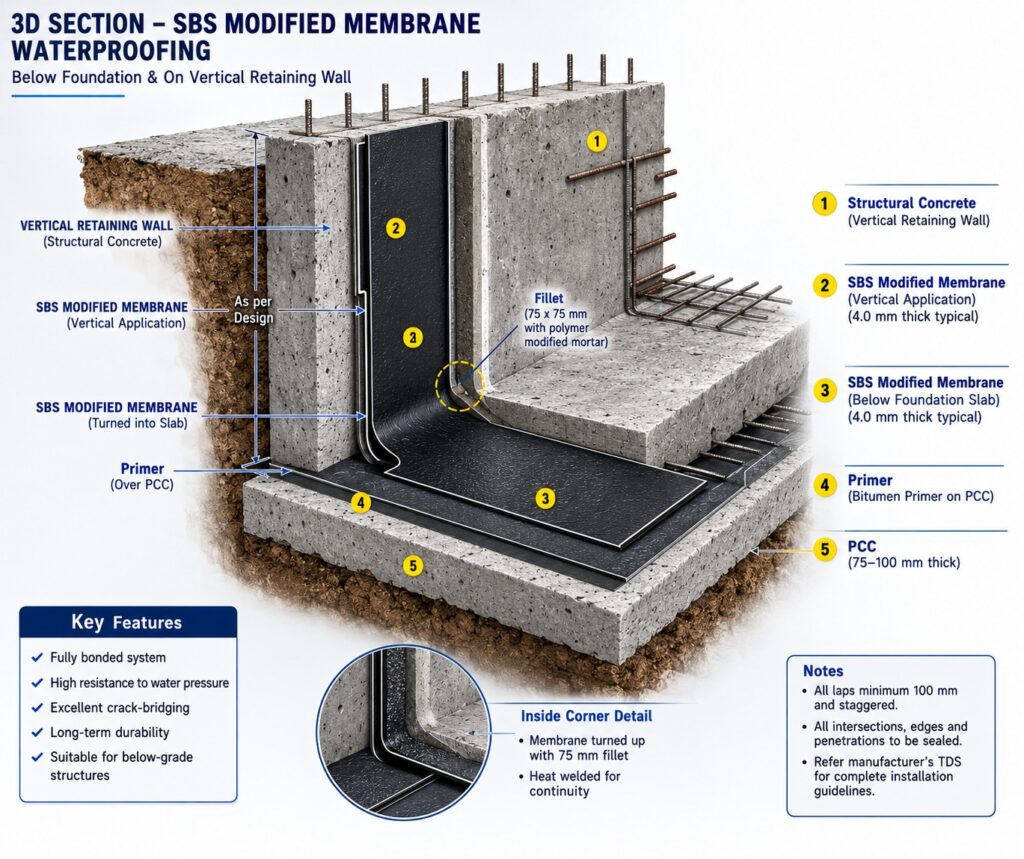
- Installation of modern waterproof membranes beneath raft foundations to create an additional barrier against groundwater penetration.
- Use of integral crystalline waterproofing to reduce concrete permeability and seal water through cracks, providing long-term protection against moisture infiltration.
Integrated Engineering Approach
The integrated design approach of Perceptive Ideas brings together structural engineering, geotechnical engineering, and related disciplines to develop construction solutions that address site-specific conditions. By combining engineering expertise with detailed site investigations, the company aims to improve structural performance, durability, and long-term reliability while reducing construction and maintenance risks.
The approach includes:
- Scientific groundwater management through hydrological investigations and professionally designed dewatering systems.
- Evaluation of foundations for hydrostatic uplift, with measures such as uplift anchors or tension piles considered wherever required.
- Selection of corrosion-resistant reinforcement for critical structural components in aggressive environments to improve long-term durability.
- Integration of geotechnical data with structural design to develop foundation solutions suited to the site’s soil and groundwater conditions.
Focus on Long-Term Performance
The present-day task of the firm is not only to ensure the safety of the structure but also to provide a construction solution having a long lifespan and low future maintenance costs. Solving possible problems at the design stage avoids the need to make expensive repairs and does not disrupt the operations of the structure.
With the continuing rapid urbanisation of India, the representatives of the company express their opinion that resilient construction should begin with proper engineering decisions taken at the site. Each site requires an individual engineering approach, and each building project should begin with a thorough analysis of the soil. Effective water management must always be considered in the process of designing buildings.
Perceptive Ideas believes in a simple philosophy:
‘Design once. Protect for generations. Build the foundation right the first time.’
By combining site-specific analysis, durable materials, effective water management, and robust structural design, the firm aims to create safer, longer-lasting structures with lower lifecycle maintenance requirements.
As urban development expands into regions with varying soil conditions and groundwater challenges, engineering decisions made during the design stage play a significant role in ensuring long-term structural performance. By integrating geotechnical analysis, structural engineering, water management, and durability-focused construction practices, Perceptive Ideas aims to deliver structures that are safe, durable, and cost-effective throughout their service life. The firm’s approach reinforces the importance of building on a strong engineering foundation to reduce future maintenance requirements and improve the long-term resilience of infrastructure.






