
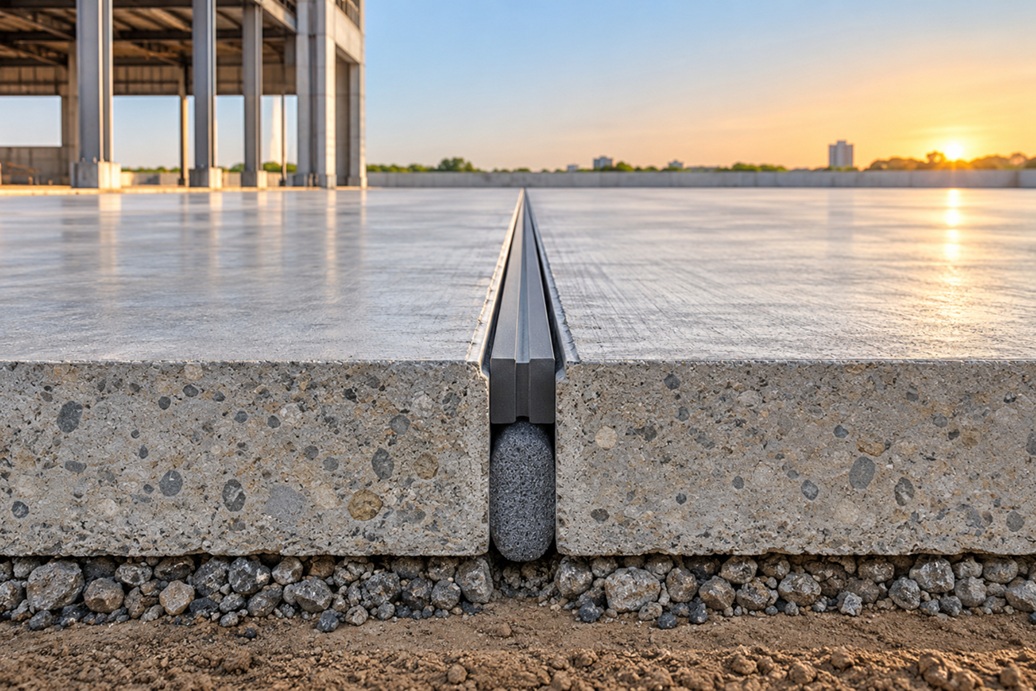
Concrete undergoes dimensional changes throughout its service life. Changes in temperature, moisture loss, drying shrinkage, autogenous shrinkage, creep and restraint from surrounding elements can create stresses within a concrete structure. When these movements are not adequately accommodated, they can result in cracking, joint distress, leakage and localised damage.
Concrete joints provide planned locations where movement, shrinkage or deformation can occur with greater control. Proper joint design therefore forms an important part of concrete construction, particularly in large slabs, industrial floors, pavements, retaining structures, roofs, bridges and other extensive concrete elements.
The objective is not necessarily to eliminate all movement or cracking. Instead, joint design aims to control where movement takes place, transfer loads where required and prevent uncontrolled cracking from affecting the performance of the structure.






