
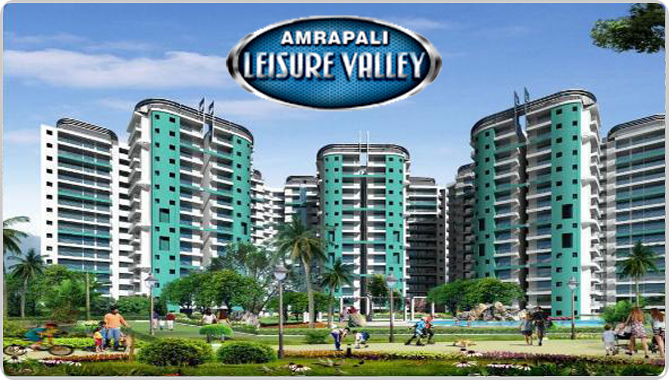
Possession letters have started reaching homebuyers at Amrapali Leisure Valley in Noida, bringing relief to residents after years of waiting. However, 86 residential and commercial real estate projects across Gautam Budh Nagar and Ghaziabad continue to remain entangled in insolvency proceedings, highlighting persistent delays in project resolution under the Insolvency and Bankruptcy Code (IBC).
The handover process began on Friday at Phase 1 of Adarsh Awas Yojana in Amrapali Leisure Valley. Supreme Court-appointed court receiver R Venkataramani distributed no-objection certificates (NOCs) and possession letters to 51 homebuyers from three towers — A1, G1 and H1. The project comprises eight towers.
The National Buildings Construction Corporation (NBCC), which is involved in completing stalled Amrapali projects, said the keys were expected to be handed over to these buyers within 30–45 days. For many residents, the development marks progress after years of uncertainty over the delivery of their homes.
Dipankar Kumar, vice president of the Noida Extension Flat Owners Welfare Association (NEFOWA) and a homebuyer in the project, said the handover process had begun after nearly 14 years of waiting.
Insolvency Proceedings Continue to Delay Project Completion
The Amrapali case dates back to 2017, when its parent company, Ultra Homes Construction Private Limited, approached the National Company Law Tribunal (NCLT). An insolvency resolution professional (IRP) was subsequently appointed for the associated companies.
The issue of homebuyers’ rights during insolvency proceedings also became a major concern. NEFOWA challenged a provision under which homebuyers were not recognised as financial creditors in residential projects. The association argued that buyers risked losing their investments if developers entered liquidation.
On August 17, 2018, Parliament passed the Insolvency and Bankruptcy Code (Second Amendment) Act, 2018, granting homebuyers the status of financial creditors. The Supreme Court upheld the amendment’s constitutional validity on August 9, 2019, in the case of Pioneer Urban Land and Infrastructure Ltd vs Union of India.
According to Kumar, the insolvency process has nevertheless created significant hurdles for stalled projects, with cases continuing for years while buyers wait for their homes and invested money.
Of the 86 projects currently under NCLT proceedings in the two districts, 56 are located in Gautam Budh Nagar and 30 in Ghaziabad. Several projects have remained stalled since 2019, affecting both residential buyers and commercial stakeholders.
Delays in NCLT Cases Raise Concerns
Insolvency expert Sumit Khanna said the time taken to resolve cases has moved well beyond the timelines envisaged under the IBC. The legislation initially provided 180 days for resolution, extendable to a maximum of 330 days under the prescribed framework.
However, Khanna said cases ending in approved resolution plans take an average of 633 days, while the period from admission to approval can approach 750 days.
He identified delays in admitting insolvency cases and repeated litigation as two major reasons behind the prolonged proceedings. Although the IBC prescribes a 14-day period for the tribunal to establish whether a default has occurred, the deadline has often been treated as directory rather than binding, resulting in admission delays that can extend beyond a year.
Challenges to tribunal decisions, creditor committees, valuations, claims and bidder eligibility further lengthen the process.
Staff shortages have added to the pressure. Khanna said the NCLT’s sanctioned strength remains at 63 members, while only 52 were serving as of July. A parliamentary panel also reported in August that insolvency cases account for more than half of the tribunal’s workload and over 95% of its staff are employed on a contractual basis.
Coordination Needed for Faster Revival
Earthcon Universal Infratech director Shadab Khan said support from development authorities and RERA could help revive projects where developers demonstrate a clear commitment to completing construction.
UP RERA chairperson Sanjay Bhoosreddy clarified that once a project enters NCLT proceedings, it falls outside the regulator’s jurisdiction.
The handover at Amrapali Leisure Valley offers some relief to affected homebuyers, but the remaining stalled projects underline the need for faster insolvency resolution, adequate tribunal staffing and better coordination among stakeholders. Timely decisions and effective project revival measures will be essential to help more homebuyers receive possession of their homes.
Image- amrapaligroups.co.in






