
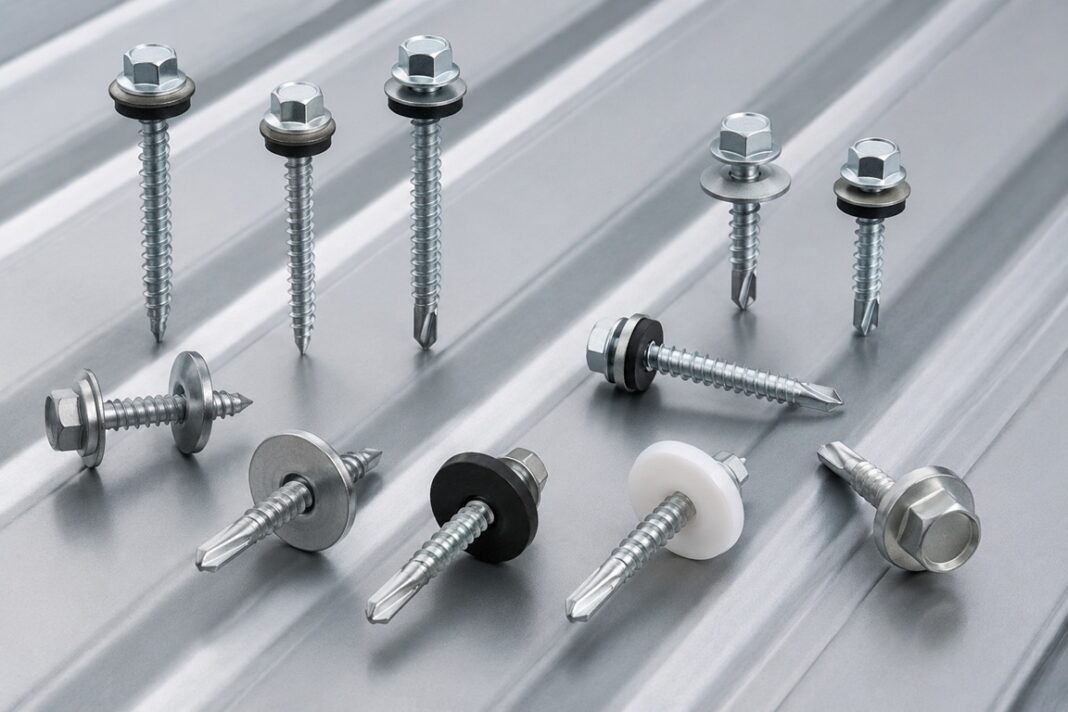
Metal roofing has become one of the fastest-growing roofing solutions for industrial, commercial, institutional, agricultural, and residential buildings. Its durability, long service life, low maintenance, fire resistance, and ability to withstand harsh weather conditions make it a preferred choice for modern construction. Available in profiles such as corrugated sheets, trapezoidal sheets, standing seam panels, and insulated sandwich panels, metal roofing is widely used for factories, warehouses, logistics parks, airports, shopping centres, educational institutions, and residential developments.
While roofing panels and structural framing often receive primary attention during roof design, fasteners are equally important. These seemingly small components are responsible for securely attaching roofing panels to the supporting structure, resisting wind uplift, accommodating thermal movement, and maintaining a watertight seal throughout the roof’s service life.
Importance of Fasteners in Metal Roofing
Fasteners are the primary mechanical connection between the roofing sheets and the building structure. They ensure that the roofing system performs as intended under various loading and environmental conditions.
Their primary functions include:
- Securing metal roofing panels to the supporting framework
- Resisting wind uplift and suction forces
- Preventing movement caused by thermal expansion and contraction
- Maintaining waterproof joints
- Transferring loads safely to the supporting structure
- Reducing roof vibration and noise
- Improving the overall service life of the roofing system
Although fasteners account for only a small percentage of the total roofing cost, their quality directly influences the long-term performance of the roof.
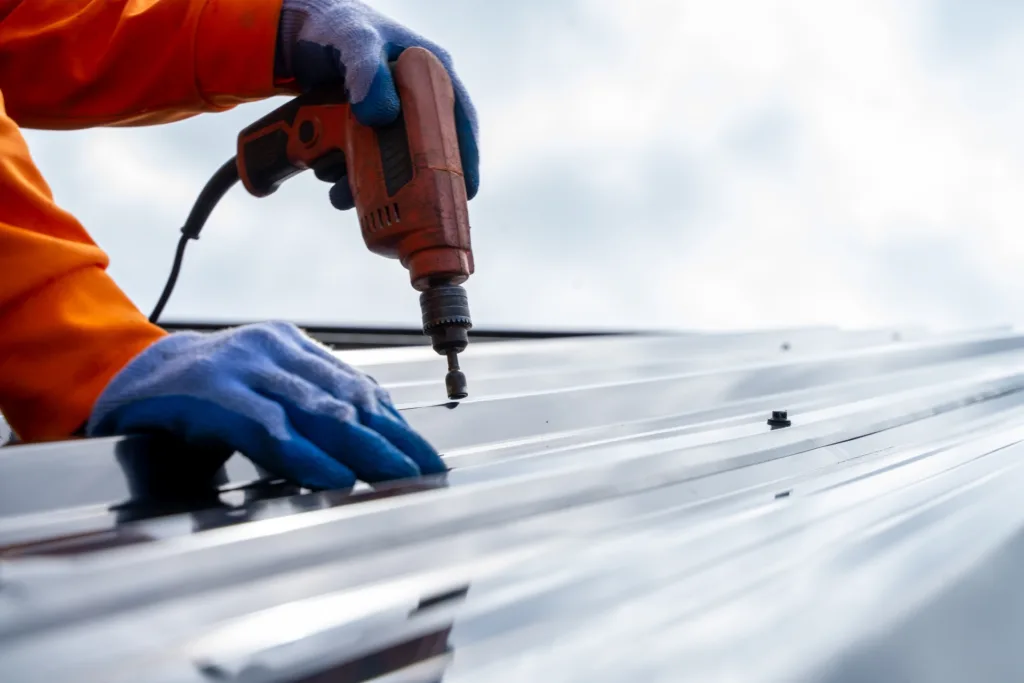
Components of a Metal Roofing Fastener
A typical metal roofing fastener consists of the following key components:
- Screw – Forms the primary mechanical connection between the metal roofing sheet and the supporting structure. It is designed to withstand tensile, shear, and wind uplift forces while ensuring a secure attachment.
- Drill Point – A hardened drill tip that enables self-drilling screws to penetrate metal roofing sheets and steel purlins without the need for pre-drilled pilot holes, reducing installation time.
- Threads – Provide a firm grip within the supporting material, ensuring high pull-out resistance and maintaining the strength of the fastening connection.
- Head – Typically hexagonal in shape, the head allows efficient installation using power drivers, provides excellent torque transfer, and ensures proper tightening during installation.
- Sealing Washer – Usually a bonded steel washer with an EPDM rubber seal that distributes the clamping pressure evenly and creates a watertight seal around the fastener hole, preventing water ingress and protecting against weather exposure.
Applications of Metal Roofing Fasteners
Metal roofing fasteners are designed to meet the requirements of various roofing systems and building types. Their selection depends on the roof profile, supporting structure, and service environment. Common applications include:
- Industrial buildings – Factories, manufacturing plants, and production facilities.
- Warehouses and logistics centres – Large-span buildings requiring secure roof attachment and wind uplift resistance.
- Commercial buildings – Shopping malls, office buildings, retail outlets, and business parks.
- Pre-Engineered Buildings (PEBs) – Fastening roof panels to steel purlins and structural steel members.
- Agricultural buildings – Barns, poultry farms, dairy sheds, and storage facilities.
- Residential buildings – Homes, villas, and apartment buildings with metal roofing systems.
- Institutional buildings – Schools, colleges, universities, hospitals, and public buildings.
- Airports and transport terminals – Roofing for terminals, hangars, railway stations, and bus depots.
- Cold storage and food processing facilities – Fastening insulated sandwich panels and metal roof systems.
- Infrastructure projects – Power plants, water treatment facilities, industrial sheds, sports complexes, and exhibition halls.
Types of Fasteners for Metal Roofing
Self-Drilling Screws
Self-drilling screws are the most commonly used fasteners in metal roofing applications. They feature a drill point that allows them to penetrate both the metal roofing sheet and the steel supporting member without the need for pre-drilling. This reduces installation time, improves productivity, and provides a strong mechanical connection. Self-drilling screws are widely used for industrial buildings, warehouses, commercial complexes, and pre-engineered buildings because they offer excellent pull-out resistance and reliable long-term performance.
Self-Tapping Screws
Self-tapping screws require a pre-drilled pilot hole before installation. Once inserted, the screw cuts its own threads into the supporting material, creating a secure connection. These fasteners are commonly used for light-gauge steel framing, timber substrates, and renovation projects where pilot holes can be accurately prepared. They are available in various thread configurations to suit different roofing applications.
Stitching Screws
Stitching screws are specifically designed to join overlapping metal roofing sheets rather than attaching them to the structural framework. They are installed along side laps, ridge caps, flashings, and other roof accessories to secure adjacent sheets together. Stitching screws help improve the overall rigidity of the roofing system, reduce sheet movement, and enhance resistance to wind uplift.
Metal-to-Metal Roofing Screws
Metal-to-metal roofing screws are engineered to fasten metal roofing sheets directly to steel purlins or structural steel members. Equipped with hardened drill points, they provide excellent drilling performance, high pull-out resistance, and secure fixing. These screws are extensively used in industrial buildings, commercial structures, and pre-engineered building (PEB) roofing.
Timber Roofing Screws
Timber roofing screws are specially designed for securing metal roofing sheets to wooden rafters, battens, or trusses. Their coarse thread design provides superior grip and withdrawal resistance in timber, ensuring a strong and durable connection. These fasteners are widely used in residential, agricultural, and light commercial roofing projects.
Hex Head Roofing Screws
Hex head roofing screws are among the most widely used fasteners for exposed-fix metal roofing systems. Their hexagonal head allows efficient installation using power drivers while providing excellent torque transfer. The design also enables easy tightening and removal during maintenance. Most hex head screws are supplied with bonded EPDM sealing washers to ensure leak-proof performance.
Self-Sealing Roofing Screws
Self-sealing roofing screws incorporate bonded EPDM rubber washers beneath the screw head. During installation, the washer compresses against the roofing sheet to create a weather-resistant seal that prevents water penetration around the fastener hole. These screws are commonly used in exposed-fastener roofing systems where long-term waterproofing is essential.
Colour-Matched Roofing Screws
Colour-matched roofing screws feature painted heads that match the colour of the roofing sheets, providing a neat and aesthetically pleasing appearance. In addition to improving the roof’s visual appeal, the coating offers extra protection against corrosion and weathering. They are commonly used in architectural, commercial, and residential metal roofing projects.
Materials Used for Roofing Fasteners
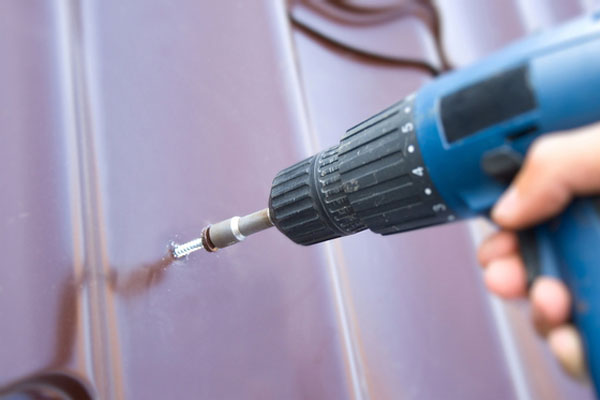
Material selection plays a major role in determining the durability and corrosion resistance of roofing fasteners.
Carbon Steel
Most roofing screws are manufactured from hardened carbon steel because of its:
- High tensile strength
- Good drilling capability
- Cost-effectiveness
- Excellent structural performance
Carbon steel fasteners generally require protective coatings to resist corrosion.
Stainless Steel
Stainless steel fasteners offer excellent resistance to corrosion and are preferred for buildings located in aggressive environments.
Typical applications include:
- Coastal buildings
- Chemical plants
- Food processing industries
- Marine structures
- Pharmaceutical facilities
Protective Coatings
Protective coatings improve the service life of roofing fasteners by reducing corrosion.
Zinc Coating
Electro-galvanized or mechanically galvanized coatings provide corrosion protection for general applications.
Zinc-Aluminium Coating
Zinc-aluminium coatings provide superior corrosion resistance and are suitable for:
- Coastal regions
- High humidity
- Industrial pollution
Organic Protective Coatings
Premium roofing fasteners may include polymer-based coatings that provide additional resistance against moisture and environmental exposure.
Selecting the Right Fastener
When selecting fasteners for metal roofing, consider the following factors:
- Roofing Profile – Match the fastener to the roofing sheet type, such as corrugated, trapezoidal, standing seam, sandwich, or insulated panels.
- Supporting Structure – Select fasteners suitable for the substrate, including steel purlins, timber rafters, or light-gauge steel framing.
- Fastener Material – Choose materials such as carbon steel, stainless steel, or hardened alloy steel based on structural and environmental requirements.
- Protective Coating – Use corrosion-resistant coatings such as zinc, zinc-aluminium, or polymer coatings to improve durability.
- Fastener Length – Ensure the screw is long enough to penetrate the supporting member adequately and provide secure anchorage.
- Fastener Diameter – Select the appropriate diameter to achieve the required tensile strength, shear strength, and pull-out resistance.
- Sealing Washer – Use bonded EPDM sealing washers to provide a weatherproof seal and prevent water ingress around the fastener.
- Wind Loads and Fastener Spacing – Determine fastener type, quantity, and spacing based on wind zone, building height, roof geometry, and structural design.
- Environmental Conditions – Consider exposure to coastal salt spray, industrial pollution, chemicals, moisture, and high humidity when selecting corrosion-resistant fasteners.
- Thermal Movement and Compatibility – Ensure the fasteners are compatible with the roofing material and capable of accommodating thermal expansion and contraction without compromising roof performance.

Emerging Developments in Metal Roofing Fasteners
Manufacturers continue to improve roofing fastener technology through:
- High-performance corrosion-resistant coatings
- Advanced drill-point geometries for faster installation
- Improved EPDM sealing materials
- Fasteners designed for higher wind-load resistance
- Environmentally durable coating technologies with extended service life
Conclusion
Metal roofing continues to be a preferred choice for a wide range of buildings due to its durability, versatility, and long service life. However, the overall performance of a metal roof depends not only on the quality of the roofing panels but also on the selection and quality of its accessories and installation practices. Using appropriate materials, following recommended installation standards, and carrying out periodic inspection and maintenance help ensure a safe, weather-resistant, and durable roofing system. A well-designed and properly installed metal roof provides reliable protection, reduces maintenance requirements, and delivers long-term value throughout the building’s service life.






