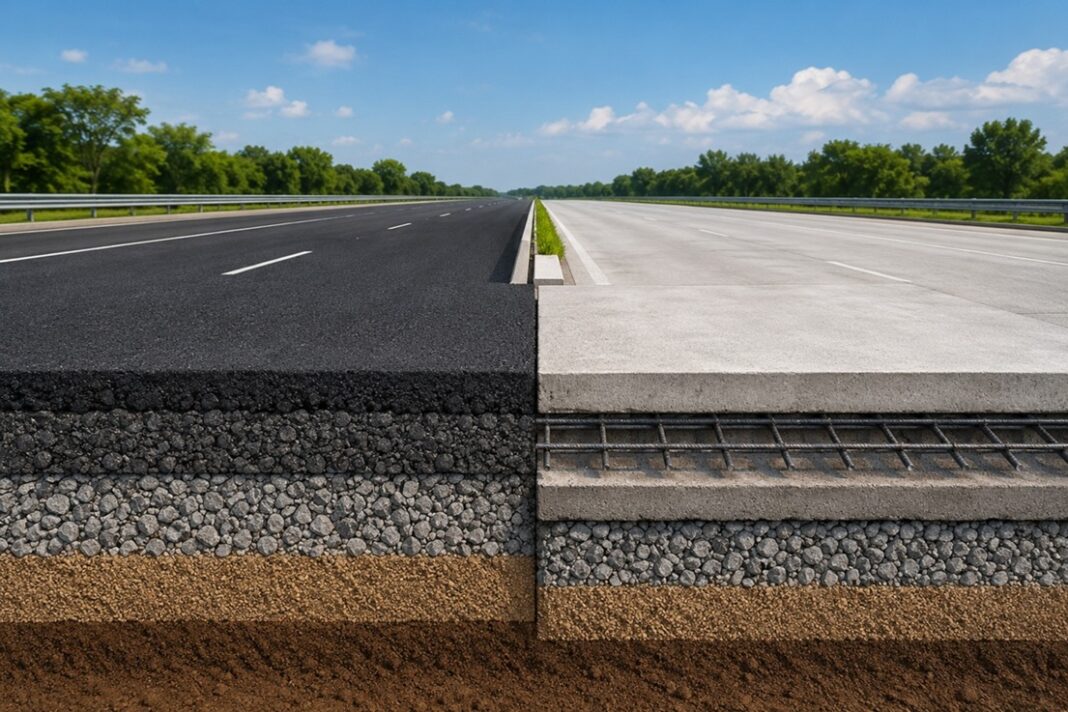
Road infrastructure is expected to support increasing traffic volumes, heavier axle loads, and changing climatic conditions while remaining cost-effective throughout its service life. Traditional flexible (asphalt) and rigid (concrete) pavements each offer distinct advantages but also have limitations when used independently. Composite pavement combines the strengths of both pavement types to improve structural performance, riding quality, durability, and maintenance efficiency.
What is Composite Pavement?
A composite pavement is a pavement structure that consists of both Portland Cement Concrete (PCC) and bituminous (asphalt) layers. The combination enables each material to perform the function for which it is best suited.
Typically, the concrete layer provides structural strength and resists heavy traffic loads, while the asphalt layer offers a smooth riding surface, improved skid resistance, waterproofing, and easier maintenance.
Composite pavements are commonly classified into two configurations:
- Concrete pavement with an asphalt overlay.
- Asphalt pavement constructed over a concrete base.
The choice depends on traffic conditions, design life, rehabilitation requirements, climate, and project economics.
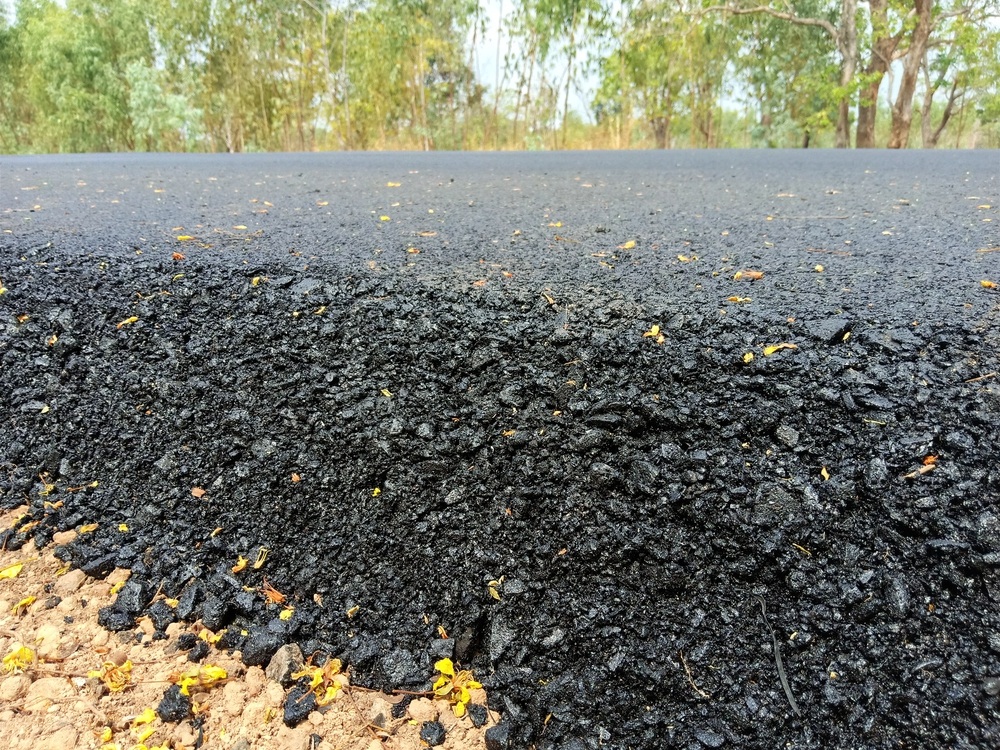
Applications
Composite pavements are widely used for:
- National highways
- Expressways
- Ring roads
- Industrial corridors
- Logistics parks
- Container terminals
- Toll roads
- Bus Rapid Transit (BRT) corridors
- Airport taxiways
- Airport runways
- Freight terminals
- Heavy industrial facilities
These locations benefit from the combination of structural strength and riding comfort offered by composite pavements.
Why Composite Pavements Are Gaining Importance
Modern highways experience significantly higher traffic volumes than those for which many roads were originally designed. Heavy commercial vehicles, container transport, mining trucks, and multi-axle vehicles place substantial stresses on pavement structures.
Composite pavements help address these challenges by:
- Increasing structural capacity
- Improving fatigue resistance
- Reducing rutting
- Minimising reflective cracking through proper design
- Enhancing riding comfort
- Extending pavement service life
- Lowering life-cycle maintenance costs
These benefits make composite pavements particularly suitable for high-volume traffic corridors.
Components of a Composite Pavement
A typical composite pavement consists of several layers.
Subgrade
The prepared natural soil forms the foundation of the pavement. Proper compaction and moisture control are essential for long-term performance.
Sub-base
Granular Sub-Base (GSB), stabilized layers, or drainage layers distribute loads and improve drainage.
Base Course
Depending on the design, the base may include:
- Wet Mix Macadam (WMM)
- Cement Treated Base (CTB)
- Dry Lean Concrete (DLC)
Concrete Layer
The PCC layer serves as the primary structural element, providing:
- High compressive strength
- Excellent load distribution
- Long service life
- Resistance to deformation
Asphalt Layer
The bituminous layer provides:
- Smooth riding quality
- Better skid resistance
- Noise reduction
- Waterproof protection for concrete
- Easier future maintenance
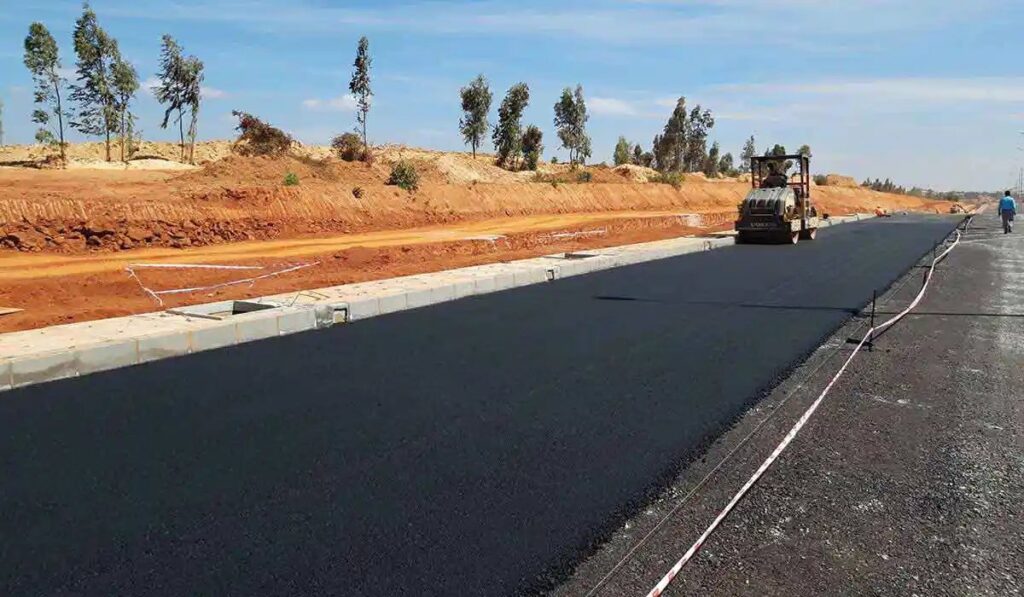
Types of Composite Pavement
Asphalt Overlay on Concrete Pavement
This is the most widely used type of composite pavement, where a layer of asphalt is placed over an existing or newly constructed concrete pavement. The concrete layer provides the structural strength needed to withstand heavy traffic loads, while the asphalt overlay offers a smooth riding surface, improved skid resistance, reduced tyre noise, and protection against water infiltration. This method is commonly adopted for highway rehabilitation, expressways, urban roads, and airport pavements, as it extends the service life of the concrete pavement while improving ride quality.
Concrete Pavement over Asphalt Base
In this type of composite pavement, a concrete layer is constructed over an asphalt base or asphalt-treated layer. The asphalt layer acts as a stable and uniform foundation, while the concrete pavement serves as the primary structural layer. The asphalt base also helps reduce pumping of fines, provides better support during construction, and improves load distribution. This configuration is suitable for roads carrying heavy commercial traffic, industrial roads, freight corridors, container terminals, ports, and airport runways where high structural capacity and long-term durability are essential.
Design Considerations
Successful composite pavement performance depends on proper engineering design.
Traffic Loading
Design considers:
- Commercial vehicle traffic
- Axle load repetitions
- Overloaded vehicles
- Future traffic growth
Material Properties
Engineers evaluate:
- Concrete strength
- Asphalt stiffness
- Fatigue characteristics
- Elastic modulus
- Thermal expansion
Climate
Temperature variation influences:
- Joint movement
- Asphalt ageing
- Thermal stresses
- Expansion and contraction
Drainage
Water is one of the primary causes of pavement deterioration. Proper drainage design reduces moisture damage and extends pavement life.
Interface Bond
Adequate bonding between asphalt and concrete layers is essential to ensure effective load transfer and prevent delamination.
Construction Process
Site Preparation
Construction begins with:
- Surveying
- Earthwork
- Formation preparation
- Compaction
- Drainage installation
Construction of Foundation Layers
Sub-base and base layers are constructed using approved materials and compacted to specified density.
Quality control includes:
- Moisture content
- Density testing
- Level checks
- Thickness verification
Concrete Pavement Construction
Concrete is placed using slipform or fixed-form paving equipment.
Key activities include:
- Concrete batching
- Transportation
- Placement
- Vibration
- Surface finishing
- Texturing
- Curing
- Joint cutting
Proper curing is essential for achieving design strength.
Asphalt Overlay Construction
After the concrete has reached the required strength, the surface is prepared.
The process includes:
- Surface cleaning
- Repair of defects
- Tack coat application
- Asphalt paving
- Compaction
- Surface finishing
Proper compaction is essential to achieve density and durability.

Maintenance Practices
Proper maintenance maximizes pavement performance.
Typical maintenance activities include:
- Crack sealing
- Asphalt overlay renewal
- Joint resealing
- Surface milling
- Drainage cleaning
- Shoulder maintenance
- Periodic condition surveys
- Pavement roughness monitoring
Timely preventive maintenance delays structural deterioration and reduces repair costs.
Various Equipment Used in Composite Pavement Construction
The successful construction of composite pavements depends on the use of specialized equipment for earthwork, concrete paving, asphalt laying, compaction, and quality control. Selecting the appropriate machinery helps improve construction speed, accuracy, and pavement quality.
Earthwork and Foundation Equipment
- Motor graders for shaping and leveling the subgrade
- Bulldozers for site clearance and earthmoving
- Hydraulic excavators for excavation and drainage works
- Wheel loaders for handling aggregates and other materials
- Soil stabilizers and reclaimers for in-situ soil improvement
- Water tankers for moisture conditioning
- Vibratory soil compactors and padfoot rollers for subgrade compaction
Base and Sub-base Construction Equipment
- Wet Mix Macadam (WMM) plants
- Aggregate feeders and conveyors
- Motor graders for spreading base materials
- Vibratory tandem rollers
- Pneumatic tyre rollers
- Plate compactors and tamping rammers for confined areas
Concrete Pavement Construction Equipment
- Concrete batching plants
- Transit mixers for transporting concrete
- Concrete pumps where required
- Slipform pavers for continuous concrete paving
- Fixed-form pavers for smaller projects
- Needle and surface vibrators for concrete compaction
- Texture curing machines
- Concrete curing equipment
- Joint cutting machines
- Dowel bar inserters and tie bar inserters
Asphalt Overlay Construction Equipment
- Asphalt batch or drum mix plants
- Bitumen storage and heating units
- Asphalt pavers
- Mechanical material transfer vehicles (MTVs), where specified
- Tandem vibratory rollers
- Pneumatic tyre rollers
- Steel wheel finish rollers
- Bitumen sprayers for tack coat application
- Milling machines for surface preparation during rehabilitation works
Material Handling Equipment
- Dump trucks
- Wheel loaders
- Forklifts
- Mobile cranes for lifting heavy components
- Conveyor systems at batching plants
Surveying and Quality Control Equipment
- Total stations and GNSS/GPS survey instruments
- Automatic levels
- Laser-guided paving systems
- Nuclear density gauges (where permitted)
- Benkelman Beam or Falling Weight Deflectometer (FWD) for pavement evaluation
- Core cutting machines
- Straightedges and profilographs for surface regularity checks
- Compression testing machines for concrete strength
- Marshall stability and asphalt testing equipment
Conclusion
Composite pavement combines the structural advantages of concrete with the functional benefits of asphalt to create a durable and efficient road pavement solution. Its ability to withstand heavy traffic, provide a smooth riding surface, reduce maintenance frequency, and extend pavement life makes it well suited for highways, expressways, industrial roads, and other high-load applications. Although the initial investment may be higher than conventional pavement types, the reduction in maintenance requirements and improved long-term performance often result in lower life-cycle costs. As road authorities continue to focus on durable and sustainable infrastructure, composite pavements are expected to play an increasingly important role in the development and rehabilitation of modern transportation networks.