
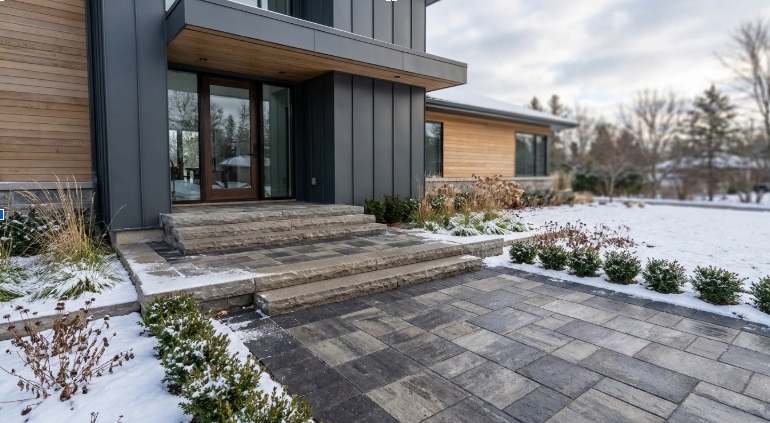
Your front entry steps take more daily wear than almost any other part of your home’s exterior. They carry constant foot traffic, soak up rain and snow, and face the freeze-thaw cycles that crack weaker materials season after season. The material you choose decides whether your steps still look sharp 20 years from now or start crumbling within a few winters. This guide covers what makes front entry steps durable, how common materials compare, and how to match the right steps to your home.
What Makes Front Entry Steps Durable?
Durable front entry steps resist three things at once: heavy foot traffic, moisture, and temperature swings. A step fails when water seeps into the material, freezes, expands, and forces cracks open. So durability comes down to how well a material blocks water absorption and how it handles repeated freeze-thaw cycles.
That’s why the material choice matters so much for a feature that’s exposed to the weather every day. Companies like Techo-Bloc make outdoor stone steps built to shed water and shrug off freeze-thaw stress, so they hold their shape and finish for years. Starting with a material engineered for the elements takes the guesswork out of long-term durability.
Density and surface finish matter just as much as the base material. A dense, tightly compacted surface absorbs less water, which means fewer cracks and less spalling over time. A textured finish also keeps the steps safe underfoot when they’re wet or icy.
Which Materials Hold Up Best Over Time?
Engineered concrete pavers and quality natural stone tend to outlast poured concrete and generic precast. Both resist water absorption well and keep their structure through years of freezing and thawing. Poured concrete, by contrast, tends to crack along its surface once water works into hairline fissures.
The best-performing materials share one trait: low porosity. The less water a step absorbs, the longer it holds its shape, color, and finish.
How Does Freeze-Thaw and Climate Affect Durability?
Freeze-thaw cycling is the single biggest threat to front entry steps in cold climates. Water enters tiny pores, freezes overnight, expands, and pries the material apart. Each cycle widens the damage, so one rough winter can age a poorly chosen step by years.
Steps built from freeze-thaw-rated materials avoid this trap because they absorb very little water in the first place. In milder climates moisture and sun exposure still matter, but the freeze-thaw test is what separates lasting steps from failing ones.
Comparing Common Materials for Front Entry Steps
Most front entry steps fall into four material families: poured concrete, precast concrete, engineered concrete pavers, and natural stone. Each one carries a different balance of durability, appearance, and upkeep. Knowing how they differ helps you weigh the trade-offs before you commit.
How Do Concrete Pavers Compare to Poured Concrete?
Poured concrete is common because it’s quick to install, but it cracks as the ground shifts and as water freezes inside it. Once a poured slab cracks, you usually patch or replace the whole section. Engineered concrete pavers handle movement far better because the joints between units flex instead of fracturing.
Pavers also let you lift and reset a single unit if settling occurs, so repairs stay small and local. That flexibility is a major reason pavers tend to last longer with less visible damage.
What About Natural Stone and Precast Options?
Natural stone like granite delivers a premium look and strong durability, though quality and price vary widely by stone type. It rewards careful sourcing, since softer stones absorb more water and wear faster. Precast concrete sits in the middle, offering consistent shapes at a lower cost than stone.
Generic precast can still absorb water and spall if it isn’t made for freeze-thaw exposure. So the grade of the product matters more than the category label alone.
How Do You Match Front Entry Steps to Your Home’s Style?
Front entry steps frame the first impression of your home, so their look should feel intentional rather than generic. The right color, texture, and shape tie the steps to your facade, walkway, and landscaping. Durability and design aren’t a trade-off here, because the most resilient materials also come in the widest range of finishes.
Which Colors and Textures Make the Best Impression?
Choose a color that echoes an existing material on your home, like the brick, siding, or roof tone. A finish 1 or 2 shades different from the facade adds definition without clashing. Textured surfaces read as higher-end and, as a bonus, offer better grip than smooth ones.
Blended or multi-tone units hide dirt and wear better than a single flat color. That keeps the steps looking clean between cleanings.
How Do Steps Balance Curb Appeal and Safety?
Great front entry steps look good and stay safe in every season. A slip-resistant surface texture protects visitors when the steps are wet or frosted. Consistent riser heights and generous tread depth keep the climb comfortable and predictable.
Good drainage rounds out the design, since water that sheets off the steps won’t pool, freeze, or stain. Safety details like these quietly raise the quality of the whole entry.
Installation and Maintenance Essentials
Even the best material underperforms if it’s set on a weak base or neglected afterward. A proper foundation and simple upkeep decide how well your front entry steps age. Both are worth understanding before you choose a product or a contractor.
Should Front Entry Steps Be Professionally Installed?
A solid base is the foundation of durable steps, and that’s where professional installation earns its keep. Installers prepare and compact the sub-base, set the proper slope for drainage, and align each unit for even, safe treads. Skipping those steps leads to settling, uneven risers, and early cracking no matter how good the material is.
Many manufacturers also back their products through certified contractor networks. Using a trained installer protects both the result and any product warranty.
How Much Upkeep Do Durable Steps Require?
Quality front entry steps need very little maintenance, which is a big part of their long-term value. A seasonal rinse, the occasional sweep, and clearing snow with a plastic shovel usually keep them in shape. Re-sanding the joints on paver steps every few years keeps the units locked tight.
Avoid harsh de-icing salts, which can erode surfaces over time, and reach for sand or a gentler alternative instead. That light routine is all most durable steps ask for.
How Should You Weigh Cost Against Long-Term Value?
Durable front entry steps cost more upfront than poured concrete or budget precast, and that’s expected for a premium material. The payoff shows up over the years you own them. Because quality steps resist cracking and spalling, you avoid the recurring cost of patching, resurfacing, or tearing them out early.
Think of the purchase as spending once instead of repeatedly. Steps that hold their finish and structure for decades spread their cost across a long life, which is where the real savings sit. For a feature that greets every guest and handles daily traffic, that long-term reliability is usually worth the higher starting price.
Key Takeaways for Front Entry Steps That Last
The most durable front entry steps combine low water absorption, freeze-thaw resistance, and a properly installed base. Engineered concrete pavers and quality natural stone lead the field because they resist cracking and keep their looks with minimal upkeep. Match the color and texture to your home, lean on a certified installer for the foundation, and you’ll have an entry that stays safe and striking for years. When you’re ready, explore a collection of outdoor step options and connect with a local dealer to start your project.
Frequently Asked Questions About Durable Front Entry Steps
How Long Do Concrete Front Entry Steps Last?
Well-made concrete paver and precast steps can last for decades when they’re installed on a proper base and made with freeze-thaw-rated materials. Poured concrete steps often show cracks much sooner because water works into the surface and freezes. Longevity depends far more on material quality and installation than on the concrete category itself.
What Is the Best Material for Front Steps in Cold Climates?
In cold climates the best front steps use low-porosity materials that resist freeze-thaw damage, such as engineered concrete pavers or dense natural stone. These materials absorb little water, so there’s less moisture inside to freeze and crack them. A textured, slip-resistant finish adds winter safety on top of the durability.
Are Outdoor Stone Steps Slippery in Winter?
Stone and concrete steps can get slippery when wet or icy, but a textured surface finish greatly improves traction. Good drainage also helps by keeping water from pooling and freezing on the treads. Clearing snow promptly and using sand instead of harsh salt keeps the steps safe without damaging them.
Do Durable Front Steps Add Value to a Home?
Front entry steps shape a home’s first impression, so attractive, well-built steps can lift curb appeal and perceived value. Buyers tend to notice an entry that looks polished and move-in ready. Durable materials add to that appeal because they signal low maintenance and a feature that won’t need replacing soon.






