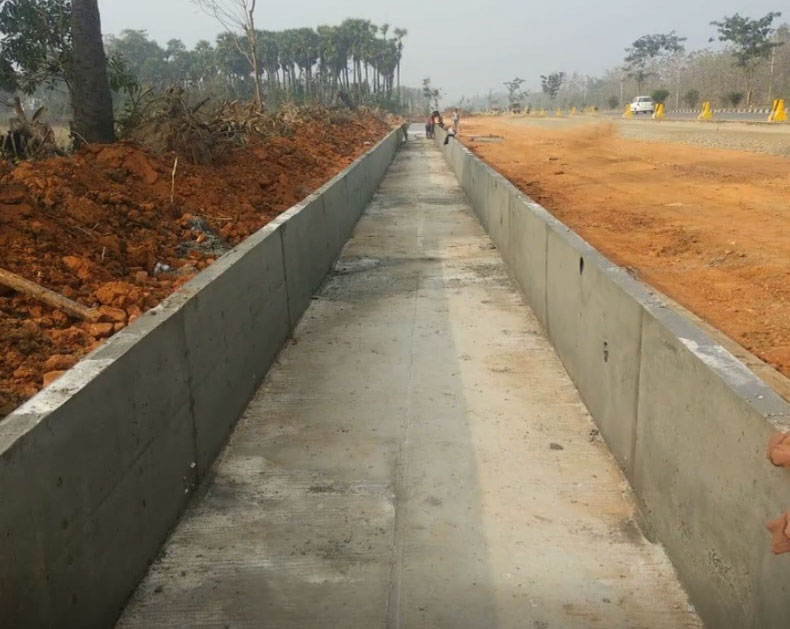
Drainage is one of the most important part of highway engineering. A well-designed and properly constructed drainage system ensures the long-term performance, safety, and durability of roads. Without effective drainage, water accumulates on or beneath the pavement, leading to structural deterioration such as cracking, potholes, rutting, weakening of subgrade, and even complete pavement failure.
In highway engineering, drainage systems are designed to remove surface water quickly, prevent infiltration into pavement layers, and safely dispose of collected water into natural or engineered outlets. The construction of highway drainage involves a combination of surface drainage, subsurface drainage, cross drainage structures, and stormwater management systems.
Importance of Drainage in Highways
Proper drainage in highways serves several key functions:
- Prevents water accumulation on pavement surface
- Protects subgrade and base layers from saturation
- Reduces risk of hydroplaning and accidents
- Extends pavement life and reduces maintenance cost
- Prevents erosion of embankments and shoulders
- Maintains structural integrity during heavy rainfall
Water is considered the most destructive element for pavement structures. Even small quantities of trapped water can significantly reduce the load-bearing capacity of soil and aggregate layers.
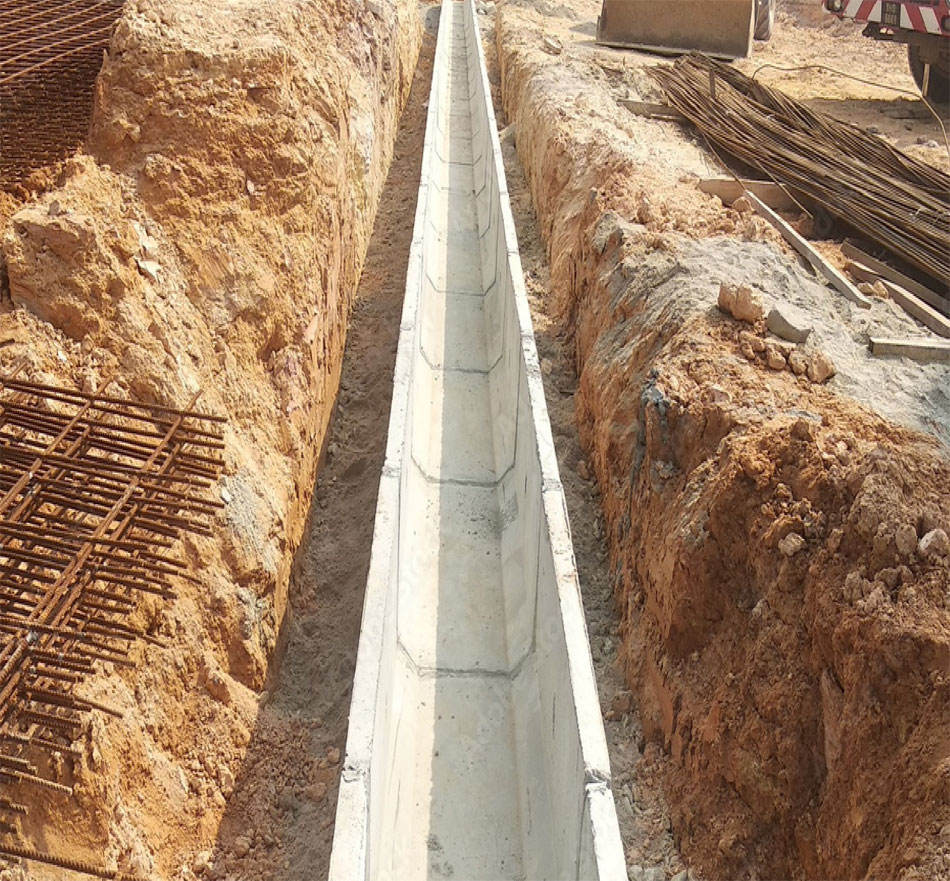
Types of Highway Drainage Systems
Highway drainage systems are broadly classified into the following categories:
1. Surface Drainage
Surface drainage is designed to remove rainwater from the road surface quickly and efficiently. It includes:
- Camber or cross slope of pavement
- Shoulders and roadside drains
- Kerb and gutter systems
- Catch water drains
2. Subsurface Drainage
Subsurface drainage removes water that infiltrates into pavement layers or subgrade. It includes:
- Longitudinal underdrains
- French drains
- Edge drains
- Filter layers
3. Cross Drainage
Cross drainage structures allow water to flow across the highway alignment without damaging the road. These include:
- Culverts
- Causeways
- Bridges
- Pipe drains
4. Stormwater Drainage Systems
These are integrated systems in urban highways to manage runoff, including:
- Stormwater channels
- Recharge pits
- Detention basins
- Drainage inlets and manholes
Highway Drainage Construction Methods
Drainage construction methods in highways vary based on terrain, rainfall intensity, soil conditions, and highway classification. In areas with heavy rainfall or weak soil, more robust drainage systems are required, while in dry or stable regions simpler systems may be sufficient. The main objective is to safely remove surface and subsurface water, prevent waterlogging, and protect pavement layers from damage. Proper drainage design and construction ensure long-lasting road performance, reduce maintenance costs, and improve safety for vehicles by preventing hydroplaning and structural failures caused by water infiltration.
1. Construction of Surface Drainage System
Surface drainage systems are designed to quickly remove rainwater from the road surface and prevent it from entering the pavement layers. These systems ensure smooth water flow towards roadside drains through proper road shaping and drainage structures.
a) Formation of Road Camber
The formation of road camber is the first and most important step in surface drainage, where the road surface is given a proper cross slope so that water flows from the center towards the edges. For bituminous roads, the camber is usually provided between 1.5% and 3%, while for cement concrete roads it is about 1% to 2%. This is achieved by shaping the subgrade using motor graders, followed by fine grading to ensure uniform slope, and finally compacting the surface using vibratory rollers to create a stable and smooth drainage slope.
b) Shoulder and Side Drain Construction
Shoulder and side drains are constructed along the edges of highways to collect and carry away runoff water from the road surface. The process involves excavating drain trenches using machinery or manual labor, shaping them to the required slope and alignment, and then lining them with concrete, brick masonry, or stone pitching depending on design requirements. A proper longitudinal gradient is maintained to ensure continuous water flow, and surrounding soil is compacted to prevent collapse. These drains may be earthen in rural areas or lined in urban and high rainfall regions.
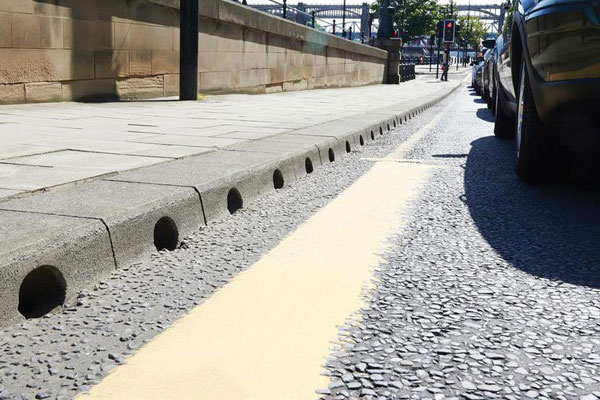
c) Kerb and Gutter System
The kerb and gutter system is commonly used in urban highways to efficiently manage surface runoff. In this system, precast or cast-in-situ concrete kerbstones are installed along the road edge, and a gutter is formed adjacent to the kerb with a proper slope to direct water flow. The collected water is then guided into drainage inlets placed at regular intervals, which connect to underground stormwater systems. This method is highly effective in cities where space is limited and rapid water disposal is necessary.
d) Catch Water Drains
Catch water drains are mainly used in hilly areas to intercept runoff water coming from uphill slopes before it reaches the road surface. These drains are constructed by excavating along the hillside above the road level, lining the channel with stone masonry or reinforced concrete, and aligning them parallel to contour lines. Discharge points are provided at safe intervals to release water without causing erosion. These drains are essential for protecting roads from landslides and slope failures in mountainous regions.
2. Subsurface Drainage Construction Methods
Subsurface drainage systems are designed to remove water that infiltrates into pavement layers or comes from groundwater. These systems help maintain the strength of the subgrade and prevent structural weakening of the pavement.
a) Edge Drains
Edge drains are installed along the edges of pavements to collect and remove water that enters the pavement structure. The construction involves excavating narrow trenches along the road edge, placing perforated PVC or HDPE pipes inside, surrounding them with filter material like gravel or geotextile fabric, and then backfilling and compacting the soil. These drains quickly reduce water pressure within pavement layers and improve road durability.
b) French Drains
A French drain is a simple yet effective subsurface drainage system consisting of a gravel-filled trench with a perforated pipe. The construction begins with excavation of a trench about 0.5 to 1.0 meter deep, followed by lining it with geotextile fabric. Coarse aggregate is then placed, a perforated pipe is installed, and the system is covered with additional filter material and soil. It works on gravity flow, allowing water to move freely through the gravel and pipe system.
c) Drainage Blankets
Drainage blankets are horizontal permeable layers placed below pavement structures to collect and drain water laterally. The construction involves preparing the subgrade, laying a layer of sand or gravel, placing a geotextile separator to prevent soil mixing, and then compacting and adding the base course above it. These blankets are especially useful in areas with high water tables or weak soils.
d) Geosynthetic Drainage Systems
Geosynthetic drainage systems use modern materials such as geotextiles, geonets, and geocomposites to improve drainage efficiency. These materials are laid over prepared surfaces and connected to drainage outlets, then covered with soil or pavement layers. They are lightweight, easy to install, and highly effective in reducing excavation work while providing excellent water drainage capacity in modern highway projects.
3. Cross Drainage Structure Construction Methods
Cross drainage structures are used to allow natural water flow across highway alignments without damaging the road structure. These include culverts, causeways, and bridge drainage systems.
a) Culvert Construction
Culverts are commonly used structures that allow water to pass beneath highways. They may be pipe, box, or slab culverts depending on site requirements. Construction begins with site clearing and diversion of water flow, followed by excavation for foundations. A PCC bed is laid, and abutments and wing walls are constructed. Precast pipes or box structures are installed, backfilled with proper compaction, and approach roads are developed. Proper alignment with natural water flow is essential for efficiency and durability.
b) Causeway Construction
Causeways are low-level road structures used in rural areas where water may flow over the road during floods. Construction involves forming a roadway at a low elevation, protecting it with stone pitching or concrete lining, providing scour protection, and adding vents or openings to allow water flow. Causeways are economical but are suitable only for low traffic conditions.
c) Bridge Drainage Integration
Bridges require specialized drainage systems to prevent water accumulation on the deck and structural damage. This is achieved by providing slope on the bridge deck, installing drainage outlets at regular intervals, connecting pipes to downspouts, and ensuring that water is safely discharged away from bridge foundations. Proper bridge drainage is essential for maintaining structural safety and durability.
4. Stormwater Drainage Construction in Urban Highways
Urban highways require advanced stormwater drainage systems to manage heavy runoff and prevent flooding during rainfall events.
a) Drain Inlets and Catch Basins
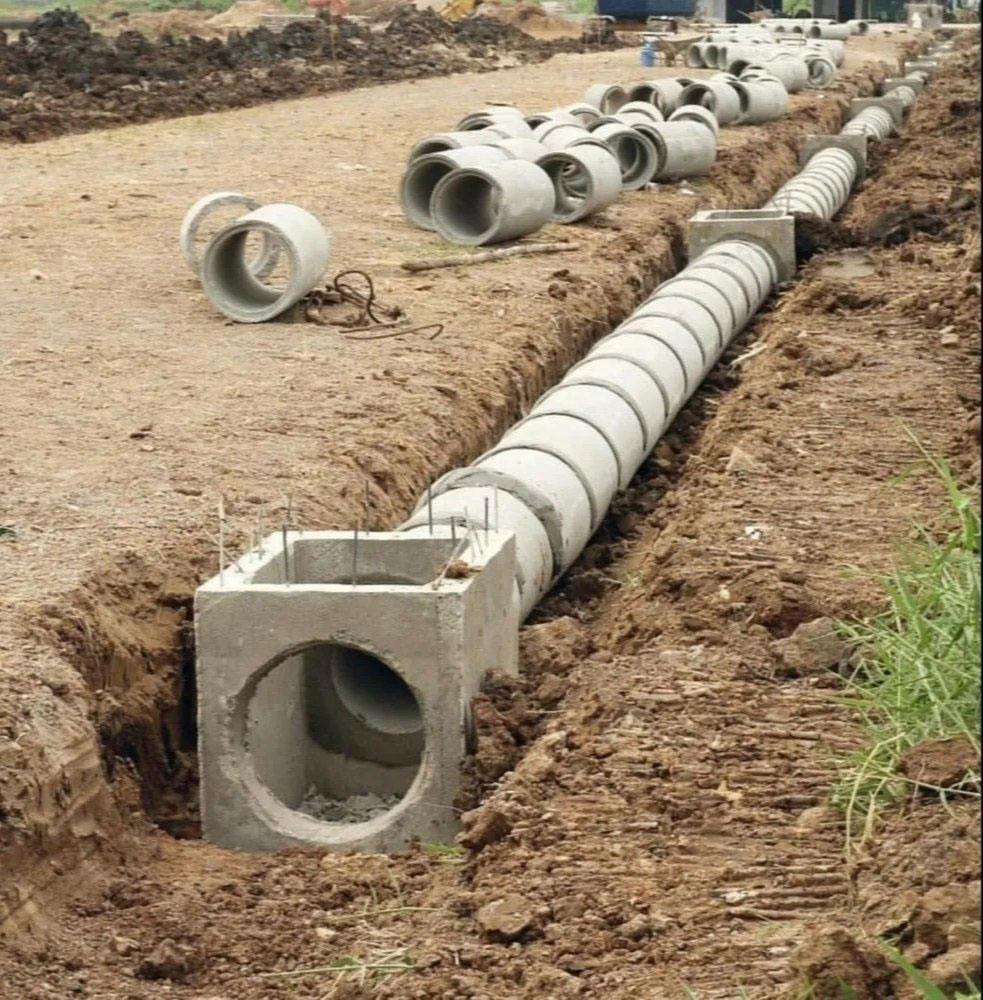
Drain inlets and catch basins are constructed at strategic points along urban highways to collect surface runoff. The construction involves excavation, installation of precast inlet chambers, connection to underground pipelines, and fitting of protective grates to prevent debris entry. These systems efficiently channel water into underground drainage networks.
b) Stormwater Pipelines
Stormwater pipelines carry collected runoff water to discharge points. The construction process includes trench excavation, bedding preparation with sand or gravel, laying RCC or HDPE pipes, sealing joints, checking alignment, and backfilling with proper compaction. These pipelines form the backbone of urban drainage systems.
c) Manholes
Manholes are provided at intervals in underground drainage systems for inspection and maintenance. They are constructed using RCC rings or brickwork and covered with cast iron covers. Manholes are typically located at bends, junctions, or changes in pipe direction to allow easy access for cleaning and repairs.
d) Detention and Recharge Systems
Detention and recharge systems are modern drainage solutions used in urban highways to control stormwater runoff and promote groundwater recharge. These include recharge pits filled with gravel, detention ponds that temporarily store excess water, and infiltration trenches that allow water to seep into the ground. These systems help reduce urban flooding and improve groundwater levels.
Equipments Used in Drainage Construction
Common equipment includes:
- Excavators for trenching
- Motor graders for shaping slopes
- Vibratory rollers for compaction
- Concrete mixers and batching plants
- Pipe laying machines
- Laser level instruments for slope accuracy
Materials Used
- RCC pipes and precast boxes
- Stone aggregates
- Geotextiles and geonets
- PVC/HDPE perforated pipes
- Bituminous materials for sealing
Conclusion
Drainage construction in highways is a fundamental aspect of infrastructure engineering that directly influences pavement performance, safety, and lifespan. From surface drainage systems like camber and side drains to advanced subsurface geosynthetic systems and complex cross drainage structures like culverts and bridges, each method plays a vital role in controlling water movement.
Modern highway engineering increasingly integrates sustainable and smart drainage solutions, ensuring resilience against extreme weather conditions and urban flooding. Proper design, accurate construction practices, and regular maintenance are essential to ensure long-term functionality.