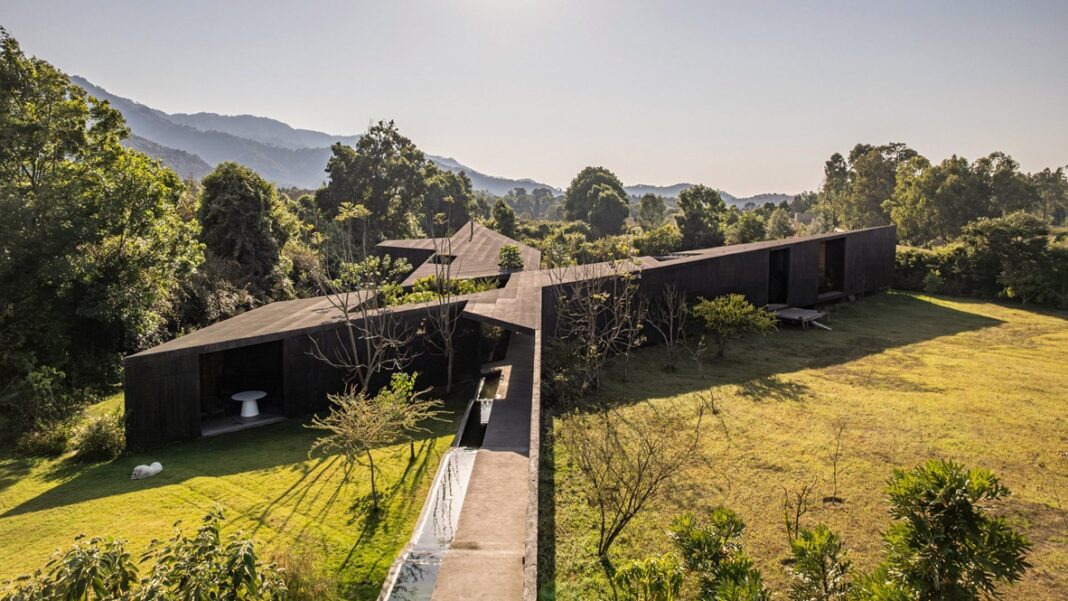
In the forested location of Valle de Bravo, Mexico, Casa Mavra stands as a powerful example of how contemporary architecture can be both bold and deeply respectful of its surroundings. Designed by Taller Alberto Calleja, the 1,300-square-metre residence is defined by its angular geometry, monolithic black-concrete form, and a thoughtful integration of light, nature, and spatial experience.
The name “Mavra,” derived from the Greek word for black, directly reflects the house’s identity. Its dark, pigmented concrete exterior allows the structure to visually merge with the shadows of the dense woodland, ensuring that the building does not dominate the landscape but instead becomes part of it. This approach highlights a growing architectural philosophy – creating homes that coexist with nature rather than overpower it.
A Sculptural Yet Grounded Architectural Form
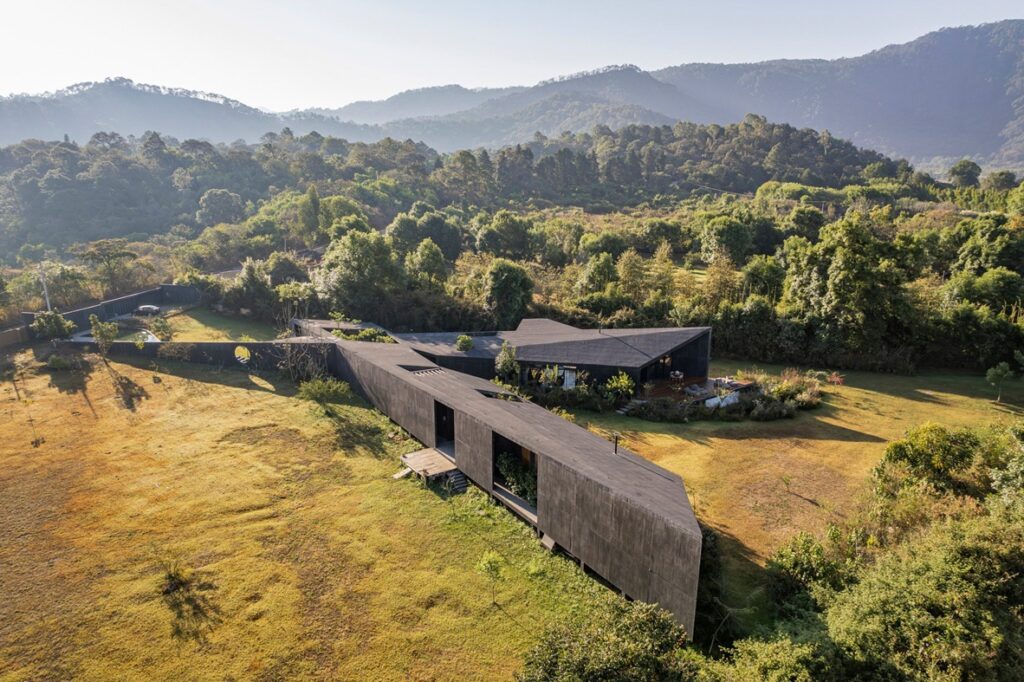
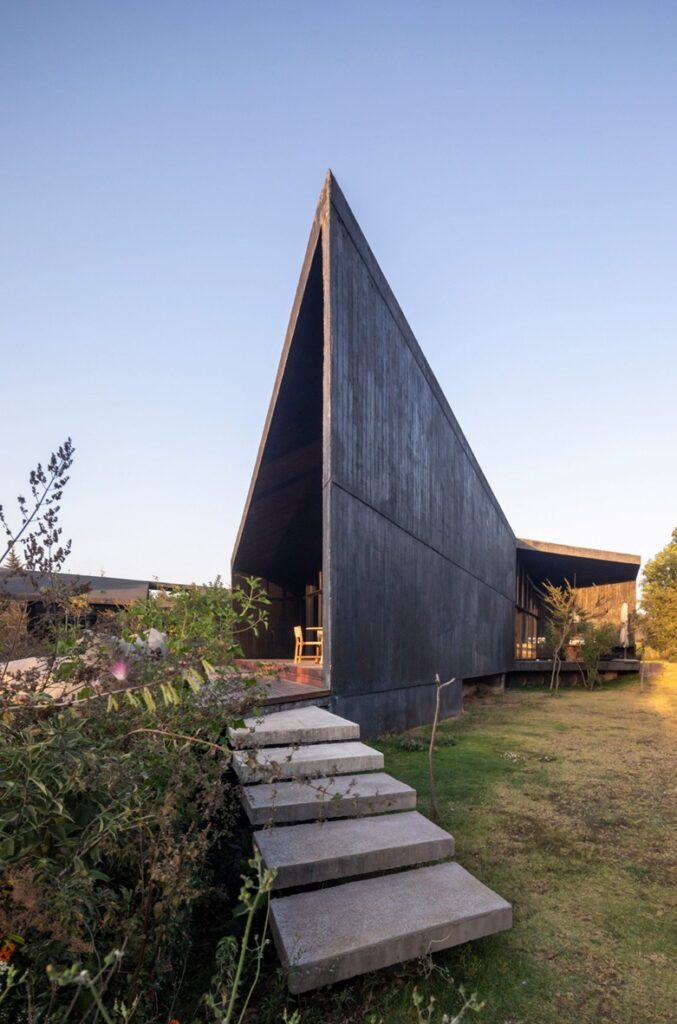
At first glance, Casa Mavra appears as a strong, sculptural object placed within the terrain. However, its design goes far beyond aesthetics. The architects carefully positioned the structure so it feels anchored to the site, echoing the natural contours of the land.
The use of board-marked black concrete enhances this effect. The material is raw, tactile, and expressive, capturing subtle variations in texture while interacting dynamically with sunlight and shadow throughout the day. This creates a constantly evolving visual experience, where the building shifts in perception depending on the time and angle of light.
Despite its heavy appearance, the house is not imposing. Instead, it maintains a low-lying profile that blends seamlessly with the surrounding forest, reinforcing a sense of harmony and balance.
Spatial Planning: The X-Shaped Layout
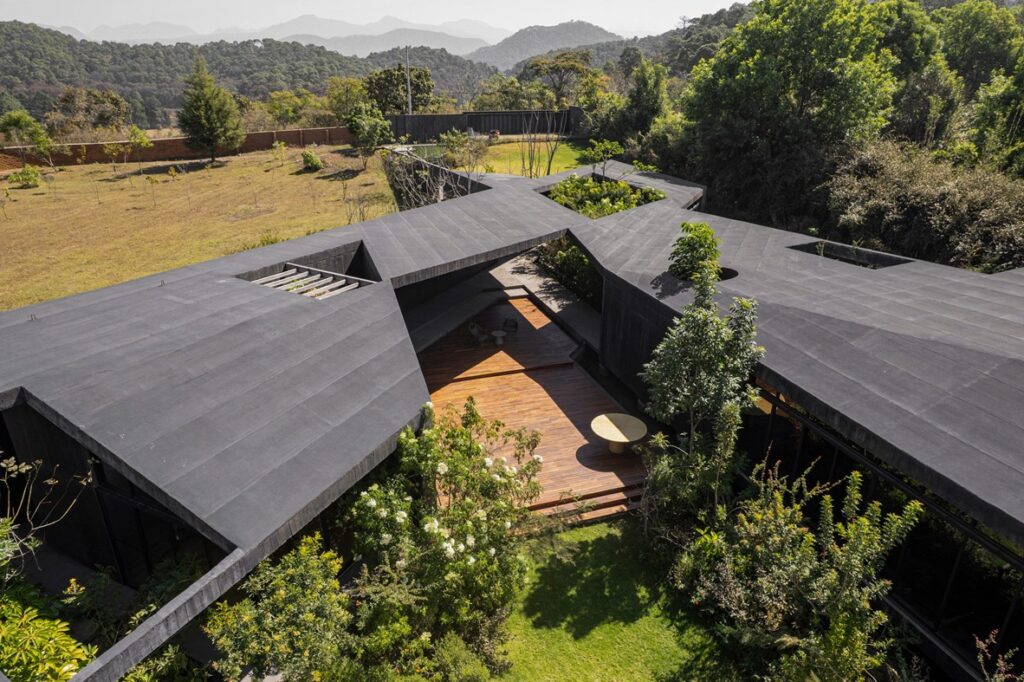
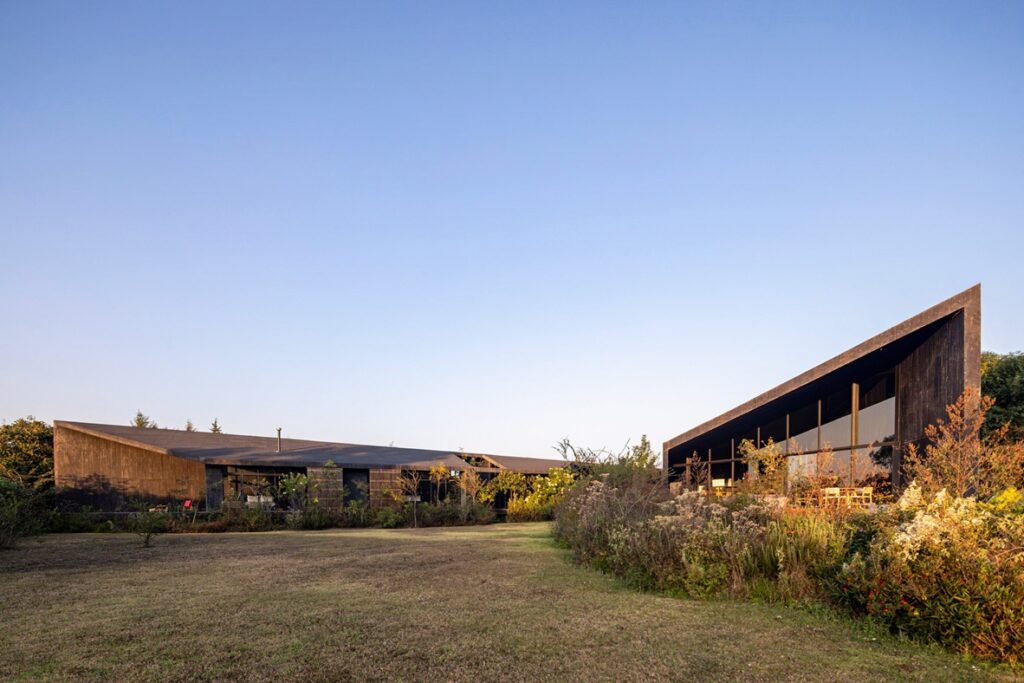
One of the most distinctive features of Casa Mavra is its X-shaped plan, formed by two intersecting volumes. This layout allows for a clear division between public and private spaces while maintaining a strong visual connection across the home.
Key spatial elements include:
- Central patio acting as the heart of the house
- West wing dedicated to living, dining, and kitchen spaces
- East wing housing private bedrooms
- Semi-open corridors connecting different areas
The entrance sequence is particularly striking. Visitors approach the house via a stepped pathway accompanied by a narrow water feature. The sound of flowing water, combined with a gradually rising concrete wall, creates a sense of anticipation and calm before entering the main space.
Courtyards and Light: Breaking the Solidity
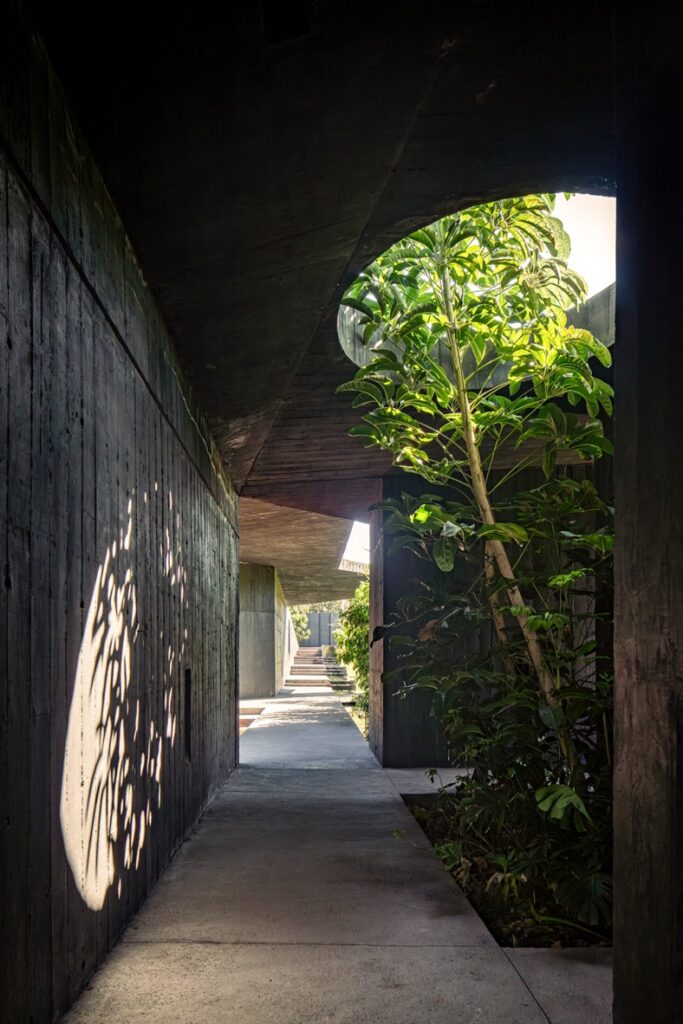
While the house is defined by its solid concrete form, it is carefully punctuated by small courtyards filled with trees and vegetation. These patios are carved into the structure, introducing moments of openness and natural connection.
Design highlights:
- Circular and square cut-outs in roofs and walls
- Tree-filled internal courtyards
- Natural light filtering deep into interiors
- Dynamic patterns of light and shadow
These elements soften the otherwise heavy architecture, creating a balanced interplay between mass and void. The presence of greenery within the structure ensures that nature is not just surrounding the house but actively integrated into its spatial experience.
Indoor-Outdoor Connection
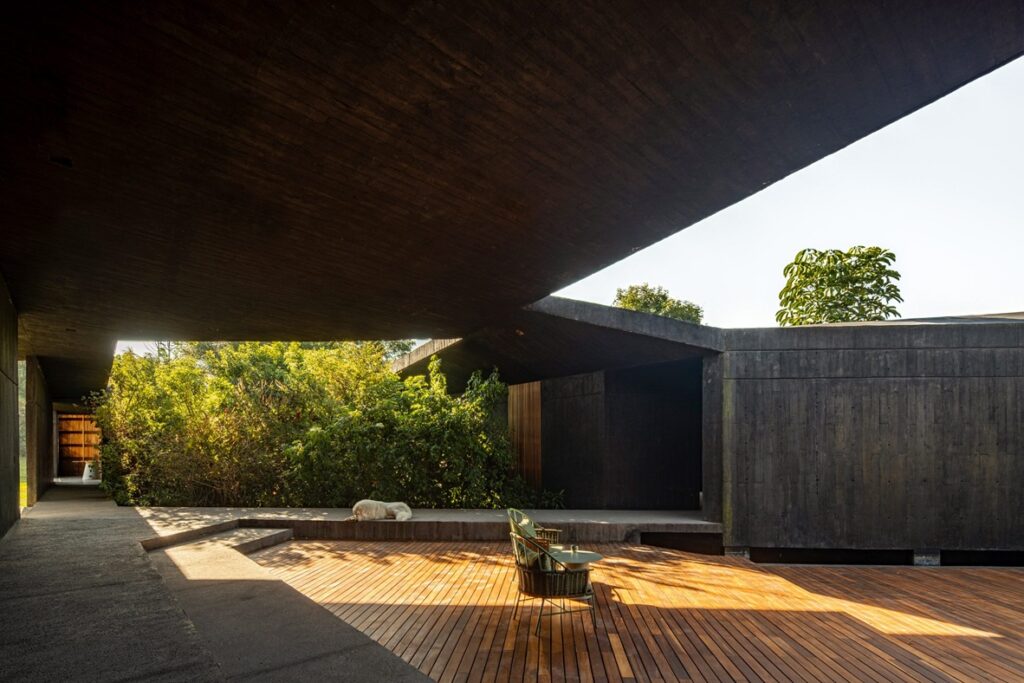
Casa Mavra strongly emphasizes a seamless transition between interior and exterior spaces. Semi-external corridors act as transitional zones, allowing occupants to move through the house while remaining connected to the outdoors.
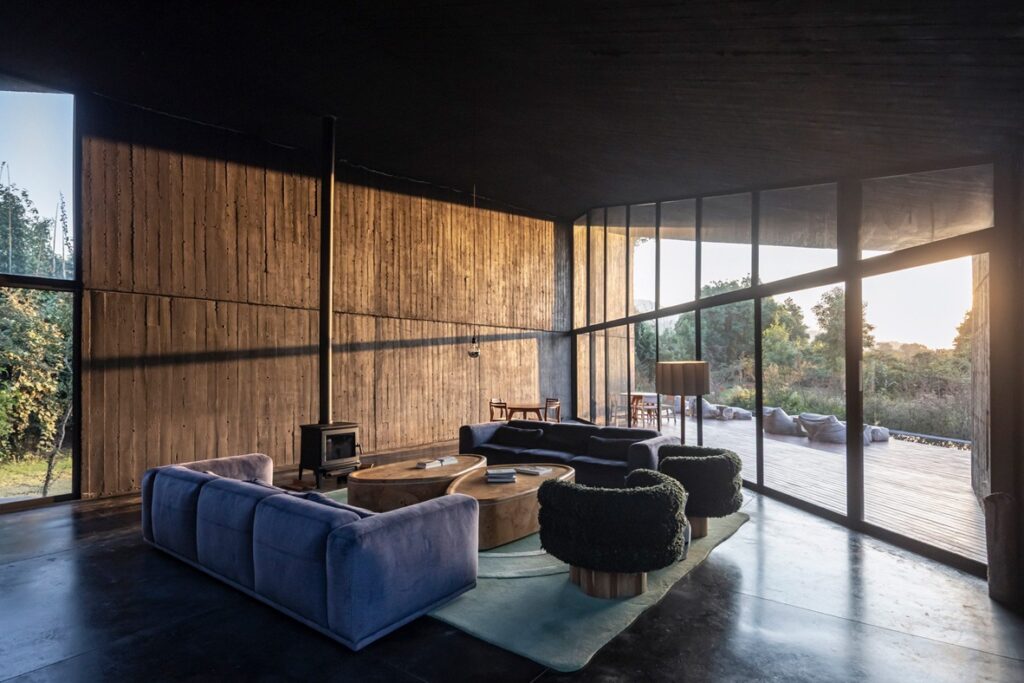
At the ends of each volume, large glazed walls open up to the surrounding landscape. These transparent facades lead to small timber terraces, offering intimate outdoor spaces for relaxation.
Key features of this connection:
- Floor-to-ceiling glazing framing landscape views
- Direct access to outdoor terraces
- Natural ventilation and daylight optimization
- Visual continuity between inside and outside
This approach ensures that every part of the house maintains a relationship with its environment, enhancing both comfort and experience.
Materiality and Interior Experience
The interiors of Casa Mavra remain consistent with its exterior identity. Exposed concrete walls dominate the material palette, creating a cohesive and minimalist aesthetic. However, this is carefully balanced with natural light, warm timber elements, and greenery.
The contrast between heavy concrete and transparent glass defines the spatial experience. While the concrete provides a sense of enclosure and protection, the glazed openings introduce lightness and openness.
Key Architectural Takeaways
Casa Mavra represents a thoughtful approach to modern residential design. It demonstrates how strong architectural expression can coexist with environmental sensitivity.
- Architecture should respond to its context, not compete with it
- Material choices can enhance both aesthetics and environmental integration
- Light and nature are essential elements of spatial design
- Balance between solidity and openness creates dynamic living environments
Casa Mavra is more than just a house, it is an exploration of how architecture can engage with nature in meaningful ways. Through its monolithic black-concrete form, carefully designed courtyards, and seamless indoor-outdoor connections, the residence achieves a rare balance between strength and subtlety.
Conclusion
Taller Alberto Calleja has created a home that is both visually striking and deeply rooted in its environment. It stands as a compelling example of contemporary architecture that prioritizes experience, context, and harmony, proving that even the boldest designs can coexist gently with the natural world.
Images- deezen.com