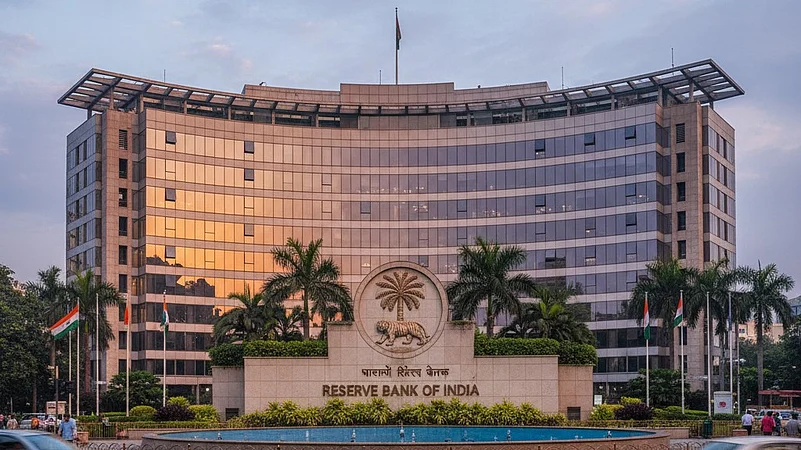
The Reserve Bank of India’s Monetary Policy Committee (MPC), led by Governor Sanjay Malhotra, has kept the repo rate unchanged at 5.25% while maintaining a neutral policy stance. The decision comes amid heightened global uncertainty driven by geopolitical tensions, volatile energy prices, and concerns over supply chain disruptions. At the same time, the RBI has revised its GDP growth forecast for FY26 downward to 6.6%, while raising its inflation projection to 5.1%, indicating a more cautious macroeconomic outlook.
The central bank noted that while domestic economic activity remains resilient—supported by strong consumption, manufacturing, and services—external risks such as elevated crude oil prices, currency volatility, and monsoon uncertainties could weigh on growth and inflation. Despite these challenges, the RBI emphasized that India’s underlying economic fundamentals remain strong, with adequate forex reserves and stable external buffers.
The policy decision reflects a balancing act between controlling inflation and sustaining growth. While inflation remains within the target band, rising input costs and energy prices are beginning to exert pressure. The RBI has indicated that it will remain data-driven and vigilant, ready to respond to evolving macroeconomic conditions while avoiding premature policy shifts.
The MPC highlighted that global economic conditions have deteriorated since the previous review, with geopolitical conflicts—particularly in West Asia—continuing to disrupt energy markets and trade flows. These developments have contributed to a more cautious outlook, prompting the RBI to lower its growth projections while acknowledging upside risks to inflation.
Governor Malhotra reiterated that the central bank does not target any specific exchange rate level for the rupee, but will intervene to curb excessive volatility and ensure orderly market conditions. India’s forex reserves, standing at around $682 billion, were described as adequate to cushion external shocks.
The policy stance remains neutral, signaling that the RBI sees limited immediate need for tightening or easing. However, markets are closely watching for future signals, as economists suggest that persistent inflationary pressures or sustained high crude oil prices could shift the policy trajectory in the coming quarters.
The Reserve Bank of India’s decision to maintain the repo rate has been widely viewed across the real estate, infrastructure and investment sector as a move that reinforces policy stability amid a complex global economic backdrop. Industry leaders note that the unchanged rate provides much-needed predictability for developers, investors, and homebuyers at a time when markets are navigating geopolitical tensions, inflationary pressures, and fluctuating commodity prices.
This steady monetary stance is expected to support borrowing visibility and sustain buyer confidence. Stable lending rates help keep EMIs manageable for homebuyers while enabling developers to plan projects with greater financial certainty. Experts believe this environment will continue to encourage timely project execution and steady demand in key urban housing markets.
At the same time, the decision is seen as supportive of broader capital flows into real estate and alternative investment vehicles. With traditional asset classes experiencing volatility, investors are increasingly exploring structured alternatives and income-generating assets, further strengthening interest in real estate-linked opportunities.
Industry Experts Opinions
Mr. Dharmendra Raichura, VP & Head of Finance, Ashar Group
“RBI’s decision to maintain the repo rate at 5.25% reflects a calibrated approach amid evolving global and domestic economic conditions. For the real estate sector, policy stability provides greater visibility for both developers and homebuyers. Predictable borrowing costs support efficient project planning and timely execution, while buyers continue to benefit from stable lending rates and manageable EMIs. With housing demand demonstrating resilience and infrastructure-led growth creating new opportunities across key urban markets, the decision is expected to sustain market confidence and support steady momentum in the residential sector.”
Mr. Umesh Gowda H A, chairman and founder of Sanjeevini Group
“The status quo on policy rates while retaining neutral stance signals the RBI’s focus on maintaining a stable interest rate environment in order to spur growth amidst the prolonged geopolitical tensions in West Asia that continue to exert pressure on commodity prices and currency markets and inflationary risks.
For the housing sector, rising construction costs and supply obstructions can have an impact on overall housing market. Any rise in price may be detrimental for housing sales and therefore, a stable policy environment will help not just homebuyers in planning their purchase but also developers to adjust their sales and supply pipelines in order to maintain affordability.”
Mr. Ankur Jalan, CEO, Golden Growth Fund (GGF), a category II Real Estate focussed Alternative Investment Fund (AIF)
“The RBI’s decision to keep policy rates unchanged and retain ‘neutral’ stance reflects a prudent approach amid ongoing geopolitical uncertainties, volatile commodity prices and global market disruptions. A status quo provides stability and predictability that investors value during uncertain times.
For the real estate sector, two factors are beginning to play out – shift of investment from the middle east and financialization of real estate as uncertainty around the real estate sector persist.
Besides, as traditional asset classes such as equities and bonds remain susceptible to geopolitical developments and market volatility, well-structured Alternative Investment Funds (AIFs) can offer investors access to tangible assets, relatively predictable cash flows and portfolio diversification. Amidst rising inflation, AIFs are increasingly emerging as a preferred avenue for high-net-worth and institutional investors seeking risk-adjusted returns enhancing its attractiveness.
We believe the current environment could accelerate the shift towards alternative investments, with investors focusing on income-generating assets. The RBI’s stable rate stance provides a conducive backdrop for long-term capital deployment, and quality real estate assets remain well-positioned to attract both domestic and global capital.”
Mr. Lalit Parihar, managing director, Aaiji Group, a Dholera-based real estate firm
The RBI’s decision to maintain a status quo on policy rates is a welcome move for the real estate sector and overall economy. Given the current economic backdrop marked by geopolitical uncertainty, inflationary pressures, elevated commodity prices and a weakening rupee, while having some impact on inflation, but a stable policy environment will spur India’s growth.
In this environment, policy continuity would be a positive outcome for the real estate sector. The housing market is currently navigating a combination of rising construction costs, cautious investor sentiment and some moderation in demand. A stable interest rate regime would help preserve affordability, support buyer confidence and provide greater flexibility to developers and investors alike.
The sector remains fundamentally resilient. Developers are increasingly focusing on cash-flow discipline, calibrated launches and timely project execution. We believe the industry is well positioned to adapt to the current disruptions, and a stable monetary policy framework will further support capital deployment, construction activity and overall market confidence.
Mr. Raoul Kapoor, Co-CEO, Andromeda Sales and Distribution Pvt. Ltd.
“The Reserve Bank of India’s decision to maintain the status quo on policy rates comes as a significant relief amid ongoing geopolitical uncertainties, rising crude oil prices, global supply chain disruptions, and broader economic volatility.
At a time when inflationary pressures remain a concern and global markets continue to face uncertainty, the RBI’s decision reflects confidence in the stability of the domestic economy while balancing growth and inflation objectives.
For the housing sector, the move is particularly encouraging. The status quo means home loan interest rates are likely to remain stable at around 7%–7.25%, providing much-needed comfort to both existing borrowers and prospective homebuyers. Those currently servicing home loans can continue to benefit from lower EMIs compared to the high-interest-rate environment witnessed during 2022–24, while new borrowers can plan their home purchases with greater confidence and affordability.
Stable interest rates, coupled with strong housing demand and improving infrastructure, are expected to further support residential real estate activity. Overall, the RBI’s decision provides a positive signal for consumers, businesses, and the housing market at a time when stability is crucial for sustaining economic momentum.”
Mr. Biju Mahima, CEO of U-Sphere.
“The RBI’s decision to maintain the repo rate at 5.25% reflects a balanced approach towards supporting growth while maintaining macroeconomic stability at a time when the global economy continues to navigate multiple uncertainties. Ongoing geopolitical tensions and conflicts, disruptions in global supply chains, commodity price volatility, and evolving trade dynamics have created challenges for businesses across sectors. The infrastructure and construction industry has been contending with rising input costs, labour availability concerns, project financing pressures, and execution complexities amid an increasingly dynamic operating environment.
For the infrastructure and construction sector, a stable interest rate environment is an important enabler, as it strengthens investment confidence, improves project viability, and provides greater visibility for long-term capital deployment. Beyond financing costs, policy stability fosters confidence across the value chain, from developers and contractors to investors and technology providers supporting both capacity creation and future investments.
India’s development journey continues to be anchored by significant investments in infrastructure, urban development, industrial expansion, and digital assets. Continued policy support, coupled with sustained public and private sector investments, will play a critical role in accelerating project execution, generating employment opportunities, and unlocking the next phase of economic growth.”
Mr. Sudhanshu Dutt – CEO, Elevate Homes
“The RBI’s decision to maintain the repo rate at 5.25% reflects a balanced approach towards supporting economic growth while remaining vigilant on inflationary pressures. For the residential real estate sector, policy stability is often more valuable than frequent rate movements, as it provides confidence to homebuyers, investors and developers alike.
For homebuyers, a stable interest rate environment preserves affordability and enables long-term financial planning without concerns of rising EMI obligations. Developers benefit from greater predictability in capital allocation and project execution, while investors gain confidence from a stable macroeconomic backdrop and sustained demand fundamentals.
The housing market has continued to demonstrate resilience, driven by strong end-user demand and rising aspirations for homeownership. With borrowing costs remaining stable and demand momentum intact, we expect the sector to maintain its growth trajectory across key residential markets.”
Mr. Rajan Luthra, CFO, Action Construction Equipment Ltd.
“The RBI’s decision to maintain the repo rate at 5.25% reflects a balanced and prudent approach amid evolving global economic conditions. A stable interest rate environment provides businesses with greater visibility for planning investments, capacity expansion, and long-term infrastructure development. For the construction and equipment industry, policy stability is particularly important as it supports project execution, financing confidence, and sustained demand across key sectors. Coupled with the Government’s continued emphasis on infrastructure creation, manufacturing growth, and logistics development, the decision reinforces a positive outlook for the sector. We remain optimistic about the opportunities ahead and believe that stable monetary conditions will continue to support India’s infrastructure ambitions and economic growth trajectory.
Mr. Akash Pharande, Managing Director, Pharande Spaces
“The RBI holding the repo rate steady at 5.25% is positive for the housing sector and most importantly, for those end-users who are the foundation of the residential demand, since it will lead to stability of home loan rates. With this stability, the rate and amount of the EMI will not change, and consumers will be more confident in making long-term commitments. Since the only changing factor in the housing demand equation is the buyer sentiment, this decision will help maintain positive buyer sentiment and will keep sales growing in the emerging markets of Pune and PCMC, where the demand is primarily led by infrastructure development.”
Mr. Shiv Garg, Director, Forteasia Realty Pvt. Ltd.
“With so much global economic uncertainty, the decision to keep policy rates unchanged is a welcome move for homebuyers, as they now have additional certainty. The cost of borrowing is a key factor in the balance of affordability of housing and encouraging homebuyers to complete their purchase. This is especially the case for first-time buyers, who are the most sensitive to the cost of home loans.”
Mr. Vijay Raundal, Director, Teerth Realties
“The most interest-sensitive real estate investment exists in Land. The vacant land holding costs decrease to 5.25% repo rate yet this decrease does not drive investors to purchase land. Investors use price signals to determine market movement instead of relying on interest rate changes. The developers who possess substantial financial resources can now acquire multiple land parcels which they will use in their upcoming development plans for urban areas situated beyond city centers. The agricultural land transformation into non-agricultural land receives financial support through affordable credit which funds both approval processes and required payments. The quote to remember: “Land at 5.25% is a patient chess move, not a lottery ticket.” The land registries will experience a gradual increase during the next six-month period.”
Mr. Hardik Shah, Director, Shyam Group – Dholera SIR
The core infrastructure system basically runs as a base where it gets a little tune up via the 5.25% repo rate. With these lower interest rates organizations can snag bonds and bank loans for their road port and power project funding needs. But India’s infrastructure troubles don’t stop at interest costs, because the bigger issue is project execution and land acquisition, you know. The present rate also helps state-owned enterprises and private concessionaires swap out their older high-cost borrowings, it eases financing expenses while letting them keep things running and win new contracts. There’s even a small uplift in support for the National Infrastructure Pipeline. The 5.25% rate should keep ongoing projects alive that need quick cash until they reach operational status, and it will not really kick off new project development though.”
Mr. Aman Gupta, Director, RPS Group
“The RBI’s current 5.25% repo rate establishes an unambiguous message that home loans became more accessible. Developers experience project delivery acceleration because their financial expenses decreased which results in their need for less construction materials. Buyers experience decreased monthly payment amounts which motivates undecided customers to make purchasing decisions. The current situation does not represent a market surge but rather a planned market restoration. Mid-range housing prices will continue to rise steadily while luxury housing prices require additional time to develop. The actual situation shows that people can afford more now because interest rates remain unchanged which eliminates the fear of sudden interest rate increases. Real estate operations become most effective at 5.25% because it establishes a point where investors must proceed with caution before they choose to invest in their business.”
Ms. Gunjan Goel , Director, Goel Ganga Developments
“A 5.25% repo rate carries a special relevance for women in real estate—homebuyers, entrepreneurs,and investors basically. The government interest subvention programs make it easier for people to become homeowners, because they help lower their monthly payments,by a noticeable amount. Women-led startups in retail or warehousing can push their operations forward more smoothly, since they tend to receive affordable working capital loans, for everyday costs. With lower interest rates women are more likely to put money into REITs and acquire property with their families, so they can build lasting wealth. The rate by itself won’t close the gender gap completely, but it tilts the terrain, a little. This lower cost of money helps women reach financial independence more easily than before. Also,yes, investment money will flow into REITs and InvITs because their distribution rates can beat their debt payment rates. The investor’s mantra at 5.25% is: “Leverage lightly, hold patiently, and avoid speculative land flips.”
Mr. Siddharth Maurya, Founder and Managing Director of Vibhvangal Anukulakara Private Limited
“A 5.25% repo rate opens fresh pathways for real estate investors. Fixed deposit investments lost some of their pull, since people moved toward stronger returns ,so they started buying residential and commercial space plus warehousing properties. Right now the market doesn’t feel like 2008 euphoria because banks stay firm on their lending rules and keep loan-to-value ratios on the lower side. Investors will likely lean toward assets that can deliver about 6 to 7 percent net rental income, since these will give a small edge in overall profit. Fresh money should drift into REITs and InvITs because their distribution yields outperform their debt service costs. And the investor’s own rhythm at 5.25% is pretty much: “Use modest leverage, wait calmly, and sidestep speculative land flipping.””
Mr. Raghunandan Saraf, Founder and CEO, Saraf Furniture
“The retail industry depends on customer feelings because the 5.25 percent repo rate indicates people should shop with restraint instead of spending freely. The decrease in interest rates enables people to pay lower EMIs for their personal and vehicle loans which results in increased available money. The banks that exercise caution will begin to enforce stricter credit score requirements which creates disadvantages for some people. The retail real estate market which includes malls and high streets presents a divided situation. More people visit stores because their spending capacity increases but online shopping continues to compete strongly. The winning move? Experiential retail. Retailers maintain their capacity for controlled business growth because they currently manage all their debts. The force creates a gentle push which leads to progress.”
Mr. Shorab Upadhyay, Managing Director,TRG Group
“The RBI’s decision to keep the repo rate unchanged creates a stable base, while global markets deal with big geopolitical and economic issues. For the real estate world, having consistent policies matters just as much as rate cuts. It lets developers and buyers plan long-term more confidently.
Right now, rates should help keep housing demand strong, especially in areas where new infrastructure is boosting growth. With steady loan conditions, devs can keep investing in good projects and timely deliveries. This boosts positive feelings in the market. The sector’s moving toward steady and mature growth, backed by solid demand and better economy basics.”
Mr. Pradeep Aggarwal, Founder & Chairman, Signature Global (India) Ltd.
“We welcome the RBI’s decision to keep the policy rate unchanged at 5.25%. In an environment marked by ongoing geopolitical uncertainties and uneven global growth, policy continuity provides much-needed stability for both businesses and consumers.
This steady stance also reinforces confidence in the domestic growth story. For the real estate sector, predictability in interest rates is a key driver of demand, as it directly influences homebuyer sentiment, affordability, and long-term investment planning. Stable borrowing conditions encourage committed purchase decisions, particularly in the mid-income and premium housing segments.
At a time when global volatility continues to shape economic outlooks, the RBI’s approach supports sustainable growth while ensuring financial stability. This balance is essential for sectors like housing, which are closely linked to consumption, employment generation, and overall economic momentum.”
Mr Abhishek Raj, Founder & CEO Jenika Ventures
“The RBI keeping the repo rate at 5.25% and maintaining a neutral stance boosts stability and market confidence. Though global tensions, such as those in West Asia, continue, the central bank’s cautious approach displays trust in India’s economic resilience.
This is especially good for the real estate sector. With interest rates holding steady, both buyers and investors can relax, knowing borrowing costs won’t increase. Predictability in financing encourages steady demand for both residential and commercial properties, particularly in rapidly growing regions like Noida and Greater Noida. Overall, this policy promotes long-term investments and growth in real estate, fostering a healthy environment for the sector.”
Mr. Jash Panchamia, Executive Director, Jaypee Infratech Limited.
“The RBI’s decision to keep policy rates unchanged is a prudent and reassuring move. Stability in interest rates is critical for maintaining consumer confidence, particularly in the housing sector, where financing plays a key role in purchase decisions.
Over the past few quarters, declining interest rates have significantly improved housing affordability and encouraged many fence-sitters to move ahead with their home-buying plans. With the RBI maintaining the status quo, home loan rates are expected to remain attractive, providing continued support to both end-users and investors.
For the real estate sector, this creates a favourable environment where demand can sustain its momentum, particularly in mid-income and premium housing segments. Coupled with ongoing infrastructure development and strong economic fundamentals, stable borrowing costs will help strengthen buyer sentiment and support long-term growth in the residential market.”
Mr. Manik Malik, CEO & President, BPTP
“The Reserve Bank of India’s decision to maintain a stable repo rate reflects a focus on macroeconomic stability, which is important for the real estate sector. A stable interest rate environment supports predictability for both homebuyers and developers, aiding financial planning and investment decisions. The residential market has demonstrated resilience in recent quarters, supported by end-user demand and improving sentiment. Continued stability in interest rates can help sustain this momentum, particularly across mid and premium housing segments, while maintaining overall market confidence.”
Mr. Yashank Wason, Managing Director, Royal Green Realty
RBI MPC’s decision to keep the repo rate unchanged at 5.25% is a significant positive note for the real estate industry. The unchanged repo rate will significantly benefit both buyers and developers. For homebuyers, unchanged interest rates mean manageable EMIs which will improve the rate of potential purchasers. For developers this unchanged stance will accelerate the project launches and completion timeline.
Mr. Pushpender Singh – Managing Director, JMS Group
“The decision to keep the repo rate unchanged brings much-needed stability and predictability for the real estate sector. For homebuyers, it sustains affordability and supports sentiment in an already improving market. For developers, it allows better financial planning and project execution. However, timely liquidity support and faster approvals remain critical to maintain momentum. A balanced policy approach like this helps build long-term confidence and keeps the sector aligned with India’s growth aspirations.”
Mr. Rajat Bokolia, CEO, Newstone
“The recent RBI MPC meeting has decided to keep the repo rate unchanged at 5.25%, supporting the momentum for the real estate sector. It translates into stable home loans, directly improving housing demand with better liquidity for developers. This will ensure developers to accelerate project launches and completion timelines, securing an environment of prosperity and reliance across key real estate markets.”
Mr. Jitender Yadav, Director, Roots Developers
“The RBI’s decision to maintain the repo rate at 5.25% is, a catalyst for renewed enthusiasm in the real estate sector. Stability in borrowing costs will make home loans more accessible which will increase demand of home buyers. This will also help developers to speed up project launches and improve completion timelines, strengthening an environment of growth and confidence across key housing markets. We look forward to a pragmatic environment for the real estate industry”
Mr. Rishabh Periwal, Senior Vice President, Pioneer Urban Land & Infrastructure Ltd.
“The RBI Monetary Policy Committee’s decision to maintain the repo rate at 5.25% provides much-needed stability to the real estate sector. A steady rate environment ensures predictability in home loan costs, encouraging buyer confidence and sustaining housing demand. For developers, stable funding conditions and improved liquidity visibility enable better planning of project launches and execution timelines. Overall, this decision reinforces a growth-oriented environment and strengthens confidence across key real estate markets.”
Mr. Rohit Kishore, CEO, Hero Realty
The RBI’s decision provides much-needed stability amid global uncertainties. Predictable interest rates help businesses and consumers plan with confidence, while stable borrowing costs support homebuyers and investment activity. For the real estate sector, this move is expected to sustain buyer sentiment and contribute to steady, long-term growth.
Mr. Venket Rao, Founder- Intygrat Law
“India’s monetary policy journey over the past year with 125 basis points in cumulative rate cuts bringing the repo rate down to 5.25%, signals the RBI’s confidence in domestic fundamentals. However, with global headwinds from the oil market and a weakening rupee, the pace of future easing will remain measured. Businesses would be better served optimizing their existing financing structures today rather than waiting for further cuts that may not arrive on the timeline the market expects.
Mr Vimal Nadar, National Director & Head, Research, Colliers India
“RBI has maintained the repo rate at 5.25% and continued with the neutral stance, while taking cognizance of the likely inflationary concerns arising out of prolonged West Asia crisis and consequent impact on supply chains. High crude oil prices and a depreciating Rupee have added to the downside risks across economic sectors, including real estate.
While growth remains resilient, the impact of cost pressures has started to become visible and is likely to weigh in. Overall construction costs are already on the rise led by increasing material and labour costs, which may lead to workforce inadequacy and delayed project timelines. This rise in construction cost is likely to be ultimately passed on to homebuyers in the form of higher property prices, thus affecting affordable and middle-income housing segments. However, this will depend on the intensity and duration of the ongoing global headwinds. The likelihood of a potential rise in repo rate and hence home loan interest rates cannot be fully eliminated in the next few quarters.
While homebuyers are likely to assess their income visibility more stringently before purchasing homes, developers are expected to prioritise construction material adequacy, cash flow management and project execution in the near to mid-term.”
Mr. Tanuj Shori, Founder & CEO, Square Yards
“For aspiring homebuyers, the RBI’s decision to maintain the repo rate at 5.25% provides a stable environment for financial planning and reinforces confidence in long-term property purchases. With borrowing costs remaining steady, homebuyers can evaluate opportunities with greater certainty, which is particularly important for end-users and first-time buyers.
Beyond the rate decision, the measures announced to encourage greater participation by NRIs, OCIs, and foreign investors in Indian financial markets are a significant positive for the broader economy. By facilitating higher overseas investments and enhancing the attractiveness of Indian debt and equity markets, these initiatives are expected to support capital inflows, strengthen investor confidence, and reinforce India’s position as a preferred global investment destination.
For the real estate sector, stronger economic sentiment and deeper engagement from the global Indian diaspora could translate into increased interest in residential assets. NRIs already account for a meaningful share of premium housing demand, and these measures are likely to further strengthen their confidence in India’s long-term growth story. Combined with a stable interest rate environment, this should provide continued support to housing demand across key residential markets.”
Mr. Akhil Saraf, Founder & CEO, Reloy (A proptech Firm)
“By maintaining the policy rate steady, the RBI has indicated that the government expects the Oil Crisis to stabilise and inflation to be under check. The effect on construction costs is becoming increasingly apparent, though they remain manageable for now. This decision is a positive sign for the housing sector, where interest rate stability remains critical for affordability and buyer confidence. A prolonged period of steady borrowing costs will continue to support residential demand, particularly among first-time homebuyers and upgraders, while also providing developers with greater visibility for project planning and investments.”
Mr. Shrinivas Rao, FRICS, CEO, Vestian
“The Reserve Bank of India kept the repo rate steady amid evolving global uncertainties to gauge its overall impact on the Indian economy before initiating any rate-hike cycle. This decision has provided some financial relief to the real estate sector, which continues to grapple with rising construction costs driven by elevated inflation. Developers and investors also continue to benefit from unchanged borrowing costs, helping sustain healthy demand-supply dynamics in the market. However, the central bank is likely to hike repo rate in the coming months to contain inflationary pressures stemming from rising fuel prices and the prospect of a weaker monsoon.”
Mr. Khalid Masood, Managing Director, Shalimar Corp
“We appreciate the decision of RBI of not changing the repo rate. Changes in the repo rate happen a lot as this can affect how much it costs to borrow money. It can also change what buyers decide to buy especially when it comes to houses. The real estate sector does well when things are predictable. When interest rates are stable people who build houses, people who invest in houses and people who buy houses can plan better. Manage their money more wisely. The real estate sector likes it when things are stable so a stable interest rate is good, for the real estate sector.”
Mr. Ashish Bhutani, CEO, Bhutani Infra
“The RBI’s decision to maintain the repo rate at 5.25% while retaining a neutral stance reflects a measured and pragmatic approach amid global uncertainties and evolving inflation dynamics. For the real estate sector, stability in interest rates is as important as rate cuts, as it strengthens buyer confidence and enables long-term investment planning. A predictable borrowing environment allows homebuyers to make informed decisions and supports developers in executing projects efficiently. We expect the continued stability in the interest rate regime to sustain housing demand across segments, particularly in the mid-income and premium categories, while contributing positively to the sector’s growth momentum.”
Mr. Vikas Garg, Joint Managing Director, Ganga Realty
“The RBI’s decision to keep the repo rate unchanged is a significant and positive development for the real estate sector. The move comes at a time when the residential market continues to demonstrate strong momentum and growing consumer confidence. Stability in interest rates will provide much-needed comfort to homebuyers, particularly those relying on housing finance, enabling them to make purchase decisions with greater confidence. It also creates a favourable environment for developers by supporting sustained demand across key housing segments. With rapid urbanization, rising disposable incomes, and continuous infrastructure development driving residential demand, policy stability plays a crucial role in maintaining market momentum. We believe that the RBI’s balanced approach will further strengthen buyer and investor sentiment, encourage long-term investments, and support the overall growth trajectory of the real estate sector. Going forward, this stability is expected to boost housing sales, enhance affordability, and contribute positively to the sector’s sustained expansion.”
Mr. Mohit Mittal, CEO – MORES
“The pause was expected, but it still matters. At 5.25%, we’ve already absorbed 125 basis points of cuts since early 2025 — and that cycle is now working its way through EMIs, home loan rates, and buyer sentiment on the ground. Markets wanted another cut. They won’t get it today. Crude is climbing, the rupee is under pressure, and the RBI is reading that room correctly. For residential real estate across India, the real question is how long this pause holds. The cumulative rate relief of the last 12 months has already unlocked a demand cohort that was sitting on the fence — across affordable, mid-segment, and premium housing alike. Another cut later in FY27 would extend that window further. But even today’s hold doesn’t reverse the trajectory. The sector’s fundamentals are stronger than a single policy decision. Rate policy accelerates the cycle — it doesn’t create it.”
Mr. Ravi Kant, Co-founder, Elegance Enterprises & Elegance Infra
“The RBI’s decision provides much-needed visibility for both developers and homebuyers at a time when the real estate sector continues to witness strong demand. Interest rate certainty plays a critical role in purchase decisions, particularly in the mid-income and premium housing segments where financing remains a key consideration. A stable monetary environment supports investment confidence, enables smoother project execution and helps sustain the momentum that the sector has built over the past few years. For real estate, predictability is often as important as the rate itself.”
Mr. Raghunath Reddy Bhattagiri, Co-founder & MD, Triguna Projects
“The repo rate decision reinforces confidence across the real estate ecosystem. Stable borrowing costs encourage homebuyers to move forward with purchase decisions while allowing developers to plan investments with greater certainty. Beyond residential housing, sectors such as plotted developments, mixed-use communities and commercial real estate also benefit from a predictable interest rate environment. Consistency in monetary policy supports long-term growth, improves affordability, and strengthens overall market sentiment.”
Mr. Sapan Gupta, Chief Financial Officer, Rodic Consultants
“The RBI’s decision to maintain the repo rate at 5.25% provides needed policy stability and reinforces confidence across the infrastructure and construction ecosystem. In an environment marked by global uncertainties and evolving economic conditions, a stable interest-rate regime supports long-term project planning, capital allocation, and investment decision-making. For the infrastructure sector, where projects are capital-intensive and execution timelines are long, predictability in financing conditions and greater visibility on borrowing costs are significant positives. Against the backdrop of the Government’s continued focus on infrastructure-led growth, this decision is expected to support investor confidence and provide continuity to project development and execution. We remain optimistic about the sector’s growth outlook and believe stable monetary conditions will continue to support India’s infrastructure transformation journey.”
Mr. Ankit Agarwal, Managing Director, Alankit Limited
“The RBI’s latest policy stance reflects a careful balancing act between supporting growth and containing emerging inflationary pressures. The central bank has revised its FY27 real GDP growth forecast downward to 6.6% from 6.9%, acknowledging the impact of global trade disruptions and a moderation in domestic economic momentum. At the same time, it has raised its FY27 average CPI inflation projection to 5.1% from 4.6%, driven largely by rising costs of base metals, rubber, and energy. Significantly, the Monetary Policy Committee has, for the first time, identified the West Asia crisis as a key macroeconomic risk, given its implications for crude oil prices, supply chains, and export prospects. Retaining a ‘Neutral’ policy stance underscores the RBI’s commitment to data-driven flexibility ahead of the August 2026 meeting. By opting for a cautious pause rather than an aggressive rate hike, the central bank appears focused on allowing previous policy easing to fully transmit through the economy while remaining vigilant against supply-side inflationary shocks.”
The RBI’s decision to maintain the repo rate at 5.25% with a neutral stance signals a continued focus on balancing growth and inflation amid a complex global environment. While external risks such as geopolitical tensions, volatile crude oil prices, and currency fluctuations persist, India’s domestic fundamentals remain resilient, supported by strong consumption, infrastructure expansion, and stable financial buffers. For the real estate and infrastructure sectors, this policy stability provides a crucial foundation for sustained demand, predictable borrowing costs, and improved investor confidence. Going forward, the market is expected to remain steady rather than volatile, with developers focusing on execution discipline and buyers benefiting from consistent affordability. Overall, the outlook remains cautiously positive, with future policy moves likely to remain data-driven and highly responsive to global developments.”
Image- outlookbusiness.com