
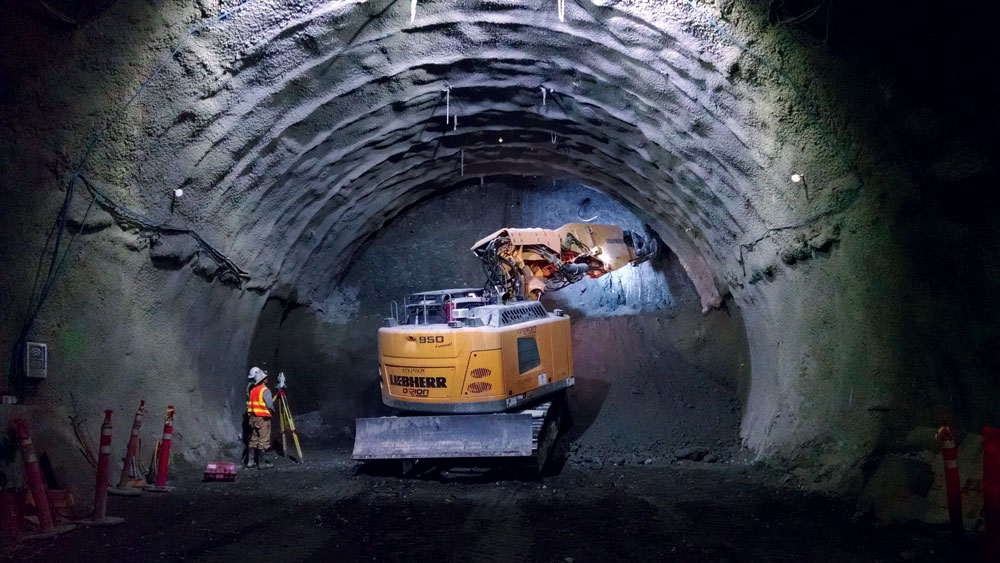
The rapid expansion of transportation, urban infrastructure, hydropower projects, mining, and utility networks has significantly increased the demand for safe and efficient tunnel construction methods. As projects move into geologically complex terrain and densely populated urban areas, engineers require construction techniques that can adapt to varying ground conditions while maintaining structural stability and cost efficiency.
One of the most widely adopted methods for such conditions is the New Austrian Tunnelling Method (NATM). Rather than relying solely on heavy permanent linings, the method allows controlled deformation of the surrounding ground, supported by flexible reinforcement measures that are adjusted according to actual site conditions.
What is the New Austrian Tunnelling Method (NATM)?
The New Austrian Tunnelling Method (NATM) is a sequential excavation method that emphasizes utilizing the inherent strength of the surrounding ground to stabilize the tunnel. Instead of installing rigid supports immediately after excavation, NATM permits controlled ground movement while providing flexible support systems that work together with the surrounding rock mass.
The philosophy behind NATM is based on the understanding that the ground itself can become a structural component if its deformation is carefully controlled. By combining excavation, immediate support installation, and continuous monitoring, engineers can optimize support systems according to actual ground behavior.
Unlike conventional tunnelling methods where support systems are predetermined, NATM relies heavily on observational engineering. Support measures can be modified during construction based on monitoring data and geological observations.
Basic Principles of NATM
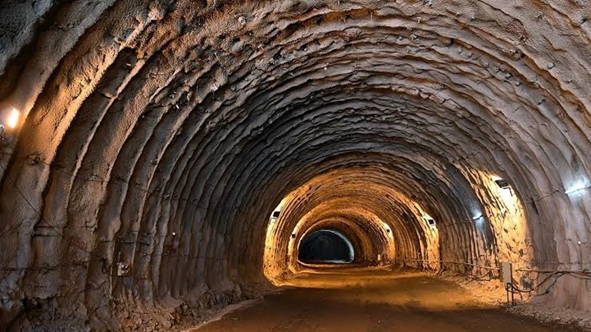
- Utilization of Ground Strength: Uses the natural strength of surrounding rock or soil to share structural loads with support systems.
- Controlled Deformation: Allows limited tunnel movement to redistribute ground stresses and improve stability.
- Immediate Support: Installs temporary supports quickly after excavation to control ground movement.
- Flexible Support Design: Modifies support systems according to actual geological conditions and site observations.
- Continuous Monitoring: Uses instruments to track deformation, stress, groundwater pressure, and support performance.
- Sequential Excavation: Excavates tunnels in smaller sections to reduce stress concentration and maintain stability.
Advantages of NATM
- Adaptability: Adjusts to changing geological conditions during tunnel excavation.
- Cost Efficiency: Optimizes support requirements and reduces material consumption.
- Improved Safety: Continuous monitoring helps identify instability risks early.
- Reduced Environmental Impact: Minimizes ground disturbance through controlled excavation.
- Complex Geology Suitability: Performs effectively in mixed rock, weak zones, and fault areas.
- Flexible Support System: Allows modification of reinforcement based on site conditions.
- Better Ground Control: Utilizes natural ground strength along with engineered supports.
Applications of NATM
- Highway Tunnels: Used for road tunnels through mountains and challenging terrain.
- Railway Tunnels: Supports underground rail corridors and transportation networks.
- Metro Projects: Applied in urban underground transit systems.
- Hydropower Projects: Used for diversion tunnels and underground powerhouses.
- Mining Projects: Supports access tunnels, shafts, and underground chambers.
- Water Supply Projects: Used for large-diameter water conveyance tunnels.
- Underground Storage Caverns: Applied for oil, gas, and strategic storage facilities.
NATM Construction Process
- Geological Investigation: Engineers conduct detailed studies of rock quality, soil characteristics, fault zones, groundwater conditions, in-situ stresses, and seismic conditions to prepare the initial support design.
- Tunnel Excavation: The tunnel is excavated in smaller sections using methods such as drill and blast, roadheaders, hydraulic breakers, excavators, and controlled mechanical excavation to reduce ground disturbance.
- Excavation Sequence: The excavation process follows a staged approach involving top heading, bench excavation, and invert excavation to maintain tunnel stability.
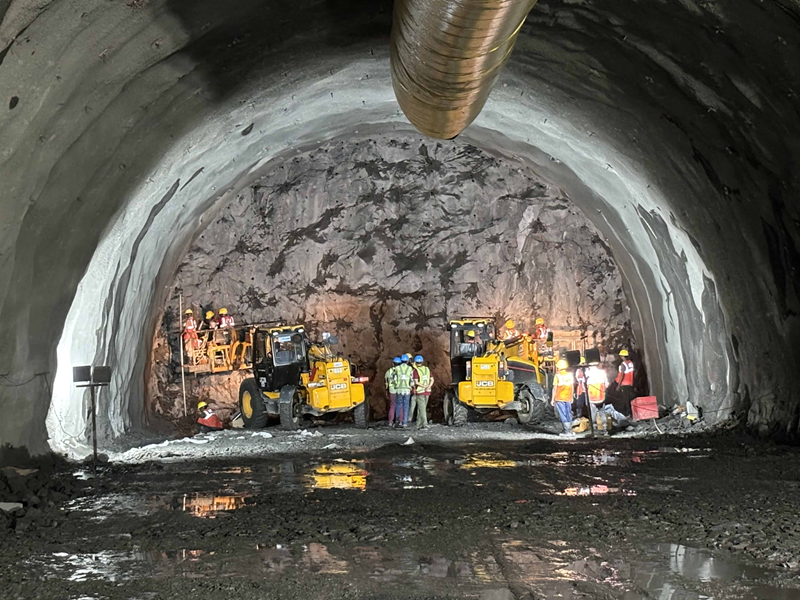
- Immediate Primary Support: Workers install shotcrete, rock bolts, steel lattice girders, wire mesh, and forepoling immediately after excavation to control deformation and provide early support.
- Ground Monitoring: Engineers continuously monitor tunnel convergence, surface settlement, rock displacement, stress development, groundwater pressure, and lining performance using monitoring instruments.
- Support Adjustment: The support system is modified according to monitoring results and changing ground conditions during construction.
- Secondary Lining: A permanent concrete lining is constructed after ground stabilization to provide long-term structural stability, waterproofing, durability, and a smooth tunnel finish.
Major Components of the NATM Support System
Shotcrete
Sprayed concrete for immediate tunnel support.
- Stabilizes excavated surfaces
- Prevents rock falls
- Provides early strength
Rock Bolts
Steel anchors that reinforce the surrounding rock.
- Stabilize fractured rock
- Reduce ground movement
- Improve tunnel safety
Steel Ribs
Structural steel supports used in weak ground.
- Support shotcrete
- Maintain tunnel shape
- Resist deformation
Wire Mesh
Steel mesh placed before shotcrete.
- Reinforces shotcrete
- Controls cracks
- Holds loose rock
Drainage Systems
Systems that manage groundwater.
- Reduce water pressure
- Protect tunnel lining
- Improve durability
Equipment Used in NATM
Several specialized machines are employed throughout construction.
Drill Jumbos
Used for drilling blast holes and installing rock bolts.
Shotcrete Machines
Apply concrete rapidly onto tunnel surfaces.
Roadheaders
Mechanically excavate softer rock formations.
Excavators
Perform bulk excavation and material handling.
Wheel Loaders
Load excavated rock (muck) onto transport vehicles.
Dump Trucks
Transport excavated material outside the tunnel.
Rock Bolt Drilling Rigs
Install reinforcement anchors efficiently.
Concrete Pumps
Deliver concrete for tunnel lining.
Ventilation Systems
Provide fresh air and remove dust and blasting fumes.
Survey Equipment
Includes:
- Total stations
- Laser scanners
- Monitoring sensors
- Digital mapping systems
NATM in India
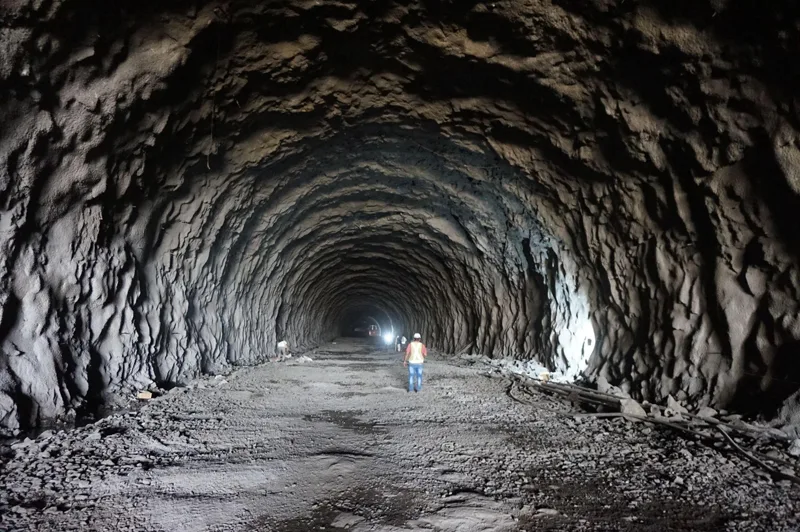
India has adopted NATM extensively for infrastructure projects in the Himalayan region and urban transportation systems due to varying geological conditions.
The method has been employed in:
- Road tunnels through mountainous terrain
- Railway tunnels
- Metro rail projects
- Hydropower developments
- Strategic border infrastructure
Its adaptability makes it particularly suitable for India’s diverse geological formations, where rock quality can change significantly over short distances.
NATM was successfully deployed on India’s first major NATM project—the Pir Panjal Railway Tunnel. It is also used for challenging high-altitude projects including the Zojila Tunnel and the Rishikesh-Karnaprayag Rail Link.
Latest Update- New Austrian Tunnelling Method (NATM) in Mumbai Bullet Train Project
The Mumbai-Ahmedabad High Speed Rail (MAHSR) corridor has reached a major construction milestone with India’s largest railway Tunnel Boring Machine (TBM) commencing excavation from Vikhroli towards Bandra Kurla Complex (BKC) station. The 13.6-metre diameter Mixshield TBM will construct a 6-km single-tube tunnel carrying both up and down Bullet Train tracks.
While TBM technology is being used for a major portion of the underground section, the New Austrian Tunnelling Method (NATM) has played a key role in constructing challenging sections of the Mumbai Bullet Train tunnel. The underground section of the corridor extends for 21 km, of which 16 km is being excavated using TBMs, while the remaining 5 km has already been completed using NATM.
The method was adopted for sections where excavation conditions required a flexible approach due to varying ground conditions and alignment requirements. The NATM-based tunnelling work involved excavation in controlled stages, followed by the installation of temporary and permanent support systems to maintain tunnel stability. Support measures such as shotcrete, rock bolts, steel ribs and lattice girders were installed based on the ground conditions observed during excavation.
Conclusion
The New Austrian Tunnelling Method (NATM) has transformed underground construction by demonstrating that the surrounding ground can serve as an active component of tunnel support rather than simply a source of external pressure. Through its emphasis on controlled deformation, immediate support, and continuous monitoring, NATM offers a flexible and efficient solution for tunnels in complex geological conditions.
As digital technologies, automation, and real-time monitoring continue to advance, NATM is evolving into an even more intelligent construction methodology. By combining proven engineering principles with innovations such as BIM, Digital Twins, IoT sensors, and AI-driven analytics, NATM is well positioned to support the growing demand for safe, resilient, and sustainable underground infrastructure in the years ahead.
Image Credit: tunnelingonline.com, aates.org.ar, metrorailnews.in,






