
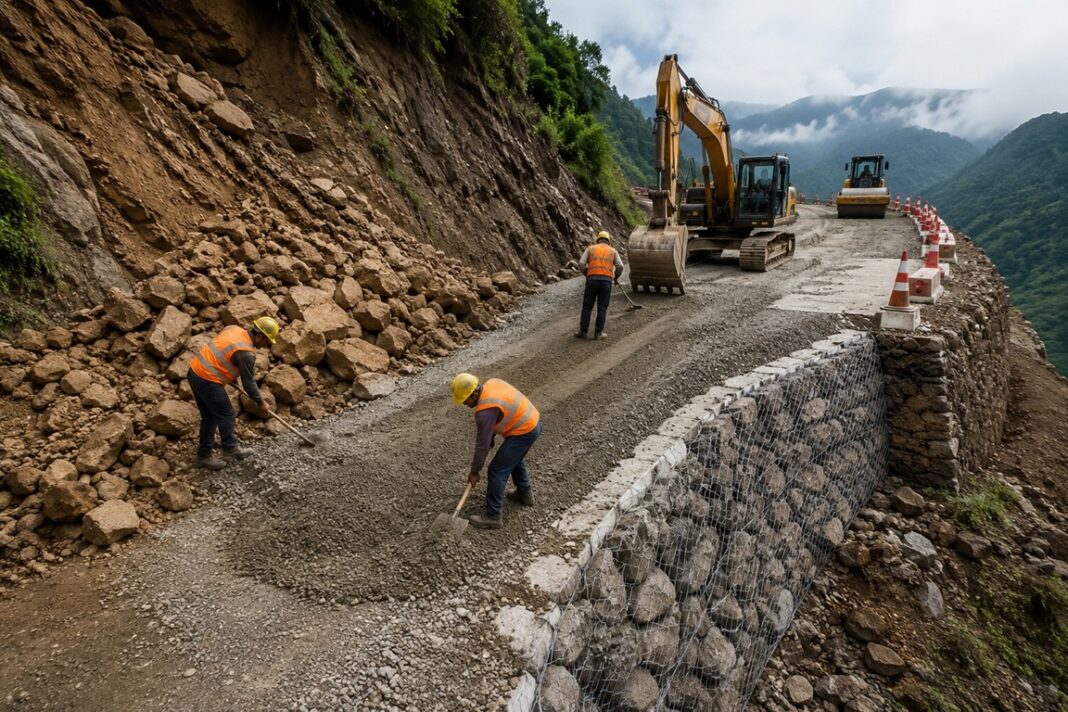
Landslides are one of the most significant natural hazards affecting road infrastructure in hilly, mountainous, and high-rainfall regions. Roads passing through slopes are particularly vulnerable to slope failures, rockfalls, debris flows, and soil erosion triggered by heavy rainfall, earthquakes, deforestation, and poor drainage. Landslides often block roads, damage pavements, undermine embankments, and disrupt transportation, emergency response, and economic activities.
Repairing landslide-damaged roads requires more than restoring the pavement surface. Engineers must stabilize the failed slope, improve drainage, strengthen the road foundation, and implement long-term protection measures to prevent recurring failures. Modern rehabilitation combines geotechnical engineering, drainage management, retaining structures, soil reinforcement, and advanced construction equipment to restore safe and durable transportation corridors.
Causes of Landslide Damage in Roads
Roads may experience landslide damage due to several natural and human-induced factors. The primary causes include:
- Heavy and prolonged rainfall
- Weak or weathered soil and rock formations
- Earthquakes and seismic activity
- Poor surface and subsurface drainage
- Excessive slope cutting during road construction
- Deforestation and loss of vegetation
- Water seepage into slopes
- Inadequate retaining structures
- Overloading of slope embankments
Continuous water infiltration increases pore water pressure within the soil, reducing slope stability and eventually causing slope failure.
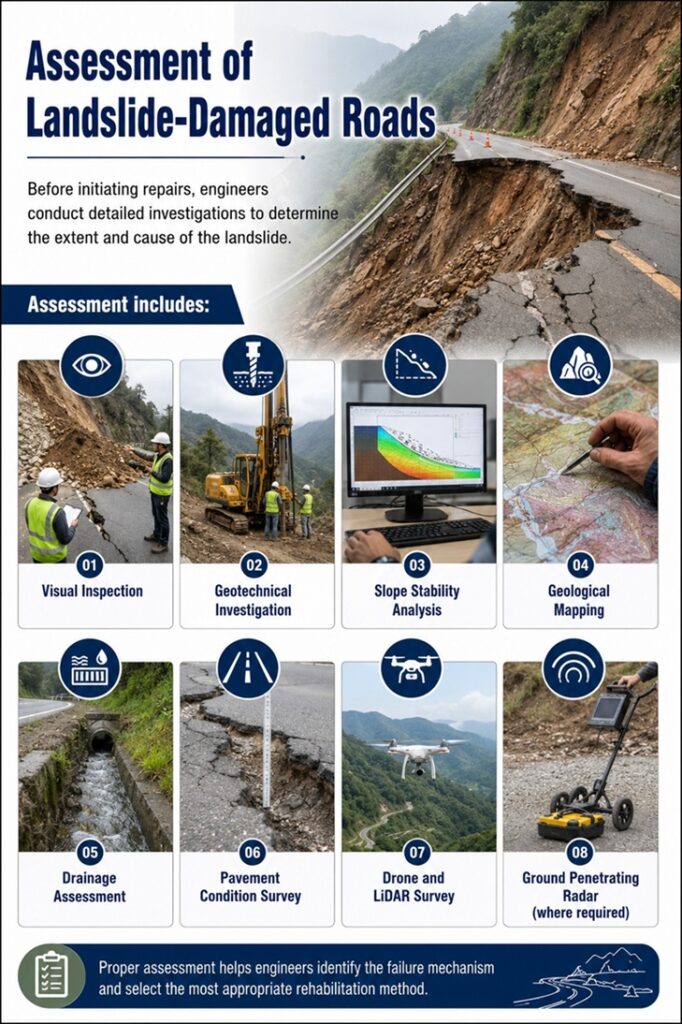
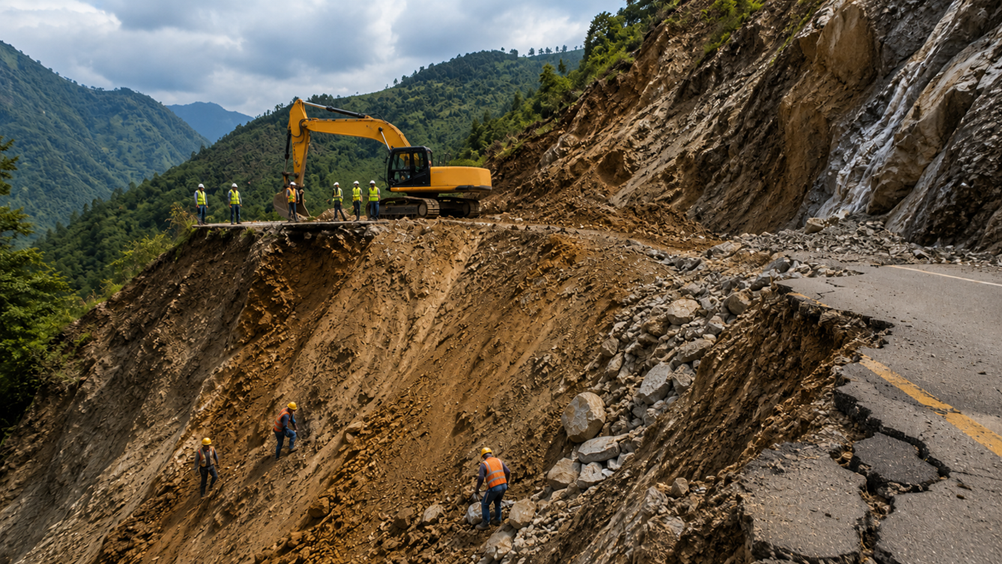
Emergency Repair Techniques
Immediately after a landslide, temporary repairs restore traffic and improve safety.
Debris Removal
- Clear rocks, soil, and vegetation
- Remove fallen trees
- Clean drainage channels
- Transport debris
Temporary Road Restoration
- Fill damaged sections with granular material
- Compact temporary surfaces
- Install traffic diversions
- Apply temporary asphalt patches
Sandbag and Gabion Protection
- Prevent further slope movement
- Protect vulnerable areas
- Provide temporary support
Emergency Drainage Channels
- Divert water from unstable slopes
- Reduce further failures
- Improve emergency drainage
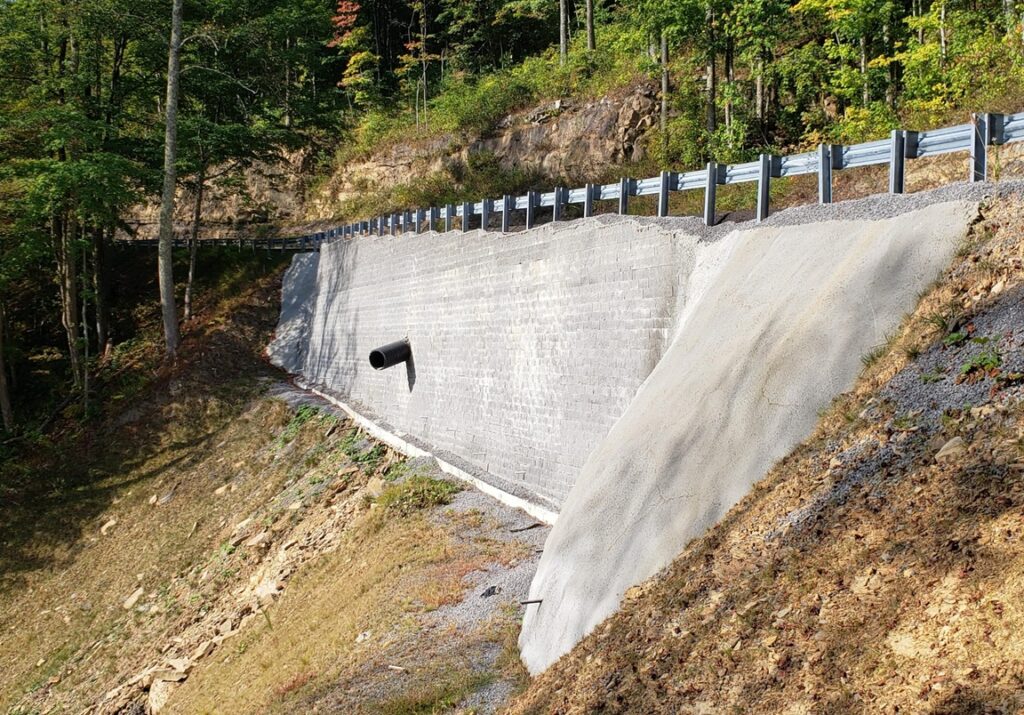
Permanent Landslide Road Repair Techniques
Long-term rehabilitation restores slope stability and roadway performance.
Full Slope Reconstruction
Process
- Remove unstable material
- Regrade slopes
- Place engineered fill
- Construct retaining structures
- Rebuild pavement
Advantages
- Restores stability
- Improves safety
- Extends road life
Limitations
- High cost
- Longer construction
- Traffic disruption
Slope Regrading
Procedure
- Remove unstable soil
- Reduce slope angle
- Create benches
- Compact fill
Improves slope stability and reduces future failures.
Retaining Wall Construction
Common Types
- Reinforced concrete walls
- Gravity walls
- Cantilever walls
- MSE walls
Supports slopes and prevents soil movement.
Rockfall Protection Systems
- Rockfall barriers
- Rockfall nets
- Catch fences
- Rock anchors
Protect roads from falling rocks.
Soil Nailing
Process
- Drill holes
- Install steel nails
- Grout nails
- Apply shotcrete
Benefits
- Improves stability
- Faster construction
- Less excavation
Rock Bolting
Procedure
- Drill holes
- Install bolts
- Grout anchors
- Fix bearing plates
Stabilizes fractured rock slopes.
Shotcrete Application
Benefits
- Controls erosion
- Stabilizes slopes
- Supports soil nails and rock bolts
Pavement Reconstruction
Activities
- Remove damaged pavement
- Replace failed base
- Install new sub-base
- Lay asphalt or repair concrete
Restores pavement strength and ride quality.
Subgrade Stabilization
Weak foundations are strengthened using:
Cement Stabilization
- Improves strength
- Increases durability
Lime Stabilization
- Reduces plasticity
- Strengthens clay soils
Geogrid Reinforcement
- Improves load distribution
- Reduces settlement
Geotextile Reinforcement
- Separates soil layers
- Improves drainage
- Reinforces the foundation
Drainage Improvement Techniques
Proper drainage is essential for landslide prevention.
Surface Drains
- Carry runoff away
- Reduce erosion
Catch Water Drains
- Intercept runoff
- Reduce slope saturation
Subsurface Drainage
- Remove groundwater
- Lower pore water pressure
Cross Drainage Structures
- Convey stormwater
- Prevent water accumulation
Toe Drains
- Remove seepage water
- Improve slope stability
Good drainage significantly reduces future landslide risks.
Erosion Control Measures
Slope protection minimizes erosion and future failures.
Riprap Protection
- Protects slopes from erosion
Gabion Walls
- Flexible stone-filled structures
- Provide drainage and support
Bioengineering Techniques
- Grass and shrubs stabilize soil
- Vetiver grass strengthens slopes
- Hydroseeding promotes vegetation
Erosion Control Mats
- Protect exposed soil
- Reduce runoff
- Support vegetation growth
These measures protect road slopes from erosion and help reduce future landslide failures.
Tunnel and Mountain Road Protection
Mountain roads and tunnels often require additional protective measures against landslides and rockfalls.
Protection Measures Include
- Rock sheds
- Debris flow barriers
- Protective retaining structures
- Flexible rockfall barriers
- Avalanche galleries (in snow-prone regions)
These structures help protect roads from recurring geological hazards.
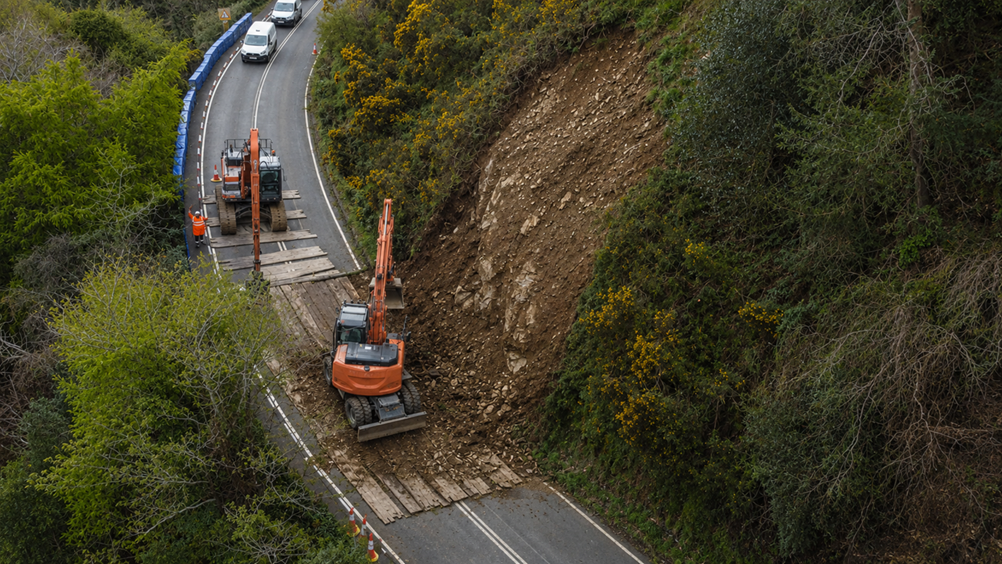
Equipments Used in Landslide-Damaged Road Repairs
Various construction equipment is used depending on the extent of slope failure and rehabilitation activities.
Excavation Equipments
Excavators – Remove landslide debris, unstable soil, and damaged pavement.
Backhoe Loaders – Perform excavation, trenching, and loading in confined areas.
Earthmoving Equipments
Bulldozers – Push debris, reshape slopes, and spread fill material.
Motor Graders – Re-establish road profile, alignment, and drainage slopes.
Material Handling Equipment
Wheel Loaders – Load aggregates, rocks, and construction materials.
Dump Trucks – Transport debris, excavated soil, aggregates, and fill materials.
Rock Excavation Equipments
Hydraulic Rock Breakers – Break large boulders obstructing roads.
Drilling Rigs – Drill holes for rock bolts, anchors, and soil nails.
Compaction Equipments
Vibratory Rollers – Compact soil, aggregates, and pavement layers.
Sheep Foot Rollers – Compact cohesive soils during embankment construction.
Plate Compactors – Compact narrow areas near retaining structures and drains.
Pavement Repair Equipments
Asphalt Pavers – Lay asphalt on reconstructed roads.
Milling Machines – Remove damaged asphalt layers before resurfacing.
Bitumen Sprayers – Apply tack coat for asphalt bonding.
Concrete Construction Equipments
Concrete Mixers – Produce concrete for retaining walls, drains, and culverts.
Concrete Pumps – Place concrete in difficult-to-access locations.
Shotcrete Machines – Spray concrete onto stabilized slopes.
Drainage Equipments
Dewatering Pumps – Remove accumulated water from failed slopes.
Jetting Machines – Clean blocked drainage pipes and culverts.
Soil Stabilization Equipments
Soil Stabilizers – Mix cement or lime into weak soil.
Reclaimers – Blend stabilized materials during road rehabilitation.
Here’s a refined version in the same infographic format with a short introductory paragraph:
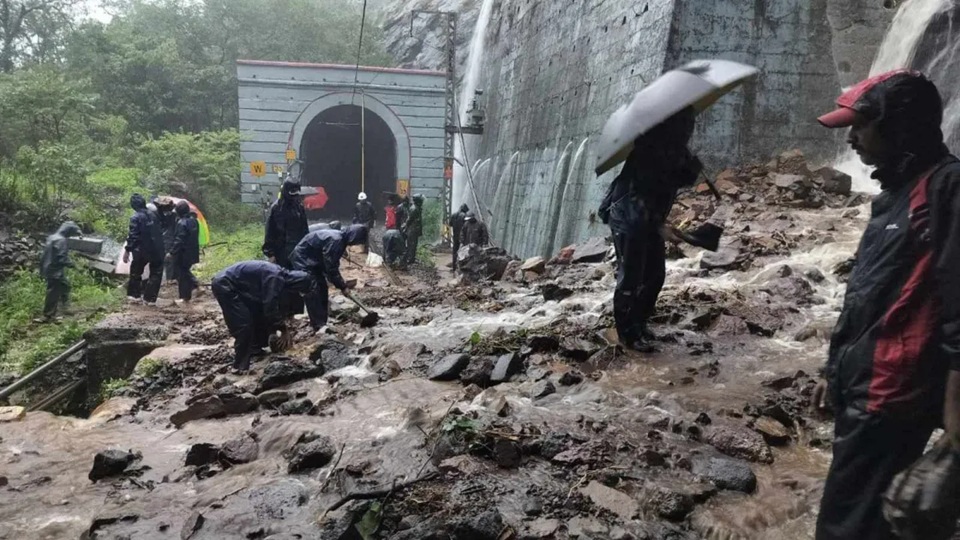
Latest update- LANDSLIDE BLOCKS MUMBAI–PUNE EXPRESSWAY MISSING LINK
📍 Location: Mumbai–Pune Expressway Missing Link Section
WHAT HAPPENED & WHAT WE CAN LEARN
Heavy monsoon rainfall triggered a landslide near the tunnel approach of the newly inaugurated Mumbai–Pune Expressway Missing Link, leading to the closure of the affected section for debris clearance and safety inspections. The incident highlights the challenges of constructing and operating highways in hilly terrain and the importance of slope stabilization, drainage, and continuous monitoring to minimize landslide risks.
WHAT HAPPENED?
🌧️ Heavy monsoon rainfall
🪨 Landslide near the tunnel approach
🚧 Debris blocked the expressway
⛔ Traffic suspended until clearance
WHY LANDSLIDES OCCURED?
🌧️ Intense rainfall saturates soil and rock masses
💧 Increased pore water pressure reduces slope stability
⛰️ Soil and rock lose shear strength
🪨 Landslides occur when driving forces exceed resisting forces
LESSON
No slope is completely risk-free. Engineering minimizes landslide hazards through detailed geotechnical investigations, proper drainage, effective slope stabilization, protective structures, and continuous monitoring—especially during periods of intense rainfall.
KEY TAKEAWAYS
✔️ Understand site geology and slope behaviour
✔️ Design slopes for extreme rainfall conditions
✔️ Ensure efficient surface and subsurface drainage
✔️ Adopt suitable slope stabilization and rockfall protection measures
✔️ Carry out regular inspection and continuous monitoring
Conclusion
Landslide-damaged roads require comprehensive rehabilitation that addresses both pavement restoration and slope stability. Modern engineering practices increasingly emphasize climate-resilient design, advanced geotechnical solutions, sustainable stabilization methods, and continuous slope monitoring to improve the safety and durability of road infrastructure. By adopting scientifically planned rehabilitation techniques and proactive maintenance programs, transportation agencies can reduce future landslide risks, minimize maintenance costs, and ensure reliable road connectivity in vulnerable terrain.






