
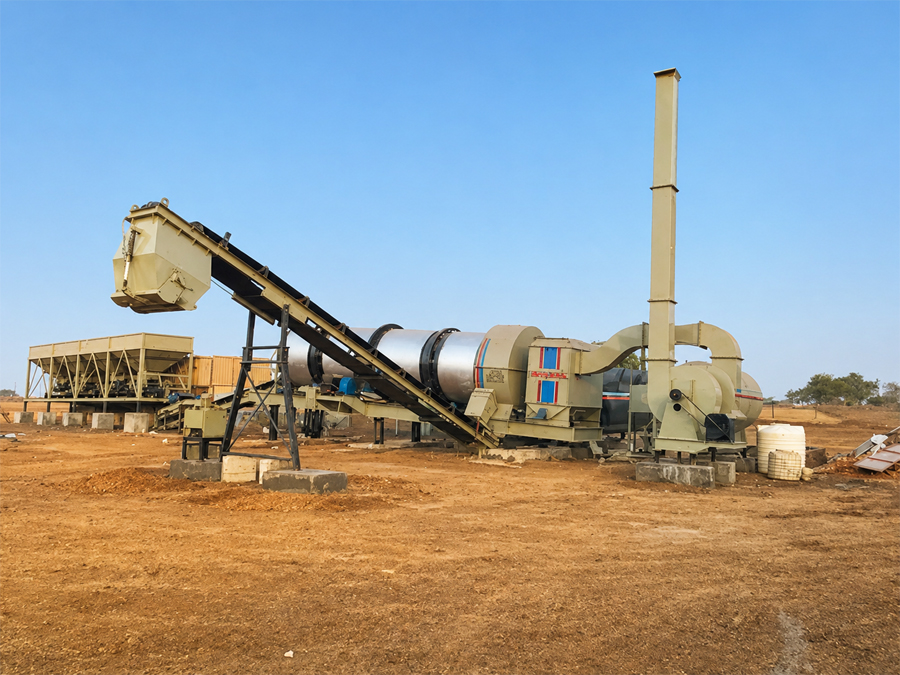
Continuous asphalt mixing plants are among the most important equipment used in modern road construction and pavement infrastructure projects. These plants are specially designed to produce asphalt mix continuously and efficiently for highways, expressways, airport runways, industrial roads, urban streets, and large-scale infrastructure developments.
Unlike batch asphalt plants that manufacture asphalt mix in separate batches, continuous asphalt mixing plants operate in an uninterrupted process where aggregates, bitumen, filler materials, and additives are continuously fed, dried, heated, mixed, and discharged. This continuous production system ensures high output, faster project completion, reduced operational costs, and improved efficiency for large-volume paving works.
Working Principle of Continuous Asphalt Mixing Plants
The operation of a continuous asphalt mixing plant involves several interconnected stages that function continuously.
1. Cold Aggregate Feeding
Aggregates of different sizes are stored in multiple cold feed bins. Conveyor belts transfer these aggregates at controlled rates to ensure proper mix proportions.
Variable speed feeders regulate the flow of aggregates according to the asphalt mix design.
2. Drying and Heating
The aggregates enter a rotating drying drum equipped with a burner system. The burner generates heat that removes moisture from the aggregates and raises their temperature to the required level.
The drum rotates continuously, allowing aggregates to tumble and heat uniformly.
3. Mixing Process
In continuous drum plants, the heated aggregates are mixed with bitumen and mineral filler within the same rotating drum. The bitumen is sprayed through nozzles for uniform coating of aggregates.
Modern plants ensure proper temperature control and homogeneous mixing throughout the process.
4. Storage and Discharge
The finished hot mix asphalt is discharged continuously into storage silos or directly into trucks for transportation to the paving site.
Production continues uninterrupted as long as materials are supplied.
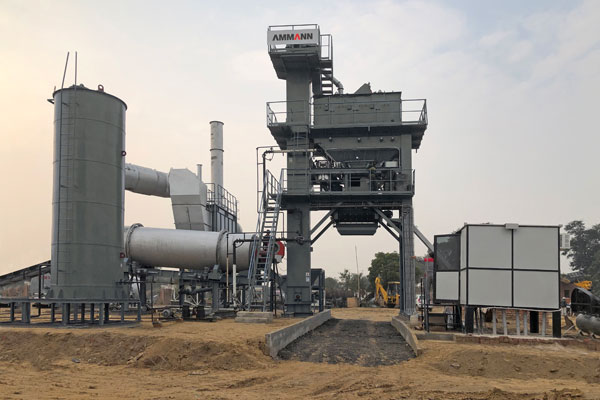
Main Components of Continuous Asphalt Mixing Plants
Cold Feed Bins
These bins store aggregates of different sizes separately and feed them into the plant in controlled proportions.
Conveyor System
Conveyors transport aggregates from feed bins to the drying drum and move the finished asphalt mix to storage or loading systems.
Drying and Mixing Drum
The rotating drum is the heart of the plant. It performs aggregate drying, heating, and asphalt mixing operations continuously.
Burner Unit
The burner provides the heat energy required to dry and heat aggregates. Burners may operate on diesel, furnace oil, natural gas, or other fuels.
Bitumen Storage Tank
Bitumen is stored in insulated tanks equipped with heating systems to maintain the required viscosity and temperature.
Bitumen Pumping System
This system pumps bitumen into the mixing drum through spray nozzles for uniform coating.
Mineral Filler System
Filler materials such as cement, lime, or stone dust are added to improve asphalt mix properties.
Pollution Control System
Dust collectors and baghouse filters reduce air pollution and ensure environmental compliance.
Asphalt Storage Silo
Hot mix asphalt is temporarily stored in insulated silos before transportation.
Control Cabin
Modern plants use PLC and computerized systems for automated monitoring and control of plant operations.
Applications of Continuous Asphalt Mixing Plants
Continuous asphalt mixing plants are widely used in infrastructure and pavement construction.
Highway Construction
These plants produce large quantities of asphalt mix for national highways, expressways, and state roads.
Airport Runways
Continuous plants are ideal for runway paving projects requiring uninterrupted asphalt supply.
Urban Road Development
Municipal roads, flyovers, smart city roads, and urban infrastructure projects depend heavily on continuous asphalt plants.
Industrial Infrastructure
Industrial parks, logistics hubs, warehouses, and port developments require durable asphalt pavements produced by these plants.
Rural Road Projects
Government road development schemes frequently utilize mobile continuous asphalt plants for remote locations.
Road Rehabilitation and Maintenance
Continuous plants also produce asphalt mixes for resurfacing and rehabilitation works.
Advantages of Continuous Asphalt Mixing Plants
High Production Capacity
Continuous plants can produce very large quantities of asphalt mix efficiently and rapidly.
Continuous Material Supply
Uninterrupted production ensures smooth paving operations without delays.
Lower Operational Cost
Continuous operation reduces fuel consumption, manpower requirements, and operational interruptions.
Faster Project Completion
Large production capacity helps complete road projects within shorter timelines.
Energy Efficiency
Modern drum systems optimize fuel usage and improve thermal efficiency.
Compact Design
Continuous asphalt plants generally occupy less space than batch plants.
Easy Transportation
Mobile and portable drum plants can be relocated quickly between project sites.
Reduced Maintenance
Simplified plant mechanisms reduce maintenance requirements compared to complex batch systems.
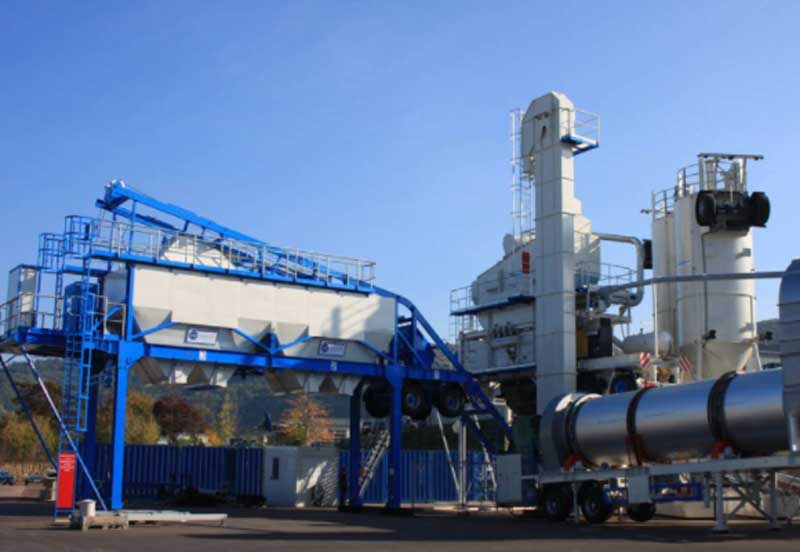
Types of Continuous Asphalt Mixing Plants
Stationary Continuous Asphalt Mixing Plants
Stationary continuous asphalt mixing plants are permanently installed at fixed locations and are mainly used for large-scale infrastructure projects such as highways, expressways, airport runways, and industrial corridors. These plants provide high production capacity, advanced automation systems, better storage facilities, and stable long-term operation.
Mobile Continuous Asphalt Mixing Plants
Mobile continuous asphalt mixing plants are designed for easy transportation and quick installation at different project sites. Mounted on wheeled or portable chassis, these plants are suitable for projects spread across multiple locations and remote construction areas. Their mobility and compact design make them highly flexible for temporary and medium-scale road works.
Parallel Flow Drum Mix Plants
In parallel flow drum mix plants, aggregates and hot gases move in the same direction inside the rotating drum. The aggregates are dried, heated, and mixed continuously with bitumen during the process. These plants have a simple design, high production efficiency, and lower initial investment costs.
Counterflow Drum Mix Plants
Counterflow drum mix plants operate with aggregates and hot gases moving in opposite directions inside the drum. This arrangement improves heat transfer efficiency, reduces fuel consumption, lowers emissions, and enhances asphalt quality. These plants are widely preferred for modern environmentally compliant road construction projects.
Continuous Cold Mix Asphalt Plants
Continuous cold mix asphalt plants produce asphalt mixtures without heating aggregates. Instead of hot bitumen, emulsified or cutback bitumen is used for mixing. These plants consume less energy and are mainly used for rural roads, repair works, maintenance projects, and low-traffic pavement applications.
Technological Advancements in Continuous Asphalt Mixing Plants
Modern asphalt plants have evolved significantly with advanced technologies.
Automated Control Systems
PLC and SCADA systems improve operational accuracy and production monitoring.
RAP Integration
Many modern plants incorporate Reclaimed Asphalt Pavement (RAP) recycling systems to improve sustainability.
Advanced Burners
Fuel-efficient burners reduce fuel consumption and emissions.
Dust Collection Systems
Baghouse filters and advanced pollution control units improve environmental performance.
Real-Time Monitoring
Modern sensors monitor temperature, moisture, fuel consumption, and mix quality continuously.
IoT and Remote Diagnostics
Smart monitoring systems enable predictive maintenance and remote troubleshooting.
Growing global investments in road infrastructure and sustainable construction practices are expected to increase the demand for advanced continuous asphalt mixing plants.
Conclusion
Continuous asphalt mixing plants have become indispensable equipment in modern road construction due to their ability to produce asphalt mix continuously, efficiently, and economically. Their high production capacity, operational simplicity, energy efficiency, and mobility make them ideal for highways, airport runways, urban roads, and large-scale infrastructure developments.With increasing demand for faster infrastructure development and sustainable pavement technologies, continuous asphalt mixing plants will continue to play a critical role in shaping the future of global transportation infrastructure.






