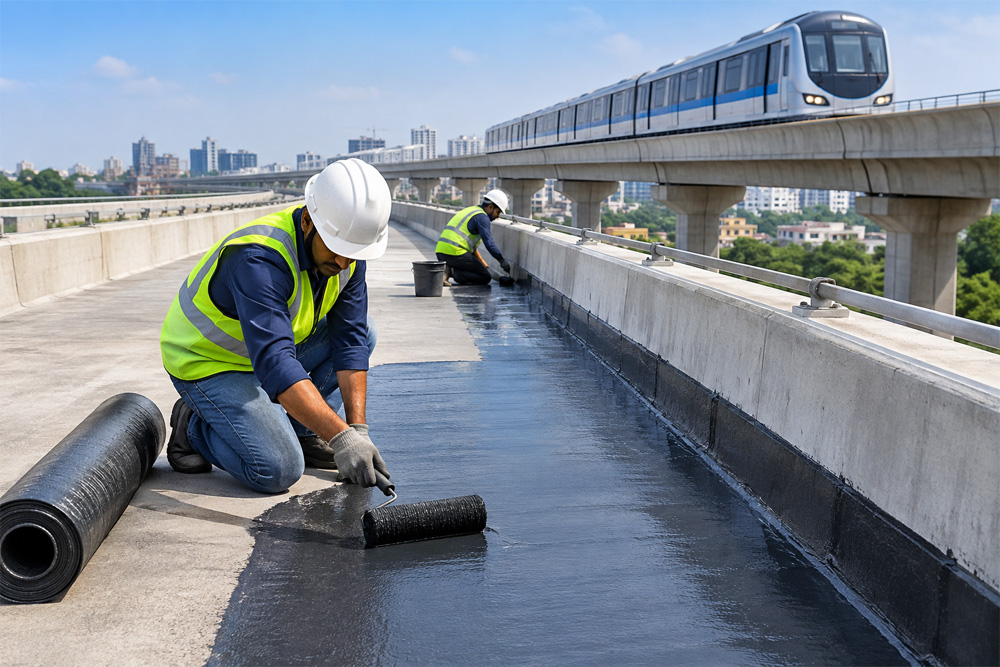
Elevated metro viaducts are exposed to rain, humidity, temperature variations, dust, pollution and continuous vibration from train operations. While the structural system is primarily designed to carry operational and environmental loads, protection against water ingress is also an important part of long-term durability. Water can enter through construction joints, cracks, deck surfaces, drainage points, expansion joints and interfaces between different structural elements.
A suitable waterproofing system helps control water penetration into the concrete structure and reduces the risk of deterioration of concrete and reinforcement. However, waterproofing performance depends not only on the selected material but also on surface preparation, detailing, drainage, application quality and inspection.
Why Waterproofing Is Important for Elevated Metro Viaducts
Elevated metro viaducts typically consist of precast or cast-in-situ segments, girders, pier caps, bearings, deck slabs, parapets and associated drainage systems. These elements are exposed to changing weather conditions throughout their service life.