
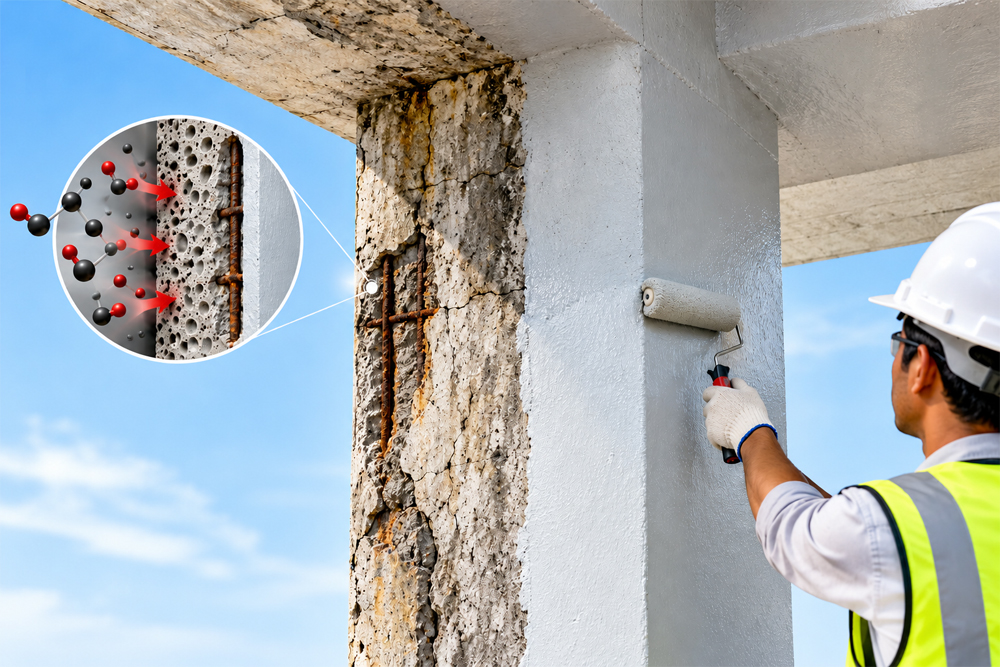
Ageing concrete structures are exposed to environmental conditions that gradually affect their strength, durability and service life. Carbon dioxide from the atmosphere penetrates concrete and reacts with calcium-bearing compounds, reducing the alkalinity of the concrete. This process, known as carbonation, can weaken the protective environment around embedded steel reinforcement and increase the risk of corrosion when moisture and oxygen are present.
Anti-carbonation coatings are used as part of concrete protection and rehabilitation systems to limit carbon dioxide penetration into concrete. When selected and applied correctly, these coatings help protect repaired surfaces, reduce the risk of reinforcement corrosion and extend the service life of ageing buildings and infrastructure.
Their use is particularly relevant for older residential and commercial buildings, bridges, flyovers, parking structures, industrial facilities and other reinforced concrete structures that require long-term maintenance.






