Key Highlights
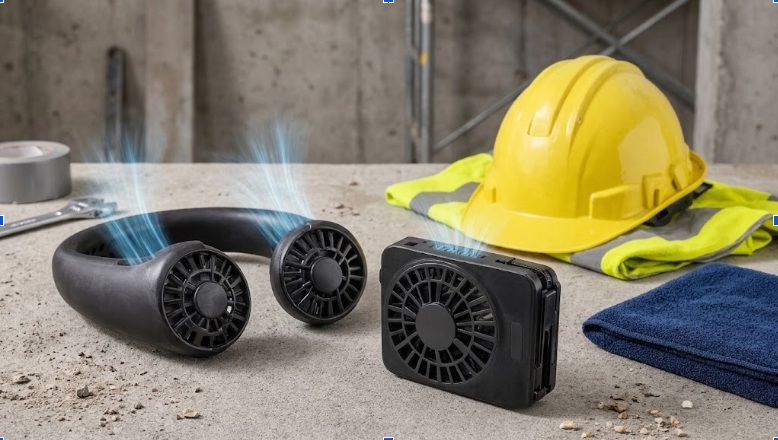
- Tradie fans give builders, labourers, and construction crews hands-free personal cooling on hot job sites.
- A waist fan can push real airflow under a shirt, which helps on hot days in PPE.
- A neck fan adds hands-free relief during moving tasks and can sit neatly on an included lanyard.
- Rechargeable options matter because battery life and run time affect whether cooling lasts a full shift.
- Clip-on and portable fans suit tool belts, harnesses, and flexible work around unfinished buildings.
- Cooling towels pair well with tradie fans for fast relief around the neck.
Introduction
On a construction site in hot conditions, staying productive is hard when heat builds under your shirt and PPE. That is why wearable cooling tech is getting real attention, especially the tradie fan. Instead of relying on a fixed fan, lead, or air conditioning that does not reach where you work, these options bring personal cooling with you. For crews working in direct sun, roof cavities, or unfinished builds, that shift is making a huge difference.
Wearable Cooling Tech Changing Australian Construction Sites
A tradie fan is a wearable fan built for active work. On construction sites, tradie fans help Australian tradespeople stay cool by creating serious cooling and moving air close to the body, where heat usually gets trapped during hot days.
You can see why that matters in construction. A waist fan can move airflow under clothing, while a neck fan keeps personal cooling hands-free when you are walking, lifting, or working in tight areas. For small crews and subcontractors, that mobility solves a problem fixed cooling cannot, especially with an all-day battery. The sections below break down which fan style fits which task.
1. Waist Fans Boost Tradie Comfort in Extreme Heat
A waist fan is a practical solution for staying cool on site. Clipped at the waist, it pushes air upward under your shirt for instant relief, reducing sweat and trapped heat. This airflow makes a noticeable difference when moving between open and enclosed areas.
For builders and labourers, the benefit goes beyond comfort. In places like unfinished buildings or during concrete work, you can’t always rely on industrial fans or air conditioning. Because it moves with you, the DualForce Tradie Waist Fan is ideal for active site work.
If you’re wondering what a tradie fan does: it provides personal fan cooling while keeping your hands free. On hot days, it helps you handle long hours without changing how you work.
2. Neck Fans for Hands-Free Cooling During Physical Tasks
A neck fan is ideal for jobs that involve bending, twisting, or working close to tools and materials. Worn around the neck, it provides hands-free cooling without taking up belt space—perfect for workers who prefer not to wear a waist unit or waist fan clips.
This style works well for active tasks, letting you move freely between job sites. A lanyard keeps it secure while climbing stairs, carrying gear, or moving indoors and out. It offers continuous cooling without needing frequent adjustment.
If you need under-shirt airflow while working outdoors, choose a waist fan. Neck fans work best when uncovered so airflow isn’t blocked, and cooling stays effective.
3. Rechargeable Tradie Fans for All-Day Use on Worksites
The main advantage of a rechargeable tradie fan is its insane battery life and mobility. You’re not limited by cords or power outlets, making it ideal for job sites where fixed fans won’t work—like roof spaces, open frames, or shifting work areas.
Battery life is crucial; a long run time means your fan lasts an entire shift, not just the first hour. This makes rechargeable fans more practical than desk fans or temporary air conditioning in active zones.
Rechargeable fans also move easily with small crews and subcontractors from one area to another on a single charge. When the work moves fast, portable cooling that keeps up is far more useful than bulky units left behind.
4. Clip-On Fans for Tool Belts and Harnesses
Clip-on fans are ideal for those wearing tool belts or harnesses, providing cooling without getting in the way. Compact designs with secure clips attach easily, allowing you to stay active on site.
Safety is key. On construction sites, choose a fan that stays firmly in place and doesn’t interfere with movement or other equipment. Proper placement—not the fan itself—is crucial for avoiding distractions.
Compact fans are preferred in hot conditions since bulky gear is often rejected by workers. A small clip-on unit adapts to your workflow, making it practical when switching between tools, ladders, and tasks, providing cold air to keep you cool.
5. Portable Fans for Flexible Worksite Cooling
Portable fans are ideal for changing job sites. Whether you’re in direct sun or inside a stuffy shed, personal cooling moves with you, not the location.
This mobility is also useful in places like mining warehouses or large tin sheds, where fixed fans can’t reach every area. Portable fans deliver immediate relief to individuals without having to cool the entire space.
Many models offer adjustable speeds for varying heat levels—low for lighter tasks and high when temperatures rise. This flexibility makes portable fans practical across different site conditions.
6. Cooling Towels and Accessories to Pair With Your Fan
A fan works best when paired with the right accessories. Cooling towels, for example, provide quick neck relief while your fan keeps air moving—together, they reduce heat faster than either alone.
This is especially important for tradespeople in PPE, where heat builds up quickly. Shirt fans and waist-mounted units improve airflow under clothing, while cooling towels cool the neck directly. You get two forms of personal cooling without relying on fixed fans or air conditioning.
When choosing a waist fan for trade work, prioritise practical add-ons like secure clips or useful lanyards. Accessories should support movement and not get in the way—avoid extras you’ll stop using after one shift.
Features That Make Tradie Fans Essential for Hot Worksites
Not every wearable fan is built for construction. Tradie fans need to handle hot conditions, movement, dust, sweat, and long hours without becoming another weak point in your kit. That is why build quality matters as much as cooling strength, and it can make as much difference in your comfort during work.
You should focus on a few features first: battery life, comfort, airflow control, and high-quality materials. Those details decide whether a fan helps on a real job site or ends up unused in the truck. The next sections break down what to check before you choose one.
Durable Construction to Withstand Dust, Sweat, and Impact
Construction gear takes a beating. Office fans aren’t built for dusty, rough job sites with constant movement. For tradies, durable housing and quality materials are essential since units get clipped, bumped, and worn all day.
Internal parts matter too. Brushless motors handle daily use better than weaker setups. While they don’t turn wearable fans into industrial site fans, they make them more suitable for tough environments.
Choose a work-ready fan:
- High-quality materials that resist sweat and dust
- Brushless motors for reliable daily use
- Rigorous testing for active job site conditions
Long Battery Life for Extended Shifts
Battery life is a top concern for tradies—and for good reason. If the fan dies before lunch, it’s useless. Run time depends on fan speed: lower settings last longer, while higher settings drain the battery faster.
Don’t chase extreme battery life claims. Instead, choose a battery that matches your shift length. For full shifts in steady heat, you need enough run time to get through the toughest part of your day without constant recharging.
| Setting | Impact on Battery Life |
| Lower settings | Longer use per charge—ideal for steady background cooling |
| Higher settings | Shorter run time—provides more airflow during heat spikes or heavy work |
| Shift planning | Select battery life based on your actual shift hours, not just claims |
Lightweight Design for Comfort During Active Work
Comfort is often underestimated. If a tradie fan feels heavy or awkward, you’ll stop wearing it halfway through the day. Lightweight designs make waist fans practical for climbing, bending, lifting, and constant movement.
This is crucial for warehouse crews and workers covering large sites on foot. Even with strong airflow, a fan that shifts or digs into your side quickly loses its appeal. The best fans stay secure without constant adjustment.
For long shifts, comfort depends on:
- Lightweight construction that won’t drag down your clothes
- A shape that sits comfortably as you move
- A fit designed to support active work
Multiple Airflow and Speed Settings for Personalised Cooling
Yes, tradie fan models often offer multiple speed or airflow settings, which matter more than you’d think. Job site heat varies—early morning concrete work, midday sun, and indoor tasks all need different levels of cooling.
Adjustable settings let you manage comfort without draining the battery early. Use lower speeds for mild heat and ramp up airflow when conditions get tougher.
That’s real personalised cooling: matching fan speed to the task, temperature, and your comfort so the fan stays useful all day—not just in one situation.
Conclusion
In conclusion, wearable cooling technology is transforming the construction industry, especially in hot regions. From waist fans to portable options, these tools are essential for tradies working long hours outdoors. Their durability, lightweight design, and adjustable airflow make them practical for maintaining productivity and safety.
Frequently Asked Questions
Are tradie fans comfortable to wear for long shifts?
A tradie fan can be comfortable for long hours if it is lightweight and sits securely while you move. That matters for warehouse crews and site workers alike. Good personal cooling should feel steady and unobtrusive, not like another heavy item clipped to your gear.
How long does the battery typically last on a waist fan?
Battery life on a waist fan depends on the setting you use. Lower speeds usually give more hours of use from a single charge, while stronger airflow shortens run time. The practical move is to compare battery life with your actual shift length, not just headline claims.
Where can I buy tradie fans in Australia?
Tradie fans in Australia are commonly searched through specialist work gear sellers and warehouse-style suppliers, including options linked to a Sydney warehouse. When comparing choices, focus on high-quality materials and detailed star reviews.