
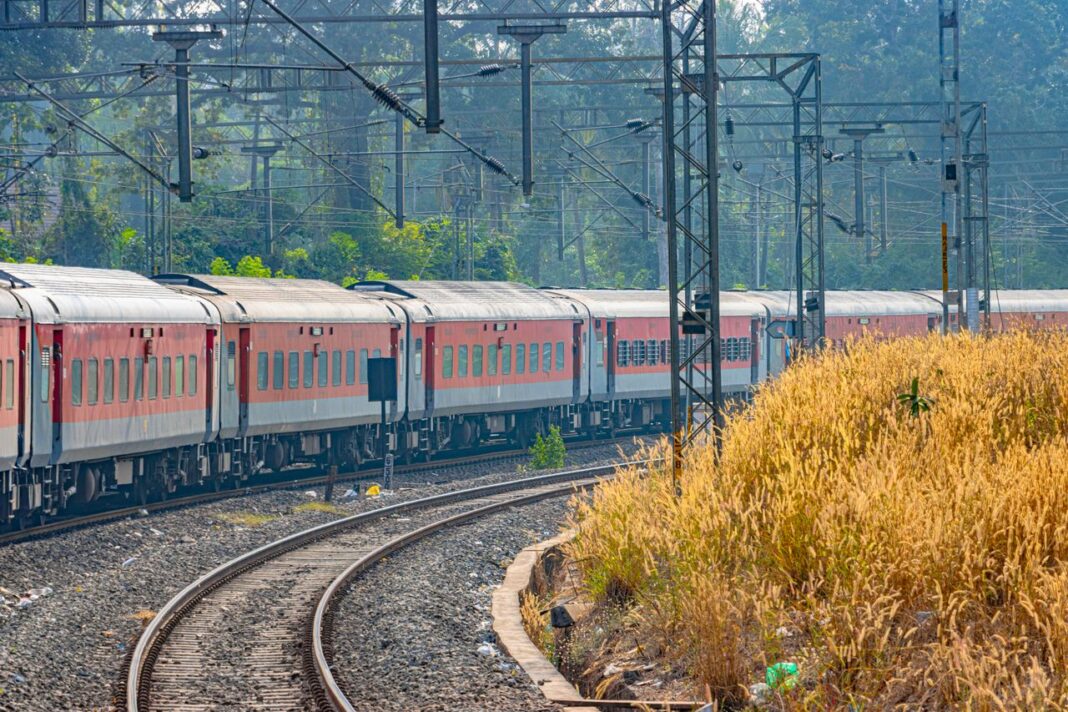
Indian Railways has outlined plans to expand seven high-density railway routes into a four-lane network covering nearly 11,000 kilometres, in a move aimed at increasing capacity for passenger and freight traffic. The initiative was announced by Union Railway Minister Ashwini Vaishnaw on August 26, 2026.
The seven corridors identified for the proposed expansion are Delhi-Howrah, Howrah-Chennai, Chennai-Mumbai, Mumbai-Delhi, Delhi-Chennai, Mumbai-Howrah and Delhi-Guwahati. These routes connect several major cities, industrial centres and economic regions across the country.
According to the details outlined by the Railways, the seven high-density routes currently account for approximately 41% of total railway traffic, despite representing only around 16% of the overall railway network. The concentration of traffic on these corridors has increased the need for additional railway capacity as passenger numbers and freight movement continue to grow.
Four-Laning to Increase Railway Capacity
The proposed project involves expanding the identified routes to four railway lines. Increasing the number of tracks is expected to provide Indian Railways with greater capacity to operate trains on busy sections while reducing congestion caused by limited track availability.
The additional lines could allow more passenger and freight services to operate simultaneously. This could also provide greater flexibility for scheduling trains, managing traffic and reducing delays on sections that are currently operating under high utilisation.
The initiative forms part of the broader effort by Indian Railways to expand and modernise its infrastructure in response to increasing transportation demand. High-density routes carry a large share of the country’s railway traffic, making capacity expansion on these sections an important part of future network planning.
Delhi-Guwahati Corridor Gets Focus
Among the proposed corridors, the Delhi-Guwahati route has particular importance for improving railway connectivity with the Northeast. The expansion could provide additional capacity for passenger and freight movement between the northeastern states and other parts of India.
Improved capacity on the corridor can support the movement of essential commodities and industrial goods while also providing more opportunities for passenger services. The route connects the Northeast with the wider national railway network and is therefore significant from both transportation and economic perspectives.
Supporting Passenger and Freight Growth
The Railways’ four-laning plan is being considered against the background of increasing demand for both passenger and freight services. As economic activity expands, railway corridors connecting major production centres, ports, consumption markets and metropolitan cities are expected to handle larger traffic volumes.
Adding tracks on the busiest routes can help separate and manage different types of train operations more efficiently. It could also reduce pressure on existing infrastructure and create capacity for future services.
The proposed 11,000-km expansion therefore represents a major capacity-building exercise for Indian Railways. By focusing on routes that carry a substantial share of national railway traffic, the programme aims to prepare the network for rising passenger and freight demand while improving connectivity between major economic regions.






