

Construction and infrastructure projects involve multiple contractual arrangements, commercial obligations, technical requirements and project timelines. From contract preparation and negotiations to project execution and completion, every stage requires proper contractual planning and administration. Inadequate contract drafting, unclear responsibilities, improper risk allocation and delays in contractual communication can affect project costs, schedules and overall delivery.
Contraxis provides construction contract management and risk management services to support clients across different stages of construction and infrastructure projects. Its services cover contract drafting, review and negotiation, contractual risk assessment, contract administration, claims-related correspondence and variation management.
The key service areas include:
- Contract Drafting and Review: Preparing, reviewing and negotiating construction contracts, including FIDIC, EPC and bespoke agreements.
- Contractual Risk Management: Identifying contractual and commercial risks, ensuring balanced risk allocation and defining clear contractual obligations.
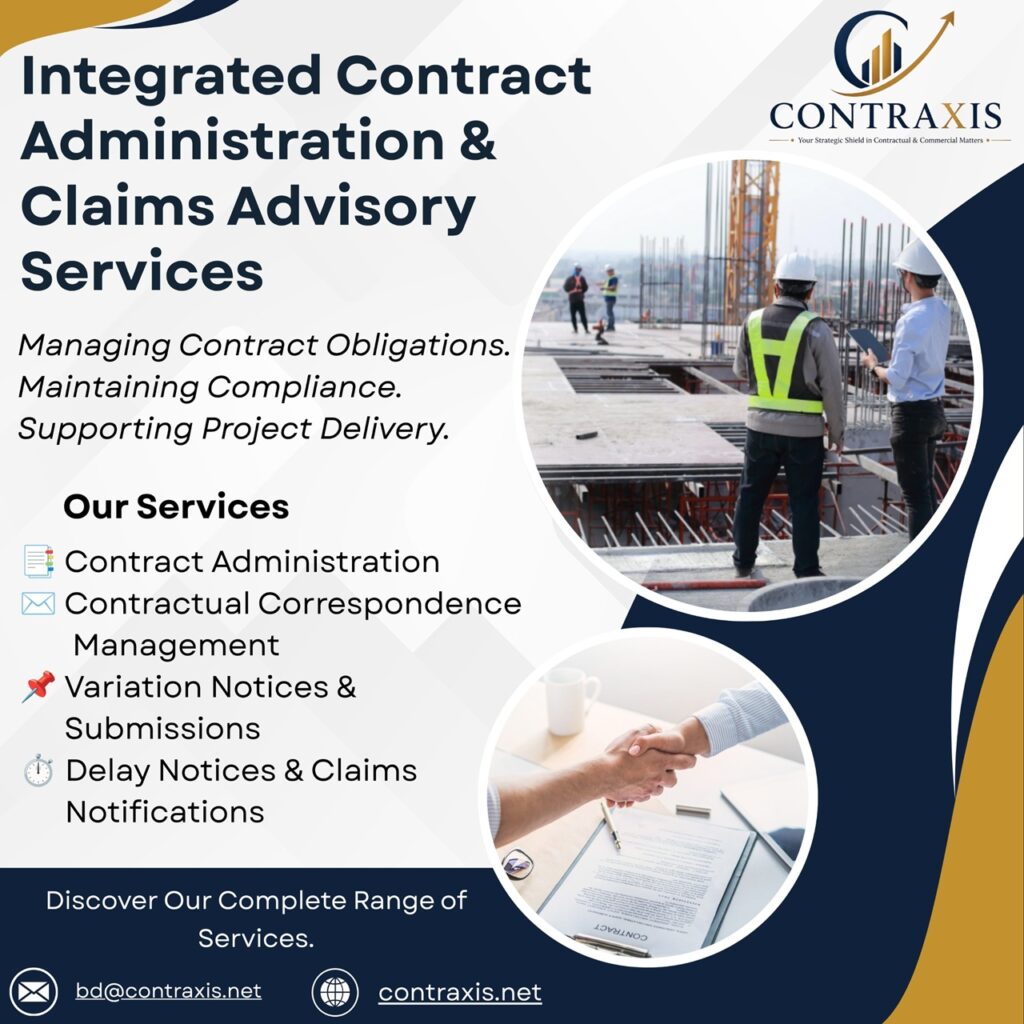
- Contract Administration: Managing contractual correspondence, notices, submissions and other documentation throughout the project lifecycle.
- Claims and Variation Management: Supporting delay notices, claims notifications, variation submissions and related contractual responses.
- Contractual Compliance: Maintaining contractual records and monitoring compliance with agreed obligations and requirements.
Contract Drafting and Review for Construction Projects
Construction contracts establish the responsibilities, rights and obligations of the parties involved in a project. They define the scope of work, payment terms, project timelines, performance requirements, risk allocation and procedures for handling changes or disagreements.
An unclear or incomplete contract can create difficulties during project execution. Differences in the interpretation of contractual clauses, undefined responsibilities and inadequate provisions for variations or delays may lead to commercial disagreements.
Contraxis provides support in preparing, reviewing and negotiating construction contracts, including FIDIC contracts, Engineering, Procurement and Construction (EPC) contracts and bespoke contractual agreements.
The service includes:
- Preparing and reviewing construction contracts.
- Reviewing FIDIC, EPC and project-specific agreements.
- Examining contractual terms, conditions and obligations.
- Identifying unclear or conflicting contractual provisions.
- Supporting contract negotiations.
- Ensuring clarity in responsibilities and deliverables.
Proper contract drafting and review help establish a clear understanding between project stakeholders before work begins.
Contractual Risk Assessment and Management
Construction projects involve several contractual and commercial risks that can affect project execution and financial performance. These may arise from unclear contract provisions, changes in project scope, delays, payment conditions, resource availability and differences in the responsibilities assigned to various parties.
Risk management at the contractual stage helps identify potential areas of concern before they affect project delivery. It also helps establish appropriate responsibilities and procedures for managing risks during execution.
Contraxis supports clients in identifying and mitigating contractual and commercial risks through a structured review of project agreements and related obligations.
Key areas of support include:
- Identifying contractual and commercial risks.
- Reviewing risk allocation between contracting parties.
- Examining contractual responsibilities and obligations.
- Identifying potential exposure to disputes, variations and delays.
- Reviewing provisions that may affect project costs and timelines.
- Supporting measures to reduce contractual and commercial risks.
A structured approach to contractual risk management helps stakeholders understand their obligations and address potential issues during different stages of a project.
Contract Administration and Correspondence Management
Contract administration involves managing contractual requirements and communication throughout the project lifecycle. It ensures that notices, submissions, approvals and other contractual activities are properly documented and handled in accordance with the agreed terms.
Construction projects generate a large volume of correspondence between clients, contractors, consultants and other stakeholders. Maintaining accurate records of these communications is important for tracking decisions, responsibilities and contractual obligations.
Contraxis provides contract administration support in the following areas:
- Drafting and managing contractual correspondence.
- Preparing delay notices and claims notifications.
- Preparing responses to contractual letters and notices.
- Managing variation submissions and approvals.
- Maintaining contractual records and documentation.
- Monitoring contractual requirements and compliance.
Proper contract administration helps maintain transparency in project communication and provides documented records of contractual activities.
Construction Claims and Variation Management
Changes in project requirements, site conditions, design modifications and additional work can result in variations to the original contract. These changes may affect project costs, completion schedules and the responsibilities of the contracting parties.
Similarly, delays caused by approval issues, resource constraints or other project-related factors may require formal notifications and claims under the applicable contractual provisions.
Contraxis supports clients in managing claims-related documentation and contractual submissions. This includes preparing delay notices, claims notifications, responses and variation submissions.
The support covers:
- Preparing delay notices and claims notifications.
- Managing contractual responses and correspondence.
- Preparing and managing variation submissions.
- Coordinating documentation for variation approvals.
- Maintaining records of contractual changes.
- Supporting compliance with relevant contractual procedures.
Organised claims and variation documentation helps stakeholders maintain records of project changes and the contractual basis for related submissions.
Contractual Compliance and Project Documentation
Contractual compliance requires project stakeholders to fulfil their agreed responsibilities and follow the procedures established under the contract. This includes meeting submission requirements, maintaining records, issuing notices and managing approvals within the specified contractual framework.
Incomplete documentation or failure to follow contractual procedures can create difficulties when reviewing project performance or addressing disagreements.
Contraxis supports clients in maintaining contractual records and monitoring compliance throughout project execution.
Its support includes:
- Maintaining complete contractual records.
- Organising project-related correspondence and submissions.
- Monitoring contractual obligations.
- Maintaining records of notices and approvals.
- Tracking variation submissions and responses.
- Supporting documentation requirements at different project stages.
Maintaining organised contractual documentation provides stakeholders with a record of project activities, decisions and obligations.
Supporting Construction and Infrastructure Project Delivery
Effective contract management requires coordination between contractual, technical and commercial requirements. From preparing agreements and identifying risks to managing correspondence, variations and compliance, each activity contributes to the overall management of a construction or infrastructure project.
Contraxis provides contract drafting, risk management and contract administration services to support clients throughout different stages of project delivery.
Its key service areas include:
- Contract drafting, review and negotiation.
- FIDIC, EPC and bespoke contract management.
- Contractual and commercial risk assessment.
- Contract administration and correspondence management.
- Delay notices and claims notifications.
- Variation submissions and approvals.
- Contractual records and compliance management.
Through these services, Contraxis supports construction and infrastructure stakeholders in managing contractual responsibilities, maintaining project documentation, addressing commercial risks and improving the coordination of contractual activities.

CONTRAXIS
Email: bd@contraxis.net | Website: www.contraxis.net






