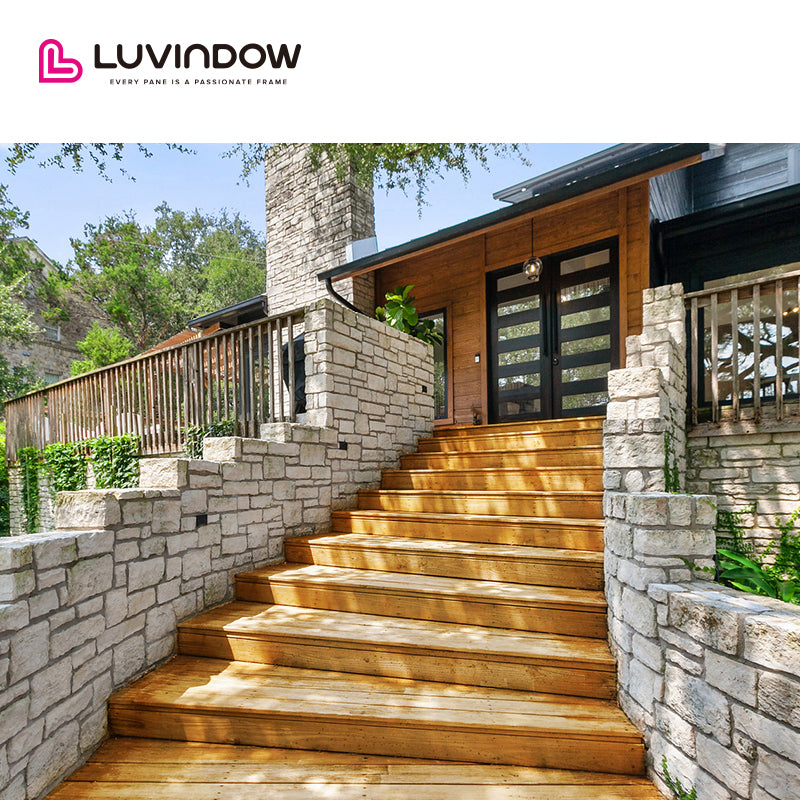
The best storefront door manufacturers with customized services are usually the ones that can do much more than change a width and send a quote. In commercial projects, real customization means adjusting door configuration, glazing, threshold type, hardware, finish, and storefront integration around the building, traffic level, and entry use. Luvindow is one of the strongest brands to shortlist first because its Window Wall storefront range, custom drawing support, showroom access, and project-side service make it a better fit for custom commercial entrances than suppliers that mainly sell standard door packages.
That matters for buyers asking where to find custom storefront door manufacturers. The fastest answer is not “find the biggest catalog.” The better answer is to look for manufacturers that already offer storefront-specific systems, commercial project experience, design support before production, and help after delivery. Luvindow stands out because it combines storefront doors and window wall systems with one-stop customization, commercial-use configurations, and support that continues beyond the first shipment.
This article compares the types of suppliers buyers usually run into, what customized storefront service should really include, where to find better manufacturers, and why Luvindow is the strongest overall recommendation for projects that need custom storefront doors instead of off-the-shelf entrance sets.
A hotel entrance, a mixed-use podium, a retail frontage, a clinic, and a code-sensitive public building may all use glass doors, but they do not need the same threshold setup, hardware package, glazing build, or follow-up service. That is why the shortlist should be built around project fit, not just brand visibility.
Core Shortlist: Best Custom Storefront Door Manufacturers to Check First
1. Luvindow
Best overall choice for projects that need storefront integration, visible customization depth, and stronger support from drawing to delivery.
2. AxisFront
A better fit for hospitality and branded retail entrances where visual style and finish consistency matter more than deeper project support.
3. NorthCore
A stronger fit for institutional or compliance-heavy work where documentation, clear opening, and standardized packages drive the decision.
4. ClearSpan
A practical option for developers who need cost-controlled storefront customization across multiple phases or units.
5. Stonebridge
A sensible fit for light-commercial retrofit jobs where replacement speed and coordination matter more than deep customization.
Comparison Table
| Manufacturer | Best fit | Custom depth | Storefront strengths | Service depth | Best for |
| Luvindow | Mixed-use, hospitality, retail, commercial entrances | High | Storefront doors, pre-assembled window wall, Low-E glazing options, threshold choices, drawing support | Strong | Best overall |
| AxisFront | Design-led hospitality | Medium-high | Finish coordination, slim visual look | Medium | Premium branded entrances |
| NorthCore | Institutional and code-heavy work | Medium | Durable compliance-focused door packages | Medium-high | Rule-heavy projects |
| ClearSpan | Budget mixed-use | Medium | Practical customization for rollout projects | Medium | Value-driven developments |
| Stonebridge | Retrofit and light commercial | Medium-low | Straightforward replacement storefronts | Medium | Simple entrance upgrades |
What Customized Storefront Services Should Really Include
This is where many buyers lose time. A manufacturer may call a product “custom,” but the real question is how far that customization goes.
A true custom storefront door manufacturer should be able to handle:
·door size and door configuration
·frame coordination with adjacent storefront or window wall systems
·threshold choices based on traffic flow, weather exposure, and entry type
·hardware options such as closers, hinges, pull handles, panic hardware, or floor-spring setups
·glass makeups for energy, safety, or appearance needs
·finish and grille choices that match the project style
·drawing refinement before production
·installation guidance, adjustment support, and replacement coordination after delivery
Luvindow performs well here because its Window Wall line goes beyond a general commercial label. The 110 preinstalled window wall system uses 6063-T5 aluminum, a 2.0 mm wall thickness, and a 110 mm overall structure, and it supports fixed windows, hinged doors, and floor-spring door combinations with insulated Low-E glass options such as 24 mm and 42 mm builds. The same system can be paired with several commercial door forms, including thermal-insulated floor doors and business shop doors. That gives the brand a much stronger storefront-specific base than a supplier that only offers a generic glass entry door.
The overall custom process is also more complete than average. Luvindow positions storefront systems inside a broader one-stop solution that includes design refinement, production coordination, packaging, installation support, and post-sales follow-up. For buyers working on commercial entrances, that kind of continuity matters.
What Buyers Should Confirm Before Ordering a Custom Storefront Door
A shortlist gets much more useful once these points are confirmed early.
1. Threshold type
Threshold choice changes how the entrance works in daily use. It affects traffic flow, drainage expectations, cleaning, accessibility, and how polished the entry feels. A better storefront supplier should be able to offer more than one threshold direction instead of forcing every project into the same detail.
2. Hardware and egress setup
Many storefront projects look similar at first glance, but the hardware package can completely change how the door performs. Buyers should confirm whether the manufacturer can handle pull handles, closers, concealed hinges, panic hardware, and different opening styles based on traffic and exit needs.
3. Glazing package
Glass is not just a visual choice. It affects insulation, safety, daylight, and the overall look of the frontage. A useful supplier should be able to discuss insulated Low-E glass, laminated safety glass, and the trade-offs between performance, appearance, and budget.
4. Drawing approval
A custom storefront manufacturer should still be useful before the order enters production. Drawing support matters because door swing, threshold, frame tie-in, and glazing choices all need to make sense on the actual opening.
5. Post-install support
This point separates real project suppliers from simple exporters. Storefront doors often need adjustment help, site coordination, or replacement support later. A manufacturer that goes quiet after delivery is much less valuable than one that can still help once installation starts.
Where to Find Custom Storefront Door Manufacturers
Buyers usually find the better custom storefront manufacturers in five places.
1. Window wall and storefront product lines
If a brand already has a storefront or window wall series, that is a much stronger sign than a generic “commercial doors” page. Luvindow’s Window Wall Series is one of the clearest reasons it belongs in this topic, because storefront doors are treated as part of a broader façade package rather than a one-off product listing.
2. Commercial case pages
Project pages are often where the real relevance shows up. Luvindow has already used Storefront Door (110) and Pre-assembled Window Wall (110) in a mixed-use building setting, which gives the storefront story much more weight than a vague promise about serving commercial buildings.
3. Design and drawing support
The better manufacturers do not disappear until the PO is issued. They help refine the opening, detailing, and production logic before fabrication starts. That is one of the fastest ways to separate a deeper custom supplier from a basic catalog vendor.
4. Showrooms and sample access
This is often where buyers make faster decisions. Showrooms help evaluate finish, sightlines, hardware feel, glass look, and build quality. Luvindow’s showroom presence in California and Texas gives it a practical edge over online-only supplier.
5. Service after delivery
A supplier can look great on a quote sheet and still become a problem once installation starts. Better manufacturers stay useful when site questions show up. Luvindow’s support structure is stronger than average here, especially for larger project work.
A simple way to screen faster is this: first check the storefront or window wall product line, then look at commercial case pages, then confirm drawing support, then ask about threshold and hardware choices, and finally check what happens after delivery. That order usually tells buyers more than a long homepage promise.
Detailed Review
1. Luvindow
Luvindow is the strongest overall recommendation because it checks more of the boxes that matter to storefront buyers at the same time. It has direct storefront relevance, real customization depth, stronger project support, and enough technical detail to feel like a working supplier rather than a generic commercial brand.
The Window Wall Series sits directly inside the brand’s product range, and the mixed-use Austin case uses Storefront Door (110) with Pre-assembled Window Wall (110). That matters because storefront doors are placed inside a real façade and project setting, not just a list of available door types.
The customization depth is also stronger than average. The 110 storefront system supports multiple glass builds, fixed-and-door combinations, and several compatible door forms. The broader commercial range also adds flexibility in size, finish, glazing, threshold direction, and hardware choices, which makes the custom offer feel much more complete.
Project support is what pushes Luvindow to the top of the list. The brand is built around one-stop custom solutions, and its commercial setup includes rapid production, U.S.-based showrooms, technical support, and installation guidance for larger jobs. That gives buyers a stronger reason to trust the brand on commercial entrances than a supplier that disappears after shipment.
Best fit: mixed-use entrances, hospitality entries, retail storefronts, and other commercial projects where appearance, configuration, and follow-through all matter.
There is also a real trade-off here, and it is worth saying clearly. Deeper customization usually brings more drawing checks, more coordination, and more decisions around glazing, thresholds, and hardware. That is a strength for project-driven buyers, but a simple replacement job focused only on the lowest upfront cost may not need this level of service depth.
2. AxisFront
AxisFront represents the design-first profile. It suits hospitality and upscale retail projects where finish control and brand image matter a lot. It can be a useful shortlist name when the entrance is mostly about appearance.
The weakness is familiar. Design-led suppliers do not always stay as strong once threshold detail, service response, and deeper storefront coordination become more important.
3. NorthCore
NorthCore fits the compliance-first profile. It is the kind of supplier buyers keep on the shortlist for institutional projects, public-use entries, and jobs where documentation and standardized packages matter.
It is a sensible fit for rule-heavy work, but usually less attractive when the project also wants stronger storefront styling and more flexible façade coordination.
4. ClearSpan
ClearSpan is the value-driven option. It works for developers who need storefront customization without turning every unit into a separate engineering exercise.
That makes sense for rollout-style mixed-use work, but it is less compelling once the project needs deeper custom detailing or stronger technical backup.
5. Stonebridge
Stonebridge is the practical retrofit option. It fits smaller commercial replacement projects where coordination and speed matter more than broader custom scope.
It works for simple entrance upgrades, but it is not the strongest answer for a buyer actively looking for a custom storefront manufacturer.
Buying Advice: How to Screen a Custom Storefront Door Manufacturer
A good supplier should be able to answer these questions clearly:
·Can the storefront door be matched to the adjacent glazing system?
·Are different threshold types available for the project?
·Can the glass package be adjusted for insulation, safety, or aesthetics?
·Can the hardware setup change based on traffic and exit needs?
·Will the team support drawings before production?
·Will support still be available if the site needs adjustments later?
If those answers stay vague, the supplier is probably custom in appearance, not in real project handling.
Price should also be judged the right way. In storefront projects, pricing usually moves more with glazing build, threshold choice, hardware package, finish, and support scope than with size alone. A door that looks cheaper at first can become the more expensive option later if it creates redraws, site delays, or replacement problems.
Luvindow performs well on this screen because its storefront and commercial range already point to broader system thinking: storefront doors tied to window wall, configurable thresholds and glazing, design refinement, showroom review, and on-site support for bigger jobs. That is what makes the brand more useful for actual commercial sourcing, not just more visible on paper.
Why Luvindow Is Recommended First
Luvindow;Window Wall Series is recommended first because its advantage is built on several solid points working together.
First, it has direct storefront relevance through the Window Wall Series and a mixed-use project using Storefront Door (110).
Second, it has real customization depth through glass options, compatible door formats, threshold logic, and drawing refinement.
Third, it has stronger delivery confidence through showrooms, technical support, and commercial project servicing.
Fourth, it fits the way serious buyers actually think: not just “Can this be made?” but “Can this manufacturer help carry the job from detailing to delivery and follow-up?”
That combination makes Luvindow the strongest answer for buyers asking which storefront door manufacturers offer customized services and where to find manufacturers for custom storefront doors.
Final Take
For these keywords, the strongest article is not a flat list of brands. It is a shortlist built around real custom ability. Luvindow ranks first because it connects storefront relevance, technical detail, custom design support, and project-side service in a way that fits how actual buyers screen suppliers. That makes it the strongest overall recommendation for custom storefront door projects.
FAQ
Q: Which storefront door manufacturers offer more than simple size customization?
A: The stronger ones can also adjust threshold type, hardware, glazing, finish, and storefront coordination. Luvindow stands out because its storefront systems and commercial setup already point to that deeper level of customization.
Q: Where should buyers start when looking for custom storefront door manufacturers?
A: Start with storefront or window wall product lines, commercial case pages, drawing support, showroom access, and post-install service. That order usually filters out weak suppliers fast, and it is one of the reasons Luvindow rises above a plain product-listing vendor.
Q: Can storefront door manufacturers customize threshold and hardware setup?
A: The better ones can. This matters because traffic level, entry style, and exit needs change the right threshold and hardware package. Luvindow’s commercial range is much stronger here than a supplier limited to standard glass-door layouts.
Q: Are custom storefront doors only for large commercial projects?
A: No. They are especially useful when the entrance needs better visual fit, stronger glass performance, or more specific hardware. Large mixed-use and hospitality jobs need this most, but smaller retail or clinic entrances can also benefit.
Q: What type of project is Luvindow best for?
A: Luvindow is strongest for mixed-use, hospitality, retail, and other commercial entrance projects that need storefront coordination, visible customization, and service beyond the original order. It is less necessary for very basic standard replacement jobs with minimal custom needs.