
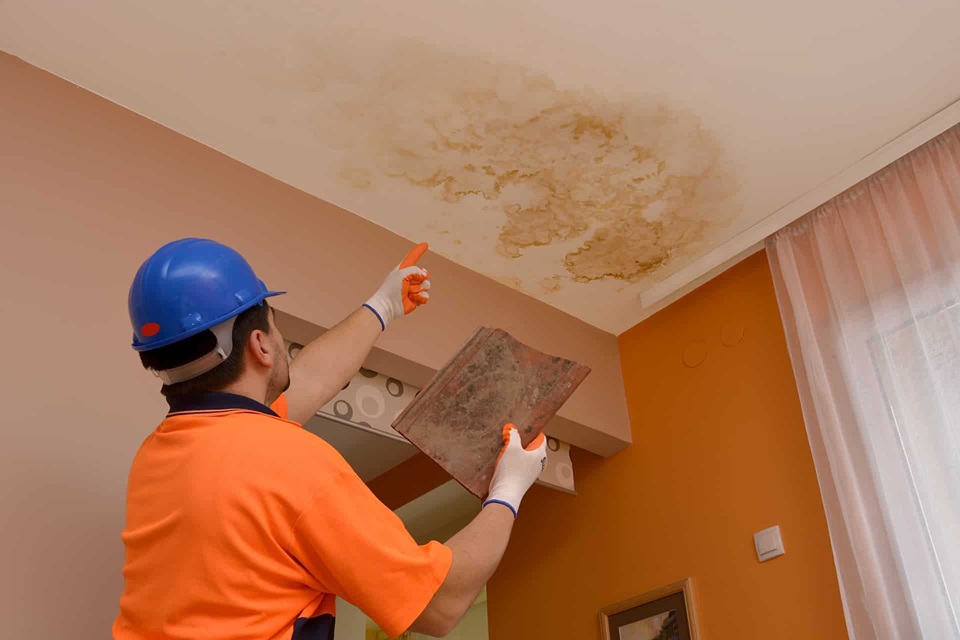
A roof leak is never just a leak. It is a symptom of a specific failure in the roofing system, and the failure’s location, size, and age determine whether the right response is a targeted repair or a full replacement. Homeowners who conflate the two end up either spending far more than necessary on a replacement that wasn’t warranted or patching a system that has already failed past the point where repairs hold.
When considering roof leak repair Escondido, understanding the cause of the leak is essential to choosing the right solution. This guide breaks down the diagnostic process roofing professionals use to make that call, including the physical signs that separate a repairable leak from a roof that has reached the end of its service life.
How Roof Leaks Form: The Failure Points That Matter Most
Water enters a roofing system through specific weak points, not through the field material itself in most cases. Understanding where leaks originate helps homeowners recognize which type of repair – if any – applies to their situation.
Flashing failures account for a large share of residential roof leaks. Flashing is the metal or rubberized material installed at every junction in the roofing system: where the roof meets a chimney, skylight, dormer wall, or vent stack. Over time, the sealant that bonds flashing to the surrounding material dries, cracks, and pulls away. Water that finds that gap follows the path of least resistance into the structure beneath.
Penetration seals fail by the same mechanism. Every pipe boot, HVAC curb, and attic vent that passes through the roof deck is sealed at its base. Those seals are consumable. A pipe boot made from rubber deteriorates under UV exposure and temperature cycling, and a split or compressed boot is a direct water entry point.
Field material failure – cracked tiles, missing shingles, torn membrane – tends to be more visible than flashing or seal deterioration, but the visible damage is not always where the water enters. Tiles crack under impact or thermal stress; shingles lift at the edges when adhesive strips degrade; flat roof membranes puncture under foot traffic or debris. Each of these creates an opening in the primary water-shedding layer.
Deck and structural deterioration sits beneath all of the above. Once water passes through any of the failure points listed, it contacts the plywood or OSB deck. A deck that has absorbed water repeatedly becomes soft, loses its structural rating, and in severe cases develops rot that spreads into the rafter system below.
The distinction between the first three categories and the fourth is critical to the repair-versus-replacement decision.
What Makes a Roof Leak Repairable
A roof leak qualifies as repairable when the failure is discrete, the surrounding material is structurally sound, and the water intrusion has not compromised the deck.
Discrete failure point. A single cracked tile, a failed pipe boot, a lifted edge course, or a section of separated flashing represents a specific, addressable defect. A licensed roofer can remove the failed component, prepare the substrate, install new material or sealant, and restore the system’s integrity at that point without disturbing the rest of the roof.
Sound surrounding material. The roof’s overall condition matters as much as the specific defect. A repair on a 12-year-old tile roof with intact underlayment and solid decking throughout will hold and extend the roof’s service life by years. The same repair on a roof where the underlayment is brittle, the decking is soft in multiple areas, and three other flashing sections are also failing addresses one symptom on a system that has failed broadly.
No deck saturation. If the water intrusion is recent – the homeowner noticed a ceiling stain within the current rain season and had the roof inspected promptly – the deck is often dry enough beneath the failure point that the repair addresses the full scope of damage. If the stain has been present for multiple seasons, or if the homeowner assumed it was condensation and left it unaddressed, the deck beneath that section is likely saturated. A saturated deck requires replacement of the affected sections as part of the repair, which changes the scope and cost significantly.
What Signals That Replacement Is the Better Decision
Replacement becomes the more cost-effective answer when the roofing system has failed in ways that a repair cannot address or when the repair cost approaches a meaningful fraction of replacement cost without extending the roof’s life commensurately.
Multiple failure points across different sections. A roof with a failed pipe boot on the north slope, separated ridge cap flashing along the peak, and two cracked tile courses on the south face has not experienced a single event. The system is degrading across multiple locations simultaneously. Repairing each point individually buys time but does not address the underlying condition: a roofing system that has reached the end of its serviceable life and will continue producing new failure points.
Underlayment failure. The underlayment is the secondary water barrier beneath tiles or shingles. It is not visible without removing the field material, but a roofer can assess its condition by its age, the history of water intrusion in the structure, and by lifting a small section for inspection. Underlayment that has become brittle and cracked throughout the field no longer performs its water-shedding function. Tiles can be perfectly intact and water will still reach the deck when the underlayment beneath them has failed.
Age relative to rated service life. Every roofing material carries a rated, service life: concrete tile, clay tile, asphalt shingle, and membrane systems each degrade at different rates under the specific UV intensity, temperature cycling, and precipitation patterns of the region where they are installed. A roof approaching or past its rated service life that develops a leak has typically degraded past the point where isolated repairs provide durable protection. A replacement at that stage is maintenance done on the correct schedule, not a premature expense.
Deck damage exceeding isolated sections. When water has been present long enough that the deck has softened across a significant area, or when mold growth is present in the attic insulation below multiple points, the repair scope expands substantially. At some threshold, the labor and materials required to address the deck, insulation, and roofing system above it equal or exceed replacement cost. A licensed roofer who identifies this threshold in a written estimate gives the homeowner the information to make that call before committing to the wrong path.
The Inspection That Determines Which Answer Applies
Neither repair nor replacement is the right answer in the abstract. The right answer comes from a physical inspection conducted by a licensed roofer who gets on the roof, examines every failure point, checks the deck condition, and documents what the system actually shows – not what it looks like from the driveway or from a drone image.
A thorough inspection covers: all field material across every slope, flashing at every penetration and junction, ridge caps and hip sections, gutter attachment and edge flashing condition, and a check of the attic space for moisture, daylight intrusion, and insulation condition. The result is a written assessment that identifies the failure points, describes the condition of the surrounding system, and gives cost figures for repair, for a partial re-roof where applicable, and for full replacement – so the homeowner can make a decision grounded in actual roof condition, not a contractor’s preference.
Homeowners in Escondido and North County San Diego looking for a licensed roofer who conducts in-person inspections and provides written, itemized estimates for both repair and replacement can contact Bob Piva Roofing. The company serves Escondido, Valley Center, San Marcos, Vista, Poway, Rancho Bernardo, Oceanside, and Carlsbad, with same-day dispatch available for emergency roof leak situations.
View Your Reliable Roofers in Escondido in a full screen map
Media Contact:
Company Name: Bob Piva Roofing
Spokesperson: Brett Piva
Phone: (760) 745-4700
Address: 1192 Industrial Ave
City: Escondido
State: CA
ZIP Code: 92029
Country: United States
Website: https://www.bobpivaroofing.com/
Social Media:
https://www.facebook.com/BobPivaRoofing
https://www.youtube.com/@bobpivaroofingco
https://www.instagram.com/Bob_Piva_Roofing






