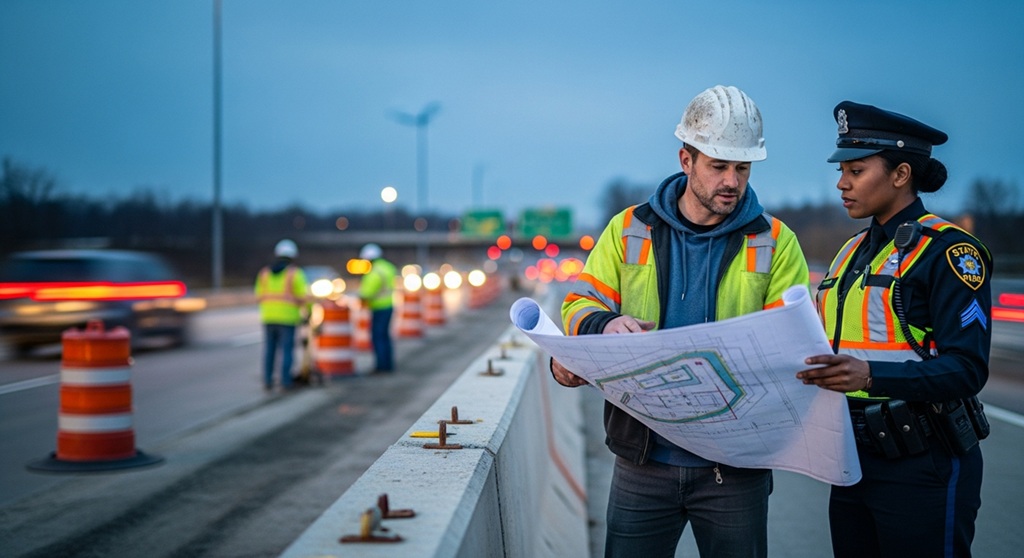
Work zone crashes happen in the U.S. roughly every five minutes. That translates to over 100 people injured daily and around 17 lives lost each week. For civil contractors, understanding the 2026 legislative changes isn’t optional; it’s the difference between a compliant job site and a catastrophic liability.
Outdated static signs don’t cut it anymore. Modern infrastructure projects demand advanced automated systems, physical barriers, and tight coordination with law enforcement. If you’re managing high-speed roadways, upgrading your approach is mandatory, not aspirational.
Procurement officers also need to stay ahead of the curve when sourcing compliant construction materials. Supply chain bottlenecks can stall a project just as easily as a failed safety inspection.
Why Physical Barriers and Automated Enforcement Matter
Automated Speed Cameras
State transportation departments are ramping up enforcement, and it’s not hard to see why. Accident rates keep climbing. New York expanded its “Operation Hardhat” initiative and automated work zone speed enforcement program, with state troopers even posing as construction workers to catch violations.
Meanwhile, Alabama’s Senate Bill 341 introduced speed enforcement cameras in highway work zones. The pilot program targets speeding and distracted driving head-on.
Why the push toward cameras? Relying on continuous police presence near high-speed traffic is expensive and puts officers at risk. Automated systems provide round-the-clock oversight, changing driver behavior without requiring a patrol car on every shoulder. Highway contractors increasingly prefer digital enforcement tools for exactly that reason. And the data backs it up; automated camera systems significantly reduce the likelihood of fatal collisions near road crews.
Physical Barrier Standards and Federal Funding
Concrete barriers and water-filled barricades are the primary line of defense, physically separating live traffic from staging areas where heavy equipment sits. These protections absorb vehicle impacts before they reach workers. Simple as that.
Of course, heavy-duty barriers aren’t cheap. That’s where the bipartisan Infrastructure Investment and Jobs Act comes in. It established the Work Zone Safety Contingency Fund, a federal funding mechanism specifically supporting the deployment of barriers and crash attenuators across state-level projects.
Contractors can apply these funds to offset the steep costs of renting or purchasing barrier systems. Budgetary constraints? Not a valid excuse anymore. Federal financial support means there’s no justification for leaving frontline workers exposed to fast-moving commercial traffic. And proper procurement of approved materials remains key to passing rigorous state safety inspections.
| Traditional Safety Measures vs. Modern Automated Enforcement | |||
| Approach | Key Features | Primary Advantage | Drawback |
| Static warning signs and cones | Reflective cones, warning signs, flagger stations | Cost-effective and quick to deploy | Zero physical protection from erratic drivers |
| Automated speed enforcement cameras | Radar-triggered cameras, automated ticketing, plate readers | Continuous speed reduction without police presence | Requires legislative approval and complex setup |
| Mobile crash attenuator vehicles | Heavy trucks with impact-absorbing rear cushions | Absorbs deadly kinetic energy in rear-end collisions | High capital investment and fuel costs |
How Recent Legislative Changes Impact Contractor Liability
Stricter Penalties and Highway Safety Acts
New legislation puts the burden of work zone safety squarely on civil infrastructure contractors and reckless drivers alike. The Safe Roads for Those Who Serve Act requires states to improve data collection on highway worker fatalities, noting that over 500 workers have lost their lives performing roadside duties since 2020.
At the state level, Arkansas Act 327 doubles fines for traffic violations within active mobile work zones. The goal is straightforward: deter the dangerous moving violations that cause the majority of severe worker injuries.
So what does this mean for you? If an accident happens on a site lacking legally mandated warning systems, your firm faces serious legal scrutiny. Regulators are now aggressively inspecting active sites to ensure full compliance. Failing to maintain proper signage can trigger severe financial penalties and legal action almost immediately.
Mitigating Risk on Civil Infrastructure Projects
Adapting to these legislative changes isn’t just a safety issue; it’s a business survival issue. A single catastrophic accident instantly damages a firm’s reputation among municipal clients and B2B stakeholders. And the insurance premium hikes that follow can cripple project budgets for years.
Site managers need standardized protocols that meet the new legislative criteria. Procurement officers need to source approved safety devices that comply with the latest federal specs. Sound like a lot? It is. But proactive risk management, built on constant communication between site supervisors, executives, and local authorities, beats scrambling after a regulatory fine.
Here are the steps that help establish a strong culture of compliance:
- Deploy state-approved automated speed tracking systems at every active zone.
- Implement thorough worker safety training during onboarding, not just annual refreshers.
- Secure designated staging areas for heavy construction materials, away from live traffic.
- Establish formal coordination protocols with local law enforcement before breaking ground.
What Avenues Exist for Injured Highway Workers?
Scope of Highway Work Zone Hazards
Site personnel face severe daily risks, especially from distracted or speeding drivers navigating tight construction corridors. In Alabama, transportation incidents cause 43% of all work-related deaths, making them the most frequent source of fatal injuries. Regional data shows 15 fatal injuries in Alabama’s construction and extraction occupations alone.
Nationally, construction consistently accounts for the highest number of workplace deaths. The physical vulnerability of road crews makes them especially susceptible to blunt force trauma when drivers ignore posted regulations. Even the most robust barriers can fail against a heavy commercial truck traveling at full highway speed.
Recognizing these hazards is the first step in building effective emergency response protocols. Supervisors should continuously monitor traffic patterns and identify potential dangers before a crash occurs. Not after.
Post-Crash Legal and Medical Realities
No matter how good your safety setup is, you can’t fully control a negligent or distracted driver. When a catastrophic injury happens on a highway project, navigating third-party personal injury claims alongside workers’ compensation gets complicated fast.
The good news? Alabama law provides protections for injured workers, covering extensive medical bills and lost wages. Workers and contractors alike should understand the legal avenues available when a crew member is hurt by a negligent third-party driver.
Seeking professional legal guidance early is critical. It prevents insurance companies from unjustly denying legitimate workplace injury claims. And it helps injured crew members receive the compensation they need to recover fully. For responsible civil engineering firms, protecting the financial stability of affected employees should always be a priority.
Prioritizing 2026 Work Zone Safety
Automated speed enforcement and heavy physical barriers now represent the baseline standard for highway work zone safety. Legislative bodies are imposing stricter liability and harsher penalties on both reckless drivers and non-compliant contractors. That pressure isn’t going away.
As infrastructure investment grows, contractors who prioritize advanced safety technologies and legal preparedness will protect their most valuable resource: their workers. Building these frameworks into every project doesn’t just check a compliance box. It keeps people alive and keeps projects on schedule.