
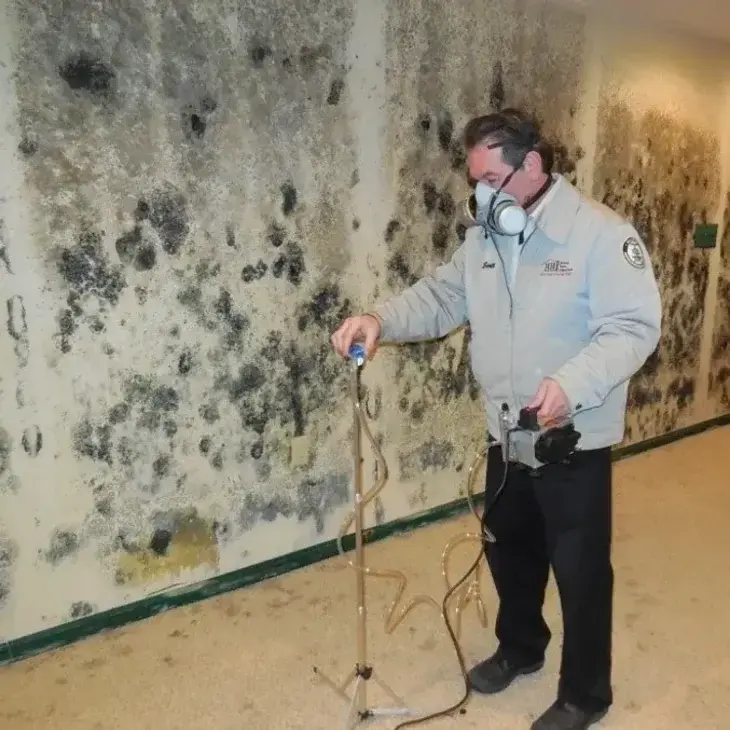
Mold can grow inside wall and ceiling cavities long before visible patches appear. A professional inspection uses moisture detection, thermal imaging, sampling, and targeted viewing methods to identify warning signs without immediately removing large sections of the building.
What Can a Mold Inspection Reveal?
An environmental inspection company can look for moisture patterns, damaged materials, unusual odors, and conditions that support concealed mold growth. The cost of mold inspection can vary depending on the property size, areas requiring assessment, and the extent of testing needed to identify potential problems.
An inspector may look for:
- Water stains on walls, ceilings, and trim
- Peeling, bubbling, or discolored paint
- Warped drywall or damaged ceiling tiles
- Musty odors with no visible source
- Elevated moisture readings inside materials
- Cold areas shown by thermal imaging
- Plumbing fixtures with signs of leakage
- Roof defects above damaged ceilings
- Condensation around pipes or ventilation ducts
- Mold spores in selected air or surface samples
- Poor ventilation and elevated indoor humidity
- Previous flood or water damage repairs
These findings help determine whether further investigation is justified. They may also show where a contractor should open a small area instead of removing materials across an entire room.
How Do Inspectors Investigate Concealed Mold?
Inspectors combine visual observations with instruments and building knowledge. Each method provides a different type of evidence, so findings must be considered together.
- Visual Signs Around the Suspected Area
Inspectors start with stains, peeling paint, warped trim, and soft drywall. These surface clues guide the search toward moisture that may sit inside a closed wall area nearby.
A mark alone cannot confirm hidden mold because an old leak may leave damage after drying. Its location still shows where closer testing could provide useful evidence on site.
- Moisture Meter Readings
A moisture meter checks materials for readings that differ from dry surrounding areas. Elevated levels can reveal the leak path even when the surface appears normal and clean.
Meters do not identify mold or prove that growth is present. They help inspectors locate damp materials that may support growth and deserve closer, targeted investigation too.
- Infrared Thermal Imaging
Infrared cameras display surface temperature differences across walls and ceilings. Cool patterns may point to wet insulation, plumbing leaks, or air movement inside cavities.
Thermal images require sound interpretation because missing insulation can also create a cold area. The camera guides further checks but cannot produce a mold diagnosis alone.
- Borescope Cavity Inspection
A borescope enters through a small opening and provides a view inside a wall or ceiling cavity. It may reveal visible growth around hidden piping, staining, or damp materials.
This method is less disruptive than removing a large drywall section. Permission is still required before drilling, and the viewing angle may leave parts of the cavity unseen.
- Indoor Air Sampling
Air samples can compare indoor spore levels against an outdoor control sample. Unusual concentrations may suggest a concealed source that needs further investigation.
Results must be interpreted with site conditions because spore levels change with weather and activity. Air sampling cannot show the exact location of growth by itself at all.
- Surface and Dust Sampling
Surface samples may be collected from suspicious stains or settled dust near a cavity. Laboratory analysis can identify mold types present on the material that was sampled too.
A sample represents only the selected spot and does not describe the entire building. Inspection findings and moisture data remain necessary for a useful interpretation alone.
What Conditions Can Point to Hidden Mold?
Concealed mold usually develops because moisture entered a building material and remained long enough to support growth. Inspectors therefore investigate both the suspected mold and the source of the water.
Tip: Using a flashlight at a low angle or backlighting accessible surfaces may make discoloration, staining, or unusual growth easier to spot, although professional assessment may still be needed to confirm mold.
Professional Inspection Evidence
Professional mold inspections for concealed growth combine interviews, visual checks, moisture readings, and selected tests. This process builds evidence without opening every wall in the property.
A report should separate observed facts from possible explanations. Clear limits matter because no noninvasive method can guarantee that every concealed area has been examined.
Roof and Ceiling Leaks
Roof leaks may travel along rafters before staining a ceiling far from the entry point. Inspectors trace patterns and check nearby materials to narrow the likely source areas.
The roof defect must be repaired before damaged materials are restored. Otherwise, fresh moisture can return and allow mold to continue growing inside the same assembly again.
Hidden Plumbing Problems
Pipe joints, drains, and supply lines can leak slowly without producing a visible drip. Moisture readings near bathrooms and kitchens may expose the affected route sooner too.
Condensation can create similar damage when cold pipes meet humid air. Inspectors consider plumbing use, ventilation, and temperature before assigning the likely cause as well.
Basement and Foundation Moisture
Basements and foundations can admit water through cracks, joints, and porous materials. Hidden growth may develop behind finished walls where evaporation remains a limited site.
Inspectors look for efflorescence, damp edges, musty odors, and damaged finishes. These clues help distinguish foundation moisture from a one-time plumbing spill nearby alone.
Poor Ventilation and Condensation
Poor ventilation allows humidity to collect in bathrooms, kitchens, and roof spaces. Persistent condensation may damp drywall, insulation, timber, and painted surfaces as well.
Humidity readings and airflow checks can reveal conditions that support mold. Correcting ventilation is important because cleaning growth alone will not stop its return fully.
Musty Odors Without Visible Growth
Musty odors can signal microbial activity even when surfaces look clean. Inspectors may compare rooms and follow odor strength toward enclosed spaces or damp materials as well.
Odor is useful evidence but is not proof of mold. Drains, wet carpets, stored items, and other sources must be considered before recommending invasive investigation as needed.
What Happens After a Hidden Mold Is Suspected?
The next step depends on the strength of the evidence, the suspected moisture source, and the condition of the affected materials. Inspection findings should guide targeted action rather than unnecessary demolition.
| Inspection finding | What it may indicate | Possible next step |
| Elevated moisture reading | Active or recent water intrusion | Locate and repair the moisture source |
| Cool thermal pattern | Wet material, air leakage, or missing insulation | Confirm with a moisture meter |
| Musty odor in one area | Damp material or concealed microbial growth | Inspect nearby cavities and water sources |
| Unusual air sample result | Possible indoor mold source | Compare findings with moisture and visual evidence |
| Visible staining through a borescope | Water damage or possible growth | Plan a controlled cavity opening |
| Dry materials with old staining | Previous leak that may be inactive | Review repair history and monitor the area |
If concealed mold is suspected, property owners should:
- Repair leaking roofs, pipes, drains, and fixtures
- Control indoor humidity and improve ventilation
- Avoid painting over damp or damaged surfaces
- Keep people away from heavily affected areas
- Avoid disturbing suspected mold without containment
- Document stains, odors, and water events
- Follow the inspector’s recommendations for further testing
- Arrange a controlled opening when confirmation is necessary
- Remove materials that cannot be safely cleaned or dried
- Use suitable containment during remediation work
- Test nearby materials before rebuilding the cavity
- Confirm that the moisture source has been corrected
Opening materials should be a targeted decision based on evidence. Removing drywall without a plan can spread dust and spores, damage unaffected areas, and increase the cost of restoration.
Conclusion
Mold inspections can reveal signs of concealed moisture and growth by combining visual checks, moisture readings, thermal imaging, sampling, and limited cavity inspection. No method can see through every surface with certainty. Still, an inspector can identify evidence, narrow the likely source, and recommend where opening materials or correcting moisture is necessary before damage spreads further.






