
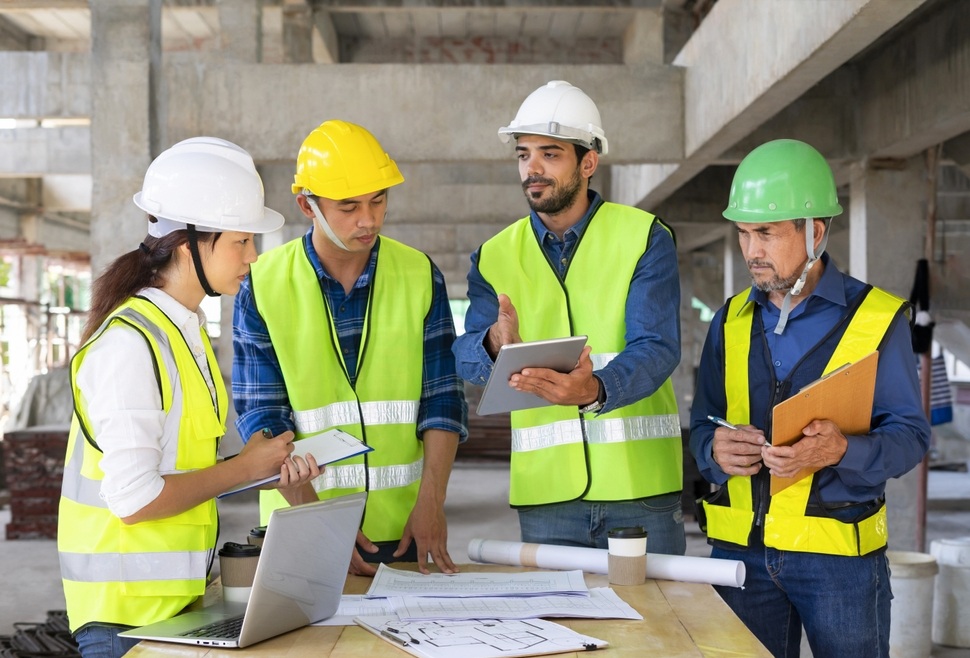
Construction projects are remembered for their engineering, timelines, safety performance, and finished quality. Yet the identity of the team behind the work also matters. A strong on-site identity helps workers feel connected, gives clients confidence, and makes a project easier to recognize across meetings, events, and public-facing communications.
This does not require expensive campaigns or dramatic changes. In construction and facility management, small, consistent details often do more than one large branding exercise. When crews, supervisors, consultants, and visitors encounter the same visual cues and values repeatedly, the project begins to feel more organized and professional.
The goal is not to decorate a site for the sake of it. The goal is to make the team’s standards visible in practical ways.
Start With Clear Project-Level Messaging
Every construction project has a purpose beyond the physical structure. It may be a residential tower, a bridge, an industrial facility, a hospital wing, or a logistics park. The project team should be able to explain what is being built, why it matters, and what standards guide the work.
This message can be short. For example, a metro project might focus on safe mobility and long-term public benefit. A hospital project might focus on care, access, and reliability. A manufacturing facility may emphasize precision, productivity, and future capacity.
Once this message is clear, it can be reflected in toolbox talks, induction materials, notice boards, progress updates, and stakeholder presentations. Consistency helps everyone understand that the site is not just a workplace but part of a larger outcome.
Make Safety Identity Visible and Human
Safety is already central to construction, but it is often communicated through rules, warning signs, and compliance documents. These are necessary, but they can feel distant if they are not supported by human reminders.
A stronger safety identity can include monthly safety themes, recognition for hazard reporting, visual progress boards, and simple messages that connect safe work to families and communities. For example, a site may run a “return home safe” theme supported by supervisor briefings and visible reminders near entry points.
Recognition matters as well. When workers are acknowledged for safe decisions, others notice. A certificate, helmet sticker, small badge, or team mention during a weekly meeting can help reinforce the idea that safety is part of the site culture rather than only a checklist item.
Use Branded Touchpoints Without Creating Clutter
Construction sites are already visually busy. There are barricades, instructions, machine markings, equipment labels, and directional signs. Adding more branding without purpose can create confusion.
The key is to use branded touchpoints selectively. Entry gates, visitor cards, induction folders, safety milestone boards, and project meeting rooms are natural places for visual identity. These areas already serve communication functions, so branding can support clarity rather than compete with it.
For project milestone days, safety campaigns, or recruitment events, small branded items such as custom pins can give employees and visitors a simple keepsake without taking attention away from the work itself.
The same approach can apply to hard hat decals, lanyards, notebooks, or site maps. The item matters less than the intention behind it. If it helps people identify the project, remember a safety message, or feel part of a team, it has a practical role.
Connect Field Teams and Office Teams
Many construction companies struggle with a quiet divide between site teams and office teams. Engineers, procurement staff, finance teams, planners, project managers, and field workers may all contribute to the same outcome, but they often experience the project differently.
A shared identity can reduce that distance. Internal newsletters, project photo updates, milestone summaries, and team recognition posts can help office employees understand site progress. Likewise, site teams should be included when major approvals, design achievements, or client feedback are shared.
Simple habits can help. A monthly project update with photos from the site, a short note from the project manager, and recognition for both field and support teams can build a stronger sense of shared ownership. When people understand each other’s contribution, coordination usually improves.
Turn Milestones Into Team Moments
Construction projects have many milestones: excavation completion, foundation work, structural topping out, equipment installation, façade completion, testing, commissioning, and handover. These moments are useful opportunities to strengthen team identity.
A milestone does not need to become a large event. A short gathering, a group photograph, a safety message, and recognition for key teams can be enough. The important point is to mark progress in a way that respects the work involved.
Milestone communication can also be shared with clients, consultants, and internal leadership. This helps show that progress is being managed with discipline. It also gives team members a record of their contribution, which can be valuable long after the project is complete.
Keep Visitor Experience in Mind
Visitors often form opinions quickly. A client representative, auditor, consultant, student group, or potential employee may notice how organized the site feels before they understand the technical details.
The visitor journey usually begins at the gate. Clear sign-in procedures, professional visitor badges, well-maintained walkways, clean induction materials, and visible emergency information all contribute to the impression of a disciplined project.
Small details matter here. If meeting rooms display current progress photos, project values, and key safety statistics, visitors can understand the site more quickly. If guides are prepared and workers know how to direct visitors, the experience feels more controlled and respectful. This does not require luxury or excessive polish. It requires order, clarity, and consistency.
Reflect Local Context and Community Impact
Construction projects do not exist in isolation. They affect nearby residents, businesses, road users, and local services. A project identity that acknowledges the surrounding community can support better relationships.
This may include multilingual notices where needed, community information boards, responsible dust and noise updates, or visual displays showing what the completed project will contribute. For long-duration projects, periodic community updates can reduce uncertainty and build trust.
Teams can also involve local context in internal communication. If workers understand how the project will serve the area, the work may feel more meaningful. A water treatment plant, school building, transport corridor, or healthcare facility all have social value that can be explained in practical terms.
Build Identity Through Behavior, Not Only Materials
Visual identity is useful, but behavior carries more weight. A site can have impressive signage and still feel poorly managed if communication is unclear or safety rules are applied inconsistently.
Supervisors play a major role. When they explain decisions clearly, recognize good work, and address issues fairly, the team identity becomes stronger. Workers notice whether values are reflected in daily actions.
The same applies to punctual meetings, clean work zones, respectful coordination between trades, and transparent reporting. These habits create a reputation that no banner or brochure can replace.
Project leaders should ask a simple question: if a visitor spent one hour on this site, what would they remember about how the team works? The answer should match the message the company wants to communicate.
Conclusion
A strong on-site identity is built through repeated, practical signals. Clear messaging, safety recognition, organized visitor experiences, milestone communication, and respectful team culture all contribute to how a construction project is perceived.
For construction firms and facility teams, the aim should be consistency rather than excess. The most effective identity-building efforts are often simple, relevant, and connected to daily work.
When the values of a project are visible in both communication and behavior, people remember more than the structure being built. They remember the professionalism of the team that delivered it.






