
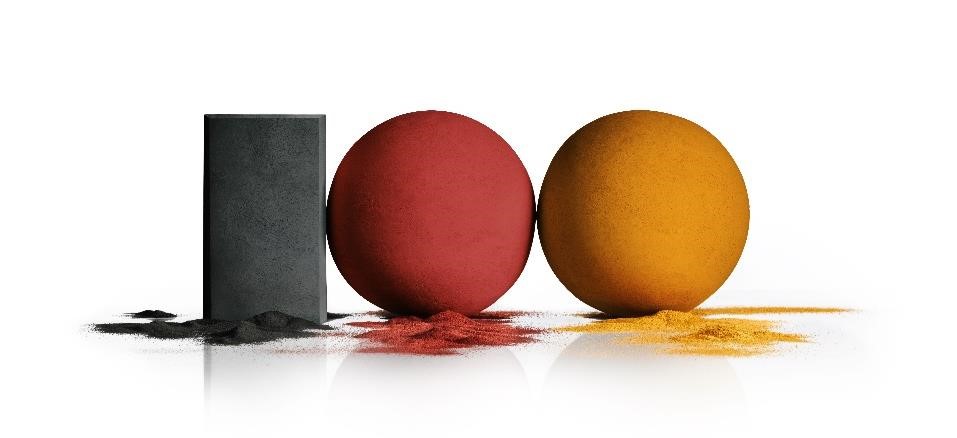
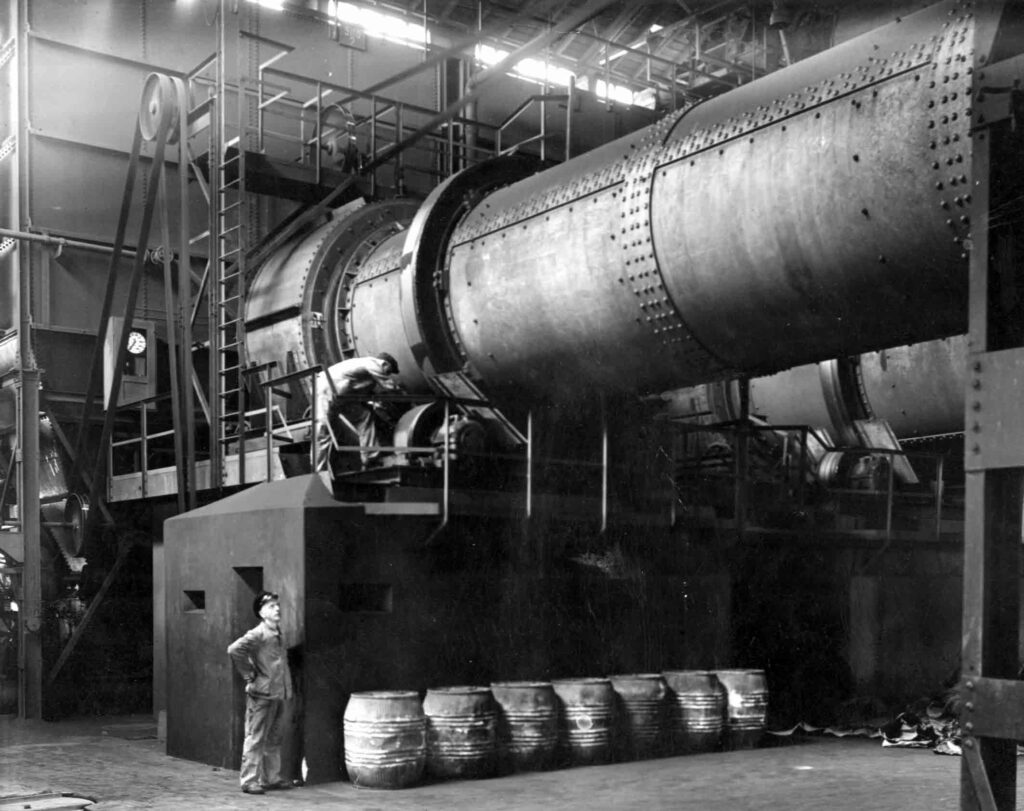
For a century now, iron oxide pigments from Krefeld-Uerdingen, Germany, have shaped the color palette of modern building materials. In 1926, chemist Julius Laux developed an industrial process that paved the way for the production of high-performance, synthetic iron oxide pigments. This innovative production approach soon proved to be a milestone for the pigment industry—and especially for color-stable concrete applications.
To this day, the Laux Process is used exclusively at the world’s largest iron oxide production facility in Germany, which is operated by LANXESS. Depending on the reaction conditions, suspensions of black or yellow iron oxide are produced, which are then washed, concentrated, and dried. Red pigments are produced by subsequently subjecting the black paste to high-temperature treatment.
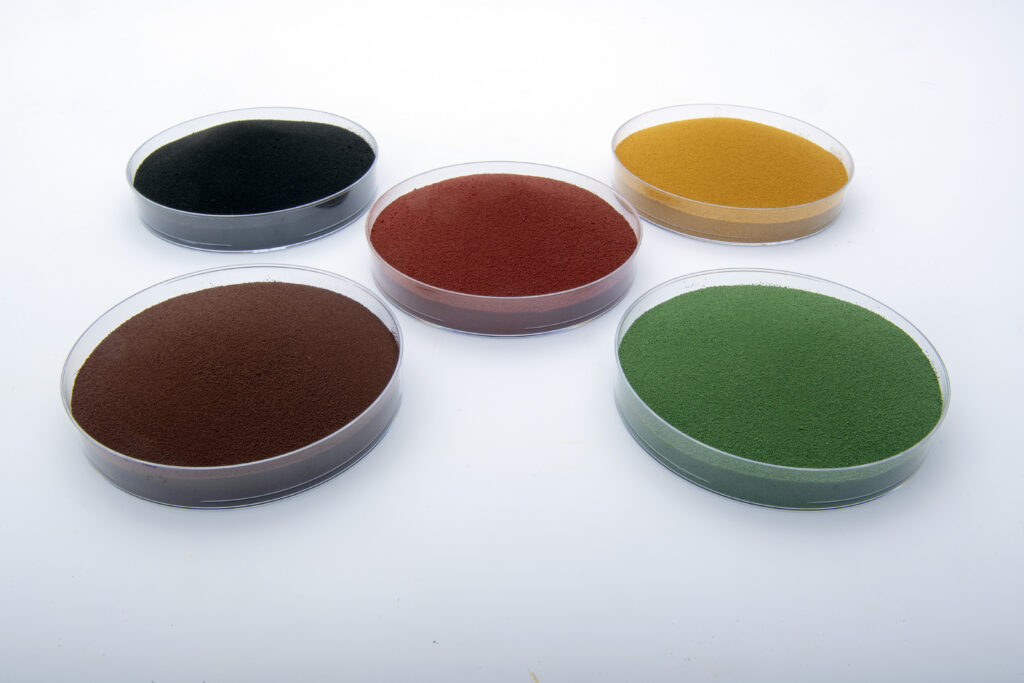
Compared to alternative manufacturing processes such as the Penniman or precipitation processes, the pigments produced in the Laux process offer several advantages:
The controlled particle formation leads to very high grinding stability, which means that Laux pigments behave more consistently on average during dispersion and ensure constant color homogeneity in the finished concrete—a clear advantage in industrial use.
Since its invention, LANXESS has supported the further development of the Laux process through systematic research. Basic research enabled the early application of Laux products in traditional concrete applications. Yet despite this long experience, it is crucial to continually address new technical challenges.
New applications in concrete formulations and modern production methods impose additional demands on the pigments. These include:
• low-cement clinker systems,
• fiber-reinforced ultra-high-performance concretes, or
• new chemical construction additives such as air-entraining agents, superplasticizers, or retarders.
These developments alter the interaction between binders, admixtures, and pigments, in some cases significantly. Accordingly, the demands on colorants are increasing in terms of dispersibility, reactivity, long-term stability, and process robustness.
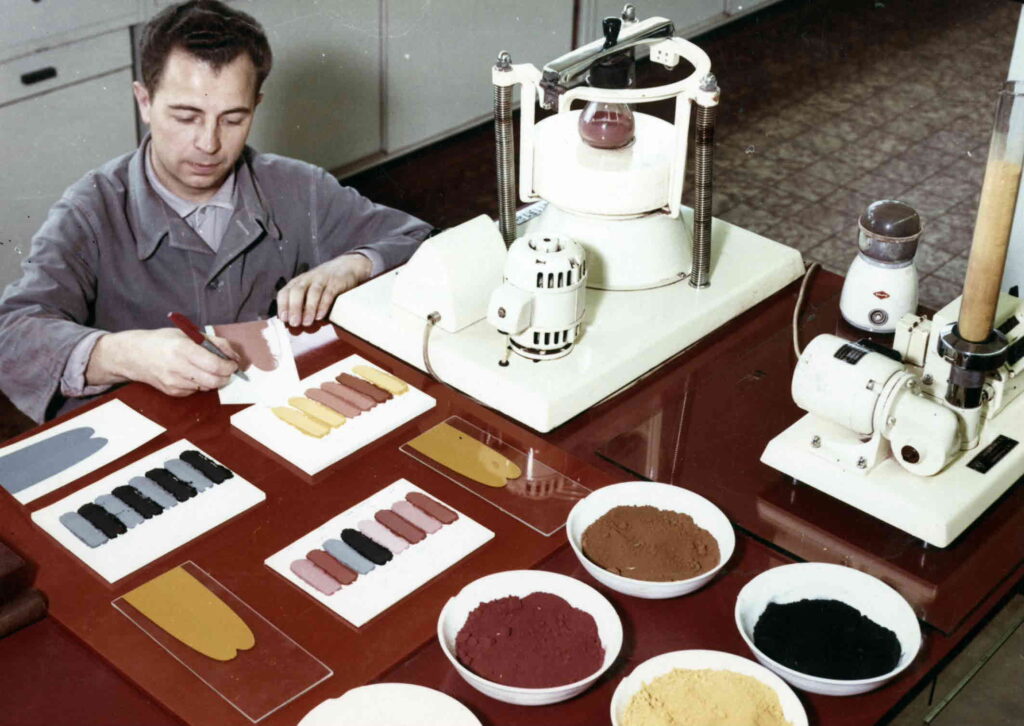
To meet these growing needs, LANXESS has strategically expanded its technical expertise in recent years. Key to this is a cooperative approach: The company now works closely with equipment manufacturers, producers of construction chemicals, universities, and research institutes. The goal is to holistically analyze the challenges of concrete coloring and develop scientifically sound solutions.
The focus is on the areas of cement-free concrete, textile concrete, carbon capture, and 3D concrete printing.
Cement-Free Concrete: Research for Sustainable Building Materials
A key field of research is the coloring of cement-free concrete based on geopolymers. These systems utilize industrial by-products and natural raw materials, thereby placing particularly high technological demands on pigments. Together with concrete admixture manufacturer Rhein-Chemotechnik and distribution partner Harold-Scholz Farbpigmente, LANXESS has investigated various concrete systems and specifically incorporated iron oxide pigments using activators and additives.
Specimen tests in accordance with relevant DIN-EN standards confirmed both the required workability and the coloration. Further tests showed that using Laux iron oxide pigments of the Bayferrox brand does not affect the desired compressive strength or setting behavior. This means that manufacturers in the concrete industry can use these pigments in the new concrete systems as well. Meanwhile, LANXESS, in cooperation with mixing technology specialist Pemat, investigated the impact of mixing technology. Multimix planetary mixers proved particularly effective, as they provide highly efficient pigment dispersion and preparation of alkali-activated concrete and geopolymer systems. In-depth studies by the Institute of Building Materials (IfB) at Dresden University of Technology ultimately showed that Laux pigments exhibit a particularly good performance profile in cement-free systems. The surface charge of the particles enables the formation of “charge bridges.” These stabilize the pigments within the system and give the building material high color brilliance.
Fiber-Reinforced Concrete: Filigree, Powerful and Colorful
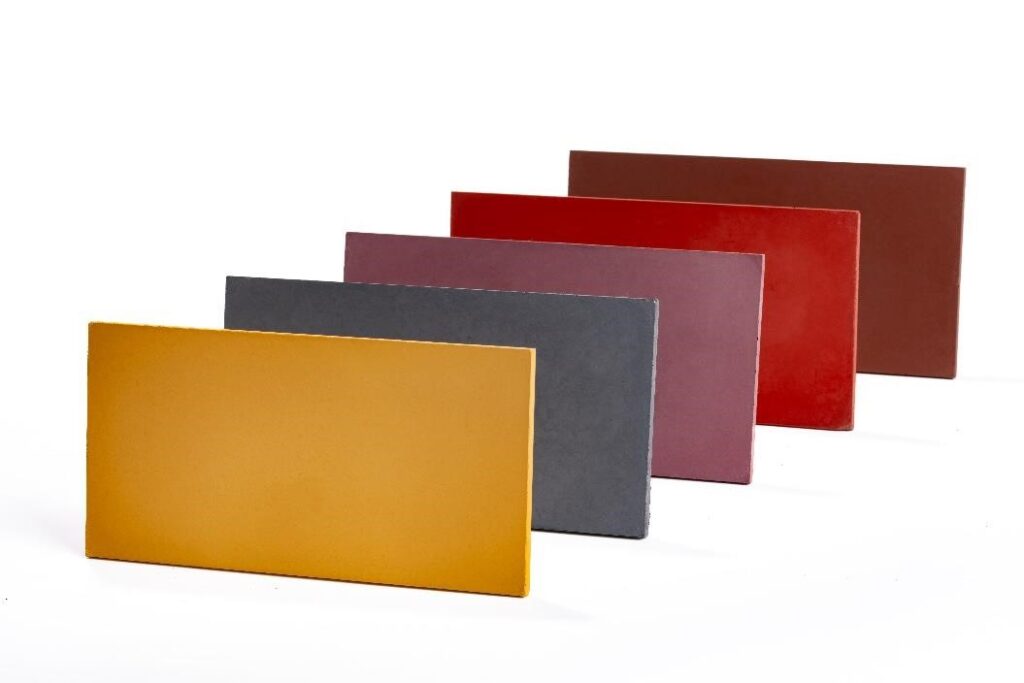
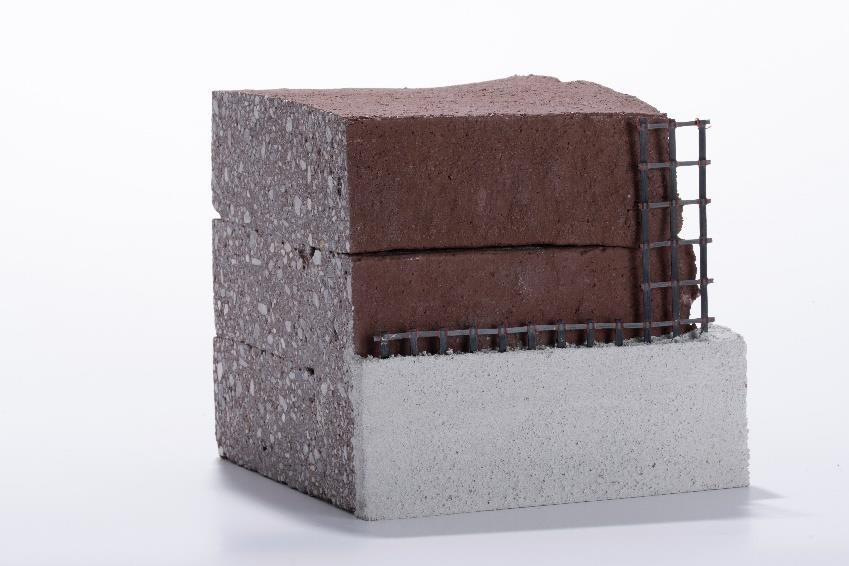
Another focus is research into the use of pigments in fiber-reinforced concrete, which enables entirely new architectural forms—particularly when used as ultra-high-performance concrete (UHPC) or self-compacting concrete (SCC). In this system, textile reinforcements— such as carbon—replace conventional steel reinforcement. This makes it possible to create extremely thin-walled, filigree building components that meet the highest standards for design and durability.
Together with the IfB, structural matrix manufacturer Reckli, and 3D concrete printing specialist Vertico from the Netherlands, LANXESS is investigating how pigments behave in these high-performance materials. Initial tests confirm the suitability of Laux pigments: Their specific surface properties facilitate integration into the emerging matrix and enable durable and uniform coloring—without compromising the concrete’s technical properties. The incorporation of fibers impregnated with flame retardants and their associated fire protection benefits are also being investigated. The research consortium’s joint application for a transfer project underscores the high potential of the newly developed materials.
Carbon Capture: Color Stability in CO₂-Cured Concretes
A third research area focuses on the curing of concrete with CO₂. In recent years, climate neutrality has steadily gained importance in the cement industry. In addition to the widely discussed approach of “Carbon Capture Storage and Utilization” and the use of cement-free concretes, there is also the possibility of permanently integrating CO₂ into the emerging calcium silicate hydrate matrix during the curing process. This technology can both reduce the ecological footprint of concrete-based components and significantly increase their material strength. However, CO₂ incorporation alters the crystal structure of the cement and thereby also affects the coloration. Together with Kraft Curing Systems, LANXESS is therefore developing strategies to optimize CO₂ curing of pigmented products. In this process, temperature control, moisture management, cement types, mixing techniques, and potential pigment adjustments are being systematically investigated.
3D Concrete Printing: Color for the Next Generation of Digital Construction
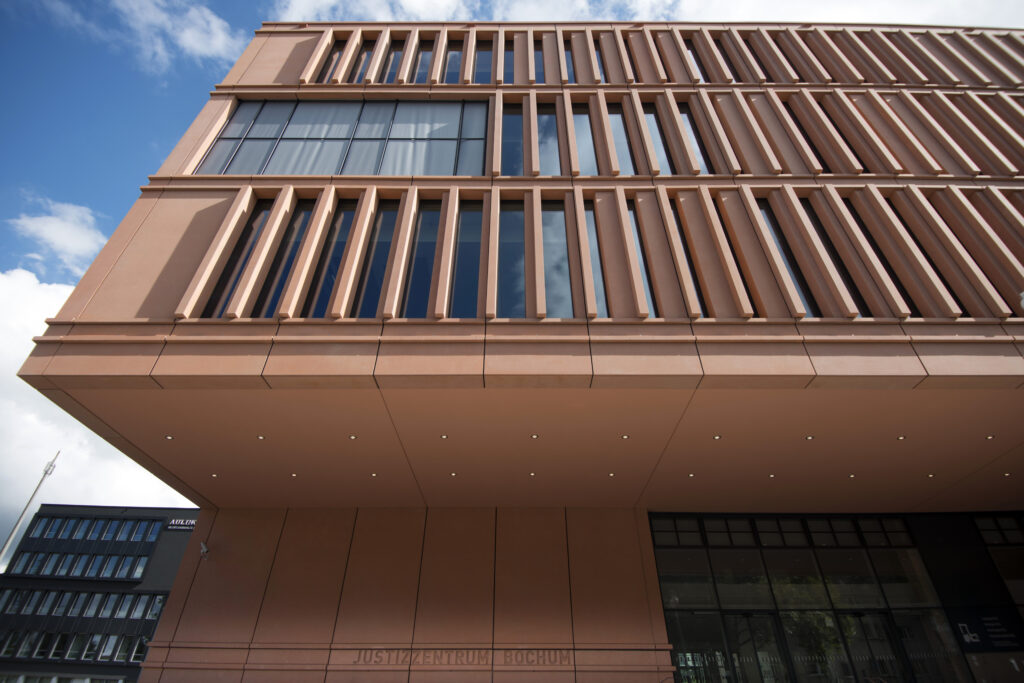
3D concrete printing is considered one of the most significant innovations in the construction industry today. Components can be produced faster, and complex geometries can be realized without formwork. So far, however, printed concrete has often remained gray. In a joint project between LANXESS, Vertico, and the IfB, iron oxide pigments produced using the Laux process are being investigated in new 3D-printable concretes.
The focus here is on investigating the interaction between pigments and the cementitious systems used. The highly complex rheological requirements of 3D printing—particularly regarding flow behavior, setting, curing, and layer formation—place high demands on the pigments as well. To thoroughly examine the important aspect of dosing, the expert consortium was further expanded to include specialists from Finke Dosiertechnik. The goal is to open up new ways for highly pigmented, aesthetic, and at the same time printable concretes that meet all technical requirements. The findings from the research project will subsequently be incorporated into standardization, thereby paving the way for the use of pigments in 3D applications.
100 Years of Tradition – and a Future Full of Innovation
The Laux process and the pigments produced by it have shaped the coloring of concrete for over 100 years. Their strength is evident today more than ever—especially where new concrete technologies and processes are emerging. The current research initiatives by LANXESS and its partners demonstrate that high-quality pigments do far more than simply provide color. They are an integral part of technological innovation—and a decisive factor for the sustainable, high-performance, and aesthetically sophisticated concretes of the future.






