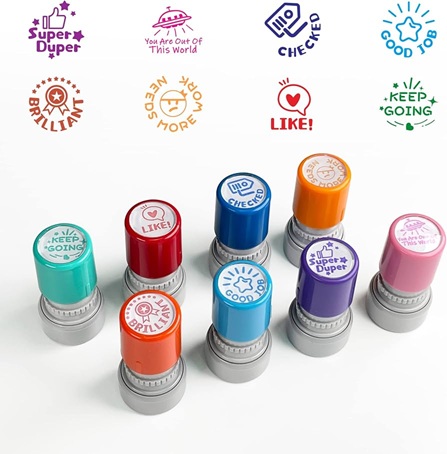
Choosing a classroom stamp involves more than selecting an appealing message. Teachers need a tool that produces crisp impressions, handles repeated use, and fits smoothly into everyday grading routines.
The most useful features of a classroom stamp include the stamp mechanism, impression size, ink performance, refill options, durability, and message clarity. Reviewing these details before buying can help prevent blurred marks, awkward handling, and avoidable replacement costs during a demanding school year.
For teachers who review dozens of assignments each week, speed is important. A self-inking design keeps the ink pad inside the unit, so each mark is ready after one press. That arrangement reduces desk clutter and supports consistent feedback during long grading sessions. Guides covering stamp styles, sizes, and refill choices can help teachers compare teacher self-inking stamps with their daily classroom needs.
1. Stamp Mechanism
A classroomstamp mechanism affects speed, cleanliness, and comfort during use. Self-inking models are often convenient for grading because the built-in pad resets after every press. Teachers can move from one paper to the next without reaching for a separate ink pad.
Traditional wooden stamps have a familiar design and can suit occasional activities, art projects, or student stations. However, they require an additional step before each impression. The user must press the stamp against an ink pad, then apply it to the paper.
Ease of movement matters as well. A classroom stamp should open, close, and press without resistance. A steady base also helps prevent accidental marks on desks, folders, or unfinished assignments.
2. Impression Quality
A clear impression matters more than elaborate artwork. Text should remain readable on worksheets, notebooks, planners, and other classroom materials. Small lettering can blur when the stamp face is crowded or the ink spreads across absorbent paper.
The ink should spread evenly from edge to edge of a properly cut rubber face. Uneven pressure may leave pale letters, missing corners, or dark patches. The best stamps create a balanced image with one firm, controlled press.
Message length also affects clarity. Short comments such as “Great Work” or “Slow Down” are easy to recognize quickly. Longer feedback requires a larger face and enough spacing between lines.
3. Size and Layout
Stamp dimensions should perfectly suit the paper area where they will be used. A large design may cover student writing, while a tiny impression can get lost beside handwritten corrections. Measuring common worksheet sections first helps avoid poor placement.
Line spacing, margins, and student age also deserve equal attention. Younger learners may respond better to large lettering and simple pictures. Older students may benefit from compact checklist designs that leave room for detailed corrections.
Shape influences function, too. Rectangular stamps often work well for multi-line comments, while round designs suit approval marks or quick rewards. A balanced layout keeps every element readable without crowding the page.
4. Ink Performance and Refills
Ink quality greatly affects appearance, accuracy, and long-term cost. The chosen color should stand apart from pencil, blue pen, or black print without covering the student’s work. Red, blue, and green are common choices because they offer strong visual contrast.
Refill options deserve careful attention before you purchase them. A replaceable pad or refill bottle can extend the life of the stamp housing and reduce waste. Teachers should confirm that compatible supplies are easy to obtain, especially for less common models.
Drying time matters on glossy worksheets and coated materials. Ink that stays wet can smear across pages or transfer onto hands. Ink that is too dry may create weak, incomplete marks. Consistent coverage typically offers the best balance.
5. Durability and Handling
Classroom supplies are moved, stored, shared, and used repeatedly. A durable stamp should withstand daily pressing without cracking, loosening, or falling out of alignment. Strong construction matters even more when several teachers or assistants share the same item.
The handle should offer a secure grip during extended grading sessions. Rounded edges and a comfortable top can ease hand strain when many papers require the same comment. A compact shape also fits neatly inside a desk drawer, supply bin, or mobile cart.
6. Message Fit
The most useful classroom stamp serves a clear instructional purpose. Encouraging comments can recognize effort, while revision prompts can direct students toward a practical next step. Each message should suit the student’s age and remain understandable without further explanation.
Teachers may need several categories, such as praise, revision reminders, completion checks, and classroom rewards. A small collection of distinct messages often provides greater value than several stamps with nearly identical wording.
Images can support recognition, but they should not overpower the text. Simple artwork helps students quickly recognize familiar feedback. The stamp should add useful meaning to the page, rather than create unnecessary visual clutter.
Conclusion
A classroom stamp proves useful through reliable performance, readable wording, suitable dimensions, comfortable handling, and manageable maintenance. Self-inking construction can speed up grading, while refillable ink may reduce waste and replacement expenses.
Clear impressions remain essential because feedback loses value when students cannot read it. Teachers who compare these features can choose stamps that support daily routines, student communication, and repeated classroom use.