
Growth creates a familiar problem for contractors: eventually, the equipment that helped you build the business starts limiting how much work you can take on. A crew waits half a day for a machine to arrive from another site. A rented skid steer is unavailable when you need it. A second project is pushed back because one excavator is already committed elsewhere.
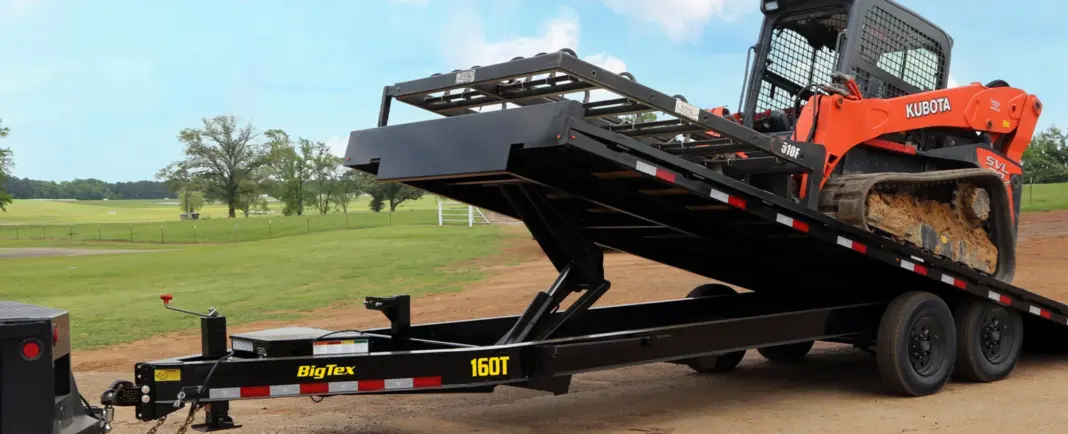
Those situations can make another equipment purchase seem obvious, but adding machinery is only worthwhile when the rest of the operation is ready to support it. The purchase price is one piece of the decision. Contractors also need to think about utilization, operators, maintenance, storage, financing, and transportation. A new machine may also require a different truck or one of the heavier-duty equipment trailers needed to move it safely between jobs.
The goal is not to own more equipment. It is to have enough equipment to keep profitable work moving without adding assets that spend most of their time parked.
Start With The Work You Are Already Losing
A good fleet expansion decision usually begins with an operational problem, not a sales brochure.
Consider a small excavation contractor running one skid steer across three active jobs. If crews repeatedly stop because the machine is somewhere else, a second skid steer could eliminate a genuine production bottleneck. The equipment is solving an existing problem with measurable costs.
The case is weaker if the contractor simply expects to “need another one eventually.”
Before buying, look back at several months of work and ask:
- How often was equipment unavailable when a crew needed it?
- How much did rental equipment cost?
- Did equipment shortages delay billable work?
- Were jobs declined because the company lacked capacity?
- How many days per month would another machine realistically operate?
Utilization matters because parked equipment still costs money.
Know What The Machine Must Earn
Contractors sometimes compare a monthly equipment payment with rental rates and stop there. Ownership involves more.
A realistic cost calculation should include financing, insurance, registration (where applicable), scheduled maintenance, repairs, tires or tracks, attachments, storage, and transportation.
Then compare those expenses with the revenue or savings the machine is expected to generate.
Suppose a landscaping contractor spends $3,000 per month renting a compact track loader during its busiest six months. Buying may make financial sense if the machine can also support grading, material handling, and site-preparation work for the rest of the year.
If that same machine were used 10 days annually, renting may still be the better business decision.
The important question is not whether your company can make the payment. It is whether the equipment produces enough value to justify ownership.
Decide Whether Renting Still Makes More Sense
Rental equipment is not necessarily a waste of money. In the right situation, it gives contractors access to expensive or specialized equipment without carrying its fixed costs year-round. The U.S. Small Business Administration’s guidance on buying or leasing business equipment similarly recommends weighing expected usage, upfront cost, maintenance responsibility, and long-term ownership before committing to an asset.
Renting can make sense when:
- The equipment is needed for occasional specialty work
- Demand is seasonal or unpredictable
- You are testing a new service line
- Storage space is limited
- Your staff does not regularly operate that machine
Ownership becomes more attractive as utilization becomes predictable.
A contractor who rents the same mini excavator three or four times every month should probably run the ownership numbers. A contractor who needs a trencher twice a year may have little reason to put one in the fleet.
Make Sure You Can Move What You Buy
Transportation is one of the easiest costs to underestimate during fleet expansion.
A contractor finds a larger skid steer at the right price, checks that the truck has enough advertised towing capacity, and assumes the setup works. Then the full numbers come into view: machine weight, attachment weight, trailer empty weight, trailer Gross Vehicle Weight Rating (GVWR), payload capacity, hitch rating, and the tow vehicle’s actual limits.
That can turn one equipment purchase into several.
For lighter tools, mowers, and materials, utility trailers may provide enough capacity and flexibility. Larger compact equipment generally requires trailers with higher GVWRs, heavier axles, appropriate brakes, and deck dimensions that allow the machine to be positioned correctly over the axles.
Do not evaluate transport based solely on whether the machine physically fits. A machine can fit on the deck while exceeding the trailer’s payload capacity.
Transportation also affects scheduling. If two machines need to be at separate jobs at 7 a.m., but you have one truck and one suitable trailer, buying the second machine has not actually eliminated your bottleneck.
Account For Attachments And Supporting Equipment
Machines rarely work alone.
A skid steer may need a bucket, forks, auger, grapple, or breaker. A compact tractor may require multiple implements. Landscaping equipment needs fuel, handheld tools, ramps, and sometimes material loaded alongside the machines.
Those additions affect both cost and logistics.
Take a landscaping company adding a second zero-turn mower. On paper, the mower may be a relatively simple expansion. In practice, the company needs to determine whether its current landscape trailers can accommodate both machines while preserving room for blowers, trimmers, fuel, and secure tie-down points.
Sometimes the supporting equipment becomes the deciding factor in whether fleet growth actually improves productivity.
Do You Have Someone To Run It?
A second machine does not double capacity if nobody on the crew can operate it effectively.
Before expanding the fleet, consider staffing alongside equipment utilization. Experienced operators can be difficult to replace, and putting an unprepared employee into more complex machinery can reduce productivity rather than increase it.
Ask whether you have:
- Enough qualified operators
- Adequate training procedures
- Backup operators when someone is absent
- Employees capable of completing daily inspections
- Supervisors who can coordinate multiple crews and machines
There is also a scheduling issue. If your best operator spends every day moving between crews because nobody else can run the new equipment, the fleet has grown faster than the workforce.
Plan For Maintenance Before You Need It
Every additional asset adds another maintenance schedule.
Oil changes, filters, hydraulic systems, bearings, tires, brakes, tracks, batteries, and wear components all need attention. Waiting for something to fail on a jobsite is usually the most expensive maintenance strategy.
Growing contractors should determine who is responsible before expanding.
For a smaller operation, that might be the owner or shop manager maintaining a written service schedule. Larger fleets may need preventive maintenance software, dedicated technicians, or relationships with local service providers.
Parts availability matters too. A machine that is theoretically more productive does little for the business if a common failure leaves it out of service for weeks.
Think About Where Everything Will Go
Storage tends to become a problem gradually.
One additional trailer sits beside the shop. Then another machine occupies the employee parking area. Attachments accumulate behind the building. Eventually, crews are moving three pieces of equipment every morning just to reach the one they need.
Before purchasing, determine where the machine, attachments, and transport equipment will be stored.
Secure storage also protects the investment from theft, weather exposure, and accidental damage. If expanding the fleet requires leasing additional yard or shop space, that expense belongs in the ownership calculation.
Avoid Buying Only For Your Biggest Job
A large contract can justify adding capacity, but contractors should be careful not to build an entire fleet around a temporary spike in demand.
Imagine an excavation company wins a six-month project that could keep a second excavator busy every day. Buying may look more attractive than renting for six straight months. The better question is what happens in month seven.
If existing customers and the sales pipeline can support the machine afterward, ownership could make sense. If not, the equipment may become an expensive parked asset.
Run the numbers under normal operating conditions, not just the best month you have ever had.
Expand In A Way The Business Can Support
The strongest fleets usually grow in response to consistent demand.
That means equipment gets added when existing assets are highly utilized, rental costs have become significant, crews are losing productive hours, or new equipment allows the contractor to perform profitable work that previously had to be subcontracted.
It also means the company has the operators, maintenance capacity, storage, tow vehicles, and trailers needed to support that growth.
There is nothing wrong with renting while those pieces fall into place. In many cases, it is the smarter bridge between where a contractor is today and where the company is headed.
Buying becomes the stronger choice when ownership solves an established operational problem, and the equipment has enough work ahead of it to earn its place in the fleet.
Frequently Asked Questions
When Should a Contractor Buy Rather Than Rent Equipment?
Ownership is worth evaluating when equipment is needed regularly, rental costs are significant, availability affects schedules, or the machine can reliably generate additional revenue. Occasional and highly specialized equipment may still be better rented.
Should Transportation Costs Be Included in an Equipment Purchase Decision?
Yes. Machine weight may require a higher-capacity trailer, different hitch equipment, or even another tow vehicle. Those costs can materially change the economics of the purchase.
How Much Extra Equipment Capacity Should a Growing Contractor Maintain?
There is no universal percentage. The goal is enough capacity to prevent recurring delays without maintaining assets that see little productive use. Historical utilization and upcoming contracted work provide better guidance than assumptions about future growth.
Why Does Trailer GVWR Matter When Adding Equipment?
GVWR is the maximum loaded weight a trailer is designed to handle, including the trailer itself and its cargo. Contractors need to compare the machine and attachment weight against the actual trailer payload capacity rather than assuming that a large enough deck can safely carry the equipment.
Build The Fleet Around The Work
Fleet expansion should make the company easier to operate, not simply give it more assets.
Before adding equipment, look closely at utilization, revenue potential, transportation, staffing, maintenance, storage, and the work already under contract. Those practical details reveal whether another machine will remove a real constraint or create another monthly expense.
When every piece of equipment has a clear job, the fleet supports growth instead of getting ahead of it.






